Wheelchair users can use the ramp and elevators in the building to reach the observation corridor
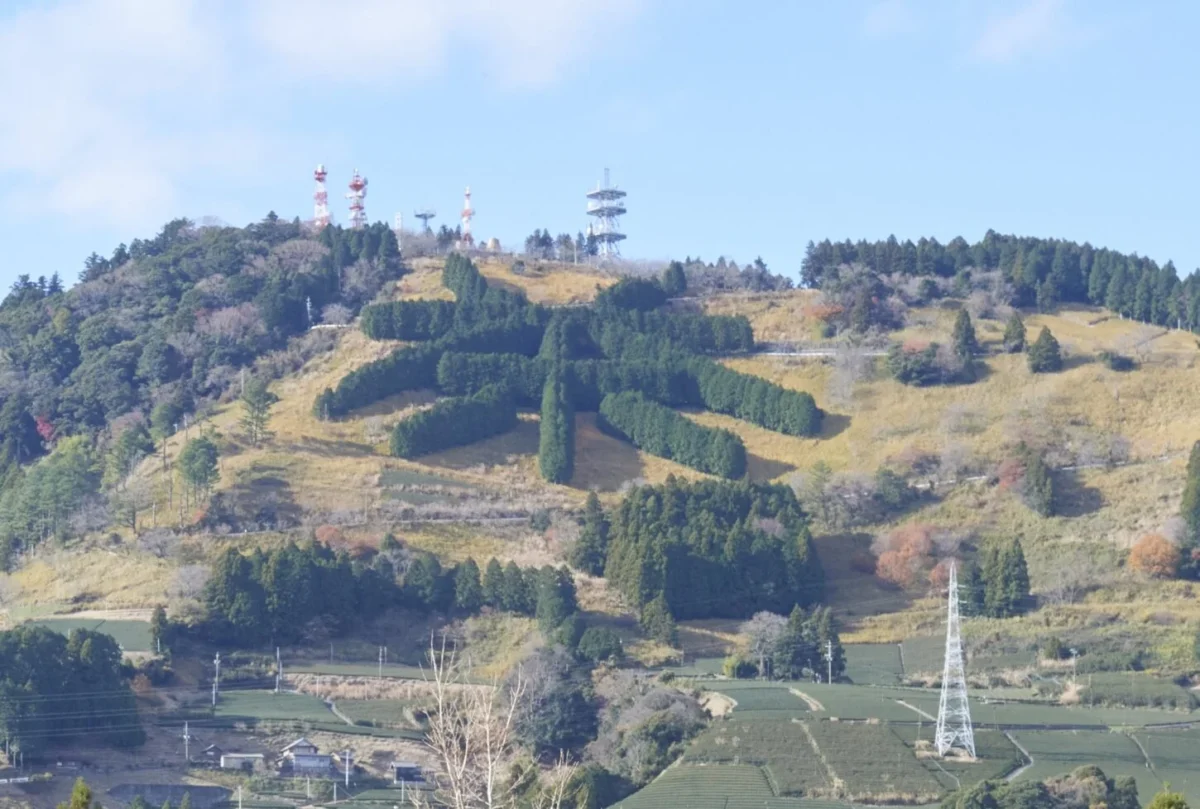
“Nihondaira”, Its name is derived from Yamato Takeru no Mikoto, a legendary figure from the distant age of the gods. According to the Kojiki (the oldest existing record of Japanese history), it is believed that during his journey to the east, the Japanese warrior Yamato Takeru was attacked by bandits who trapped him and the grasslands in this area on fire to kill him, but he escaped by cutting the burning grass with the sacred sword that he carried at his waist. After later defeating the bandits, Yamato Takeru climbed a small mountain in this area and looked over the land that he had leveled. This mountain was named “Nihondaira”, and he renamed the sacred sword that saved the plight of the people to “Kusanagi-no-Tsurugi”, one of the Three Imperial Sacred Treasures.
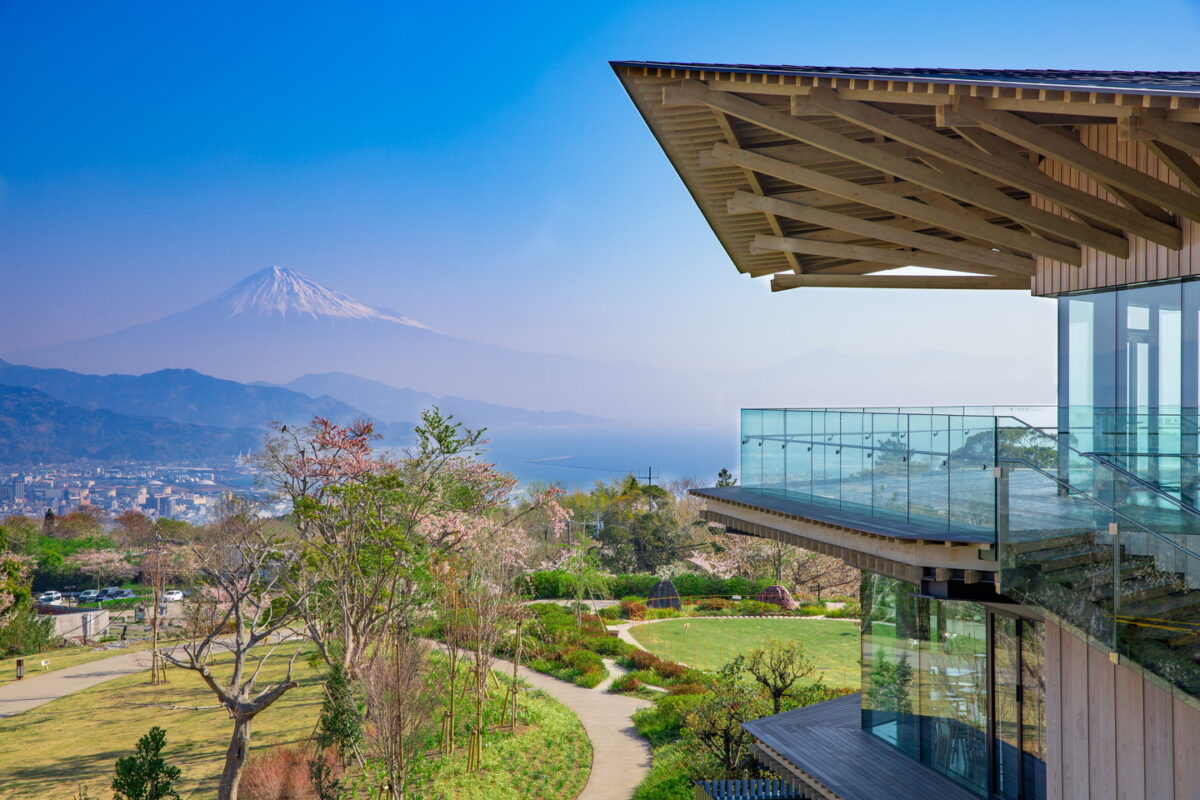
Today, Nihondaira is considered one of the most picturesque spots in Japan, having been awarded first place in the competition to determine Japan’s top 100 tourist attractions. This time, we will be introducing the Nihondaira Yume Terrace located at the summit of Nihondaira. Now, let’s head for the Yume Terrace from the parking lot at the top of Nihondaira.
A beautiful wooden facility in harmony with the natural landscape
The building was designed by Kengo Kuma & Associates
The Nihondaira Yume Terrace was designed by Kengo Kuma & Associates, who also designed the New National Stadium, which served as the main venue for the Tokyo 2020 Olympic Games. The beautiful wooden facility is made of wood sourced from Shizuoka Prefecture and blends in perfectly with the surrounding natural landscape.
Let’s start with the exhibition area on the 1st floor. Here, the history and culture of Nihondaira and its nearby tourist attractions are introduced using graphic panels, projection mapping, and touch panels.
1st-floor exhibition corner
Historical explanation of Nihondaira using projection mapping
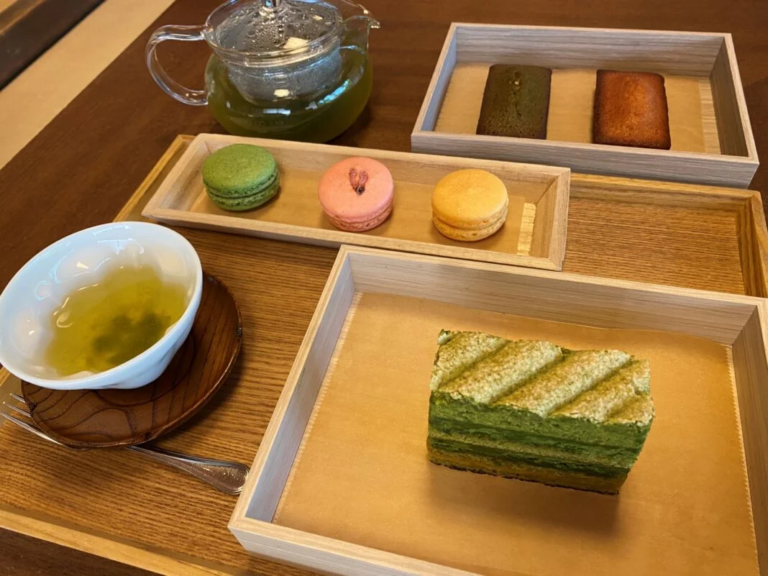
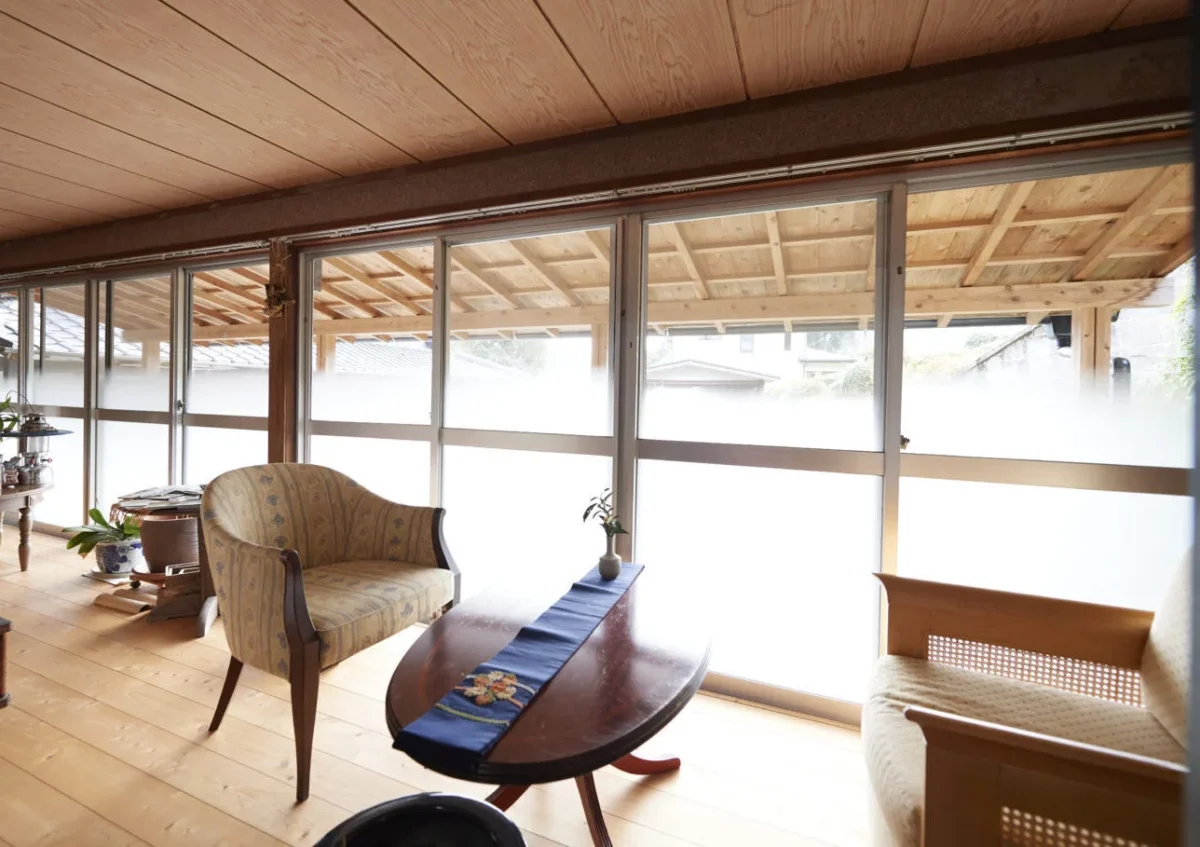
On the 2nd floor, there is a lounge where you can enjoy seasonal teas and sweets. Here, you can relax and enjoy the view beyond the glass.
Drinks and desserts are sold at the 2nd-floor lounge.
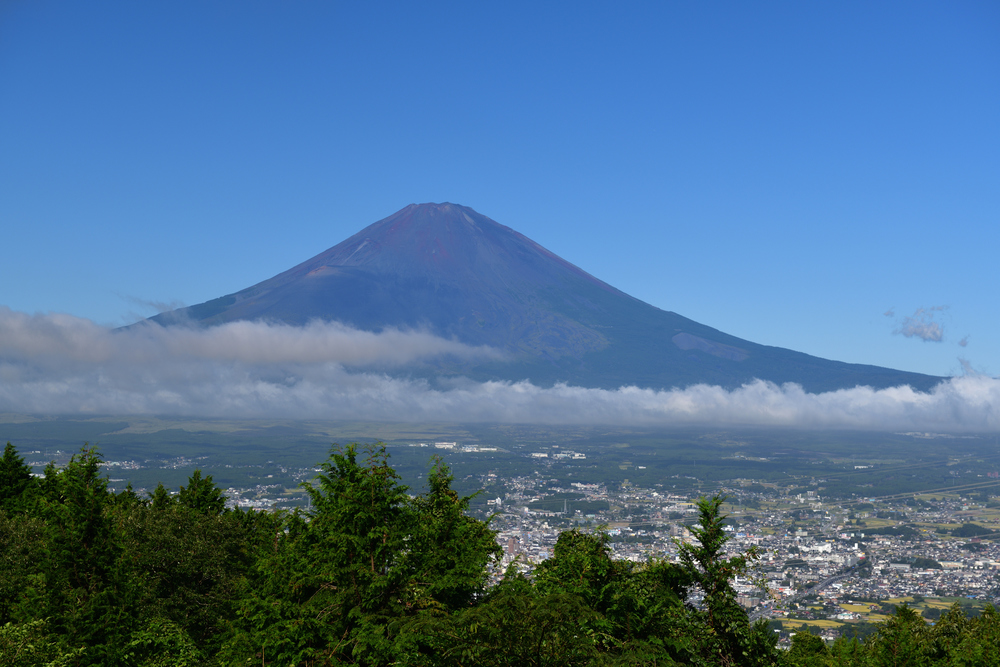
You can enjoy a perfect view of Mt. Fuji from the lounge.
The third floor features a 360-degree, all-glass observation floor. After climbing up the stairs and turning around, you can see a breathtaking view of Shimizu Port and Suruga Bay, the deepest bay in Japan, below you, with the majestic Mt. Fuji in the distance. In the unlikely event that the weather does not allow you to see Mt. Fuji, please enjoy the beautiful view of Mt. Fuji displayed on the large monitor.
When you climb the stairs up to the 3rd floor…
Another stunning view of Mt. Fuji awaits.
Observation corridor with a 360-degree panoramic view
Now let’s go outside and head over to the observation corridor!
The observation corridor built to surround the digital tower
You can see as far as Omaezaki to the west.
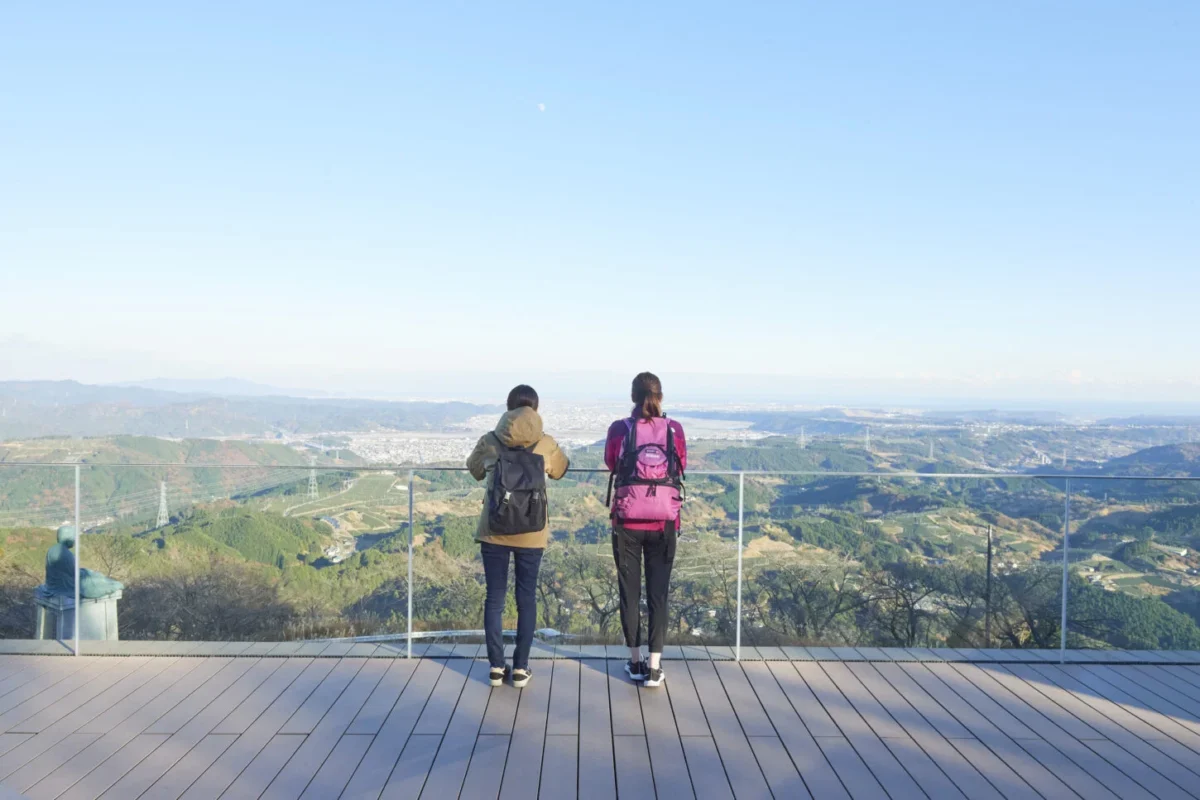
The observation corridor has a circumference with a length of approximately 200 meters. As you take a lap around the corridor, you can see the city of Shizuoka, Suruga Bay, Miho no Matsubara, which was registered as a component heritage of Mt. Fuji, a World Heritage Site, and of course, Mt. Fuji itself. Is it possible that Yamato Takeru also looked out over this land like this during the age of the gods? How has the landscape changed between the times described in the Kojiki and today?
The Miho Peninsula is visible, and beyond it is the Izu Peninsula.
After circling around the observation corridor, you will finally see Mt. Fuji.
Relax and enjoy the view from the bench.
Visitors may enter the observation corridor at any time, regardless of the facility’s hours of operation or even on days when it is closed. If you visit at night, you can enjoy the night view of Nihondaira, which is registered as one of Japan’s Nightscape Heritage Sites.
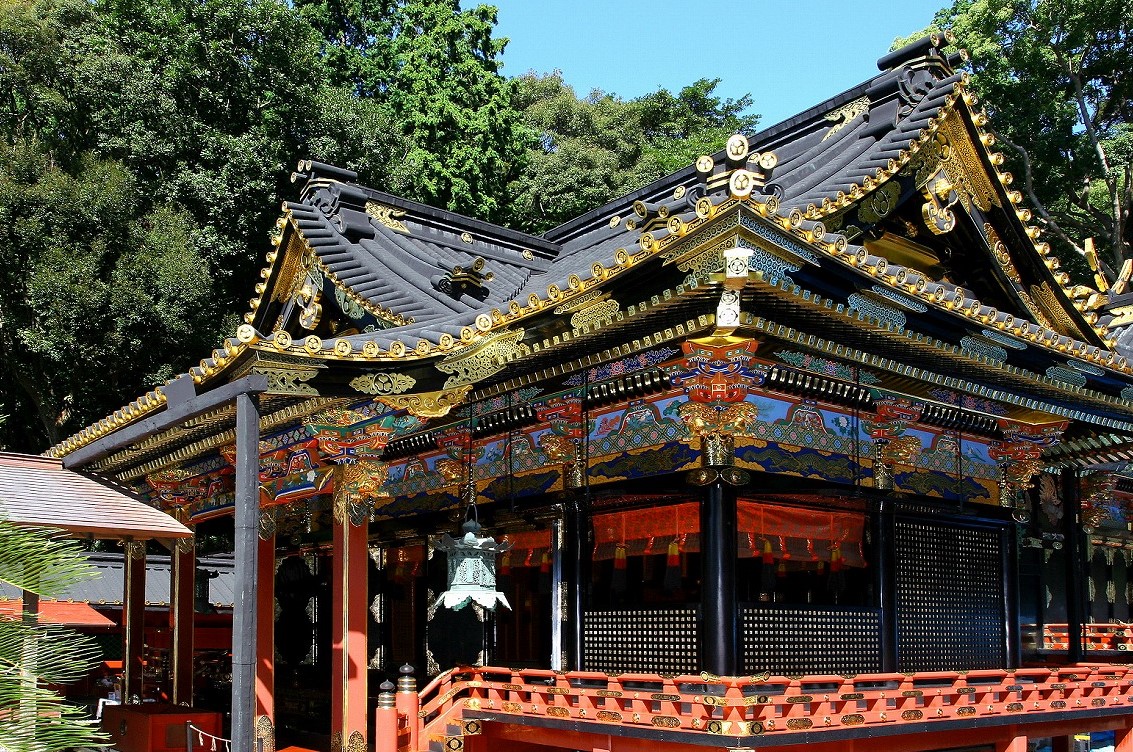
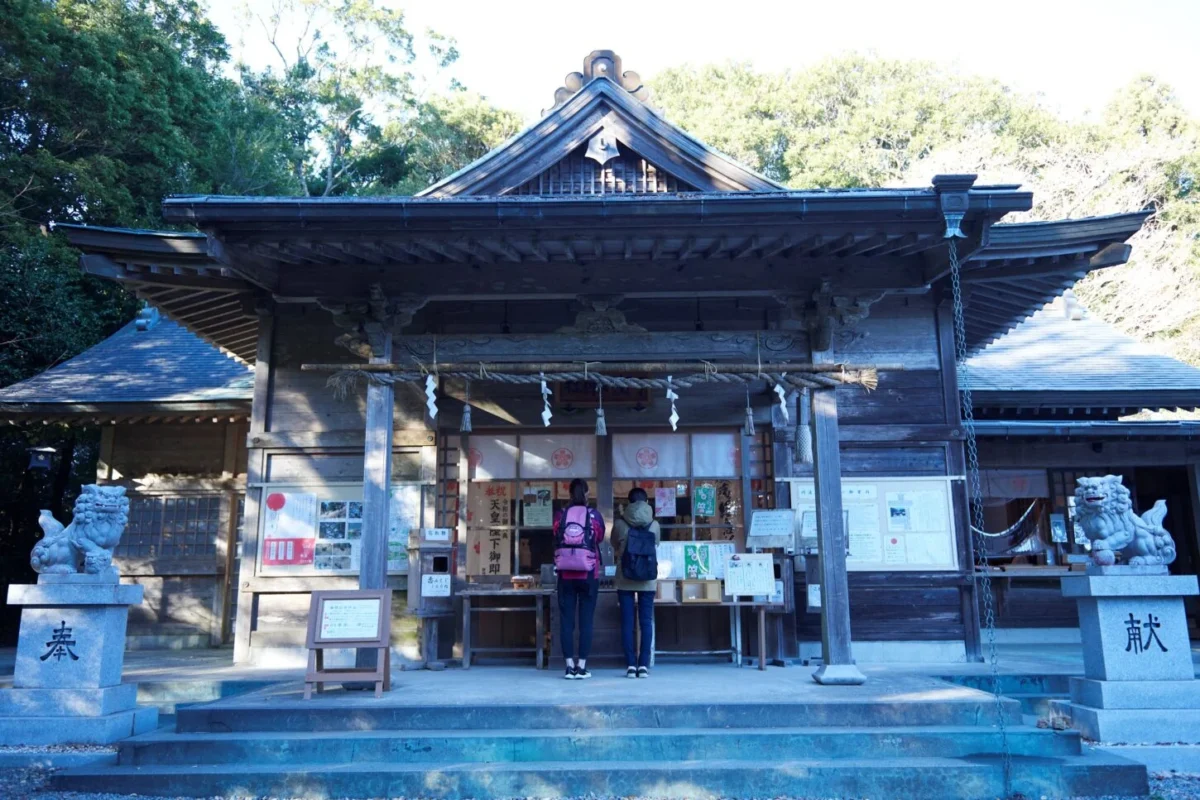
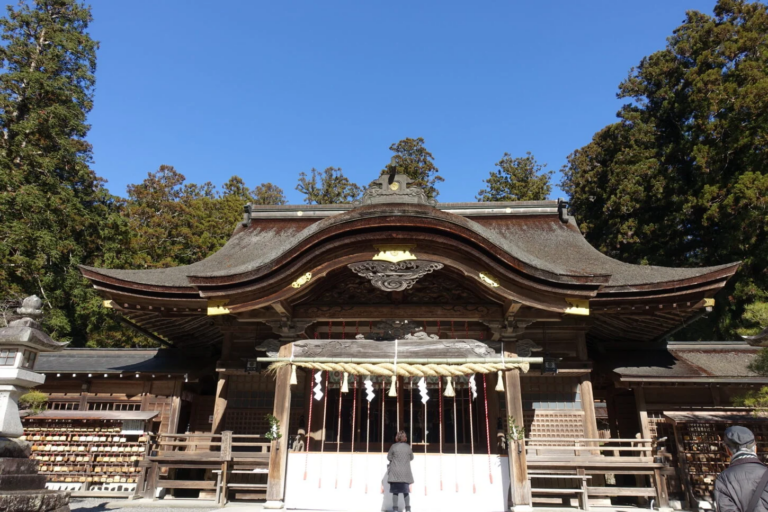
The Kunozan Toshogu Shrine, which was designated as a National Treasure, is just a 1-minute walk from the terrace
Nearby, there is a ropeway station near the Yume Terrace that connects the summit of Nihondaira and Mt. Kuno, and from here, you can also visit the Kunozan Toshogu Shrine. Please stop by, along with your visit to the Yume Terrace!
Izu Panorama Park, which is located in Izunokuni City, is a popular tourist spot that offers spectacular views of Mt. Fuji, Suruga Bay, and the mountains of Izu. In addition to the beautiful scenic views, the facility offers nature walks, delicious cuisine, private spaces, and athletic fields, and is recommended for everyone from children to adults.
Izu Panorama Park was recently renovated in 2021 and has become an attractive spot to enjoy the panoramic view with more openness and elegance! Today we will introduce all the main attractions and highlights of the facility.
Take a stroll in the air on a ropeway while enjoying the expansive view
Izu Panorama Park (foot of the mountain)
We arrived at Izu Panorama Park and immediately boarded the ropeway. The ropeway is boarded from the second floor of the facility at the foot of the mountain, where you can find a store selling souvenirs as well as an Italian restaurant. This ropeway is approximately 1,800 meters long. The normal operating speed is surprisingly fast at 4 meters per second or about 14 kilometers per hour. It takes approximately 7 minutes and 30 seconds to reach the summit. As you get higher in the air, the view gradually expands to include the peaceful rural landscape of Izu-Nagaoka, the cityscape of Izunokuni City, Mt. Fuji, and Suruga Bay. We reached the summit of the 452-meter-high mountain in no time while admiring the vast scenery.
When you get off the ropeway and step out of the building, you are greeted by one of the best views in Shizuoka Prefecture of Hakone, Mt. Fuji, and Suruga Bay. The spectacular view will surely make you want to run out toward it.
A peaceful rural landscape extends below
A grand panoramic view extends beyond the deck
Highlights of Izu Panorama Park Ao Terrace
Water Basin No. 1 at the Ao Terrace – Lighting up the spectacular view with brilliant blue colors
The first thing that immediately catches your eye when you get to the observation deck at the top of the mountain, called the “Ao Terrace”, is the bright blue water basin. There are a total of three water basins, each designed with the concept of “water reflecting the blue of Mt. Fuji, Suruga Bay, and the sky”. The beautiful blue color of the water basin makes the sweeping view even more vivid and mystical. One of the three water basins, an elongated trapezoidal basin in the center of the deck, shows a reflection of an upside-down Mt. Fuji on the surface of the water when the weather is clear. (Depending on the intensity of sunlight and time of day.) The grand panoramic view from the Ao Terrace that you can enjoy while feeling the gentle breeze is something you will never get tired of looking at.
Water Basin No. 2 at the Ao Terrace- If the conditions are right, an upside-down Mt. Fuji is reflected onto the surface of the water
Water Basin No. 3 at the Ao Terrace – Private space “The Water Lounge”
Although it feels refreshing just looking at the scenery, there are also two private spaces here where you can enjoy the view while having tea and sweets, or just relax and chat with your loved ones.
Katsuragi Saryo Private Gazebo
There are four booths at the “Katsuragi Saryo Private Gazebo”, located at the back of the Cafe-Katsuragi Saryo. The booths, which are partitioned by wood panels, offer a private space like a wooden veranda where you can relax. We recommend making a reservation in advance.
The Water Lounge
The other private space is called “The Water Lounge”, which is located down the stairs on the right after getting off the ropeway. This 14-seat lounge offers sunshades to create a calm and relaxing atmosphere. It also faces one of the blue water basins, so you can see the beautiful shimmering water created by the sun’s rays on the surface of the water in front of you when sitting in a chair. And on the other side, the majestic Mt. Fuji and the bright blue Suruga Bay spread out before you, so you can gaze at the view while forgetting about the time.
Enjoy a moment of relaxation in the shade at The Water Lounge
How to use the lounge
The lounge can be used by purchasing one or more items at Katsuragi Coffee. (All users must purchase at least one item. The duration that the lounge can be used for is 30 minutes or less.) (*The lounge may not be available depending on the weather, the number of people there, etc.)
Enjoy eating sweets while gazing at the spectacular view at Ao Terrace!
Wouldn’t it be great to relax, drink coffee and eat sweets while enjoying the panoramic view? For those of you who agree, we would like to introduce the two cafes located at Ao Terrace.
Katsuragi Coffee
Katsuragi Coffee
Katsuragi Coffee, located just off the ropeway, is a cafe based on a modern Japanese-style concept. We recommend their drip coffee, café latte, and coffee-flavored soft-serve ice cream that is accented with the aroma and bitterness of coffee. Katsuragi Coffee’s most popular non-alcoholic cocktails are brightly colored and perfect to show off on SNS! Enjoy their mildly sweet and refreshing taste.
The Katsuragi Sunrise (left) and Suruga Ocean are two of the most popular non-alcoholic cocktails
Coffee soft serve ice cream and the mango caramel soft serve ice cream, which is available for a limited time only
Katsuragi Saryo
Katsuragi Saryo
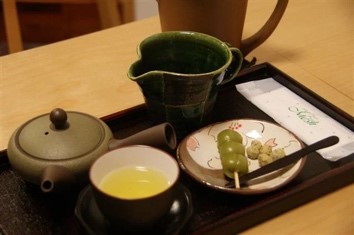
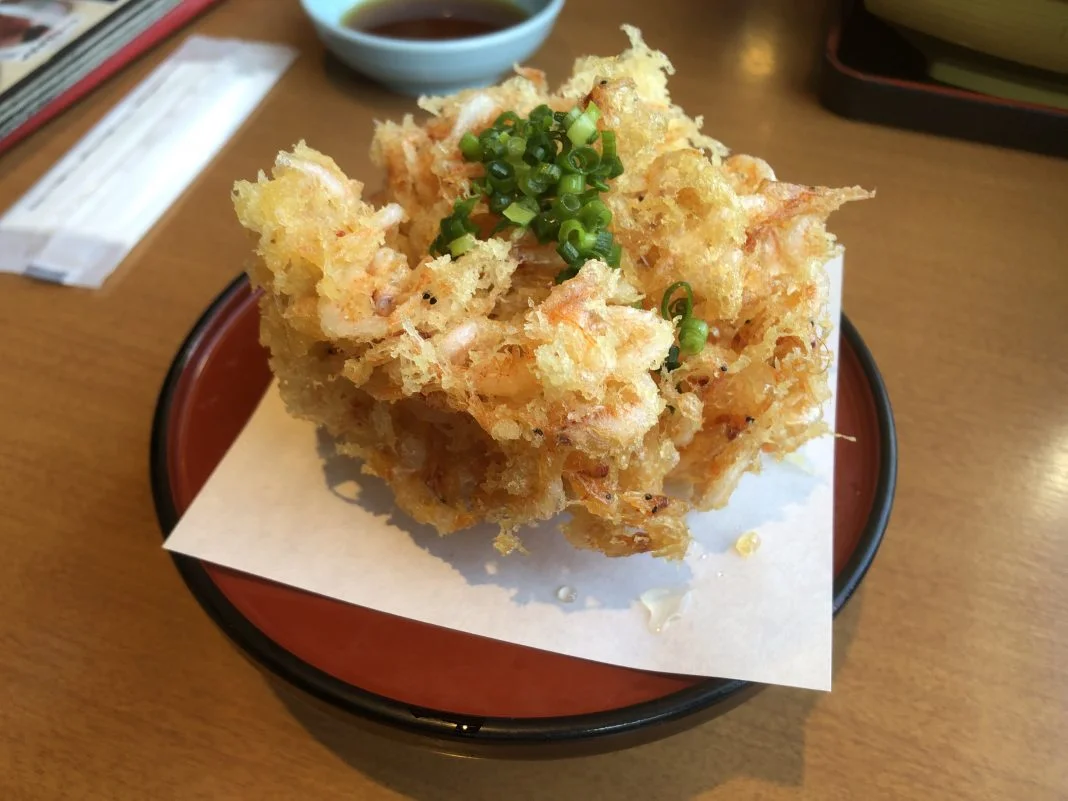
At Katsuragi Saryo, which is located on the water basin side, you can enjoy light meals made with Suruga Bay specialties such as the sakura shrimp kakiage (mixed tempura) udon and shirasu (whitebait) rice bowl, as well as Japanese sweets such as irodori dango (tricolor dumplings).
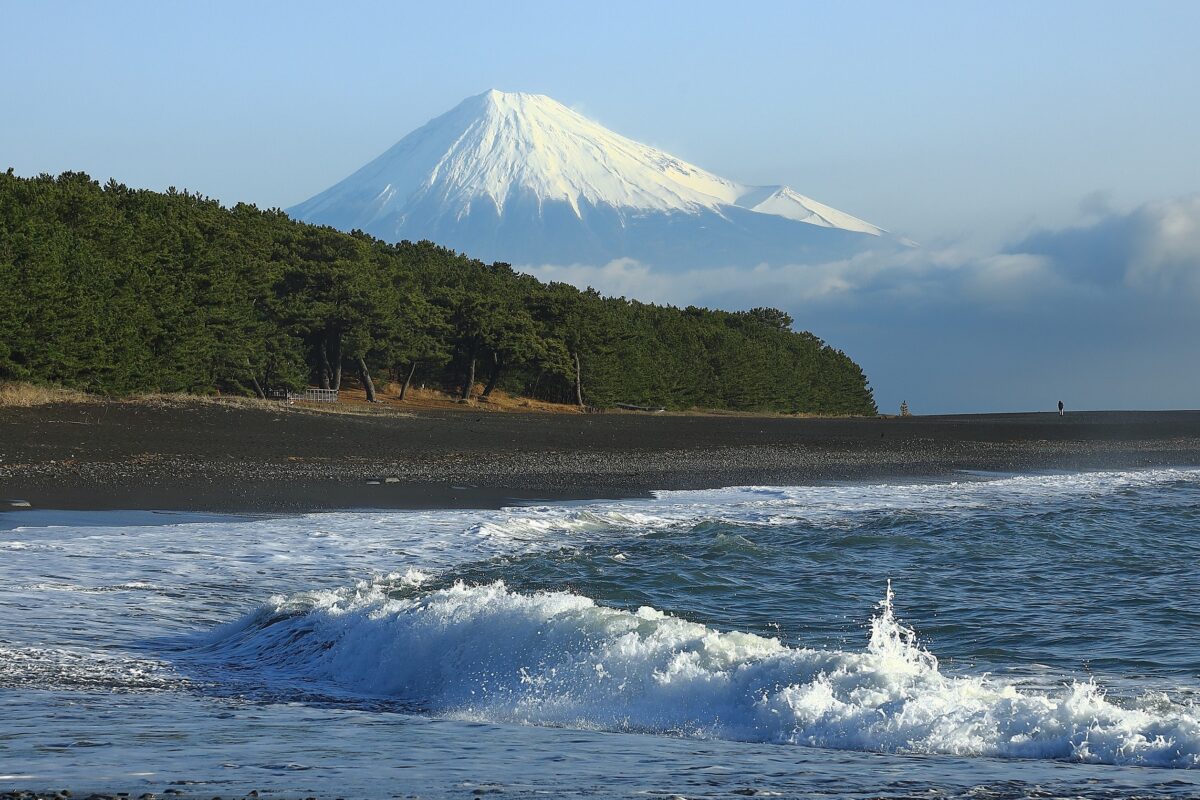
The best part of Katsuragi Saryo is the amazing view! The restaurant has large windows, so you can gaze at Mt. Fuji and Suruga Bay from your seat inside the restaurant. There is also a seating area on the deck outside the restaurant for a more open-air experience.
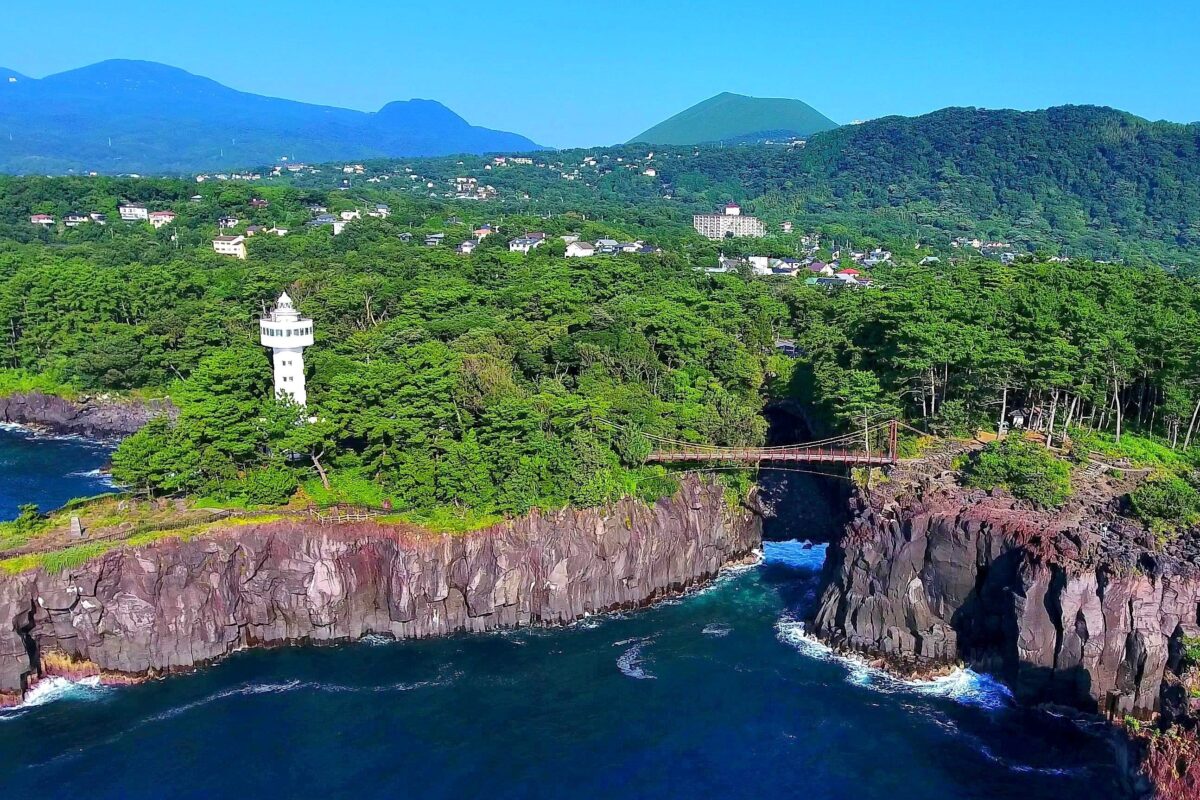
View from the outdoor deck seats at Katsuragi Saryo
More aerial park attractions at Izu Panorama Park!
We’ve already introduced many attractions that you can enjoy at Izu Panorama Park, but we’re not done yet! Beyond this, there are more areas where you can experience the beautiful scenery and nature of Mt. Katsuragi and the customs and culture of the Izu-Nagaoka area.
Enjoy more spectacular views at the Fujimi no Ashiyu footbath
Walk past Katsuragi Saryo toward the mountain path, and soon you will see a footbath on your right. Here at the Fujimi no Ashiyu footbath, you can see Mt. Fuji from a different angle from that of the Ao Terrace.
Towels are also sold here, so please ask the staff if you need one. *The footbath can be enjoyed free of charge.
Photo frame for taking a commemorative photo with Mt. Fuji
After passing the footbath, you will arrive at a large space at the top of the mountain a couple of minutes away. There is a photo spot where Mt. Fuji looks like it is framed next to the observatory at the top of the mountain, so be sure to take a commemorative photo together with the spectacular view.
Boardwalk
If you continue walking further along, the mountain path turns into a boardwalk paved with wooden planks. The boardwalk is lined with trees on both sides, making it seem as if you are walking through a tunnel of trees.
Taking a stroll along the paths with beautiful seasonal scenery such as fresh greenery and autumn leaves is very pleasant, and your body and mind will feel relaxed as you walk.
Saezuri no Oka Observatory
Just past the boardwalk is the “Saezuri no Oka Observatory”, which offers scenic views of Nakaizu in the opposite direction of Mt. Fuji, including Shuzenji, Amagi Pass, Mt. Omuro, and Kano River.
As the name suggests, the view of the green forest from this observatory, where you can also hear the chirping of birds such as Japanese nightingales, will also soothe your soul. By the way, when I visited in August, the sounds of the buzzing cicadas were louder than the chirping of the birds.
Lover’s Sanctuary/Shiawase no Kane (Bell of Happiness)
Shiawase no Kane (Bell of Happiness)
On the deck at the end of the observatory which overlooks Mt. Fuji is the “Shiawase no Kane”. This bell of happiness is considered a symbol of the “lover’s sanctuary”. Izu Panorama Park has been selected as a lover’s sanctuary by the “Lover’s Sanctuary Selection Committee”. If you’re visiting as a couple, don’t forget to take a commemorative photo with your partner!
Katsuragi Shrine, Katsuragi Jizoson and Geta Kuyozuka
Torii gate of Katsuragi Shrine and Mt. Fuji
Izu Panorama Park also has various spots related to local beliefs, such as Katsuragi Shrine, Katsuragi Jizoson, and Geta Kuyozuka.
Katsuragi Shrine has a long history dating back to the Heian period, and the name of Mt. Katsuragi is also said to have been derived from this shrine.
The shrine serves as a reminder that the summit of Mt. Katsuragi, where Izu Panorama Park is located, was a sacred place for the people in the community.
Katsuragi Shrine
Hanafuji Flower Craft and Log Athletic Square
In addition, there is the “Hanafuji Flower Craft” where seasonal flowers are planted and the “Log Athletic Square” where children can play, making it a place where you can have a fun time with your family, as a couple, or with your friends.
The “Hanafuji Flower Craft” seasonal flower sculpture
Log Athletic Square
Restaurants and recommended souvenirs at the foot of Izu Panorama Park
Now, let us introduce the various facilities located at the foot of the mountain in Izu Panorama Park.
Trattoria Izu Paradiso
Izu Panorama Park “Trattoria Izu Paradiso”
Trattoria Izu Paradiso is an Italian restaurant that offers pasta, pizza, meat, and fish dishes using local ingredients based on the concept of if the city of Izu was in Italy, instead of Japan. We highly recommend the pizza, which is made by hand from the dough using authentic Italian wheat. The pizzas, which have a delicious crispy and doughy texture, are baked in an authentic pizza oven that can be seen in the kitchen through the glass as you enter the restaurant.
Pets are welcome in the terrace seating area, so please spend a pleasant time here with your loved ones.
Appetizers are served in small portions so women can enjoy a variety of tastes
Brick oven pizza topped with locally sourced shirasu (whitebait) from Shizuoka Prefecture
Izu no Shunsai Market
At the “Izu no Shunsai Ichiba” (Izu’s Shunsai Market), a store at the foot of the mountain, locally grown vegetables and fruits, processed foods made from them, fashionable Fuji goods, and other products unique to Izu are sold.
At the “Izu no Shunsai Market” located at the foot of the mountain, you can purchase locally-grown vegetables and fruits, processed foods made from the vegetables and fruits, stylish Mt. Fuji-themed goods, and other products unique to Izu. The “Mt. Fuji Yokan” is the most popular item among them, particularly the lemon-flavored yokan with its beautiful blue color, which is an Izu Panorama Park original.
Fruit jams and pickled vegetables from Izu
The most popular item, the Mt. Fuji Yokan
The second most popular item, the canned fatty tuna
Lastly
We hope you visit Izu Panorama Park and spend a luxurious time with your loved ones.
The Tanna Basin is located in Kannami in Tagata District, Shizuoka Prefecture. The small basin with a circumference of 4 km surrounded by mountains on all sides is home to ten dairy farms and approximately 1,000 cows. Located in the middle of the Tanna Basin is the “Dairy Farming Kingdom Oratche”.
With over 140 years of dairy farming history and dairy culture, they are engaged in recycling-based organic farming that emphasizes the symbiosis between people and livestock, soil cultivation, and food production that focuses on safety and freshness
Soft-serve ice cream and local beer! Enjoy the wide range of delicious treats for both children and adults!
One of the best things to look forward to at Oratche is the fresh soft-serve ice cream. The distance from the workshop to the nearest barn is a mere 50 meters. What’s surprising is that the freshly squeezed raw milk is processed immediately and made into soft-serve ice cream in as early as eight hours later. During peak season, the fresh, one serving of fresh, rich soft-serve ice cream lets you enjoy the delicious taste of fresh milk to the fullest is sold every 15 seconds, or up to 2,000 scoops a day.
Oratche’s soft-serve ice cream
Adults can enjoy the local beer. There is a beer brewery inside the facility, which can be observed from the outside.
How the beer is produced
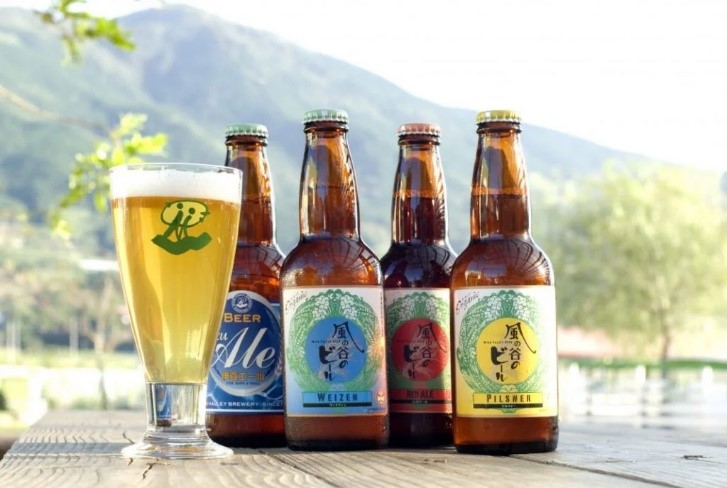
The local beer, which has been produced for 23 years and became the first beer in Japan to be certified as organic in December 2000, is brewed using natural water drawn from 300 meters underground. Because it is not filter-filtered or heat-treated, it is an authentic draft beer containing live yeast.
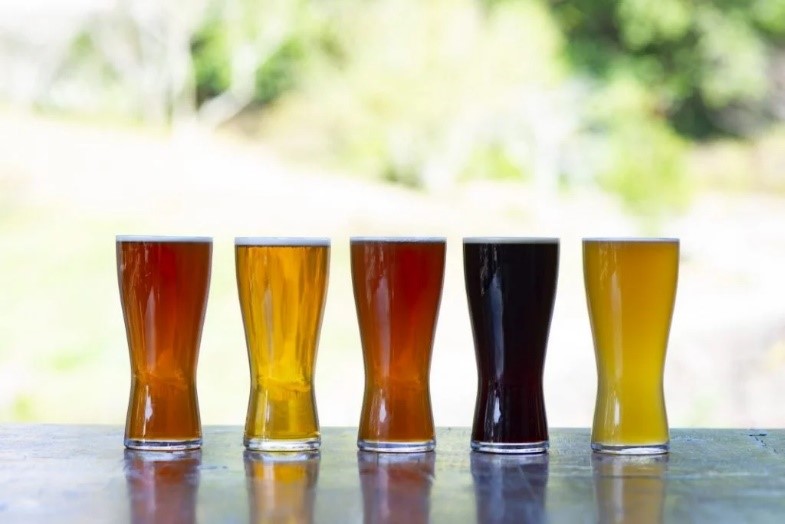
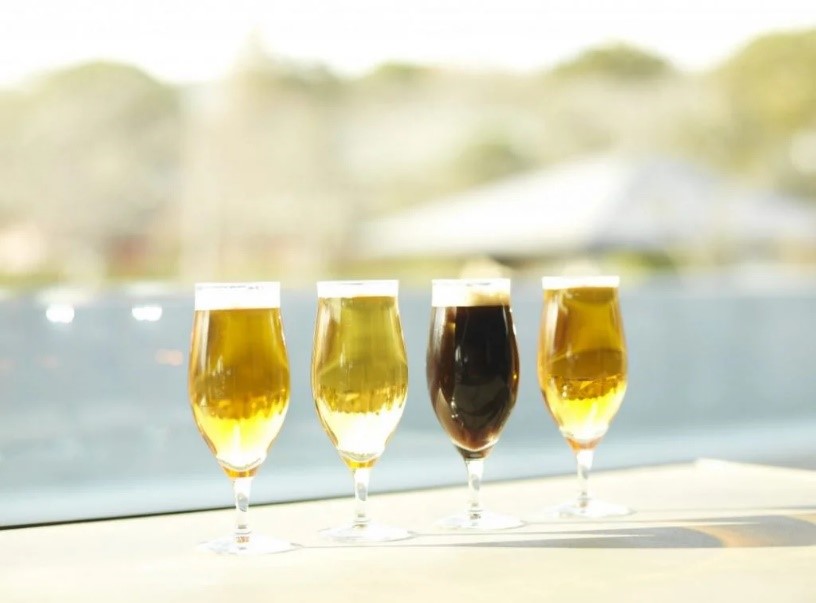
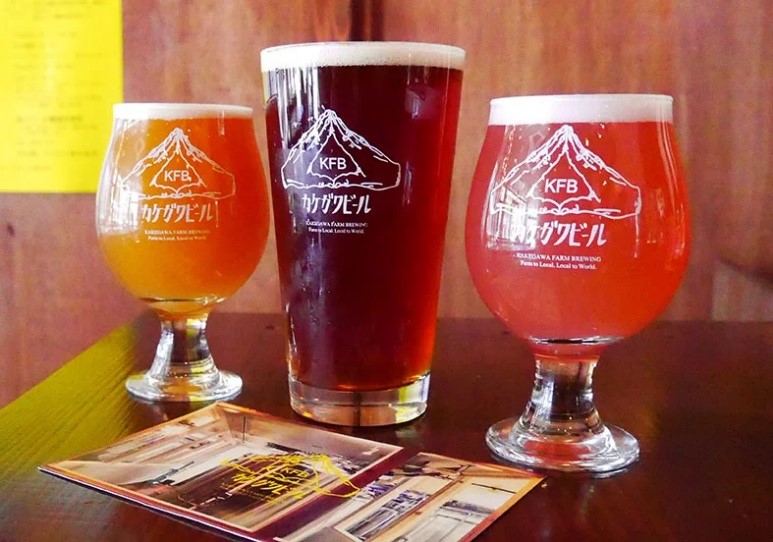
Four types of beer are available, including the certified organic “Pilsner” and “Witbier”, “Izu Ale”, made with locally grown two-rowed barley, and the amber-colored “Red Ale”.
Beer can be enjoyed in the flower greenhouse and restaurant and can also be purchased at the store as souvenirs.
Certified organic Pilsner!
At the restaurant, popular dishes include pork cutlet curry and pork steak made with “Tanna Hako Pork”, a healthy brand of pork fed with Tanna Milk powder for 20 days after weaning, and spaghetti made with cheese, butter, and other dairy products made at the workshop. Please try the sweet and refreshing flavor of Tanna Hakko Pork for yourself.
A variety of experiences to interact with peaceful surrounding nature
Dairy farming experience
Another charm of Oratche is the variety of dairy, farming, food and production experiences that you can enjoy. The dairy farming experience includes milking and feeding the cows. You can also interact with other cute animals such as goats, rabbits, donkeys and sheep.
Dairy farming experience: Feeding the animals
When we approached the animals with a basket of food, they all immediately came up to us and munched on it. They were so cute that we didn’t want to stop feeding them. (A fee is charged for the animal feed).
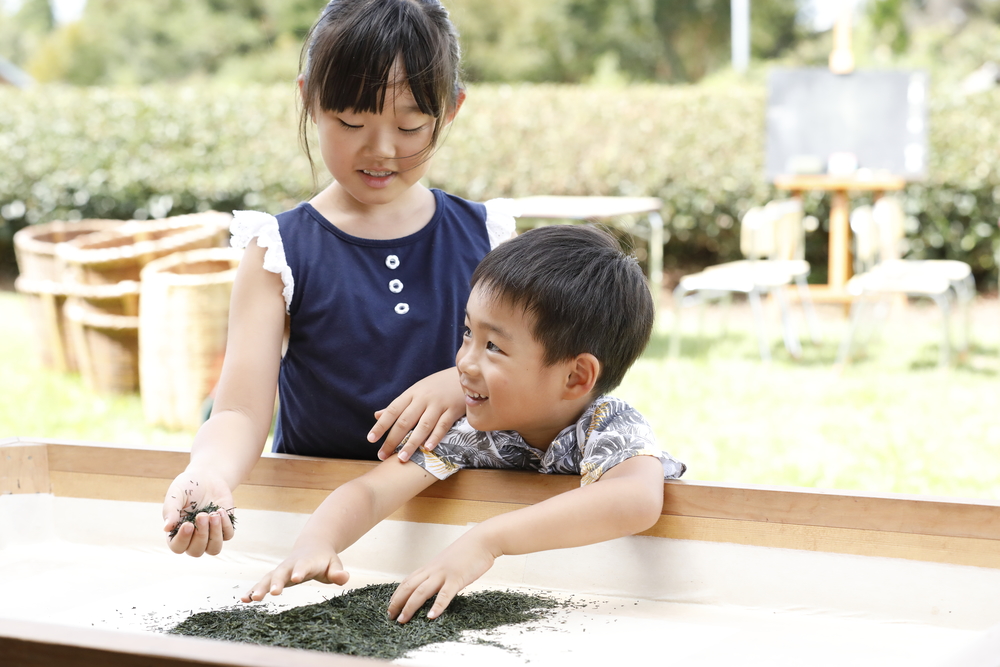
15- to 30-minute hands-on activities that even children can enjoy are available for the food experiences, which include making butter, bread, ice cream, herb tea, fruit parfaits, etc.
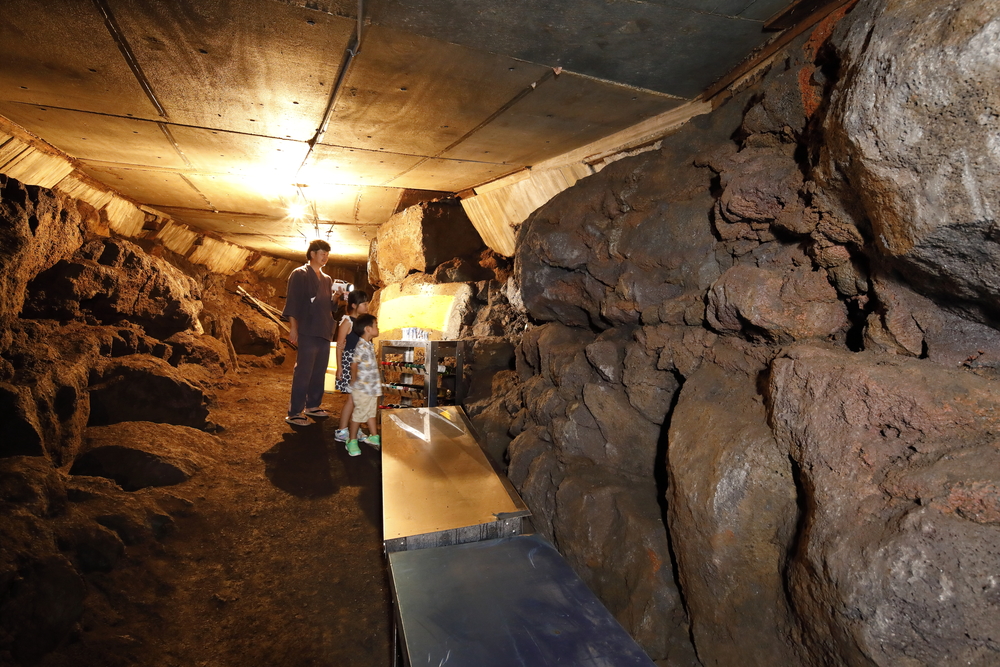
Kannami Meguri Vegetables
About ten kinds of seasonal vegetables such as eggplants, peppers, zucchinis and carrots are grown in the field inside the facility, and visitors can enjoy a harvesting experience (reservations are accepted on the day of harvest if available). These are brand-name vegetables called “Kannami Meguri Vegetables”, and are grown using the same cow manure compost used to cultivate the soil in Tanna. High-quality compost that has been fully fermented over a period of more than six months are used to grow environmentally friendly and high-quality vegetables as local circulation-type crops.
The harvested vegetables can be eaten at the BBQ corner in the facility, which is great for educating children about food. The fields can be muddy, so wear clothes you don’t mind getting dirty during the experience. Vegetables harvested in the garden can be purchased at the store, and every Saturday and Sunday, a farmers’ market is held by the mothers of the dairy farmers.
Kannami Meguri Vegetables
Another popular activity is the giant maze.
Giant maze in a cornfield
The giant maze in the corn field, which boasts a large area of 75 square meters, is a popular activity that attracted more than 200,000 visitors last year. Search for the three checkpoints within the course and aim to reach the goal.
Tall corn stalks!
Both children and adults can enjoy the corn maze made of tall corn stalks, and the course changes every year. On average, it takes around 20-25 minutes to reach the goal, so everyone should give it a try.
In addition, other hands-on activities such as making key chains, Raku ware pottery and tapestries are also available.
Bring home the bounties of Tanna
After interacting with animals and eating delicious food, of course you’ll want to take a look at the souvenirs. A wide variety of products including cheese, butter, and other dairy products made with Tanna Milk and popular Tanna Milk series sweets such as sablé, rusk, and Baumkuchen, local beer, vegetables and other Izu specialty souvenirs are available at the store.
Tanna Milk series sweetsProducts made with fresh raw milk
All of the products made from fresh raw milk are specialties of Tanna and are sure to be appreciated not only to be enjoyed at home but also as souvenirs.
Please share these delicious products with your friends and family.
We’ve entered the season when the wind blowing across your cheeks feels pleasant. You can also feel the changing of the seasons from the Izu landscape. Today we would like to show you a stroll through Inatori that is suitable for autumn, the season of leisure and food.
Enjoy the spectacular views at the “Autumn Susuki Event” in the Inatori Hosono Plateau, Higashiizu.
Inatori Hosono Plateau
The Autumn Susuki Event is held every year from October to November in the vast 125-hectare susuki fields (26 times the size of the Tokyo Dome) in the mountains of Inatori. The spectacular views of the expansive susuki fields, and the Sagami Bay and Izu Islands below are well worth seeing! Why not take a stroll through the golden susuki fields spreading throughout the area?
Taking a stroll in the susuki fields
No general vehicles are allowed during the event, so after registration, visitors will be given an “Event & Walking Map” to explore the fields on foot (entrance fee required).
There are several walking routes, including a one-lap 1.5-kilometer route (about 25 minutes) and a 2-hour route to the top of Mount Misuji, so please choose a route that suits your physical fitness level and time.
The site also has four marshlands (Nakayama Marsh No.1, Nakayama Marsh No.2, Momono Marsh, and Shibahara Marsh) that have been designated as cultural assets by Shizuoka Prefecture, where visitors can sometimes observe rare wetland plants such as the Eleorchis japonica and Asian pogonia.
Stamp rally eventHosono Plateau swing
At the event venue, there is a stamp rally, a Hosono Plateau swing that offers a view of the sea, free rentals of playground equipment such as sleds, badminton sets, and balls, and light snacks and beverages are available on holidays.
The map of Inatori Hosono Plateau
Kinmedai is a popular fish of Inatori. Enjoy the “Inatori kinme,” the local brand-name fish
Inatori Port
If you get hungry after taking a stroll on the plateau, try the “Inatori kinme,” a specialty of Inatori, to recharge your energy. Inatori Port is a historic town that specializes in kinmedai fishing. About 30 boats head to the fishing grounds and catch the kinmedai one by one using vertical longlines, in which 40 hooks are attached to one trap.
Unloaded kinmedai
Vertical longlining causes less damage to the fish, so the unloaded fish are preserved beautifully.
The fish are sorted immediately after unloading
The boats leave early in the morning and all the fishermen return to the fishing port by noon, where the fish are immediately unloaded, sorted, and packed, and by the next morning, they are lined up at the consumer market in Odawara and other areas. Inatori kinme is sold at a high price in the market. The best place to taste it is here!
Restaurants where you can taste fresh Inatori kinme
Kinme Tokoro Naburatoto
Kinmedai donburi
“Naburatoto,” located right in front of Inatori Port, specializes in kinmedai dishes. Since the restaurant was opened, it has been dedicated to serving “Inatori kinme” and purchases it directly from the Inatori Branch of the Izu Fisheries Cooperative Association. The fatty kinmedai is served in a variety of ways, including braised, sashimi, pickled, seared, sanga-yaki (grilled fish cakes), and namero (minced fish mixed with spices and seasonings). The menu offers a variety of dishes that allow you to fully enjoy the deliciousness of Inatori kinme. The “kinmedai donburi” pictured here is a set meal that is truly all about kinmedai, offering three kinds of dishes at once including sashimi, negitoro, and namero.
Braised kinmedai set
The meat of the sweet and spicy “braised kinmedai set” is thick and surprisingly fluffy. It comes with a very satisfying portion of salad with kinmedai sashimi, a side dish, and miso soup.
The restaurant may be closed when there are no fish in stock, so it is safe to check before visiting.
The map of Kinme Tokoro Naburatoto
While you’re here, share the taste of Inatori with souvenirs
Inatori agricultural and fishery marketplace “Korashie”
Korashie
“Korashie,” a direct sales shop that was set up at the Inatori Port in cooperation with the local fishing port and agricultural organization, offers fresh seafood caught in set nets at Kitagawa Port and Yatsu Port, including “Inatori kinme,” as well as a wide variety of certified regional products and specialties, including vegetables and fruits grown by local farmers, and well-known sweets made with New Summer oranges.
Inside KorashieOn a good day, around ten kinds of fresh fish are lined up inside the store
The types of fresh fish on display at the store vary depending on the weather, season, and day, but on a good day, there can be around ten different kinds of fish on display. Of course, Inatori kinme is also available as raw, boiled, or dried fish. A piece of dried fish weighs 500 to 600 grams, and a piece of boiled fish weighs 700 grams, making them perfect as a souvenir or to eat at home! The vacuum-packed braised fish is easy to prepare by simply boiling it in hot water (the Inatori kinme can be prepared by filleting it into three slices.) This is the place to go if you want to buy Inatori kinme which is rarely distributed in Tokyo.
Easy vacuum packing is also available
In the parking lot of the Higashiizu Town Hall located across the street, a “port morning market” is held every Saturday, Sunday, and on national holidays, and local fishery companies, fruit and vegetable stores, farms and confectionary stores open up stalls selling dried fish, vegetables, fruits, doughnuts, pickles and other specialty products produced in Inatori.
In addition, the freshly cooked kinme kamameshi is another excellent dish. You’ll also be happy to hear that dish comes with a free side of kinmedai fishhead soup. We recommend visiting the port morning market together with Korashie.
The map of Korashie
Closing
Today we introduced Inatori in autumn, but as the birthplace of “tsurushi-hina” (hanging doll ornaments), the area is very famous for the “Hinano Tsurushi Kazari Festival” held every year from late January to late March.
Don’t miss the approximately 380 hina dolls and vine decorations displayed on the 118 steps of Susanoo Shrine. For visitors, Inatori in the early spring is also a great place to have a lot of fun.
What is the 【Mt. Fuji World Heritage Centre, Shizuoka】?
The Mt. Fuji World Heritage Centre, Shizuoka is located in Fujinomiya City, Shizuoka Prefecture.
It is a facility focused on Mt. Fuji, which was registered as a cultural world heritage site in June 2013. People visit the museum from all over the world to learn about Mt. Fuji, from the artistic qualities of the mountain to the history of faiths surrounding it, and its development as a volcano.
In addition, Fujisan Hongu Sengen Taisha, the head shrine of the approximately 1,300 Sengen shrines found across the country, is located nearby, indicating the depth of the history of faith related to Mt. Fuji.
Now, I will introduce you to the highlights of the Mt. Fuji World Heritage Centre and tell you how to get around this facility!!
The magnificence of the building is overwhelming, and you cannot afford to miss the beautiful reflection on the water basin! It’s so instagrammable!
At the museum, you will see many designs that make use of Mt. Fuji’s beautiful, conical form. The first thing that struck me was the splendid, powerful exterior, built in an inverted conical form. In front of the museum is a water basin that draws spring water from Mt. Fuji itself. When you look at the building from the front, the inverted cone building is reflected on the water, revealing the beauty of Mt. Fuji’s conical shape. The building is shaped like an upside-down Mt. Fuji, so when you look at the famous “upside-down Fuji” in photographs, you can also see a “reverse-upside-down Fuji.” This has made the museum into a new Mt. Fuji viewing spot, and an ideal location to share on social media.
The Torii gate and Mt. Fuji reflected on the surface of the water
From here, you can see not only the buildings but also the real Mt. Fuji.
I bet this is the only place in the world where you can capture not only the giant Torii gate and Mt. Fuji towering on the far-off horizon, but also the upside-down Fuji, all together in one shot!
Let’s go inside the museum!
Enter the museum through the entrance on the right as seen from the front.
As soon as you enter, there is a huge information board.
When looking from the outside, you will see that the inside of the building is constructed on a slope that spirals upwards so that you can climb up. When looking from the inside, you will understand why it’s been built this way. While the exterior was characterized by wooden lattices, the interior’s esthetic is quite the opposite. I was surprised by how futuristic it looks!
Simulating the experience of climbing Mt. Fuji – Ascending Fuji
Permanent exhibit – Ascending Fuji
When you enter the building and start going up the slope, you will see one of the permanent exhibits entitled Ascending Fuji.
Landscapes from the mountain trail are projected on the walls, giving visitors a simulated experience of climbing the mountain from the sea, which is uniquely possible from Shizuoka Prefecture. The scenery is projected as a time-lapse video, and as you ascend the slope, the scenery gets closer and closer to what you would see at the summit of the real Mt. Fuji.
The image projected changes from moment to moment and scene to scene. The image above shows Obuchi Sasaba, which is famous even within Fuji City as a great location to take pictures of tea plantations and Mt. Fuji.
Mountain climbers and flying squirrels?
Climbers also appear on the walls at regular intervals! They’re just shadows, but your own shadow will also be projected by the light from the projector, so it looks as if you’re climbing the mountain together. You will also see the silhouettes of animals in the forested zones.
The picture above shows a flying squirrel, but I also saw deer!
The scenery changes as you climb, so it feels as if you’re climbing Mt. Fuji. (Although climbing for real would be much more challenging.) Small children and seniors can also enjoy this experience. It feels like “Another small Mt.Fuji.”
The powerful and beautiful Mt. Fuji
When you finish “Ascending Fuji,” you come out to an open terrace. Beyond the streets of Fujinomiya City spread out below you, you can see the magnificent Mt. Fuji towering above the clouds.
You can spot the red Torii gate of Fujisan Hongu Sengen Taisha shrine. It was a bit cloudy on this day, so Mt. Hoei was hidden. Of course, the photographs from the terrace were also beautiful, but my personal recommendation is…
Lots of Mt. Fuji
This one! The upside-down Fuji benches and Mt. Fuji reflected on the spotless floor!
Photo-worthy spots are not only outside! If you visit, take a step back and ready your camera!
On the wall, there is a section called “Hometown Fujis”. It features photos taken all over the country of scenes that look like Mt. Fuji.
Learn about the roots and faith of Mt. Fuji
After viewing the dynamic Mt. Fuji, it’s time to descend into the building. Opposite the ascent are exhibition floors with monitors that operate in sync with each other. The floors are named Fierce Mountain, Sacred Mountain, and Beautiful Mountain, respectively, and they show how Mt. Fuji took on the form that it has today, how it became a subject of faith, and how it serves as a source of inspiration for works of art.
With the help of images from the touch panels, I was able to deepen my understanding of Mt. Fuji! It was so interesting, I might have to become a regular visitor.
From the fish to the birds: Mt. Fuji as a nurturer of ecosystems
When you exit the slope zone, you get to the section called Nurturing Mountain which describes Mt. Fuji’s ecosystem.
The flora and fauna of the mountain
Measured from the bottom of Suruga Bay (roughly 2,500 meters below sea level), Mt. Fuji is over 6,000 meters tall. And apparently, the meltwater and rainwater from Mt. Fuji also gush forth from the bottom of Suruga Bay, the deepest bay in Japan. The influence it has is just immeasurable.
The flora and fauna of the mountain are displayed like in the photo above, together with explanations of where on Mt. Fuji these plants and animals live.
Large animals and sea creatures are shown with silhouettes that indicate their size.
What a massive crab!!
The sizes of the deer and bear are of course impressive, but what surprised me the most was how huge the crab was.
It’s a Takaashigani or Japanese spider crab, which is known to be the biggest crab in the world.
The only reference points I had were red king crabs and Japanese freshwater crabs, so I was astonished by the spider crab’s long legs. The fishing grounds for spider crabs are at Numazu City, and if you go there, you will find restaurants that serve dishes made with spider crab. I’d like to go there sometime and give them a try.
On the opposite side of the exhibition…
Mt. Fuji covers a whole wall!
Does it seem to be made of some kind of special soil? The wall shows a geological cross-section. Could it accurately show the real geology of Mt. Fuji?
Mt. Fuji actually extends beyond what you can see in my photograph.
Let’s keep going!
The next section is Inherited Mountain. The previous sections have shown the beauty of Mt. Fuji, how it came to be, and what kind of plants and animals reside there, but this section will tell you about Mt. Fuji as a volcano. Mt. Fuji is truly fearsome when it erupts.
On the opposite side was a section where you can write your wishes on little strips of paper.
These pieces of paper were also shaped like Mt. Fuji and were so cute! Although you can’t see it from the photograph, everyone left wonderful wishes.
The Mt. Fuji you can see through the window will surely make them come true.
Following the exhibits…
The last thing I saw was the Movie Theater. It shows three different films according to the schedule. They are the Scroll of Heaven, the Scroll of Space, and the Scroll of Earth.
The movie theater inside the Mt. Fuji World Heritage Centre.
I watched the Scroll of Space. Unfortunately, I cannot show any photographs, but the Mt. Fuji you get to see on the big screen from the perspective of a legendary dragon is truly powerful! It gets high marks for being something you can enjoy even on rainy days!!
The Cafe and Museum Shop, where you can pick out souvenirs and have a snack!
After you have gone through the whole facility, be sure to stop by the Cafe & Museum Shop. Here you will of course find the standard Mt. Fuji souvenirs, but also exclusive merchandise and products that are only available at this museum. Everything there was cute, with Mt. Fuji as the recurring motif!
I can’t show you one by one, so please come by and check them out for yourself!
I bet you will find Mt. Fuji to your liking.
Incidentally, as the name suggests, the “Cafe & Museum Shop” also has a cafe. The location is excellent, so why not savor the view and enjoy an elegant original menu using ingredients associated with Mt. Fuji?
Closing…
So, what did you think of Mt. Fuji World Heritage Centre, Shizuoka? With both beauty and education on offer, this is a facility that both adults and children can enjoy!
Nearby you will also find Fujisan Hongu Sengen Taisha and Omiya Yokocho, where you can enjoy the famous Fujinomiya Yakisoba noodles. Visit them as well while you’re at it and enjoy all aspects of Mt. Fuji.
Lake Tanuki is located in Fujinomiya City, Shizuoka Prefecture. Although it’s called a “lake,” it was originally a small swamp, which was later artificially expanded and turned into a lake. It’s in the Asagiri Highland and has a length of around 4 kilometers. There are many accommodation available in the area, and it’s a very popular destination for families.
A view of Mt. Fuji you can only get here, in Mt. Fuji’s own backyard
At the base of Mt. Fuji, you can enjoy a unique perspective of the mountain that’s not available anywhere else. One notable feature is the Osawa Failure erosional valley, which provides a head-on view of Mt. Fuji. Unfortunately, when I visited the area, the weather was cloudy, so I missed out on seeing the mountain.
This location is famous not just for its natural beauty, but also for the opportunity to view both the majestic form of Mt. Fuji and the serene lake together. Throughout the year, photographers flock to this spot to capture this picturesque view.
The campgrounds were bustling with visitors
There were lots of tents, as well as people strolling the promenade with a camera in one hand.
Introducing leisure activities at Lake Tanuki that both children and adults can enjoy!
The administrative building
Aside from the stunning Mt. Fuji view, there are plenty of other things to do at Lake Tanuki!
One of the best activities is cycling around the lake. You can enjoy the scenic beauty of the lake and its natural surroundings while riding on the cycling course around its length. You can bring your own bicycle or rent one from the administrative building if you don’t have one. It’s a great way to explore the area all year round.
Price list. You can have a 60-min cycling ride for only 500 Yen.
Of course, you can also simply go on foot! The lake has a circumference of around 4 kilometers, so you can walk around it in about an hour.
*If you go cycling, please watch out for pedestrians and practice common courtesy!
You can enjoy some serious camping too!
So many tents!
It was bustling with lots of campers when I visited. Some people were there with friends, while others had arrived with their families. It must have been dinnertime when I took these photographs, because, look at those delicious aromas wafted out from every tent!
Lake Tanuki has two main campgrounds – the “south side tent site” where you can set up your own tent and spend the night, and the “north side tent site” where you can come for day trips and barbecues. You can have a fancy picnic with tables and chairs, or you can set up your tent for some serious camping.
On nights with clear weather, you can see Mt. Fuji against a backdrop of a star-filled sky.
You can buy and rent a lot of equipments here
The aforementioned administrative building also sells firewood and charcoal. I believe they also have other camping equipment, but it’s best to ask them directly for details.
Other activities
I visited Lake Tanuki in February so it was the off-season, but during the camping season from June to November you can also rent a boat!
The boats were hibernating…
Learning through Playing at the Lake Tanuki School of Nature
The Nature School of Lake Tanuki
The Lake Tanuk School of Nature is an educational facility that both children and adults can enjoy. It’s centered around the theme of contact between people and nature. You can reach it by foot from Lake Tanuki. There are signposts along the way as well, so it’s easy to find!
A Tanuki sign
Now on to the Lake Tanuki Nature School building!
As you enter the building, you’ll notice the stunning wall of glass in front of you. From there, you can catch a glimpse of yet another view of Mt. Fuji that differs from the one visible from the Lake Tanuki side.
When the weather is good, you can see Mt. Fuji from the front side.
The building was packed with families and their children! The facility is filled with areas for both adults and children to enjoy.
The reception
On the right as you enter, you will see the Exploration Area: Nature in a Sea of Trees.
It’s inspired by Mt. Fuji’s Aokigahara Sea of Trees, and hiding inside are some creatures that call the Sea of Trees their home. I also went inside for a look. It’s quite challenging, even for adults. I would recommend parents and children to give it a try together!
There are many other areas based on the nature of Mt. Fuji and Lake Tanuki.
Such as the section where you can use a microscope to look at local insects…and a little library space where you can take a break with a bookA flying squirrel!?
Out of everything there, the children especially enjoyed…
The Exploration Area: Cave Nature.
Inside it’s built like a cave, and it’s truly pitch black. You can get a helmet and a pen light at the reception, and your mission is to find the bats that are hiding in the cave.
Picking up a helmet and pen light and listening to the explanationOff to explore!
Just like a real cave, there are parts where the ceiling is very low. Once you’ve counted the number of bats in the cave, you report your findings to the reception. If you get the answer right, you can get a sticker as a prize.
Fun for children and adults alike, also on rainy days
The kids’ corner is also equipped with toys for infants. There are building blocks, a slide, a ball pit and more.
The Lake Tanuki School of Nature has a rich activity program.
The facility offers opportunities to genuinely experience nature, whether indoors, or outdoors around Lake Tanuki. Some of the activities require pre-registration. There are also cottages where you can spend the night. They are of course equipped with kitchens and bathrooms, and guests can visit the hot spring baths and buffet restaurant in the adjacent Kyukamura (rest village) Fuji.
If you ever visit Lake Tanuki, do make sure to drop by the Lake Tanuki School of Nature.
Conclusion
So, what did you think?
There were lots of leisure and lodging options. Although I’ve written about my experience visiting Lake Tanuki in the winter, with all this nature around, there will be different things to enjoy in every season, so you’d want to come and visit again and again. For those who are thinking of traveling to Shizuoka Prefecture, how about paying a visit to Lake Tanuki, which is fun for the whole family, children and grownups alike?
Incidentally, the Diamond Fuji phenomenon should be visible at Lake Tanuki for the week before and after April 20 and August 20 every year. During this time, it gets really crowded with photographers from very early in the morning (i.e., the middle of the night), so if you plan on taking pictures, make sure you do your preliminary research first.
Mankanho, located in Yaizu City, Shizuoka Prefecture, is a 470-meter-high satoyama (a type of traditional rural landscape that combines elements of both forests and farmland) with a ridge line extending along Suruga Bay. Although it is a low mountain, it lives up to its name “Mankanho” due to the panoramic view of Mt. Fuji, the Southern Alps, the Izu Peninsula and Suruga Bay from the summit, enabling you to enjoy the scenic attractions of Shizuoka to the fullest. There is a spacious observation area at the top of the mountain, which is crowded on the weekends and holidays with hikers wishing to take in the spectacular view.
Along with Mt. Takakusa and Mt. Hanazawa, it is referred to as the “Yaizu Alps” , and it is a popular satoyama loved by local residents.
There are several routes to the summit of Mankanho, but today, we will introduce a hiking course that goes from “Hanazawa no Sato” to the “Kurakake Pass” and connects to the Tokaido Nature Trail BP (Bypass Course), which takes about 1 hour and 50 minutes one-way. This is an easy course that is recommended for beginner hikers and parents and children.
Hanazawa no Sato temporary parking lot ⇒ Kurakake Pass ⇒ Mankanho (Time required: Approx. 1 hour and 50 minutes)
Warm up with a stroll through Hanazawa no Sato!
Guide map in the temporary parking lot
<Time: 9:35>
Let’s now head to Hanazawa no Sato, where the start of the trail is located, by car! We’ve parked the car at the temporary parking lot (free of charge). You can tell how popular this trail is as the parking lot is almost full of cars at 9:00 a.m. There is also the “Hanazawa no Sato” parking lot about 300 meters ahead.
If you wish to use the bus, get off at the “Takakusayama Ishiwaki Iriguchi” bus stop (Shizutetsu Justline), then head to “Hanazawa no Sato” on foot.
Entrance to Hanazawa no Sato
Hanazawa no Sato, the starting point, is a mountain village located in a mountain valley that is home to about 30 households. The town’s elegant atmosphere retains the atmosphere of the Edo period and is very popular as a sightseeing spot.
Nagaya-mon style traditional Japanese home
Rows of Nagaya-mon style traditional Japanese homes can be found along the gently uphill street. The murmuring of the river, the chirping of the birds and even the bells used to repel bears sound pleasant and comforting.
<Quaint landscape>
No matter where you take pictures, the nostalgic landscape of the town makes you feel as if you have traveled back in time.
Mujin-hanbai, an unmanned sales corner
An unmanned sales corner is located at the entrance of a private home. When we visited in November, mandarin oranges, persimmons and sweet potatoes were on display.
A bag of mandarin for 100 Yen each!
Around 100 yen per bag of mandarin oranges! What a bargain! We’ll purchase some to bring home with us.
Tanka inscription
The tanka inscription reads, “I wonder about that girl I met on the road to Abe in Suruga Province when I was in the Yaizu area.”
Hanazawa no Sato flourished during the Nara and Heian periods as “Yakitsube no Komichi”, a major mountain pass connecting Shizuoka and Yaizu, and is said to have such a long history that it was even mentioned in the Manyoshu (Japan’s oldest anthology of poetry dating back to the 8th century).
The water mill
We discovered a functioned water mill that uses water from the Hanazawa River!
Our journey to Manganho is finally underway!
A signboard. We started out hiking from here.
<Time: 9:58>
Here is where we will start our hike up the mountain! There’s a sign that reads, “Beware of bears”. Let’s hike with caution, wearing a bell to repel bears.
<Walking stick>
Although the hiking course is well maintained, there are some slippery and steep sections along the way, so if you don’t have trekking poles (hiking sticks), you can rent bamboo walking sticks instead.
Well-maintained stairway on the hiking trails
We’ll climb up the wooden stairs.
The river is cool thanks to the warm and sunny weather
Cooldown. Refresh
Even though it is late November, the weather is so warm and sunny that we are sweating. Let’s cool down and refresh with the river water!
Arrived at Kurakake Pass
<Time: 10:39>
After hiking for about 40 minutes, you will arrive at the Kurakake Pass, which is a junction point. The left side leads to Mt. Takakusa and the right side leads to Manganho.
OK, break’s over! Let’s get back at it and head to Mankanho!
After a short break, we picked up the poles and continued climbing.
Signpost: One kilometer to the Summit.
<Time: 10:53>
There is a signpost that reads, “1km to the summit”, which lifts our spirits. Let’s go for it!
Mountains of the Yaizu Alps
Looking at the mountains of the Yaizu Alps, we felt very encouraging to keep going up.
300 meters to the summit
<Time: 11:10>
The sky above us is opening up and it’s getting brighter. Are we almost at the summit?
Almost to the summit!
We can hear the sounds of people talking! Just one more push to the top! Let’s go for it!
We’ve reached the summit! Mt. Fuji is clearly visible! The 360-degree panoramic view is breathtaking!
The Summit
<Time: 11:35>
The observation area at the summit was already crowded with hikers. We were blessed with great weather on the day of our visit, and the majestic Mt. Fuji was clearly visible. It feels so good! Suruga Bay is also shining brightly.
View from the summit
Beyong Suruga Bay, you can faintly see the Izu Peninsula.
Townscape of Yaizu
Yaizu Port and the townscape of Yaizu are also clearly visible.
The hike took around two hours. Even though it was for beginners, it was a little tough on us as we were a bit out of shape. We started to become a bit discouraged midway through, but ultimately it was worth the effort!
Please come and see the vast panoramic view that cannot be captured by a camera lens with your own eyes.
The gazebo
There are also a gazebo, tables and benches at the observation area, so you can have your lunch and relax here.
Enjoy a lunch box and relax with a view of Mt. Fuji
The return trip back down the mountain is quick and easy, and only takes about an hour. Although our knees are in pain, it feels great!!
Reward yourself with some sweets! Storehouse & Garden Cafe “Country Oven”
Storehouse & Garden Cafe “Country Oven”
After reaching “Hanazawa no Sato”, head to the cafe inside a traditional Japanese house along the street. Reward yourself for your hard work with some sweets and coffee for a moment of relaxation.
Enjoy handmade sweets and coffee
Here at Country Oven, you can enjoy homemade sweets and coffee while being surrounded with the nostalgic atmosphere in the garden of a 130-year-old traditional Japanese-style house with a warehouse.
It’s snack time
I’m in the mood for tarts and creme brulee! I couldn’t choose, so I decided to order the “snack set” (assorted sweets and drink included) recommended by the owner.
Retro miscellaneous goods
Feel a sense of relaxation and nostalgia with the vintage atmosphere of the miscellaneous goods.
Warm wooden box showcase
Handmade cakes and breads are also available for takeout. The wooden box showcase is simple and has a warm feel to it.
Pick and enjoy the refreshing flavor of mandarin oranges!
You can enjoy mandarin orange picking near the entrance to Hanazawa no Sato (Mid-October to late December).
All-you-can-eat freshly picked mandarin oranges
Pick as many as you want for an unlimited amount of time! You can also take home the oranges that you picked as souvenirs. Enjoy the taste of freshly picked mandarin oranges!
It was a very satisfying day
How did you enjoy the 1.5-hour hiking course from Hanazawa no Sato to Manganho?
We began with a stroll through the nostalgic streets of the town, followed by a hike up the mountain while being pushed by the beauty of nature and then a breathtaking panoramic view beyond our imagination at the summit of the mountain! Finally, we relaxed and unwound with some sweets… It was truly a wonderful day.
Hamamatsu Castle is conveniently located just a 15-minute walk from the north exit of Hamamatsu Station. If you have some spare time, we recommend taking a leisurely stroll along Ieyasu’s Promenade, which leads you to various sites related to the life of Tokugawa Ieyasu. From the ages of 29 to 45, Ieyasu resided in Hamamatsu Castle, which was later occupied by successive generations of daimyo (feudal lords) descended from those who had supported him prior to his rise to power. Many of these daimyo even attained the rank of roju (elder) during their tenure at the castle, hence the castle’s nickname “Promotion Castle” or “Shussejo” in Japanese.
Let us begin by looking at the life of Ieyasu and the period he spent at Hamamatsu Castle.
The life of Tokugawa Ieyasu
Statue of Ieyasu
Tokugawa Ieyasu, the founder and first shogun of the Tokugawa shogunate, was born in 1542 as the eldest son of the lord of Okazaki Castle. At the age of seven, he was sent to Sunpu as a hostage of Imagawa Yoshimoto. Following Yoshimoto’s defeat by Oda Nobunaga at the Battle of Okehazama, Ieyasu returned to Okazaki Castle, formed an alliance with Nobunaga, and took the name Tokugawa Ieyasu at the age of 24.
In 1570, Ieyasu moved his base of operations to Hamamatsu and began constructing Hamamatsu Castle. He then engaged in a struggle with Takeda Shingen for control of Totomi Province, culminating in a crushing defeat by the Takeda army at the Battle of Mikatagahara in 1572. Despite this setback, Ieyasu would go on to become one of the most successful and influential figures in Japanese history, eventually achieving unification of the country and establishing a lasting peace.
The Battle of Mikatahara: Ieyasu’s greatest defeat
At the age of 31, in 1572, Ieyasu faced a significant challenge when Takeda Shingen and his army marched into Totomi Province on their way to the capital. Shingen had already seized control of the northern part of the province, and led his army of 27,000 men southward. Ieyasu, commanding a smaller force of 12,000 soldiers, moved towards Mikatahara to confront them. However, despite their efforts, the Tokugawa army was defeated by the larger Takeda army and its renowned cavalry. Ieyasu himself narrowly escaped death and fled to Hamamatsu Castle.
Surprise Attack at Saigagake
Following his defeat at the Battle of Mikatahara, Ieyasu retreated to Hamamatsu Castle and began planning a strategy to turn the tables on the Takeda army. He concocted a clever scheme to lure them to Saigagake cliff and then used a white cloth to make it appear as if a bridge had been erected across the chasm. To further confuse the enemy, he set Fusaiji Temple ablaze to create the impression that Hamamatsu Castle was on fire. The Takeda camp was then tricked into thinking that they were being attacked from behind, causing many men and horses to panic and fall to their deaths while crossing the fake bridge.
Despite his defeat at Mikatahara, Ieyasu’s reputation as a military strategist grew due to his bold resistance against Takeda Shingen, who was considered the most powerful warlord during the Warring States period. Three years later, the Oda and Tokugawa clans joined forces and defeated the Takeda army at Nagashino, gaining control of Totomi Province. Ieyasu later relocated his residence to Sunpu Castle in 1586. He then emerged victorious against the Western Army at the Battle of Sekigahara after Toyotomi Hideyoshi’s death. As a result, he was appointed shogun in 1603 and founded the Tokugawa shogunate, also known as the Edo shogunate.
Sai-ga-take Cliff Battlefield, a Shizuoka designated historical site. At that time cliffs are told to be approximately 40m deep.
Hamamatsu Castle – the “Promotion Castle” (Shussejo)
The main castle gate was restored in 2014. The stone walls have been built in the nozurazumi style with unshaped stones.
Understanding the historical background of the castle and its connection to Tokugawa Ieyasu can enhance one’s appreciation for the structure.
Hamamatsu Castle was built in the Teikaku style, with the main keep’s enclosure standing at the highest point of the Mikatahara Plateau. The honmaru, ninomaru, and sannomaru were arranged in a staircase pattern. The main keep was rebuilt in 1959, and the main gate was restored in 2014. The castle’s stone walls are also a notable feature, built in the nozurazumi style with natural stones piled on top of each other. Despite appearing unstable, the inside is packed with pebbles and gravel, making it very strong.
The castle is known for having ten wells, and the well in the foundation of the main keep was left intact during the castle’s reconstruction. This well can now be seen in the basement of the main keep. Only five castles in Japan still have a well in the basement of the main keep, including Iga Ueno Castle, Nagoya Castle, Matsue Castle, Kumamoto Castle, and Hamamatsu Castle. These unique features and historical connections make Hamamatsu Castle a fascinating destination for visitors interested in Japanese history and architecture.
We can go inside the main keep and look at a lot of items on exhibition (It cost 200 Yen for one adult)
Armor and helmet
A Tokugawa Army flag tenugui hand towel, dyed by the Hamamatsu specialty chusen method. Available for purchase at the souvenir shop in the main keep of Hamamatsu Castle
The castle seal. The castle’s main keep and the Tokugawa triple hollyhock have been stamped
The Enshu Sea and Lake Hamana are clearly visible from the observation deck. On days with good weather, you can even see Mt. Fuji.
Highlights of Hamamatsu Castle Park
Hamamatsu Castle Park offers not only historical and architectural delights but also natural beauty and recreational opportunities. The Miyama-style Japanese walking garden is a peaceful retreat where visitors can enjoy the picturesque waterfall, pavilion, and pond. The park is particularly famous for its shidarezakura blossoms in the spring and momiji leaves in the fall, which draw large crowds of visitors seeking to enjoy the seasonal colors. Moreover, the stone stage is a perfect spot for picnics, and the central lawn regularly hosts various events such as concerts, festivals, and sports activities. With its combination of history, nature, and leisure activities, Hamamatsu Castle Park serves as an oasis for the city’s residents and a popular destination for tourists.
The Japanese garden. Hamamatsu Castle Park is a place of relaxation for the people of Hamamatsu
Stand in the power spot and become a great person!
The park opens at 10:00 am. We were in the car until the gates open.
Today we are at Fuji Safari Park in Susono City, Shizuoka Prefecture. We arrived before the gates opened and waited in the car in high spirits.
The park opens at 10:00 a.m. More cars arrived one after another, and we became somewhat nervous.
Then when the gates opened at 10:00 a.m,all the cars started rushing in.
After paying the entrance fee at the entrance gate, it’s finally time to enter the park. The parking lot is inside the park, about a 50-meter drive in. Parking is free and there are up to 1,400 parking spaces available.
Fuji Safari Park Tour
Fuji Safari Park opened in 1980, and the site area is said to be as large as 16 Tokyo Domes! It is home to over 900 animals of more than 70 species.
There are three main ways to enjoy the animals in the park.
(1) Drive around in your own car.
(2) Drive around in the Safari Navigation Car.
(3) Drive around in the Jungle Bus.
Other tour options are also available, but today, we decided to join the “Jungle Bus Tour,” which is the easiest tour to join and offers the most exciting experience.
We joined the Jungle Bus Tour, which offers the most impactful experience
The “Super Jungle Bus” has a bit more subdued decoration, with a black and white camouflage pattern
We parked our car and headed to the Jungle Bus Tour Ticket Office!
Jungle Bus Tour Ticket Office
Tickets are sold on a first-come, first-served basis at the Information Desk located next to the parking lot at the end of the toll gates.
The monitor on the ticket vending machine shows the availability of the bus tours, so be sure to check it before buying the tickets.
The Jungle Bus Tour and Super Jungle Bus Tour
There are two types of jungle bus tours, the regular Jungle Bus Tour and the Super Jungle Bus Tour. The differences between the two are how the buses are decorated and the way the animals are fed.
The hood and coloring of the bus for the Jungle Bus Tour are decorated in the style of a tiger, rhino and hippopotamus. The animals are fed from the side of the bus.
The hood and coloring of the Jungle Bus are decorated in the style of a tiger, rhino and hippopotamus
Meanwhile, the Super Jungle Bus has a bit more subdued decoration, with a black and white camouflage pattern. However, this one feels a bit more “professional”. The animals can be fed from anywhere above and both sides of the bus.
I guess this is what makes it “Super” 😁.
And we’re off! We start boarding from the back of the bus
Feeding the bears at Fuji Safari Park
We’re finally ready to take off in the Super Jungle Bus!! Passengers board from the back of the bus and the wire mesh doors are closed.
First up is the American black bear, which is said to be the bear that served as the model for the Teddy bear. They look scary but cute. Terrifying yet cuddly!!
When the bait is pushed up toward the ceilling, the bears have no trouble climbing up the bus and taking it.
Feeding the bears
Feeding towards the ceiling
You can even smell the bear’s breath through the wire mesh ceiling and sides of the bus. Looks like the bears forgot to brush their teeth this morning!
Part of the ceiling is covered with acrylic panels on the wire mesh, which is said to be an “anti-drooling” measure for the bears. But still, please beware of the “bear droll” when feeding them from the ceiling.
Feeding the lions at Fuji Safari Park
We’ve been waiting for this moment! It’s finally time to feed the lions. We’ll be feeding them chicken wings…
We will be feeding the lions chicken wings.
When the bait is thrust out from the side of the bus, a lion with big fangs tilts its head and bites at it a close range of 30 cm from my face. Crunch, crunch, crunch… You can hear the sound of the bones cracking. Wow… This is awesome. Everyone from men and women, young and old, are very excited.
Besides the bears and lions, you can also feed the camels and giraffes…
Feeding the camels
And feeding the giraffes as well
Other animals that you can see at the park include tigers, cheetahs, elephants, rhinos, zebras, etc. There are over 900 animals of more than 70 species, so various animals appear one after another.
The bus tour guides are very good talkers. They will tell you about lots of animal trivia, such as “the American bison’s large shoulders are very muscular to support its large head” and “the branched antlers are deer antlers, and unbranched horns are bull horns.”
Fuji Safari Park’s “Petting Zone”
Fuji Safari Park is divided into two major zones. One is the “Safari Zone,” where you can ride around in a bus or car and see carnivorous and herbivorous animals. The other is the “Petting Zone” (“Fureai zone”) , where you can interact with the animals.
After experiencing the Jungle Bus Tour, our next stop is to look around the “Fureai Zone”.
There are porcupines, kangaroos, capybaras, alpacas, squirrel monkeys, guinea pigs…These cute little animals will comfort you. Enjoy them with your family or with your partner ^^.
Fuji Safari Park “Safari Derby”
A derby is held only on Saturdays, Sundays, holidays and Mondays at the “Fureai Ranch” located within the Fureai Zone at Fuji Safari Park. This is a must-see event!
A group of American Miniature Horses, a breed of horses that are smaller than ponies, can be seen running around with all their might. They’re very cute with big heads and eyes, and are about the size of a large dog. These cute horses are very energetic and run around at full speed.
When you see the horses running as fast as they can, you can’t help but think, where does all that power come from?” As they round the corners, their bodies lean in and tilt at an angle while their tails and mains flutter in the wind. Watching these adorable horses run at full speed to get to the finish line is a must-see event!
We highly recommend adjusting your time and watching them in action.
The official website says that the event starts at 12:30 p.m., but I recommend you heading to the “Fureai Ranch” at around 12:00 p.m and purchasing a ticket (100 yen/ticket) to “bet” on the winner of the horse derby. If you bet on the winning horse, you might receive an original present!
The “American Miniature Horse”, a breed of horse that is smaller than a pony
Fuji Safari Park bakery
There is even a bakery at Fuji Safari Park.
Fuji Safari Park bakery
This bakery has all of their breads with animal motifs!
Although it is a bit awkward to take a bite out of these cute animals… Part of the bakery is a workshop where visitors can experience baking their own bread! What an scrarily impressive bakery at Fuji Safari Park!
Fuji Safari Park “Safari Shop”
And after enjoying Fuji Safari Park, don’t forget to pick up some souvenirs! You can find a variety of souvenirs including original goods. There are snacks, toys, stuffed animals… After looking around, I wanted to buy everything!
Entrance of the Fuji Safari Park “Safari Shop”
Inside the Fuji Safari Park “Safari Shop”
So, how did you enjoy our Fuji Safari Park experience? There are still many other attractions in the vast area, so it is impossible to introduce them all at once.
There were a lot of things that we didn’t see or missed, such as the “Rabbit House” and “Cat House”. Rabbit and cat lovers will love those place, where you can actually play with rabbits and cats.
At the “Rabbit House”
At the “Cat House”, with the “Cat hotpot”
When people think of Fuji Safari Park, they tend to focus only on the “Safari Zone,” but some other think “Fureai Zone” may be the best part of Fuji Safari Park.
Thank you for reading to the end. We hope you come and visit Fuji Safari Park!
Shiraito no Taki: one of the top three waterfalls in Japan
Located in Fujinomiya City, the Shiraito no Taki Waterfalls have a drop height of 20 meters and a width of approximately 150 meters. The waterfall gets its name from the way that the groundwater from Mt. Fuji flows over it in innumerable thin strands that look like hanging white threads (shiraito) of silk.
Numerous shops line the way to this gorgeous sight, giving visitors plenty of opportunities to enjoy a bite to eat or hunt for souvenirs.
Off to the Shiraito no Taki Waterfalls! But first…
There is a roundabout at the entrance to the Shiraito no Taki Waterfalls.
Take a left when you enter the roundabout and drive clockwise around the island in the middle towards your destination.
Visitors who are not familiar with roundabouts should remain calm and slowly drive through on the way to Shiraito no Taki Waterfalls.
Otodome Falls and other spectacular views along the connecting path
When heading for the Shiraito no Taki Waterfalls from the parking lot, you have to go along a path that connects the waterfall to the park. There are many good spots along the way. For example, just three minutes away on foot you will find an observation deck that offers a spectacular view of Otodome Falls.
This waterfall has been selected among the top 100 waterfalls of Japan, together with Shiraito no Taki Waterfalls! In contrast to Shiraito no Taki, the water at Otodome Falls cascades down with tremendous force. In the way that these two waterfalls have completely different characteristics despite their proximity to each other, some people have likened them to men and women.
You don’t have to worry about food, souvenirs, and what to eat
Something else you cannot miss along the path to Shiraito no Taki Waterfalls is the so-called “street of shops” with all of its eateries and souvenir shops.
And when you come to Fujinomiya, you must have some Fujinomiya Yakisoba noodles.
Famous for having won the grand prix award for budget gourmet dishes, Fujinomiya Yakisoba noodles have a distinctively springy texture. This shop’s Fujinomiya Yakisoba includes cabbage, squid, and nikukasu meat residue, making for a satisfying meal.
The beni shoga (red ginger) toppings add a nice accent to the noodles, and although the dish is filling, you will not tire of it.
I went to report on this dish together with the kids but just look at their faces as they taste the delicious Fujinomiya Yakisoba noodles.
complete satisfaction
The view from the window was also fabulous and full of nature.
Finally meet “Shiraito no Taki Waterfalls”
After finishing our meal, we head to the Shiraito no Taki Waterfalls. As we pass through the street of shops that I just described, we get to a long stairway. You can catch a small glimpse of the waterfall, and you can already feel the negative ions.
Once you can see this, it’s just a little way longer to the waterfall.
At the bottom of the stairs, you’ll find the Takimi Bridge, which translates to, “waterfall viewing bridge.” And once you cross that bridge…
You finally come face to face with the Shiraito no Taki Waterfalls.
Unlike the stereotypical waterfall, countless strands of water flow forth from the rocks, spreading out in a panoramic view.
It’s easier to understand what I mean if you see it up close, but at a glance, the Shiraito no Taki Waterfalls is made up of many different colors. There’s the green of nature, the white of the waterfall, and the blue of the water collected in the waterfall basin. There were many people clutching cameras.
I was lucky and got to see a rainbow.You can take photographs like this one as well.
It was beautiful. No wonder it’s considered one of the most notable waterfalls in Japan.
Off to the observation deck in pursuit of more picturesque views
After seeing the powerful Shiraito no Taki Waterfalls up close, we follow the posted signs and continue along the connecting path.
The 90-meter stairs were a challenge, but upon reaching the top…
Shiraito no Taki Waterfalls as seen from the observation deck looks quite different.
The blue of the waterfall basin stands out much more, and I was surprised by how clear it is. You can see clear through to the bottom, even as the surface of the water trembles from the sheer volume of water that’s pouring in.
The greenery of nature around the waterfall also comes together, giving a completely different expression compared to when you view it from up close.
Summary
Spring, summer, fall, winter. You can feel all the changes of the four seasons. When you visit the Mt. Fuji area, do make sure to make your way to the Shiraito no Taki Waterfalls.