Home Blog

For beginners and experienced cyclists! Cycling along Lake Hamana to enjoy breathtaking views and delicious food

What do you like to do when you travel? Enjoy nature, experience history and culture, search for photogenic spots… and of course, local cuisine and souvenirs are a must!
Among many ways people enjoy traveling, cycling tours have recently been gaining attention.
Cycling through scenic locations while admiring the changing scenery makes for unforgettable memories. It also increases the efficiency of travel, and with the recent rise in health and environmental awareness, it’s becoming popular with a wide variety of people.
Shizuoka Prefecture is a cycling paradise, with a diverse range of natural scenery to enjoy, including Mount Fuji, the ocean, lakes, and rivers, as well as historic roads and castle towns. There are also a variety of routes, from flatlands to mountainous areas, so you can choose where to go cycling according to your level of fitness and experience.
Among Shizuoka Prefecture’s many cycling courses, this time we will introduce a recommended route along Lake Hamana, suitable for beginners and experienced cyclists alike.
A lakeside cycling road and a nostalgic hot spring town… This is a wonderful place to escape the hustle and bustle of the city and experience the majestic nature and the peaceful passing of time.

Getting ready for a trip

First, we gather at Bentenjima Station, the starting point of the cycling trip. It’s three stations from Hamamatsu Station on the Tokaido Shinkansen. The Bentenjima Cycle Gate bicycle port is just a few minutes’ walk from this station.

Please reserve your bicycle in advance here.
→ Reservation Form: https://hamanako-cyc.revn.jp/
Rental bicycles include hybrid bikes, gravel bikes, and mini-velos with cute small wheels. Popular models may be fully booked depending on the date and time, so we recommend making your reservation early.
For those less confident in their physical strength or beginners, we recommend electric-assist bicycles.
On the day of your reservation, after arriving at Cycle Gate, you will first receive an explanation about the rental process. This will take about 20 minutes.

Here, we introduce some great coupons you can use along the way. They’re called “Yuru-Challenge Coupons.” ( Yuru-Challenge means “Do my best in moderation.”)
They can be used at stores, leisure facilities, hot springs, and other locations along the recommended cycling route, where they get you discounts and special offers.

Depart for the tour

Now, the journey finally begins.

The cycling course is basically a single road, so it’s very easy to follow.
After riding for a while, you’ll come across Hamanako Ohashi Bridge. This is the first spectacular view spot.
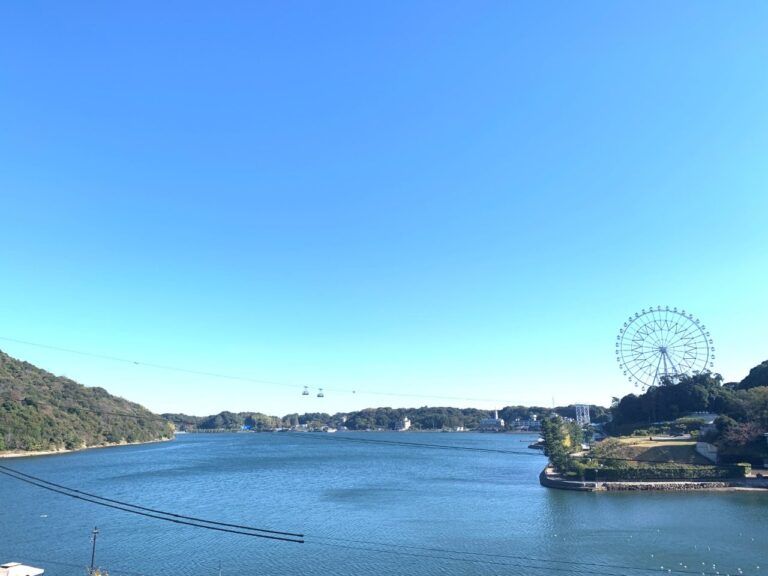
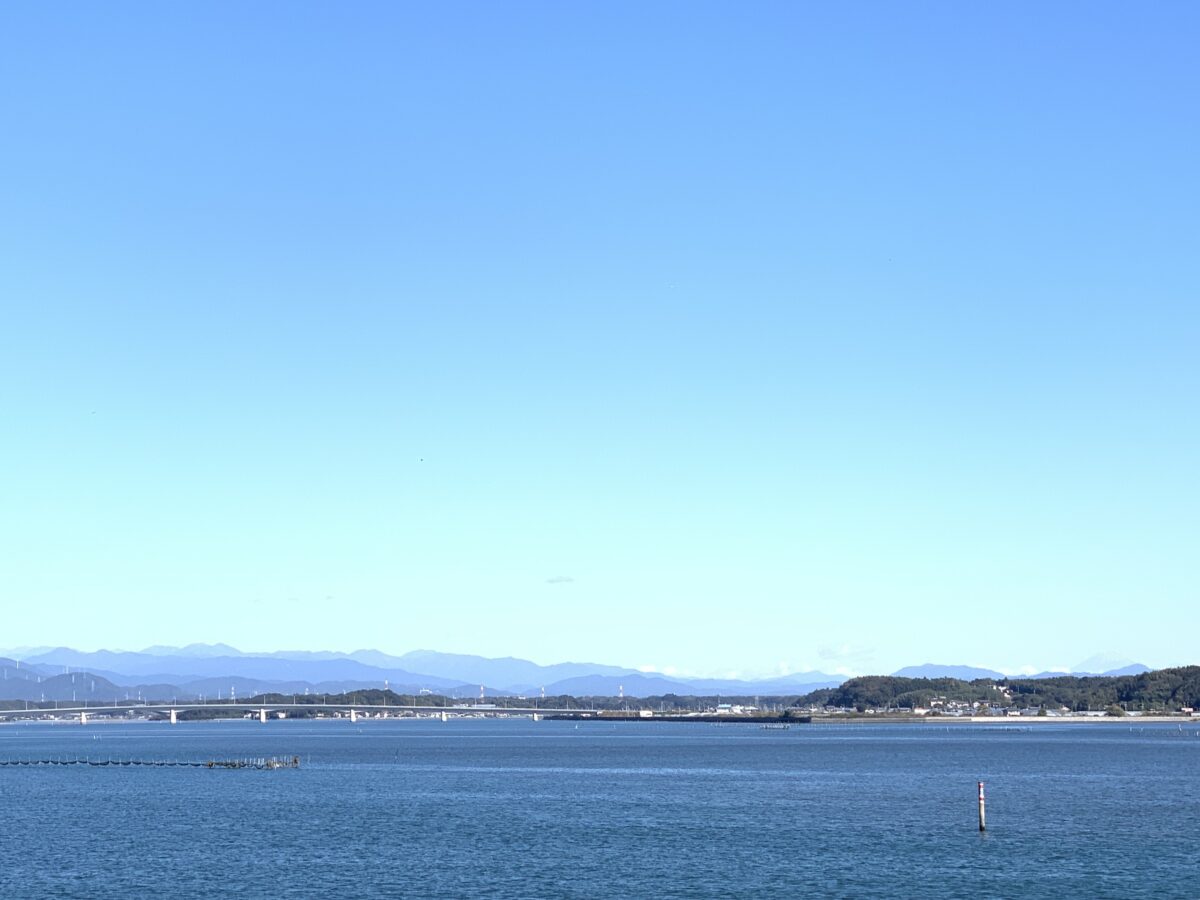
With nothing to obstruct your view, the vast lake, almost like an ocean, spreads out before you. You will feel a sense of freedom.

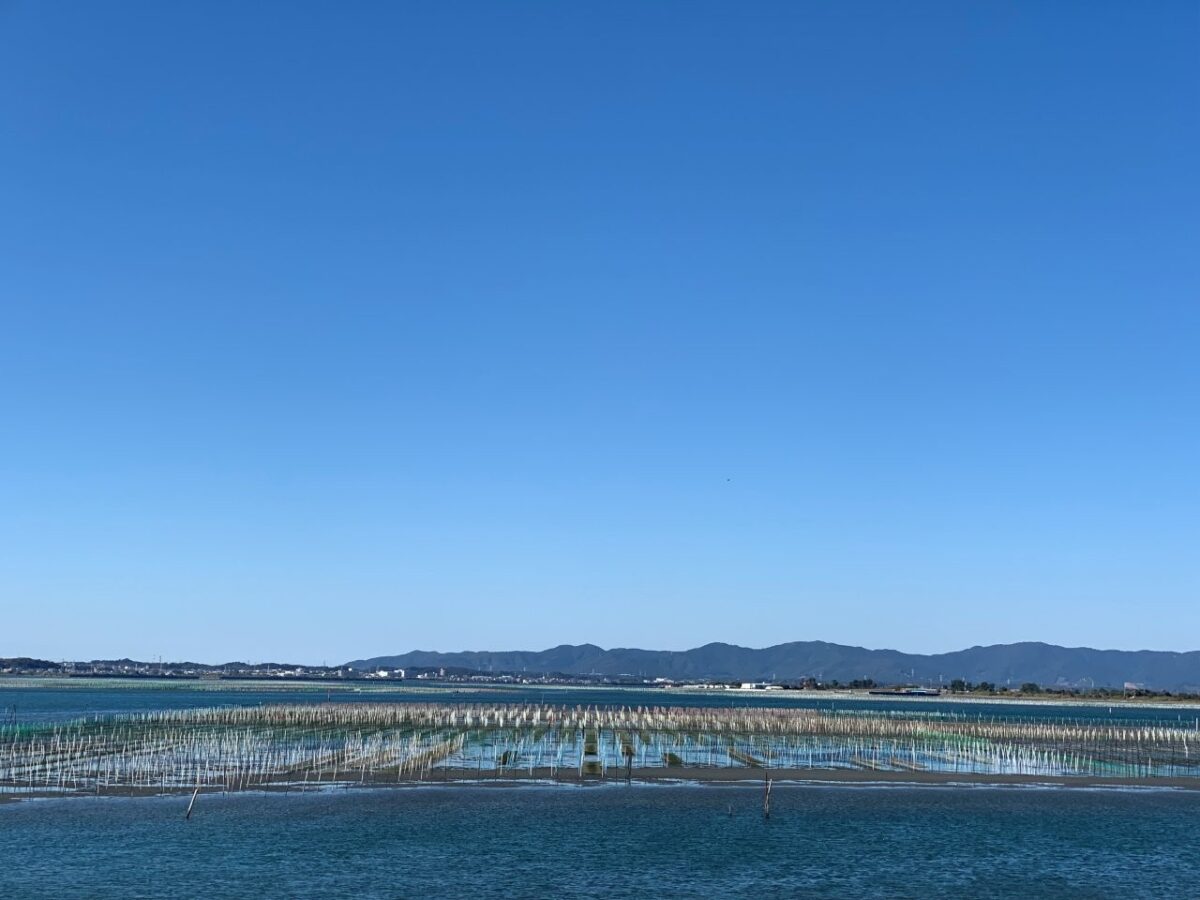
Lake Hamana in winter: Seaweed farming
Beautiful mountain ridges. On clear days, you can see Mt. Fuji.

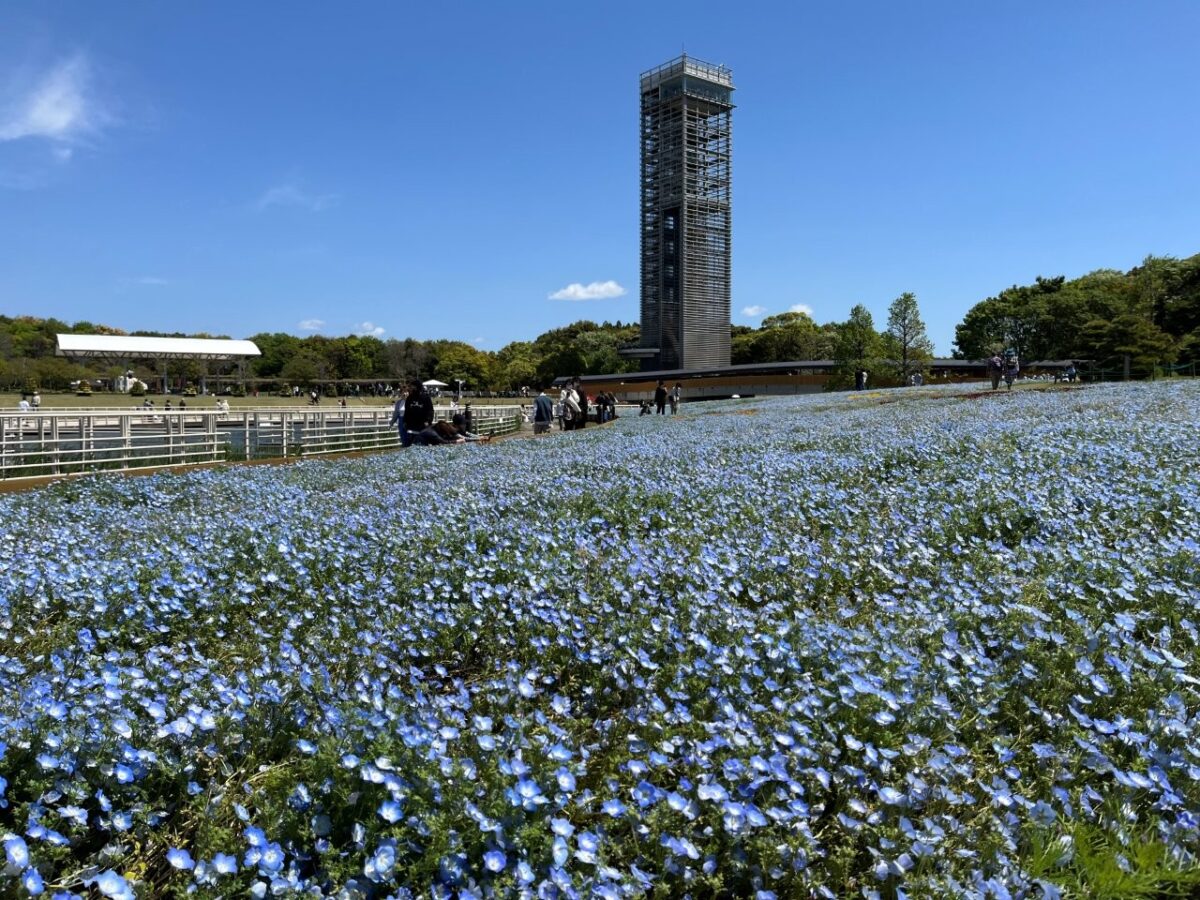
The journey to the Kanzanji Onsen area is approximately 12 kilometers one way. It takes about one hour on a bicycle. The road is flat, so you won’t get tired. Along the way, you can also stop by Hamanako Garden Park, where seasonal flowers in bloom will delight you.

Around April, the entire area is covered in a carpet of nemophila flowers!

Enjoy a comfortable ride on a dedicated bike path

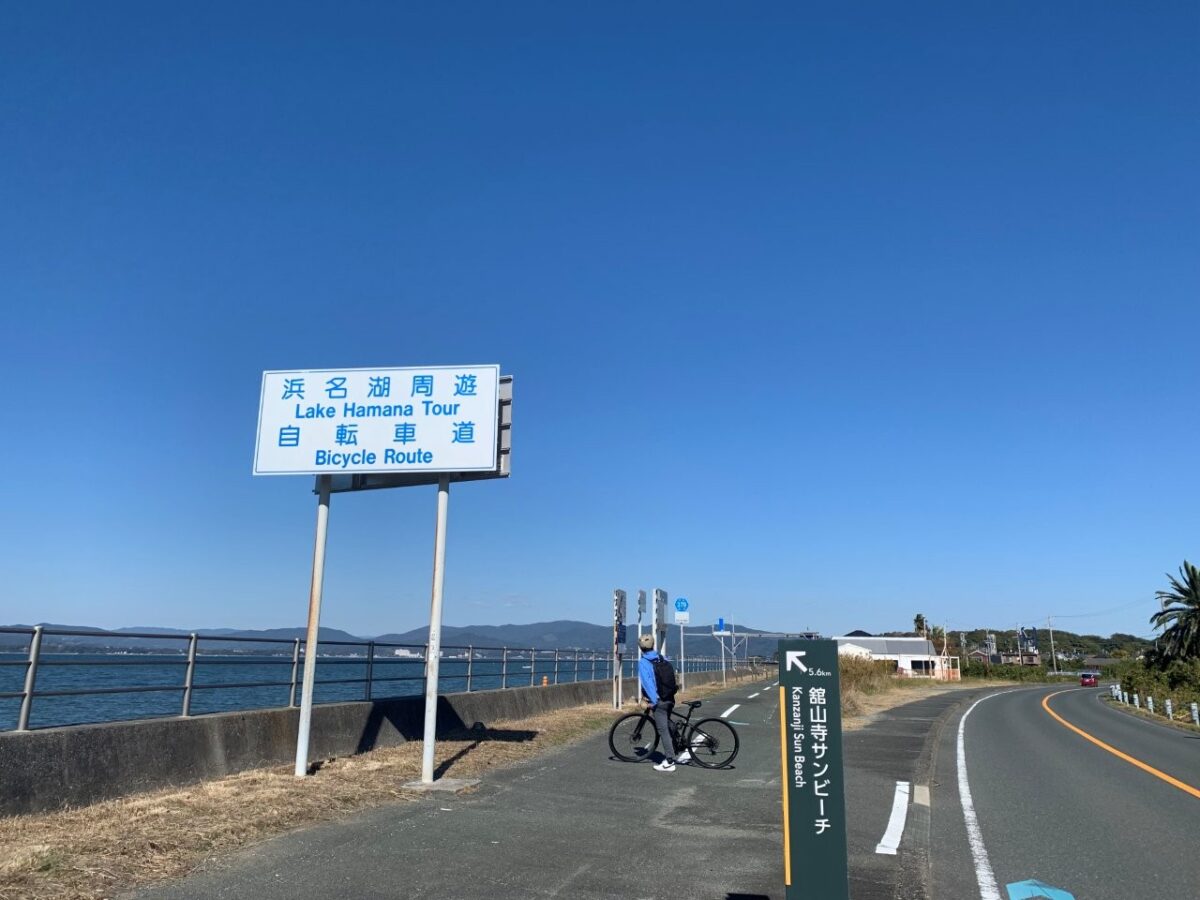
After passing Hamanako Ohashi Bridge, you’ll enter the Lake Hamana Cycling Route.
From here, most of the way to the Kanzanji Onsen area is a cycling designated road, so you can ride safely.

Take the bicycle route on the left.
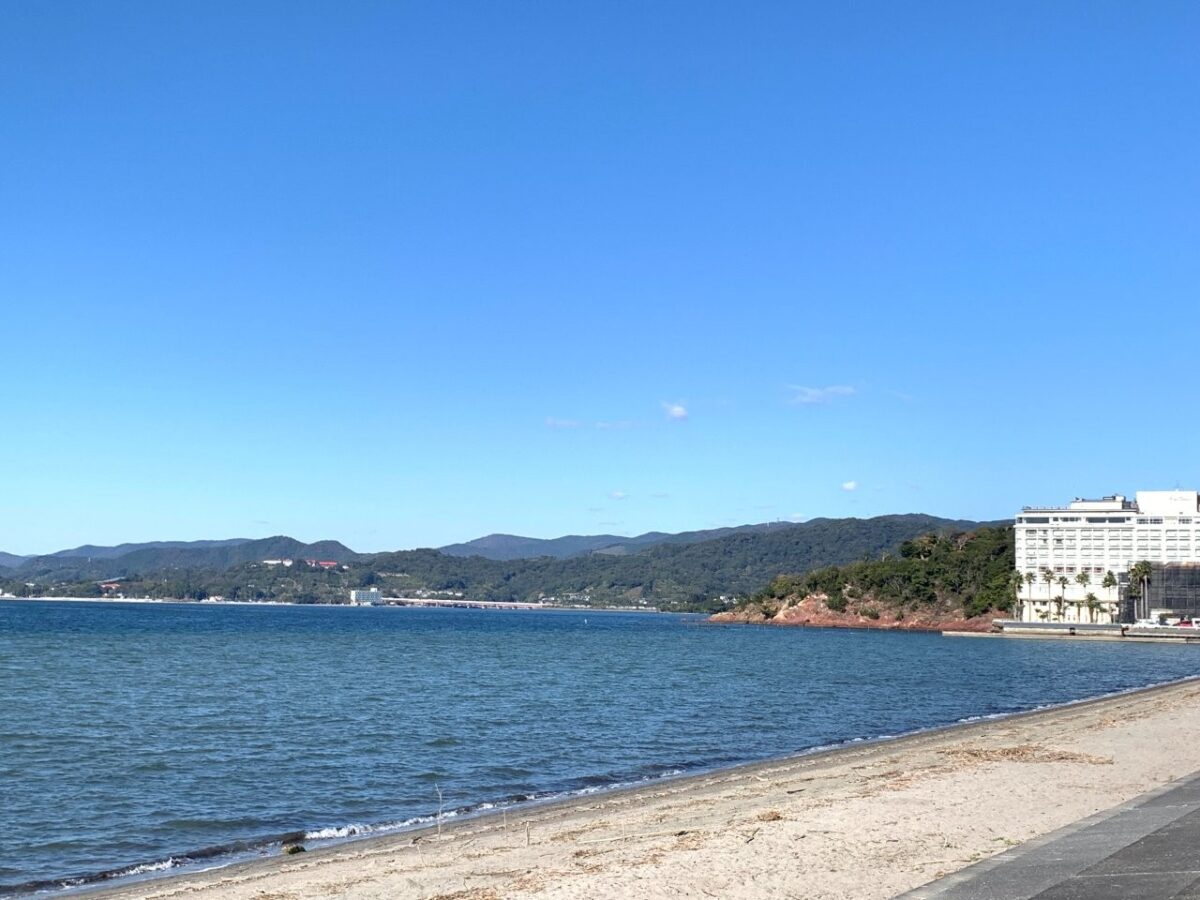
You’ve almost reached Kanzanji Onsen!

Kanzanji Onsen

The idyllic Kanzanji Onsen hot spring district

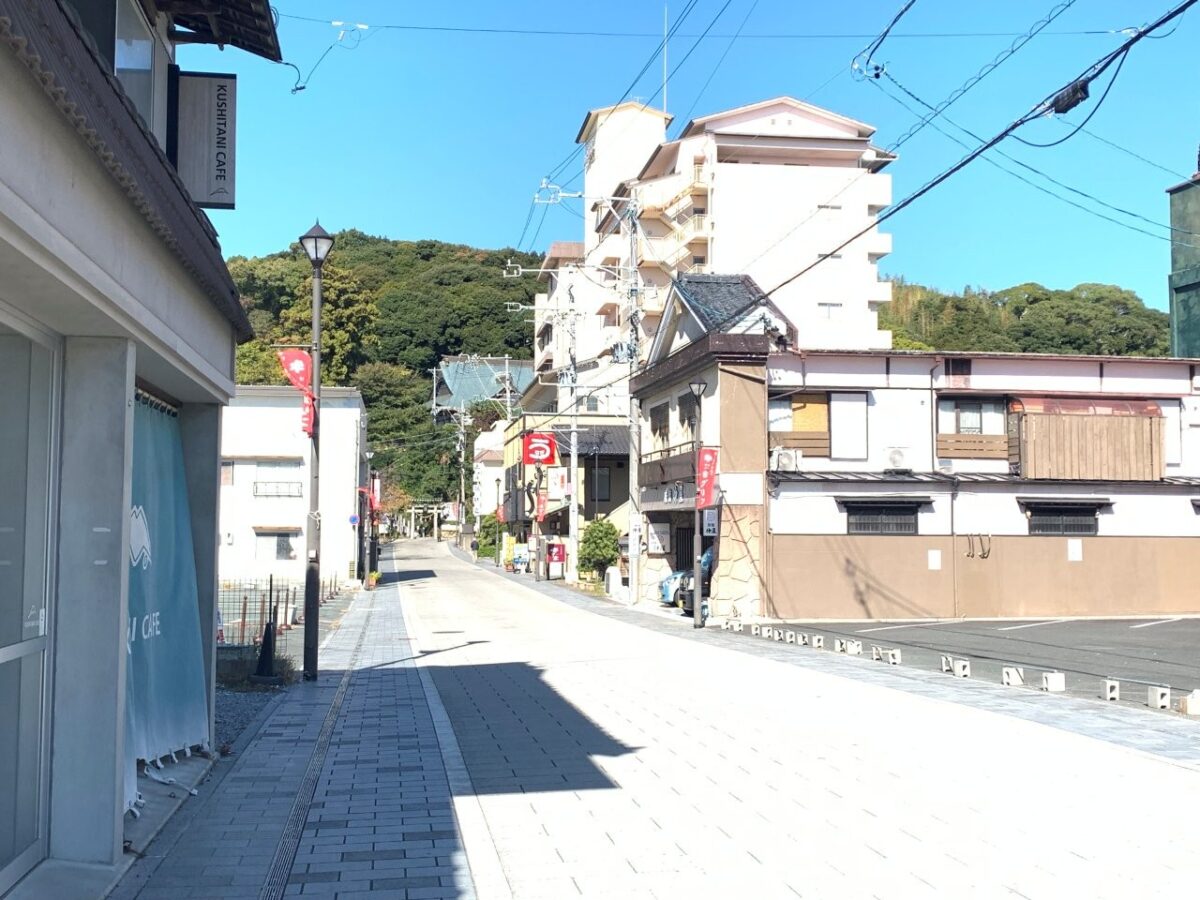
We’ve arrived at Kanzanji Onsen.
Kanzanji Onsen is a naturally rich hot spring resort on the northern shore of Lake Hamana. This hot spring boasts one of the highest salinity concentrations in Japan, and its waters are known for their ability to warm the body from the inside out. What’s more, its exceptional lakeside location offers the luxury of soaking in the hot spring while watching the sunset.

We head straight to lunch to rest our bodies, nicely tired from cycling, and fill our stomachs.
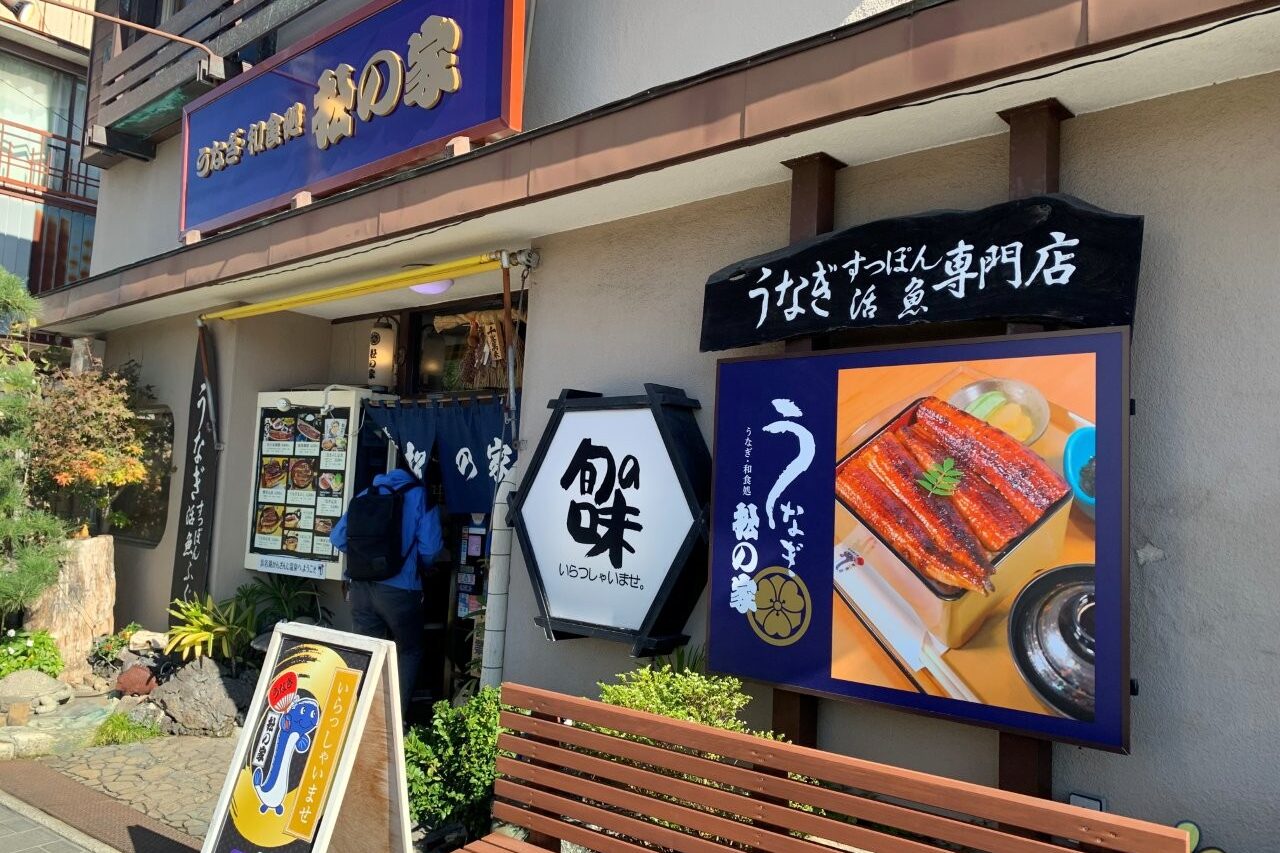
Lake Hamana is famous for its eel, of course. Kanzanji Onsen hot spring town is also home to a number of eel restaurants. This time, we visited Matsunoya.

Matsunoya’s homey atmosphere is also a draw.
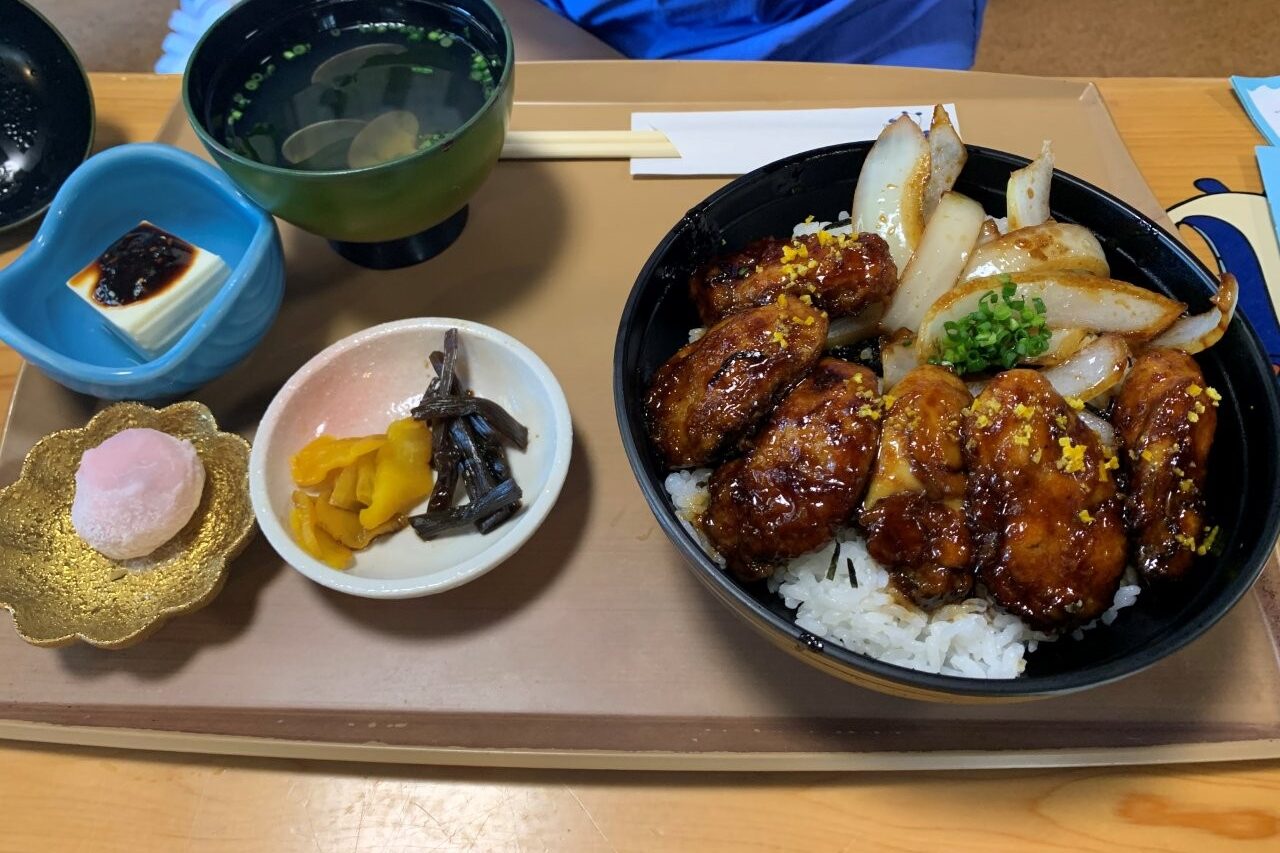
Winter-only Kaki Kaba Don (Oyster Kabayaki Rice Bowl)

There are so many delicious looking options it’s hard to choose one… I thought about getting the Unaju (Grilled Eel Rice Bowl) as I flipped through the menu, but then my eyes caught sight of the Kaki Kaba Don (Oyster Kabayaki Rice Bowl). Lake Hamana also has a thriving oyster farming industry, and this local delicacy is only available in winter (November to March). Large oysters from the lake are grilled until plump and served with kabayaki sauce, the same sauce used for broiled eel. Since I had come so far to be there, I decided to get the Kaki Kaba Don.
The plump texture of the oysters and the sweet and salty flavor of the kabayaki sauce are irresistible. They also offer a half-and-half oyster-and-eel rice bowl. I recommend this option for those of you who want to try both.
*It can get busy around lunchtime, so it is a good idea to call ahead and make a reservation.

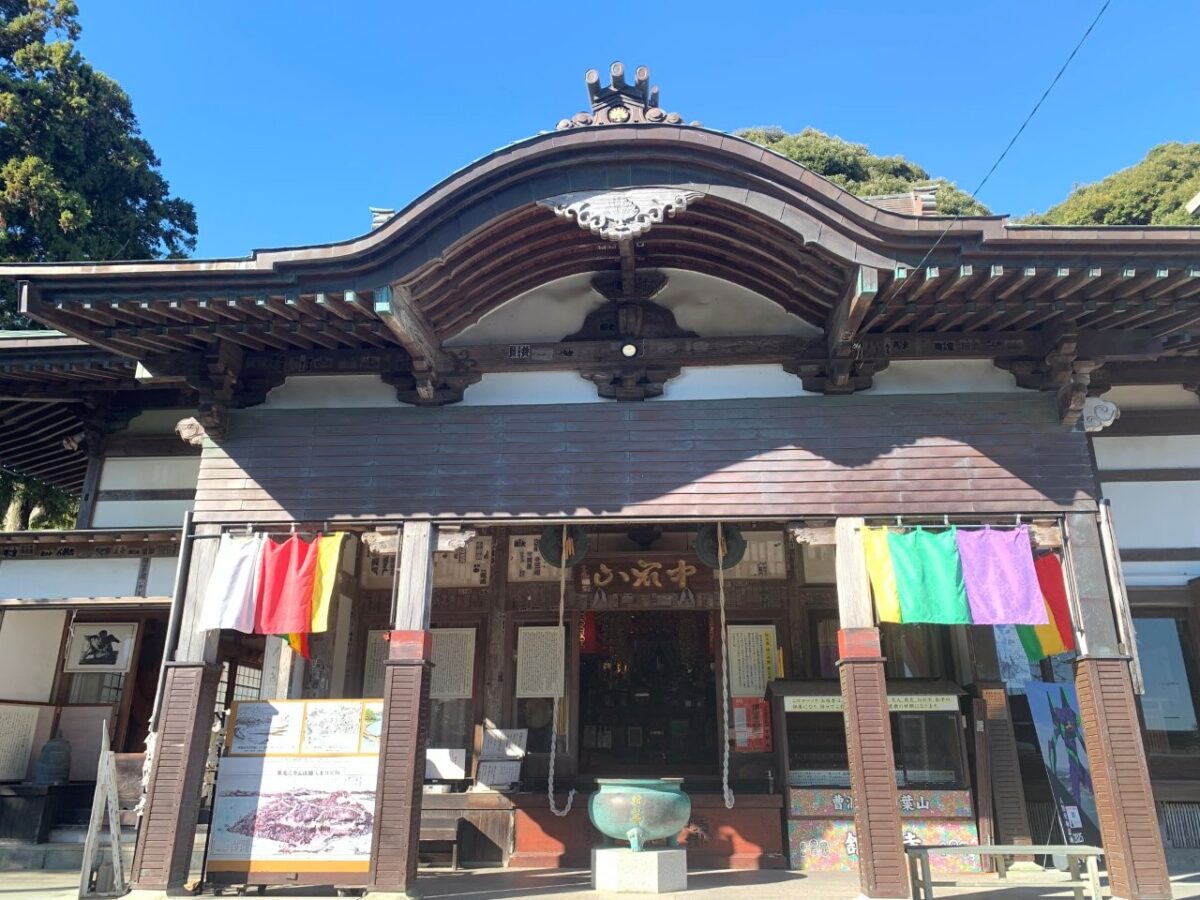
After lunch, we visited Kanzanji Temple, the ancient temple that gives the hot spring town its name. It’s said to grant various blessings, including matchmaking, healing eye ailments, and wish fulfillment. It is located in a beautiful spot with a view overlooking Lake Hamana, and the refreshing air helps you forget the hustle and bustle of everyday life.

Kanzanji Temple, an ancient temple with over 1,200 years of history.
Lake Hamana from Kanzanji Temple.

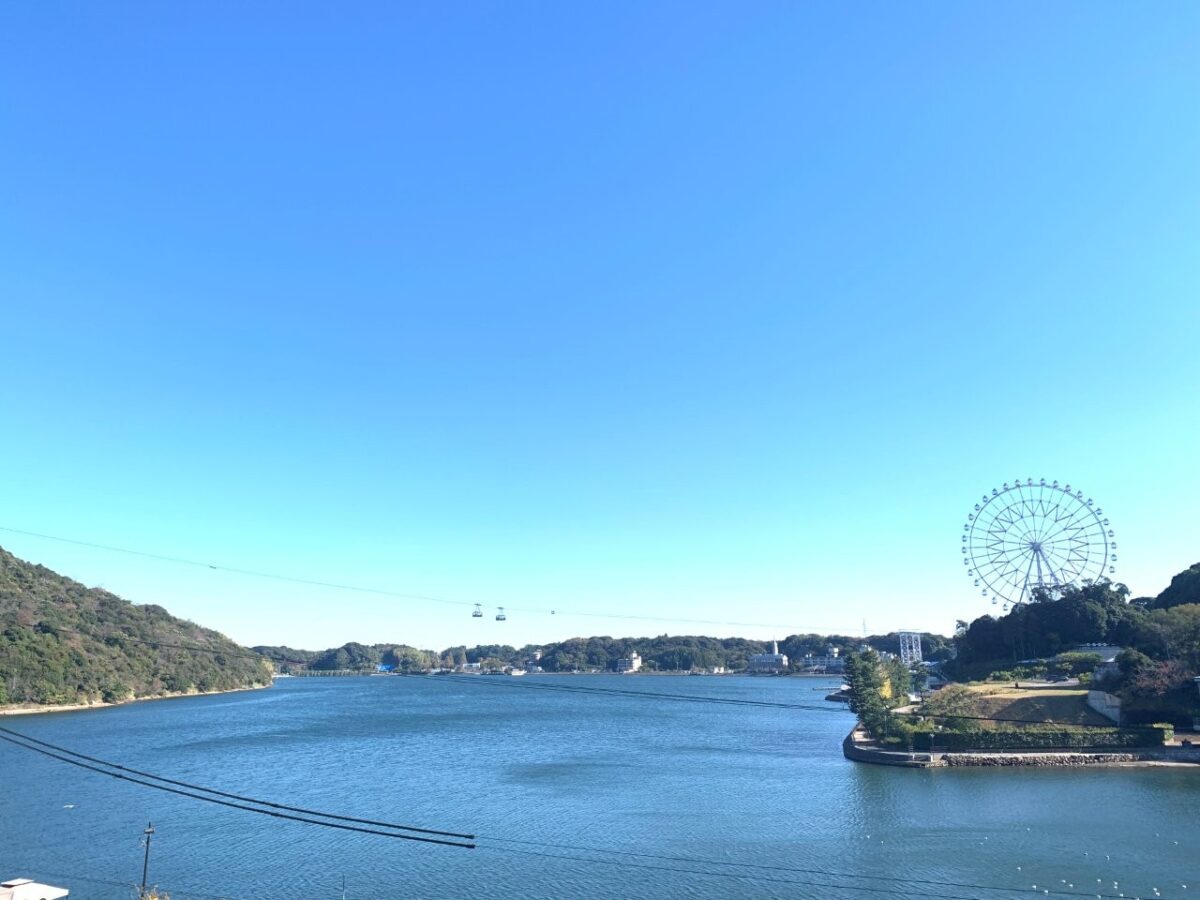
The Kanzanji Onsen area has many other attractions, including Japan’s only ropeway running over a lake and Hamamatsu Flower Park.
Bicycles can be rented for more than one day, so if you would like to take advantage of the opportunity to see various sights, relax in a hot spring at a ryokan (inn), and enjoy cuisine made with local ingredients, we recommend that you stay overnight at a nearby hot spring ryokan and enjoying a relaxing stay.
Rental bicycles can also be returned at the Kanzanji Tourist Association (returns only; no rentals available).
There is a bus that runs from Kanzanji Onsen to Hamamatsu Station, so you can enjoy a leisurely bus ride back.
We cycled to Bentenjima Station for our return trip as well.
*Please note that there may be headwinds on the Hamanako Ohashi Bridge on the way back. Give yourself plenty of time and ride at your own pace without cycling too hard.
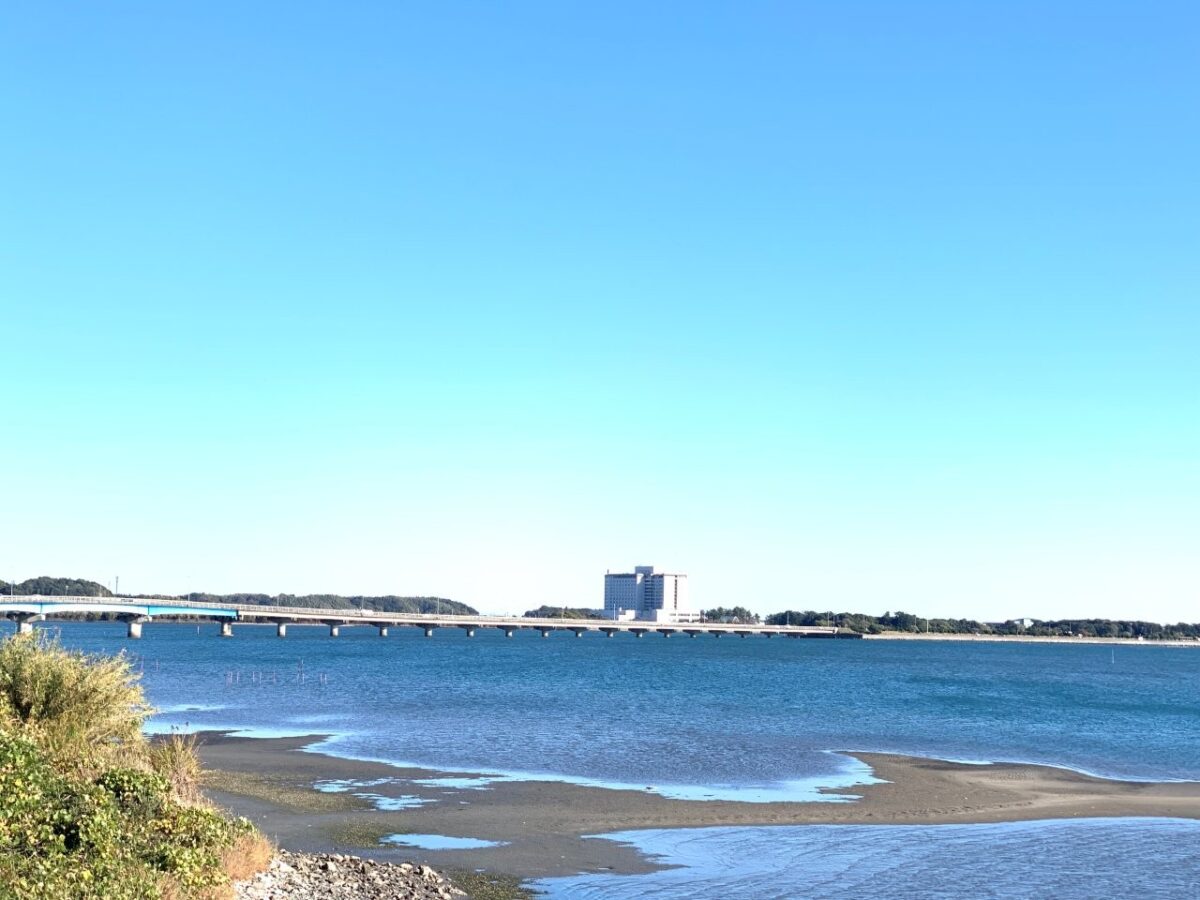
The Hamanako Ohashi Bridge we crossed earlier came into view. Once you cross this bridge, you’ll be near the finish line.

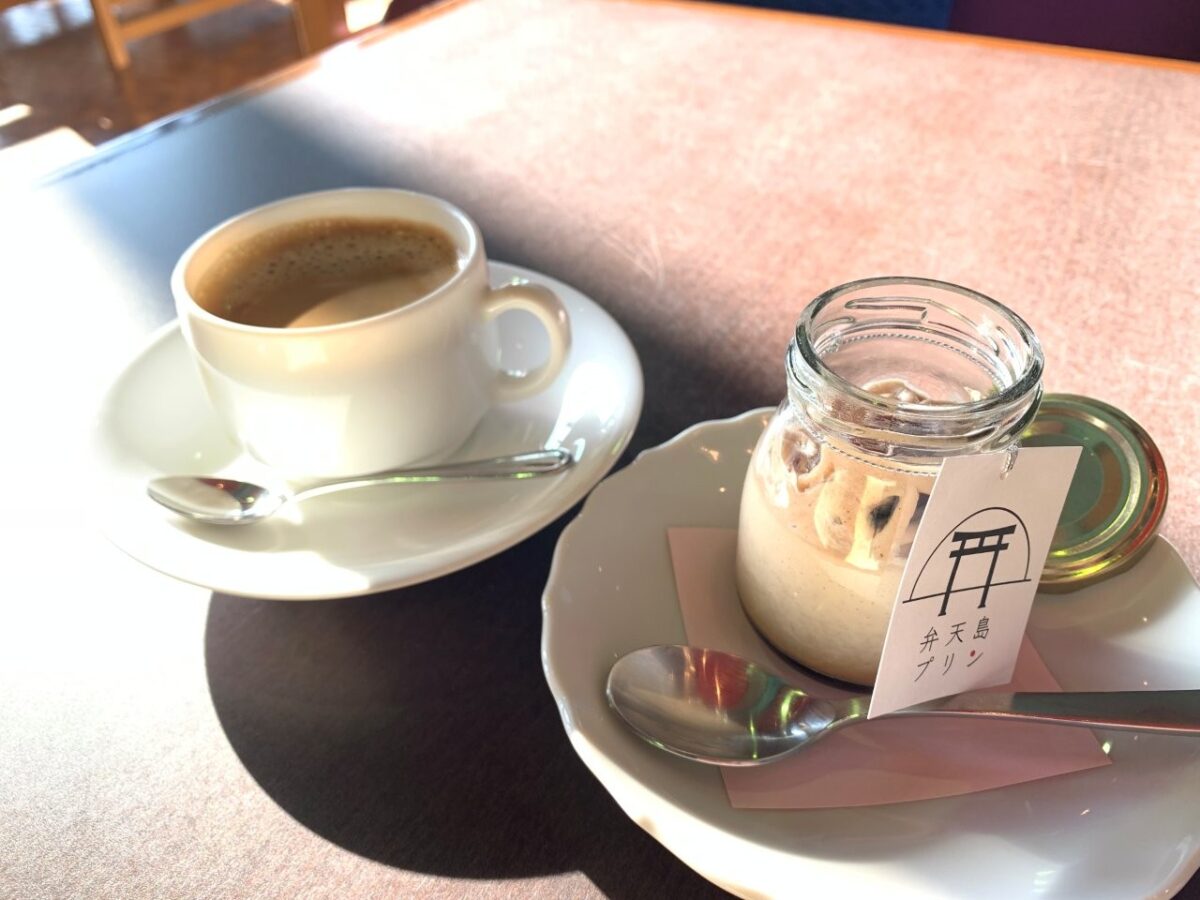
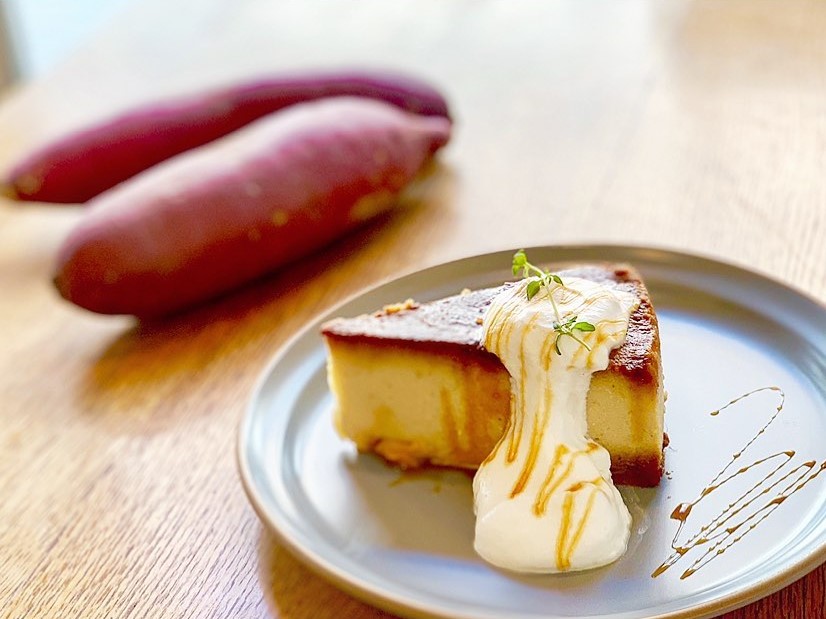
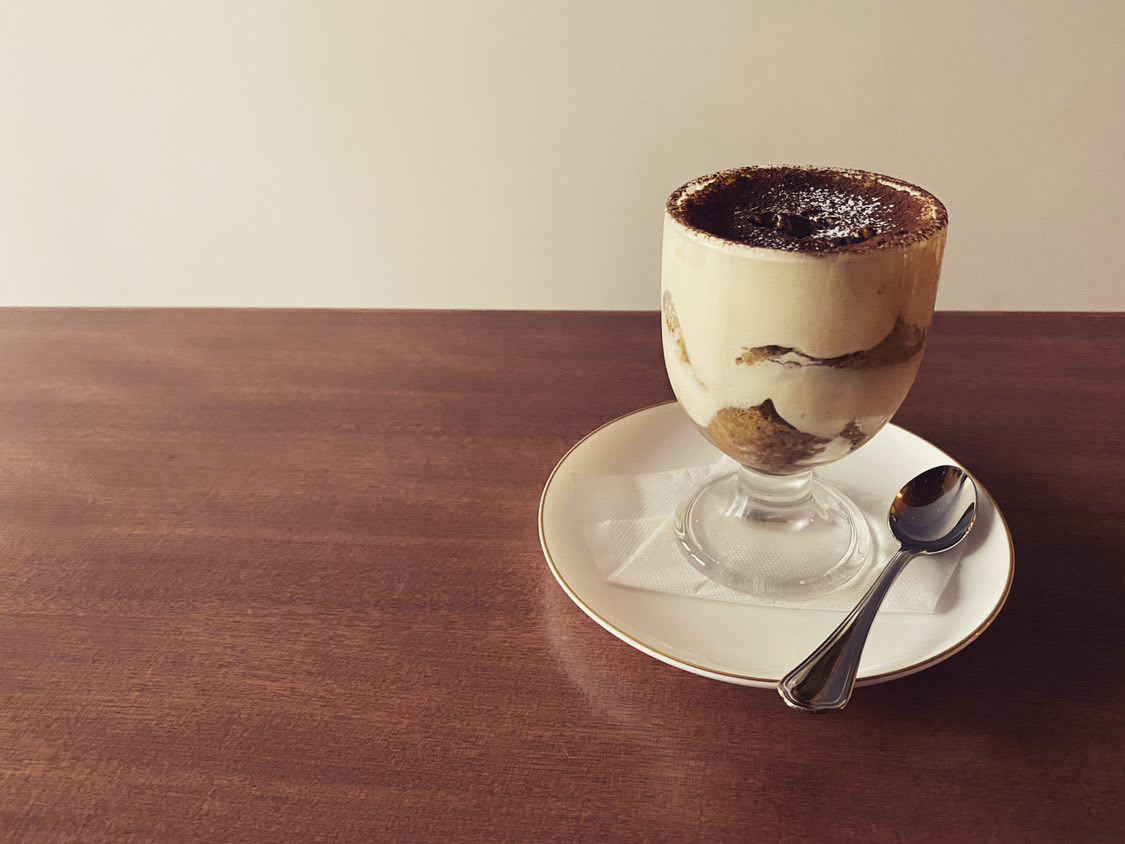
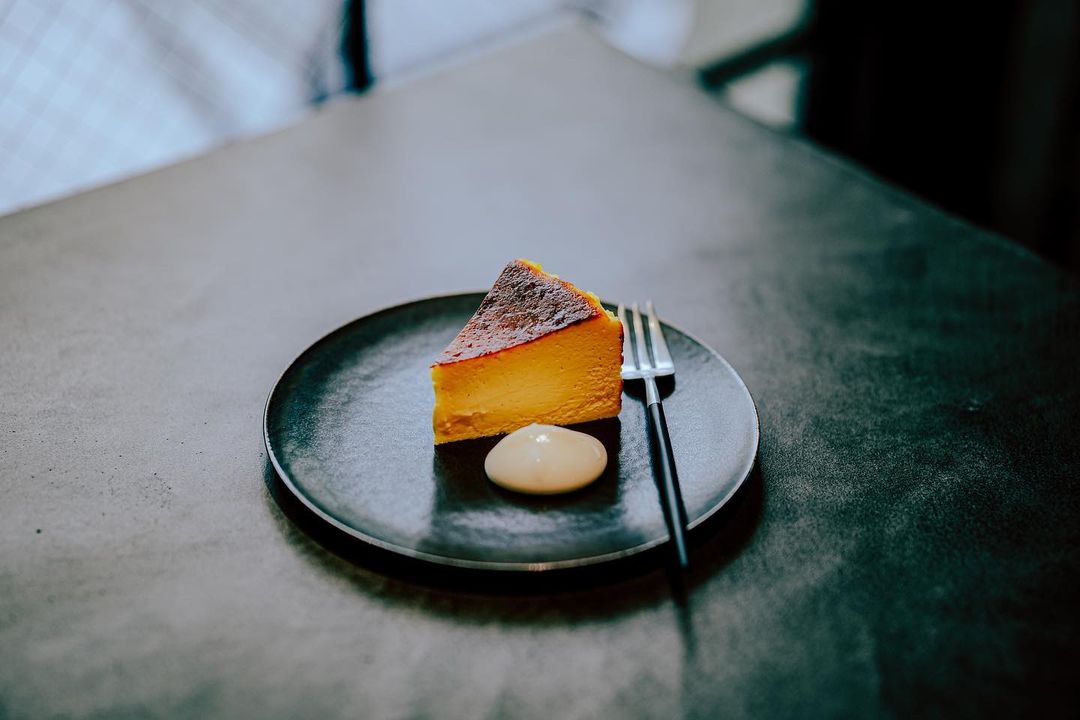
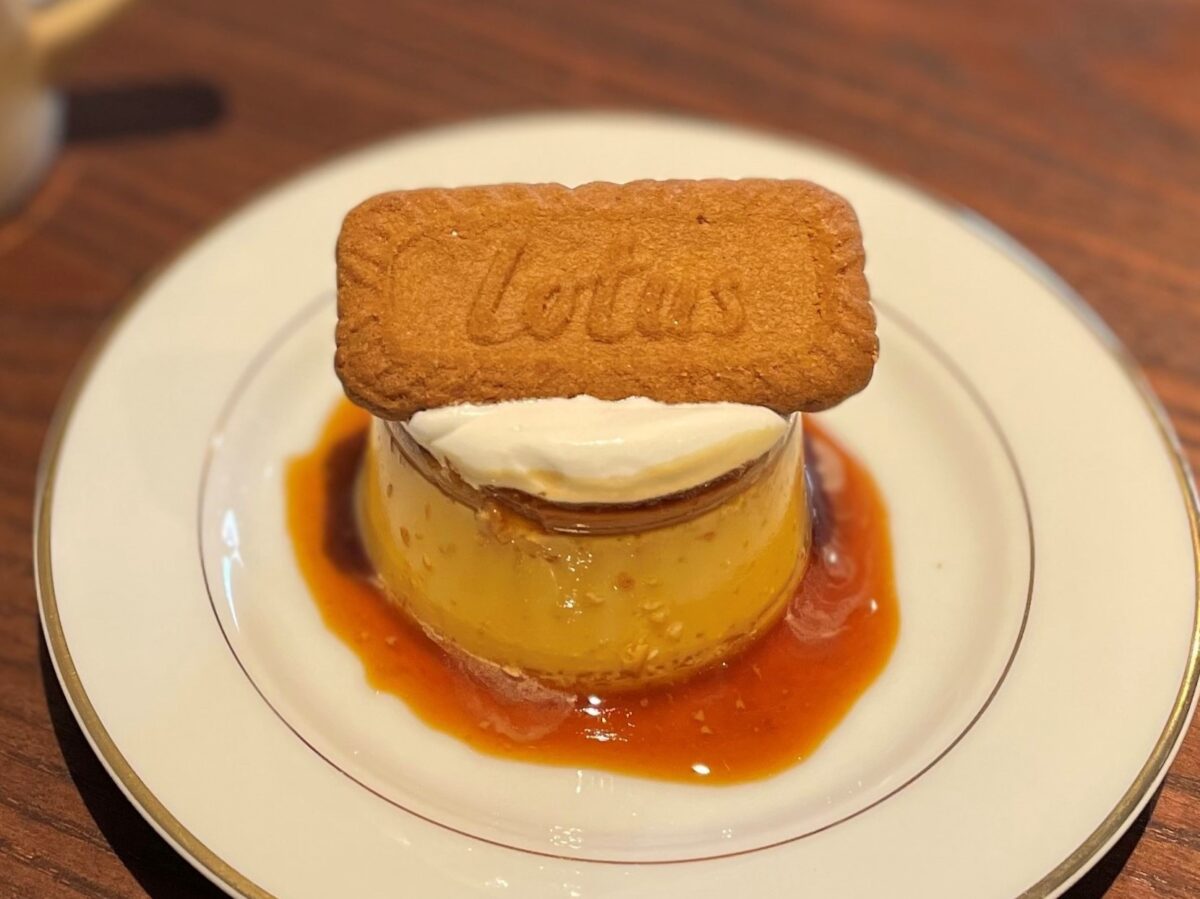
After returning my bicycle at Bentenjima Cycle Gate, I used my last coupon to enjoy Bentenjima Pudding at the cafe lounge of Hamanako Bentenjima Resort THE OCEAN, a hotel near Bentenjima Station.

In Closing

The roads around Lake Hamana are very easy to ride on, and you can customize your route to fit your stamina and fitness level – whether you travel one way, round trip, or go around the entire lake – so anyone can enjoy it. It is not yet a well-known cycling spot, there were almost no other cyclists or pedestrians, making for a very pleasant experience.
There are many types of bicycles available you can rent, and even those who aren’t confident in their stamina or strength can easily ride an electrically assisted hybrid bike. This is the type I rode, and it was comfortable enough to continue riding uphill and over long distances.
I also recommend the Hamaichi Course, which circles Lake Hamana. Lake Hamana is the 10th largest lake in Japan in terms of area, but due to its complex topography, the circumference of the lake is the third largest in the country. First, try a cycling course like the one I rode this time, and if you feel like cycling a longer distance, then you might want to try the Hamaichi Course.

What did you think of this cycling trip around Lake Hamana? Anyone can try it easily, and amazing scenery, gourmet food, and hot springs await you. If you’re interested, make sure to check out the details on this website!

For more details and to make reservations, click here →https://exploreshizuoka.jp/activities/places/cycling-lake-hamana/

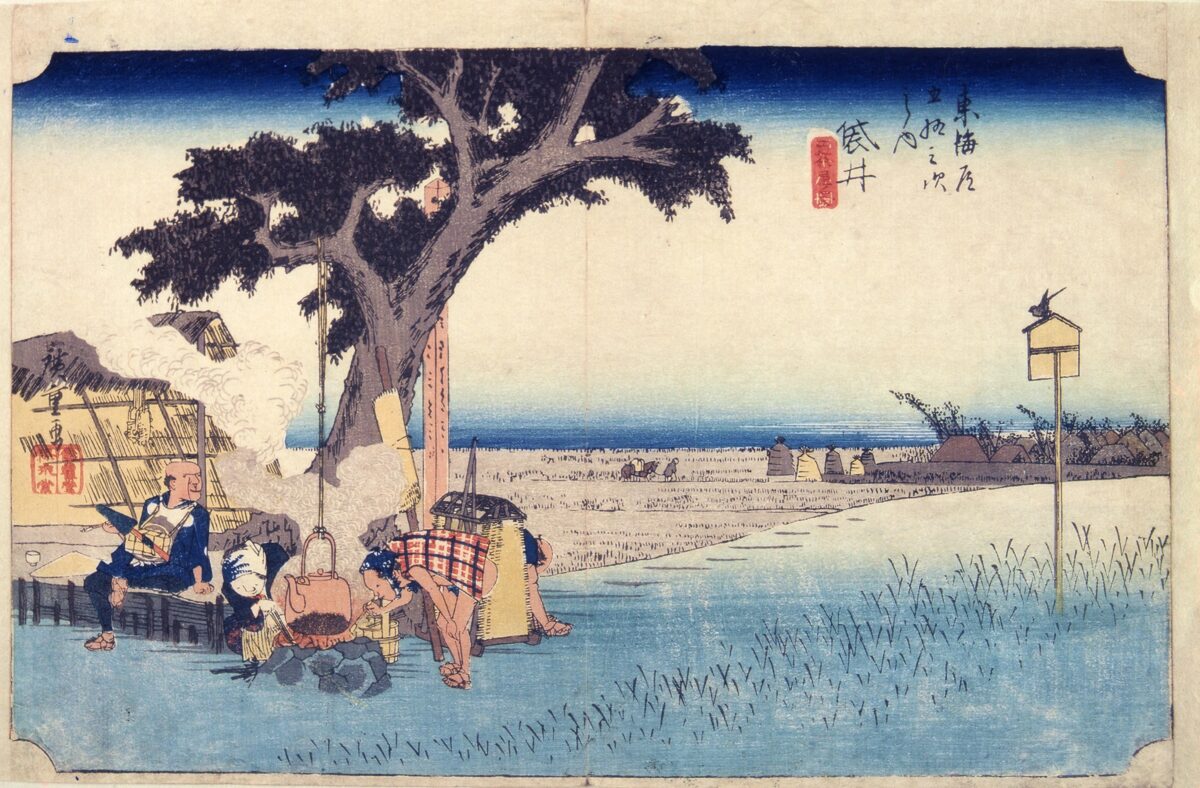
Fukuroi – Half way along Japan’s most important traveling route, the Old Tokaido Highway

0

Famous as the exact mid-point of the Old Tokaido Highway, the quaint town of Fukuroi has a long history of looking after weary travelers.

FOLLOW IN THE FOOTSTEPS OF TOKAIDO TRAVELERS

The town of Fukuroi was placed on the global stage when it became a host city for the 2019 Rugby World Cup – Ecopa Stadium hosting perhaps the most exciting game of the tournament between Japan and Ireland.

Fukuroi is easily accessible, located between the JR Tokaido Bullet train line stations of Kakegawa and Hamamatsu.

The city is known as the “Domanaka” (exact middle) of the Old Tokaido Highway on the journey between Kyoto and Tokyo, being the 27th post town from the both ends.

Fukuroi is the 27th post town on the Old Tokaido Highway.

400 years ago, it was the point at which weary travelers knew that the first half of their journey was complete. Today, a small teahouse is located in the famous ‘Halfway Point’ and you can stop for a cup of Shizuoka Green Tea.

LOCAL FOOD TO ENJOY IN FUKUROI

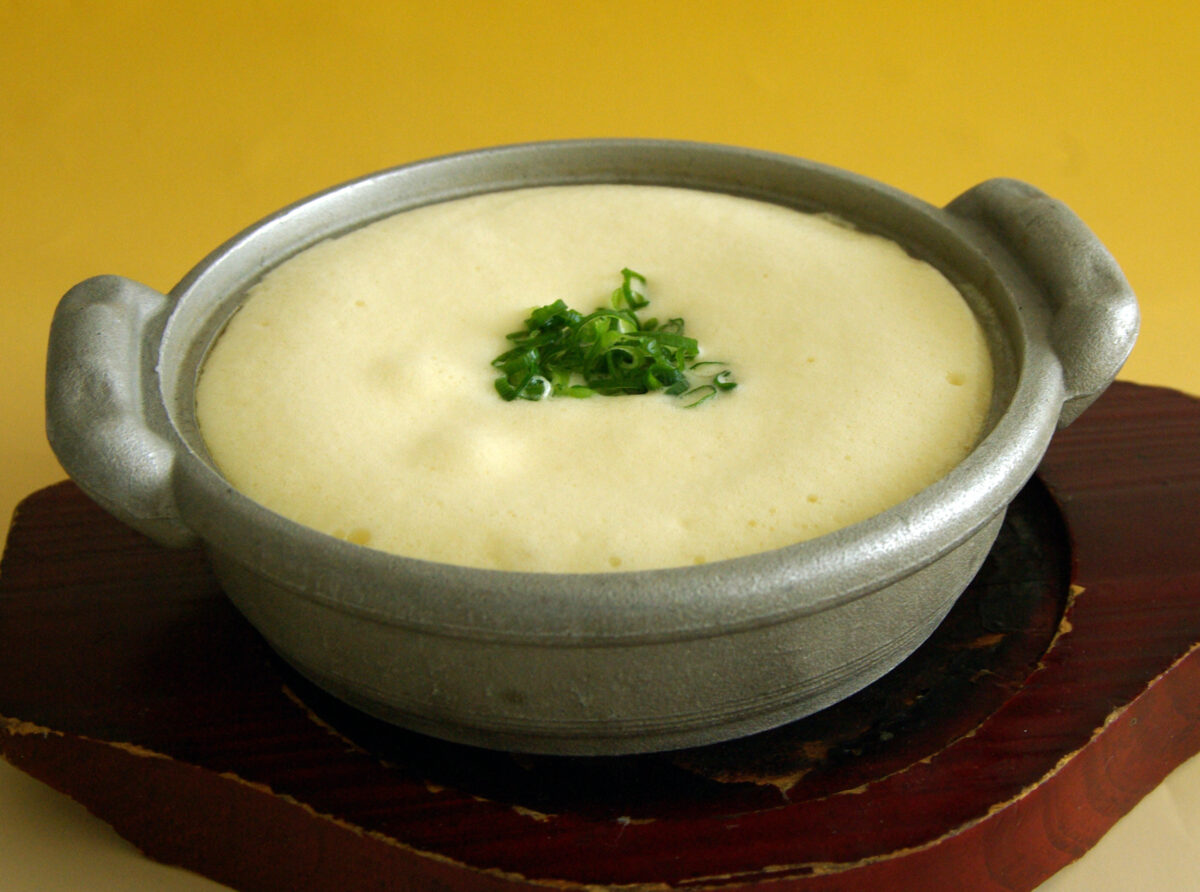
Hailing from the Edo era and perhaps for the simplicity of produce needed, is Fukuroi’s famous local dish of ‘Tamago Fuwafuwa,’ essentially eggs and soup stock whipped into a fluffy (hence the name fuwafuwa) texture full of flavor.

It is said that it was a dish enjoyed by lords, samurai, and wealthy merchants of the Tokugawa Shogunate.

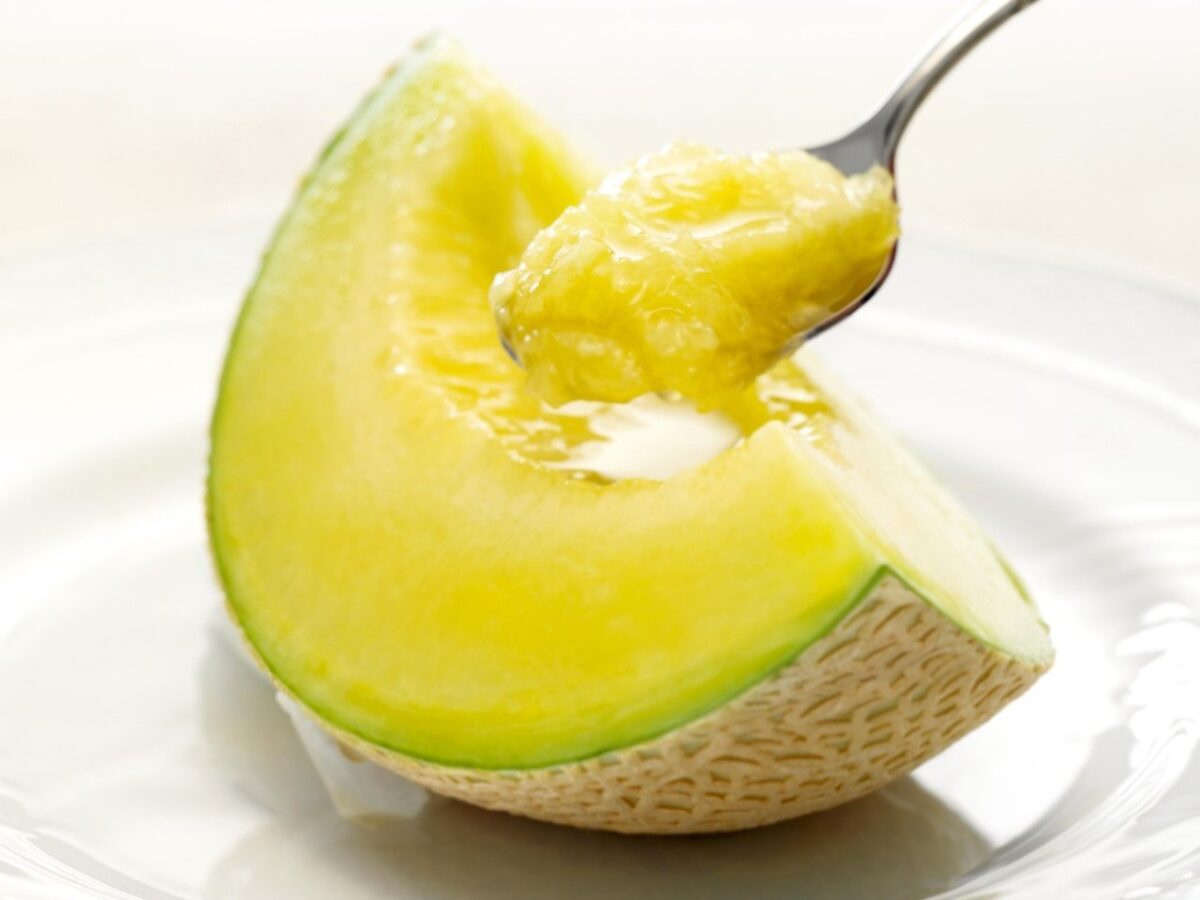
The Fukuroi Crown Melons are recognized as some of the best in the World (some melons can sell for as much as $100USD) – you can visit the farm where they are grown and indulge in this luxury fruit.

[blogcard url=”https://exploreshizuoka.jp/activities/places/indulge-in-japans-premier-crown-melon/”]

From April through to the middle of October, you can experience picking Shizuoka Green Tea in the fields and participate in a local tea ceremony.

FUKUROI TEMPLES – ENSHU SANZAN

Fukuroi is also known as a temple town. Three of the most well-known are called the Enshu Sanzan and include Hattasan Soneiji, Yusanji, and Kasuisai Temples.

Surrounded by over 700 cherry blossom trees, Hattasan Temple was constructed in 725 and is renowned for being an important site for good luck as it’s dedicated to Shokannon Bosatsu, the Goddess of Mercy.

Kasuisai Temple which was founded in 1401, was named by the Japan’s most famous Shogun, Ieyasu Tokugawa. The temple offers Zen experiences for visitors including zazen mediation and shakyo (transcribing a sutra) as well as Shojin Ryori (Buddhist vegetarian meal).

Nearby Yusanji Temple is known as a temple for eye health since the 8th century. Many of the buildings in the temple ground are registered as national and prefectural cultural heritage properties. Takigyo, the traditioanl waterfall meditaiton is practiced here and available for visitors.

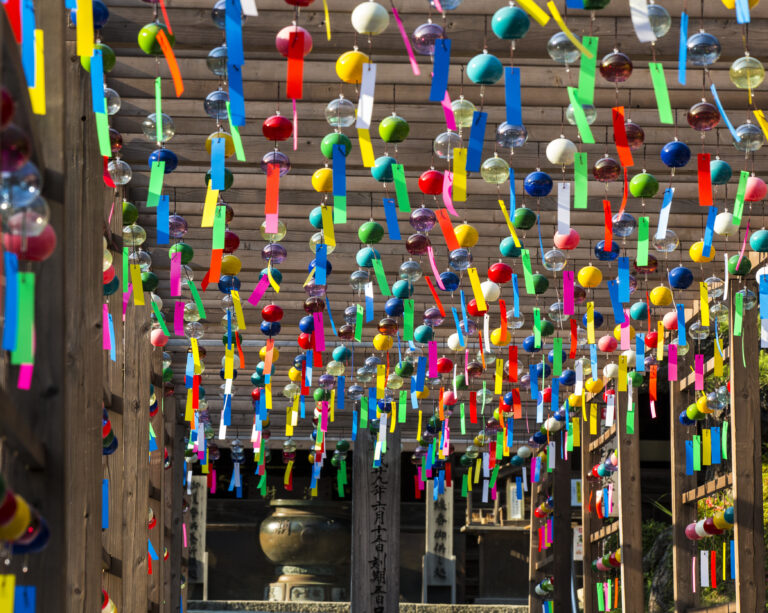
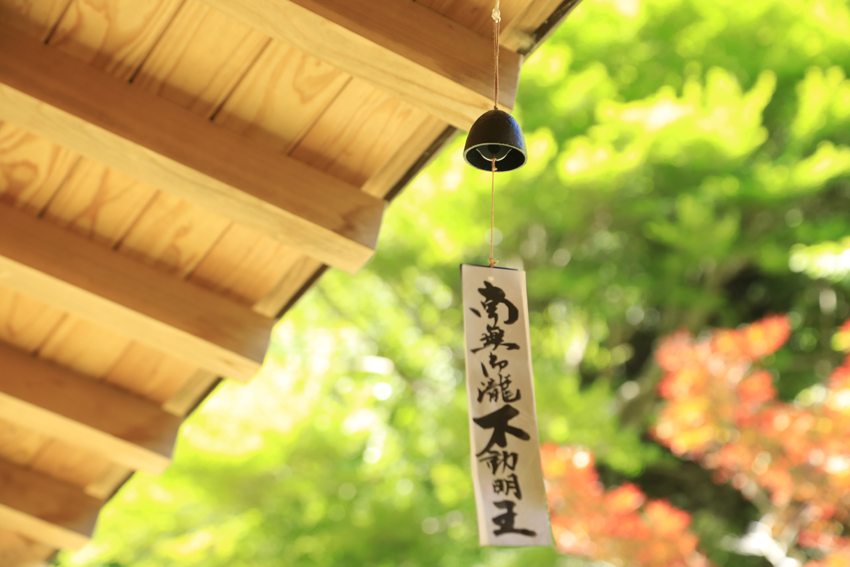
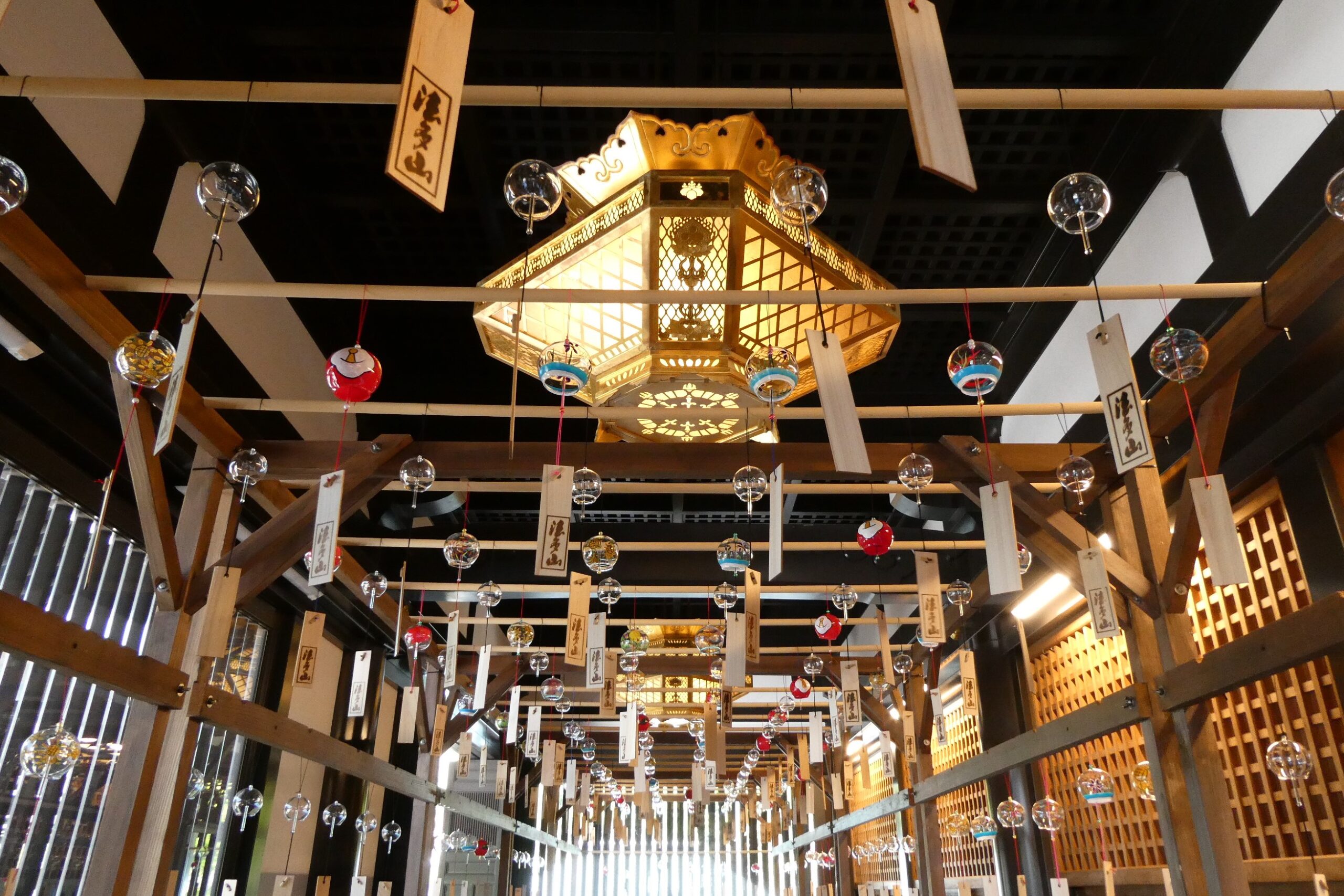
Various festivals are held throughout the year at all three temples – including the Summer Wind Bell Festival.

Hattasan Soneiji Temple
Wind Bell Festival is held at 3 different temples in Fukuroi.

The Ten Thousand Light festival at Hattasan, the Grand Rosary Festival at Yusanji, and the Fire Festival at Kasuisai are just a few of the local celebrations held throughout the year – LEARN MORE.

Hina Doll Festival at Kasuisai Temple.

OTHER EXPERIENCES

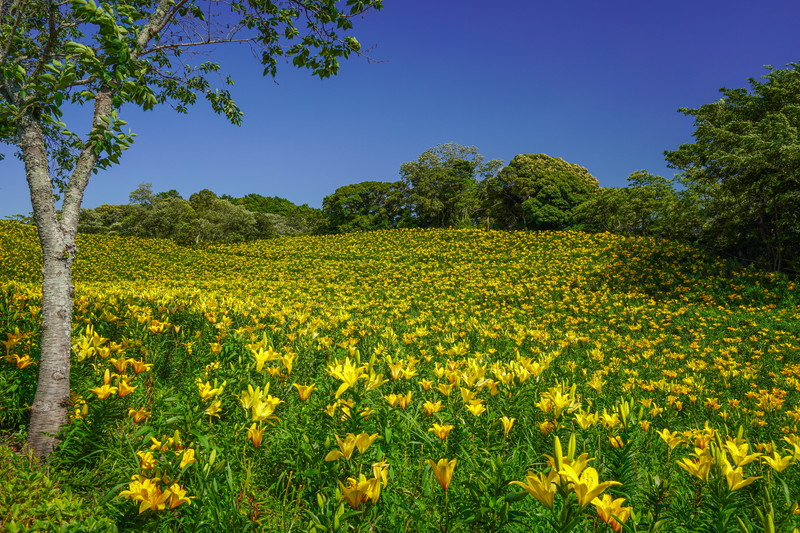
If you’re a bit temple weary, wander North of central Fukuroi City, and enjoy the picturesque gardens of Kasui Yuri no Sono which has over 2 million flowers of over 150 different varieties, the most famous being its lily collection. You can find the lily in bloom from late May to early July.

Visiting in August will allow you to celebrate Obon by watching the Fukuroi Enshu fireworks, one of the 10 largest fireworks celebrations in Japan.

One of the most delightful ways to explore Fukuroi is by cycling. There are many ‘cycle stations’ scattered throughout the city at various popular sites with secure places to leave your bike, and tools available for simple repairs if needed – LEARN MORE.

MORE INFORMATION

Activities in and around Fukuroi

[blogcard url=”https://exploreshizuoka.jp/activities/activities-search/?geodir_search=1&stype=gd_place&s=+&snear=&snearest_station%5B%5D=Kakegawa+Station&sgeo_lat=&sgeo_lon=”]

Fukuroi City Official Website

[blogcard url=”https://www.fukuroi-kankou.jp/english/”]

You can do it too! Try writing real calligraphy in Shizuoka, Japan.

Travel to a foreign country and you may realize how different it is from your home country, in many different ways. The food, the climate, the town… And the most noticeable difference is the language. One wonderful experience you can have in Japan is a calligraphy experience that will help you learn to write Japanese.

Come to Shizuoka and dive into the fascinating world of calligraphy!

Meet the Sensei (teacher)

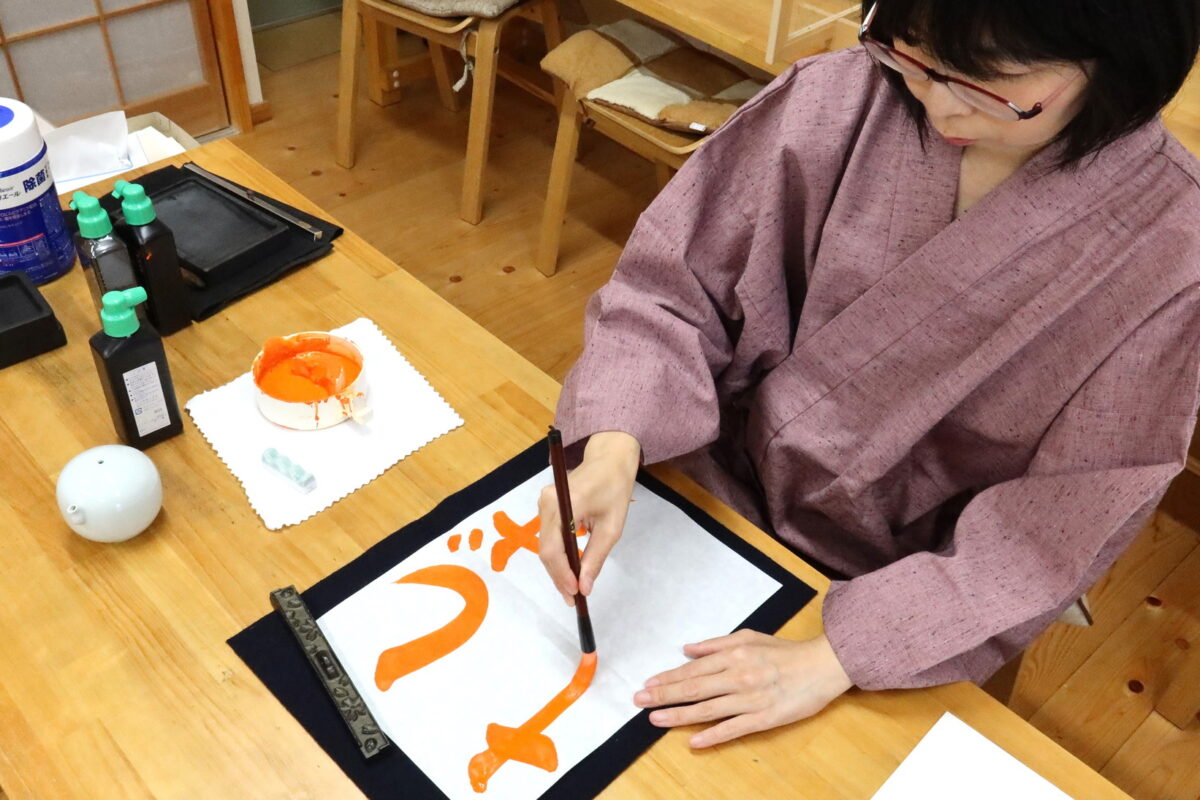
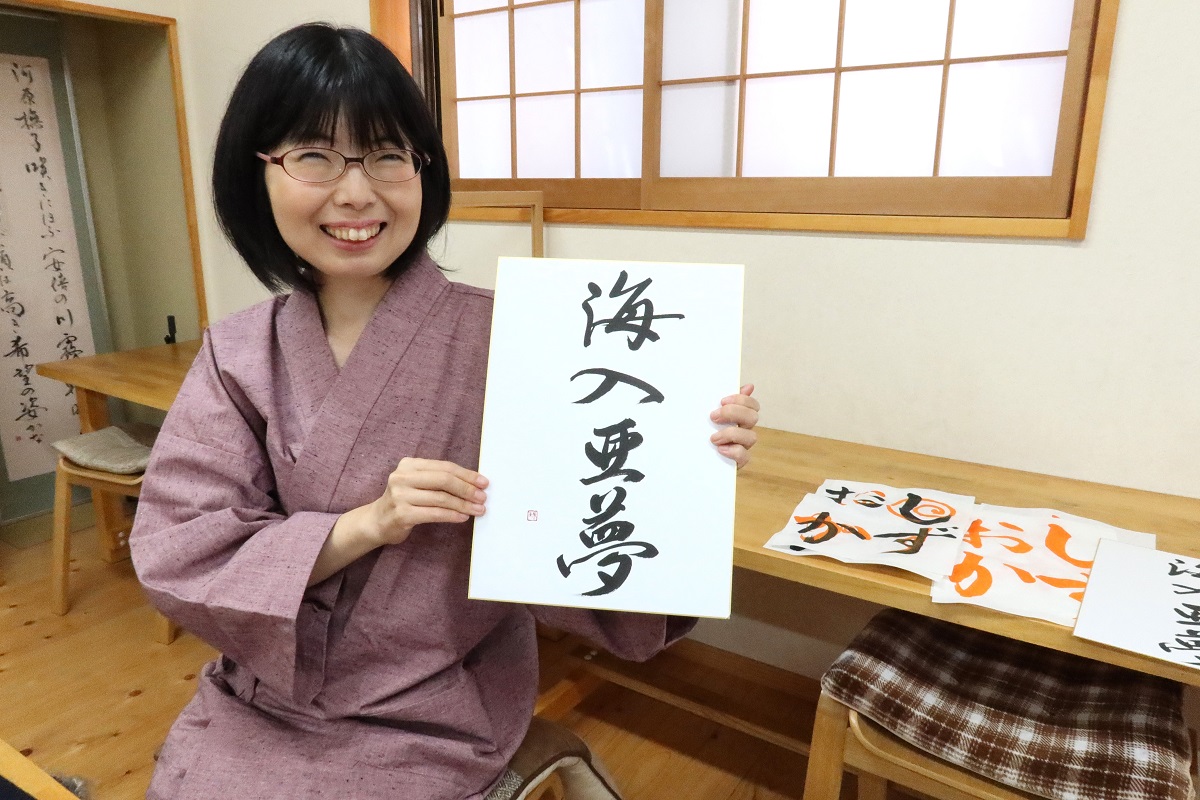
Mizue Koyama is waiting for you at the “Sho no heya (Calligraphy Room),” which doubles as a calligraphy classroom and atelier.
“Relax and have fun!”
Koyama Sensei started calligraphy in the first grade of elementary school. Since she was a child, she has loved writing, and she was eager to learn calligraphy, for which she has won numerous awards. Since opening her own Sho no heya (Calligraphy Room) in 2011, she has worked as a high school calligraphy teacher, given calligraphy performances at events, and created logo designs. She continues to spread the charm of calligraphy today.

Discover fascinating Japanese characters

Koyama Sensei uses a brush to write the word “Shizuoka” in Japanese.
She writes while adjusting the force applied to the brush.

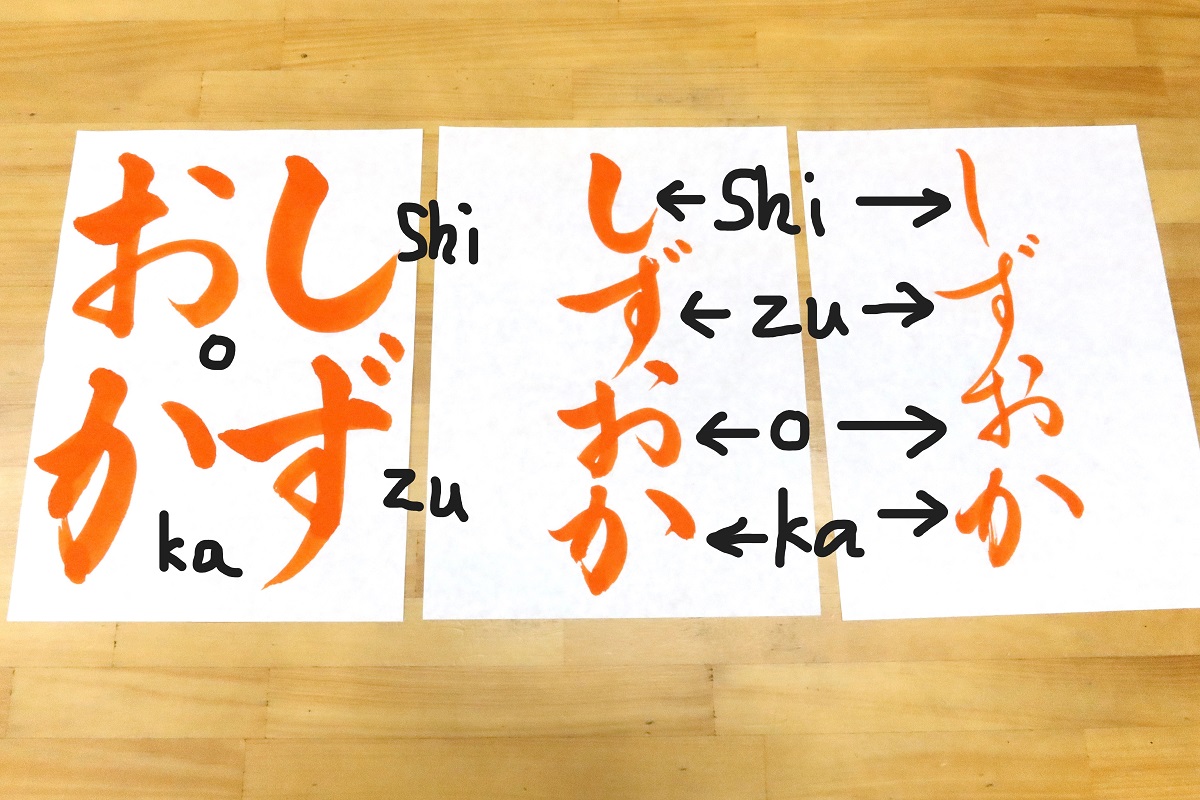
Each one looks different, but they are all pronounced Shizuoka.
In the picture on top, Shizuoka is written in kanji (Chinese logosyllabic characters), with the first character pronounced “shizu” and the second character pronounced “oka.” Each kanji character represents one or more meanings. Shizuoka is a “quiet, slightly elevated land.”
It is interesting to see how it differs from the alphabet, where each letter represents only a sound. Kanji has a long history and has evolved into its current forms through many changes to its original shapes. Koyama Sensei will tell you about what it originally looked like.
In the picture on the bottom, Shizuoka is written in hiragana (Japanese syllabic characters). Just like the alphabet, each character in hiragana represents a sound.

Try calligraphy

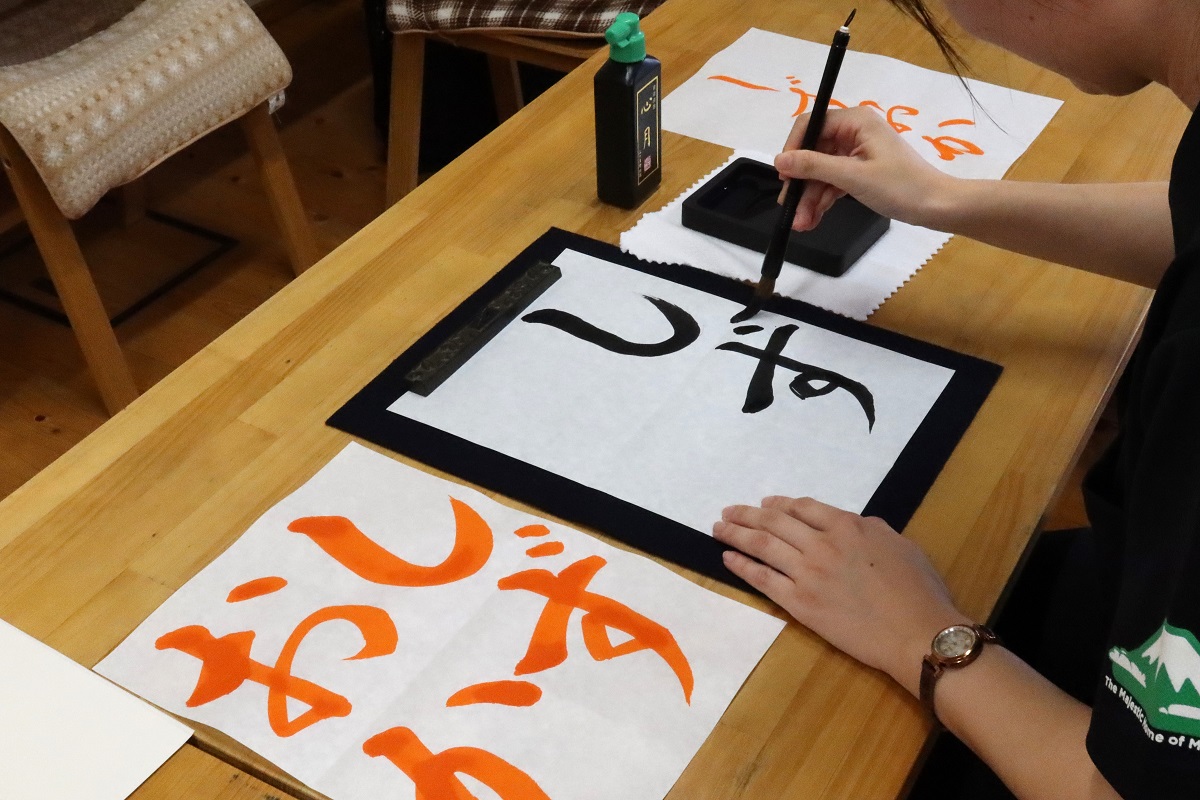
Start by writing “Shizuoka” in large hiragana, following Koyama Sensei’s example. The model is written in red ink, but you will write in black ink. It is interesting to see how the thickness of the line can change just by changing the amount of force applied to the brush or the speed of writing.
Try writing calligraphy yourself!

When you finish writing, show your work to Koyama Sensei.
Koyama Sensei will write advice in red ink so that you can improve your writing.

You should be happy to see a circle mark for calligraphy that you wrote well! The one on the right is the first attempt, and the one on the left is the second attempt. Now the characters align well, don’t they?

Improve your skills

Next, try writing some kanji. Kanji have finer lines than hiragana and are more difficult to write.
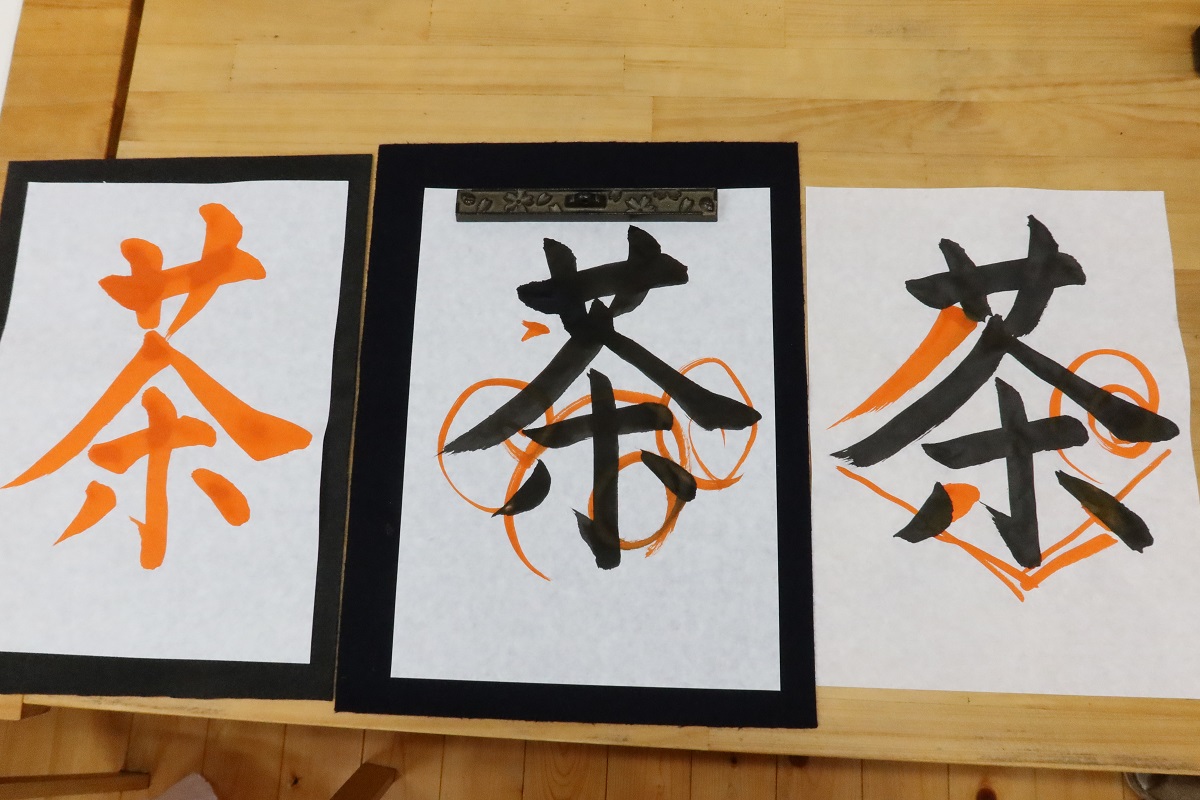
First write 茶 (cha: green tea), a specialty of Shizuoka, in kanji. It is read as “cha” with one character.
Looking at Koyama Sensei’s example, I noticed that there were times when I wrote carefully and slowly, and times when I went all in and wrote fluidly.

Just like before, once you have written the characters, you will receive advice from Koyama Sensei.
Gradually, you will get better at writing.
The one on the right is the first attempt, and the one in the center is the second attempt.

Get a unique present

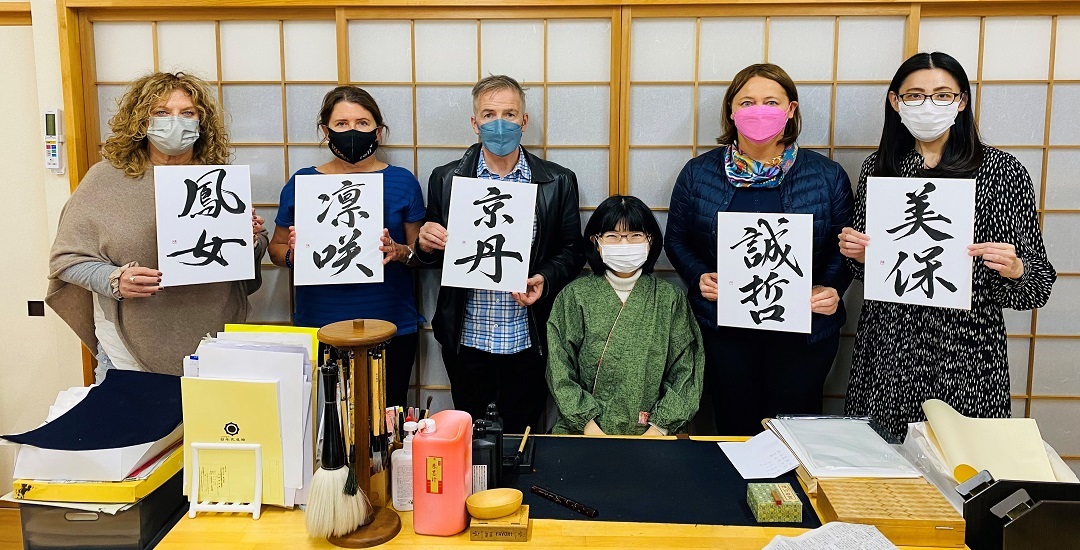
At the end, Koyama Sensei will write your name in kanji on colored paper and give it to you as a present.
Today she has written the name of William (Adams), an Englishman who arrived in Japan during the Age of Exploration and was given the title of “samurai”.
Join the program and find out what meaning its kanji has and what kanji will be chosen for your name!

YouTube

How to make reservations

For reservations and inquiries, please check the description section of this YouTube video.
Make a reservation at least 14 days before the day you want to go.

Access

About 20 minutes by taxi or rental car from JR Shizuoka Station.
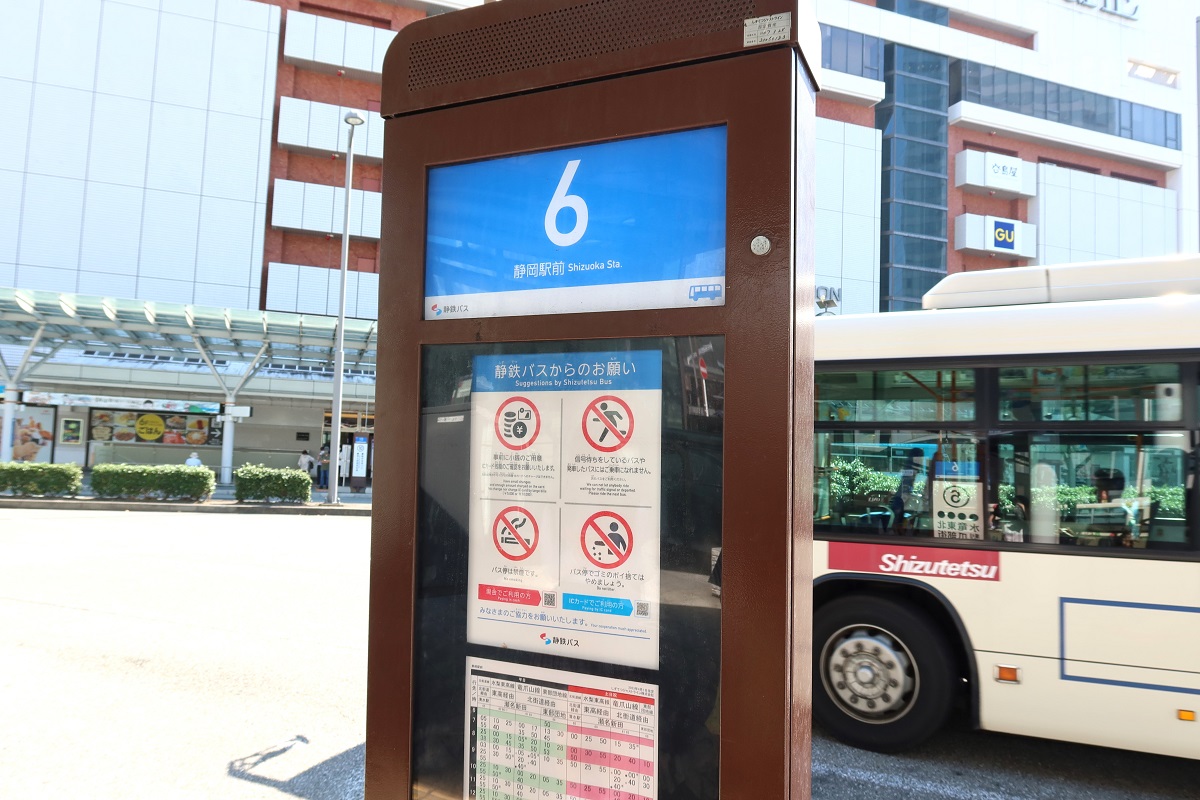
About 25 minutes by bus from Platform 6 at the north exit of JR Shizuoka Station.

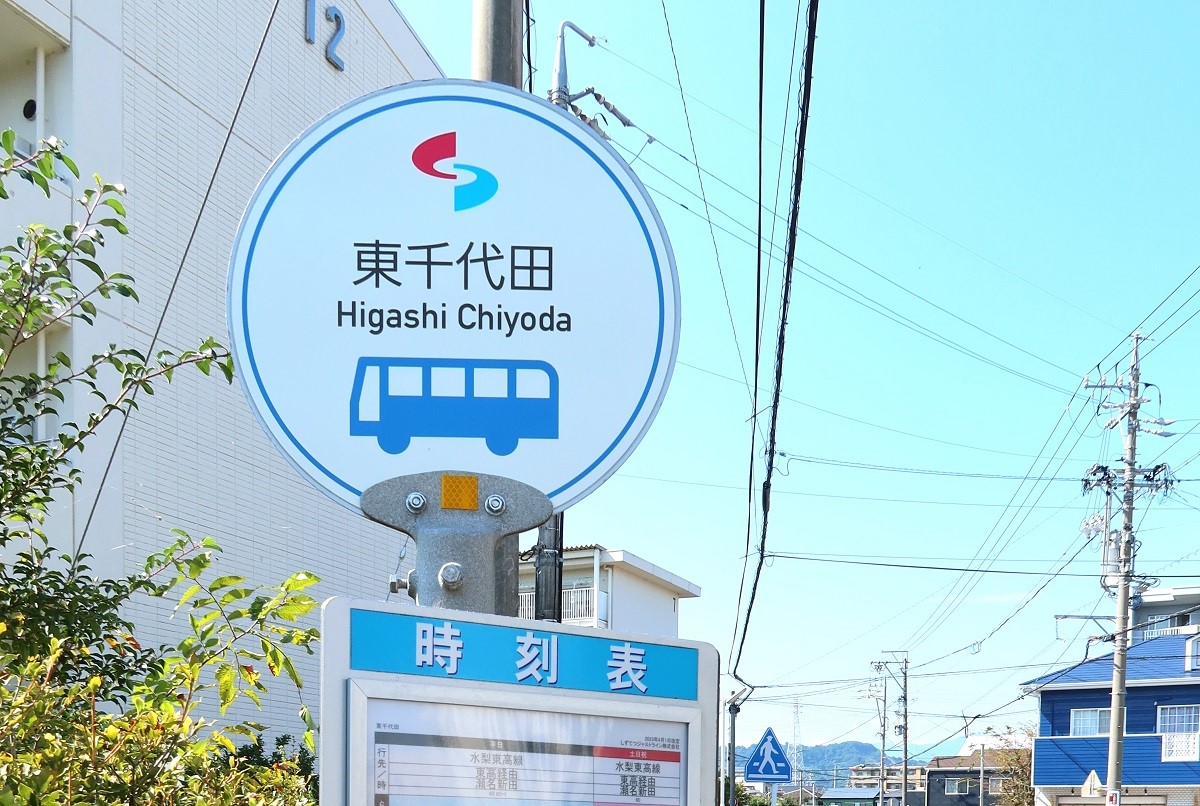
Get off at Higashi Chiyoda bus stop.
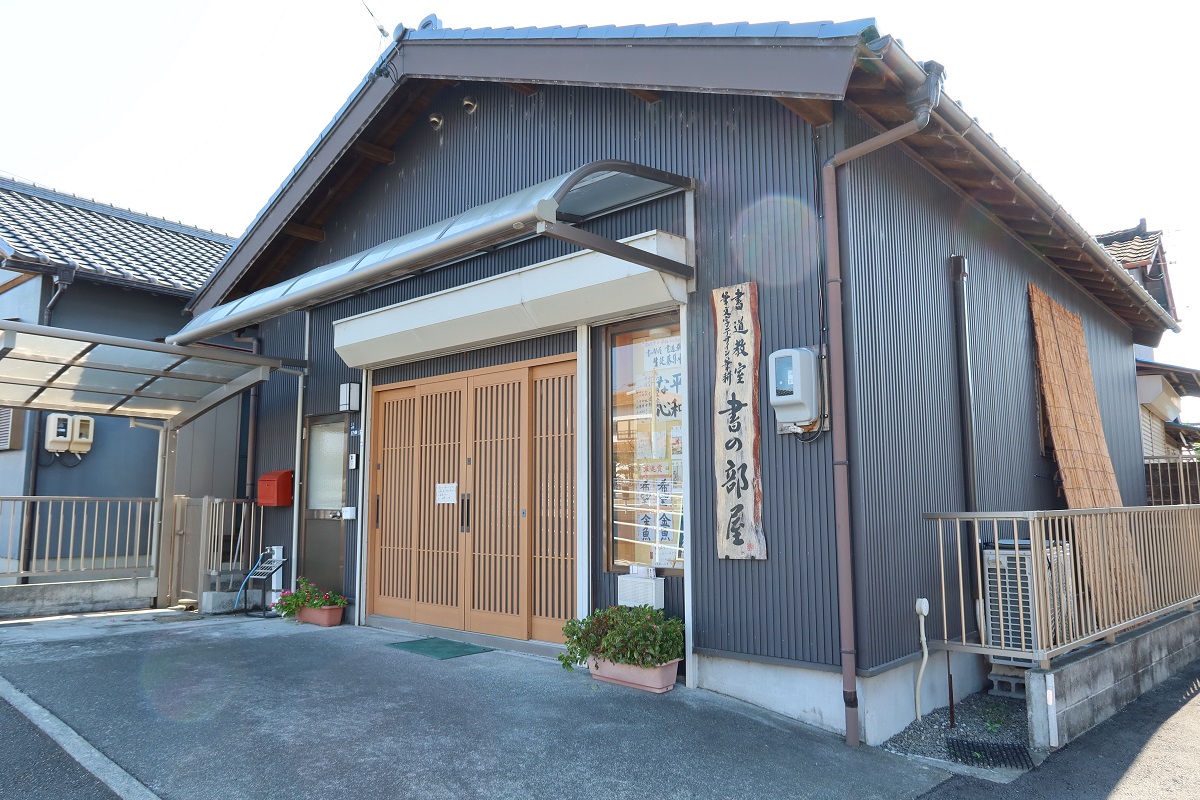
Walk about 3 minutes to the Sho no heya (Calligraphy Room).

Things to do in Japan, Shizuoka – Nature Experience: Walking tour in Namesawa Gorge in the Izu Peninsula Unesco Global Geopark

Izu & Central Izu 101

-Geography & History

The Izu Peninsula, as described on the UNESCO Global Geopark list, is one of the world’s treasures. It has unique geographical features, and the residents embrace the conservation of biodiversity, local history, and culture.

The geographical history of the Izu Peninsula started about 20 million years ago. It was a group of submarine volcanoes until about 600 thousand years ago when the movement of the Philippine Sea Plate caused those volcanoes to collide with Japan’s Honshu mainland. Thanks to these ancient volcanic activities, we are able to see many unique geographic features on display in the Izu Peninsula. We can appreciate beautiful scenery, onsen (hot springs), delicacies, and outdoor activities. Isn’t it exciting to experience how nature blesses us with magnificent things?

Central Izu has both coastal and mountainous areas, and thus has various natural features such as waterfalls, rivers, forests and beaches. You can really see the gifts of the volcanoes!

-Access To Shuzenji Station

Shuzenji Station on the Izuhakone Line of the Izuhakone Railway is the best station to use in order to get around the Central Izu area. There are two main ways to reach Shuzenji Station:

-If you use the JR Tokaido Shinkansen bullet train, get off at JR Mishima Station, then change to the Izuhakone of the Izuhakone Railway. It will take you to Shuzenji Station. Enjoy the 40-minute train ride and, if you are lucky, you will be able to glimpse Mt. Fuji between Mishima Futsukamachi and Daiba stations.

-As of December 2, 2022, there is an Odoriko train which runs twice a day from Tokyo directly to Shuzenji. The train departs from Tokyo at 9 a.m. or 12 p.m. and arrives at Shuzenji Station around 11 a.m. or 2 p.m.

Once you arrive at Shuzenji Station, you can take a bus or rent a car to your destination around Central Izu. To join “Geo Tour in Namesawa Gorge”, take a bus for about 40 minutes to Showanomori Kaikan. It is better to check the bus times beforehand just to be sure!

Activity Highlights – Soak in Nature!

The tour starts and ends at Amagi Visitor Center. It’s approximately a 4.2km (2.6 mile) walk and takes about two hours.

On this walking tour, you’ll see amazing rock formations and various strata (rock layers) caused by volcanic activity. For example, you can witness the beautiful joints carved into the smooth monoliths of the riverbed in the Namesawa Valley. These are the result of the cooling and contraction of the lava flow from the Namesawa volcano that once filled the valley. Refined by the clear water, they are truly an artwork of nature.

You’ll discover local history, plants, and wildlife that you might miss without a guide. Throughout the tour, an experienced guide will share his/her knowledge and help you maximize the experience.

This tour begins with a greeting at one of the 370 yama (mountain) shrines in Shizuoka. At these shrines, local people used to pray for rain, good harvest, and learn how their lives were closely related to the mountains.

During the tour, you will also see how this Amagi region is blessed with natural water, which is used to cultivate wasabi. Wasabi requires abundant water at a suitable temperature. So since Amagi is one of the wettest regions in Japan, it is ideal for growing wasabi.

In March 2018, “Traditional Cultivation of Shizuoka Water Wasabi” was recognized as a Globally Important Agricultural Heritage System.

In addition, the walking route goes along multiple rivers. Hearing the flowing sound of the rivers will help you relax. While walking, you might see spring water coming up from the ground and the strata.

When you see the famous Taro cedar, you will have reached the turnaround point of the tour. This 500 year old cedar is a symbol of the area and earned a designation as a prefectural natural monument.

Enjoy forest bathing on the way back!

This activity level is moderate. We recommend for the tour for anyone who is able to climb stairs and is happy to walk unpaved road.

Tips – Maximize Your Experience!

Which is the best season?

Guides say each season is unique so they recommend coming back for spring, summer, autumn, and winter. In each season, you will find unique features in the nature.

Personally, because we really enjoyed walking under the autumn foliage, our favorite season is definitely autumn (specifically around November). It is a very comfortable time after the hot summer and just before the cold winter. One thing we regretted was that we were not able to jump in the clear water during this time of the year. We would love to come back in spring to see beautiful flowers blooming in the forest.

How To Book

This tour is operated by the Izu Peninsula Geoguide Association and needed to be booked one week in advance. If you would like to learn more about the tour, please click here.

If you are interested in exploring other regions of the Izu Peninsula, please check this page.

9 Iconic Landmark Buildings of Shizuoka Designed by Famous Japanese Architects

Japan has produced internationally renowned architects, which enables you to come across their masterpieces during your Japan travel.

Here we introduce worth-visiting architectures in Shizuoka. Take a bullet train from Tokyo for about 1-2 hours and enjoy the incredible masterpieces there!

Mikuni Izukogen – Kengo Kuma

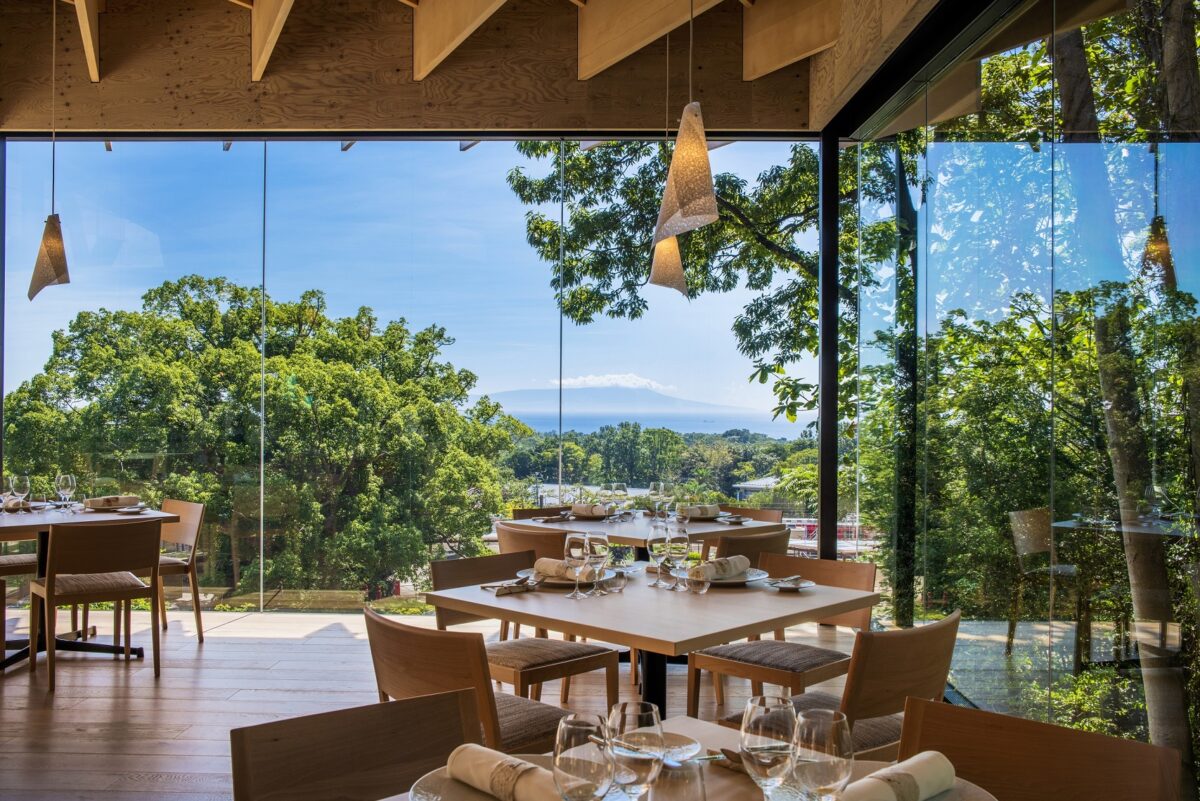
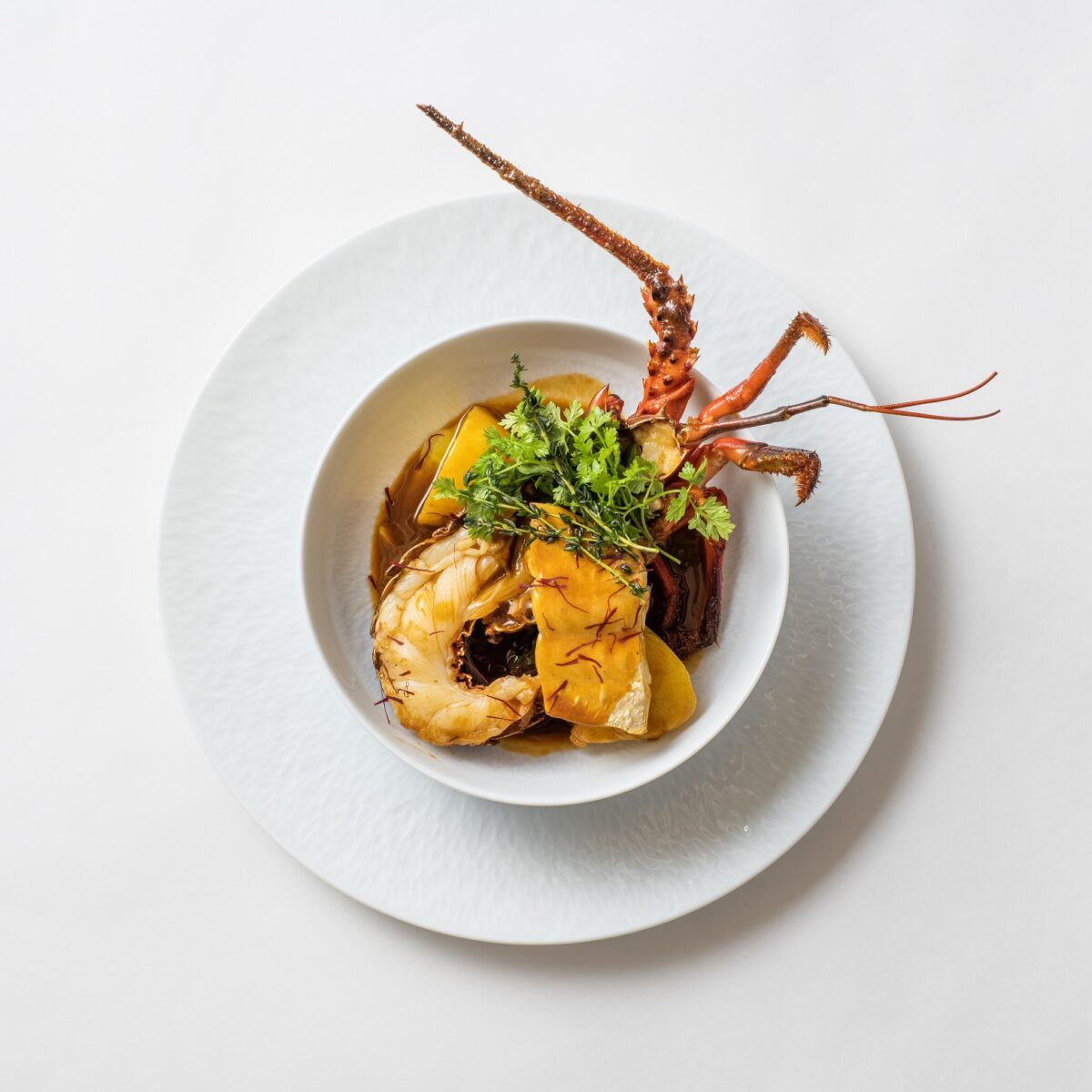
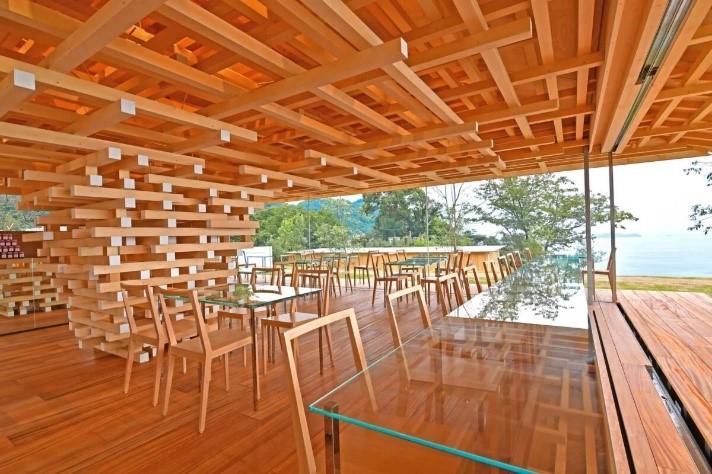
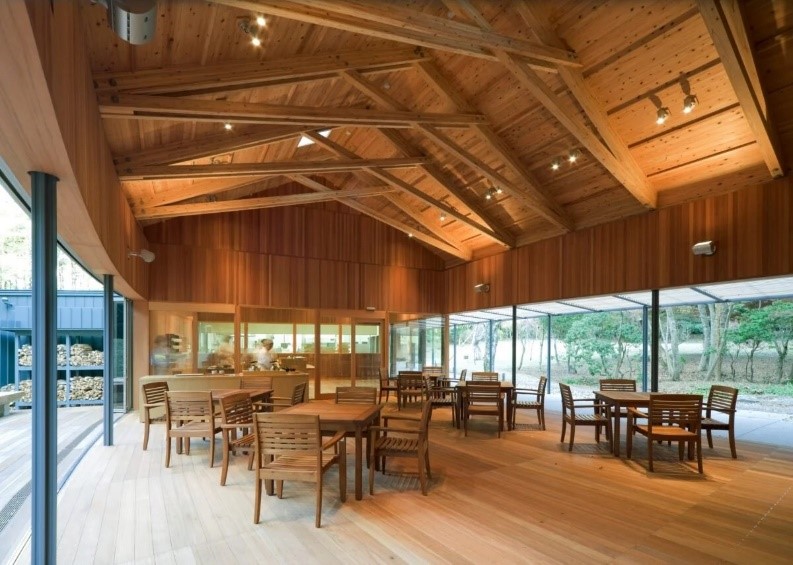
Mikuni is a Mediterranean fine dining restaurant set in Izu’s beautiful highlands. Top chef Kiyomi Mikuni and architect Kengo Kuma combine their talents to reflect the sea, sun and the land of the Izu Peninsula – reminiscent of the Mediterranean. The striking wooden structure creates a simple yet powerful space, while the glass surfaces around the perimeter offer views of the magnificent Sagami Bay.

Sanyo-so – Togo Murano

Sanyo-so is a ryokan-style inn nestled at Izu Peninsula. It was originally built in 1929 by the family of the Mitsubishi Conglomerate.  The stylish ‘tea-ceremony’ style home was built in the middle of a vast Japanese garden that continues to be exquisitely manicured even today.

In 1988, new buildings designed by Togo Murano opened (designed after Togo Murano turned 90!) to maximize natural geological formations.  Despite being flat houses, the new buildings have a unique design incorporating stairs and corridors connecting the guest houses.

Coeda House (Within the grounds of ACAO FOREST) – Kengo Kuma

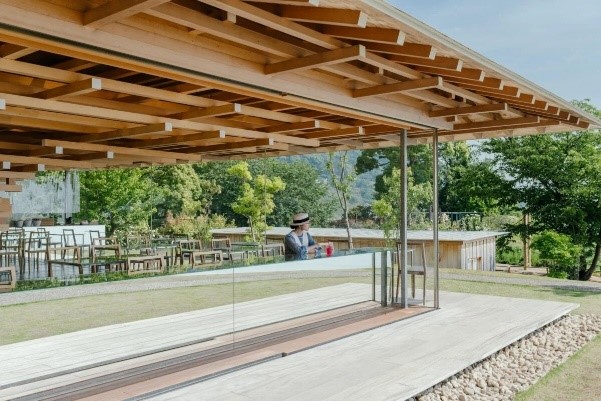
COEDA HOUSE is a café that serves sweets made with local ingredients. The name COEDA is made up of the words “CO”, which means “to gather”, and “EDA”, which means “small branches”, which come together to form a large tree. COEDA is a place for “people gathering under the tree”.

Kuma created a structure that resembles a large tree made up of small branches, with an exterior made of glass to mirror and blend in with the rose garden.

The laminated structure is anchored by 12 carbon fibers arranged in a radial pattern, which connects the foundation to the hanging wall above the opening, thus resisting tremors caused by earthquakes and wind.

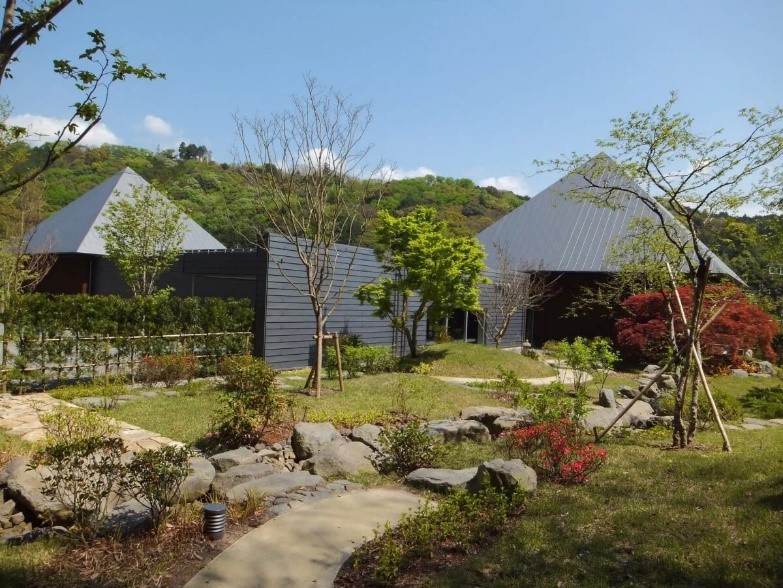
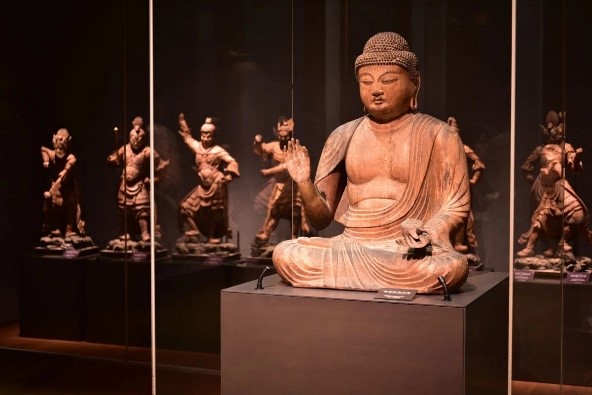
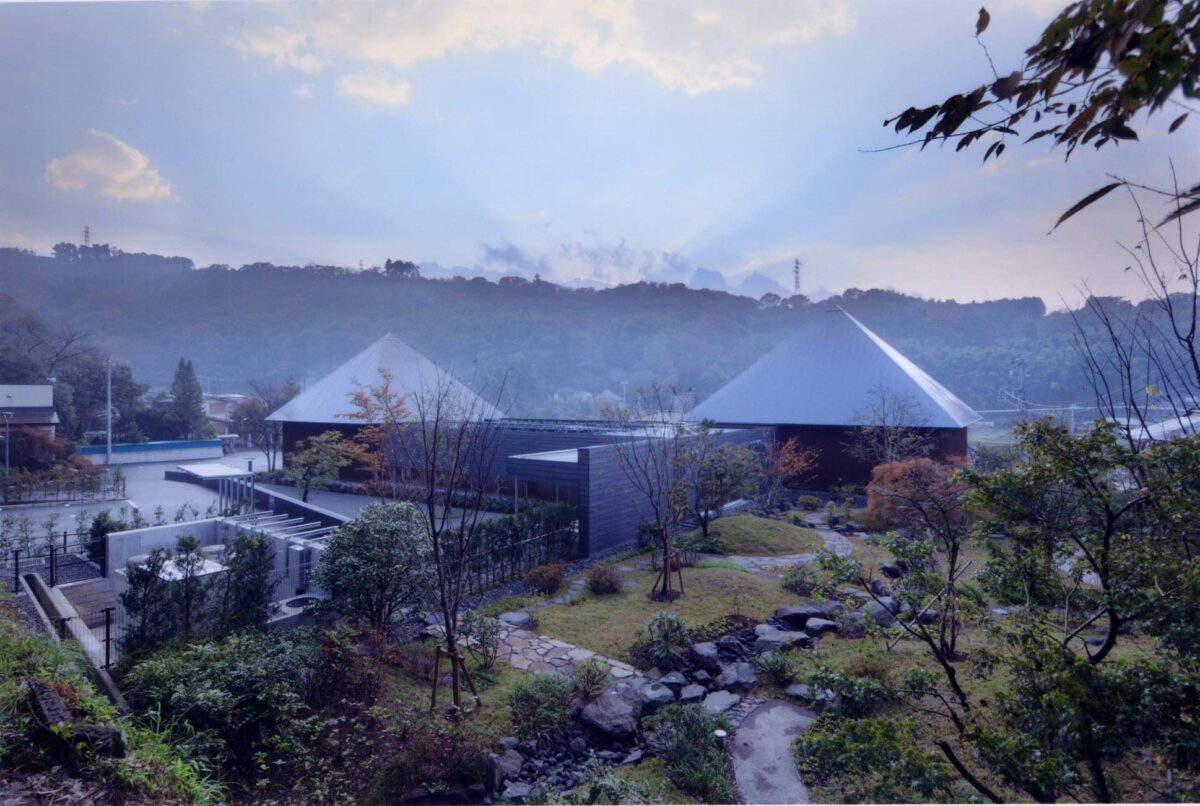
Kannami Buddha statues Museum – Akira Kuryu

The Buddhist statues of Kuwahara Yakushido were the guardian Buddhas of the people of Kannami Town.

The Kuwahara Yakushido Hall has provided a place of solace for the people of Kannami town for many years. This spiritual role underlays the planning and design of the Kannami Buddha Statues Museum to make it appear like a ‘堂’ (dō) or hall. Built as a place to enshrine the Buddha, the goal of this museum is to make a building that will be more than a simple square building.

Toraya Kobo – Hiroshi Naito

Toraya Kobo is a wagashi sweets store built on a site adjacent to the Former Kishi Residence, which was designed by famous architect Isoya Yoshida as the private residence of Nobusuke Kishi, one of the most influential statesmen in Japan’s post war era.

The new building designed by Hiroshi Naito gently curves like it’s holding in the expansive garden. The semi-exterior space created between the cafe terrace and the wagashi sweets store draws the air from the garden and blends it with the green landscape.

Mt. Fuji World Heritage Centre, SHIZUOKA – Shigeru Ban

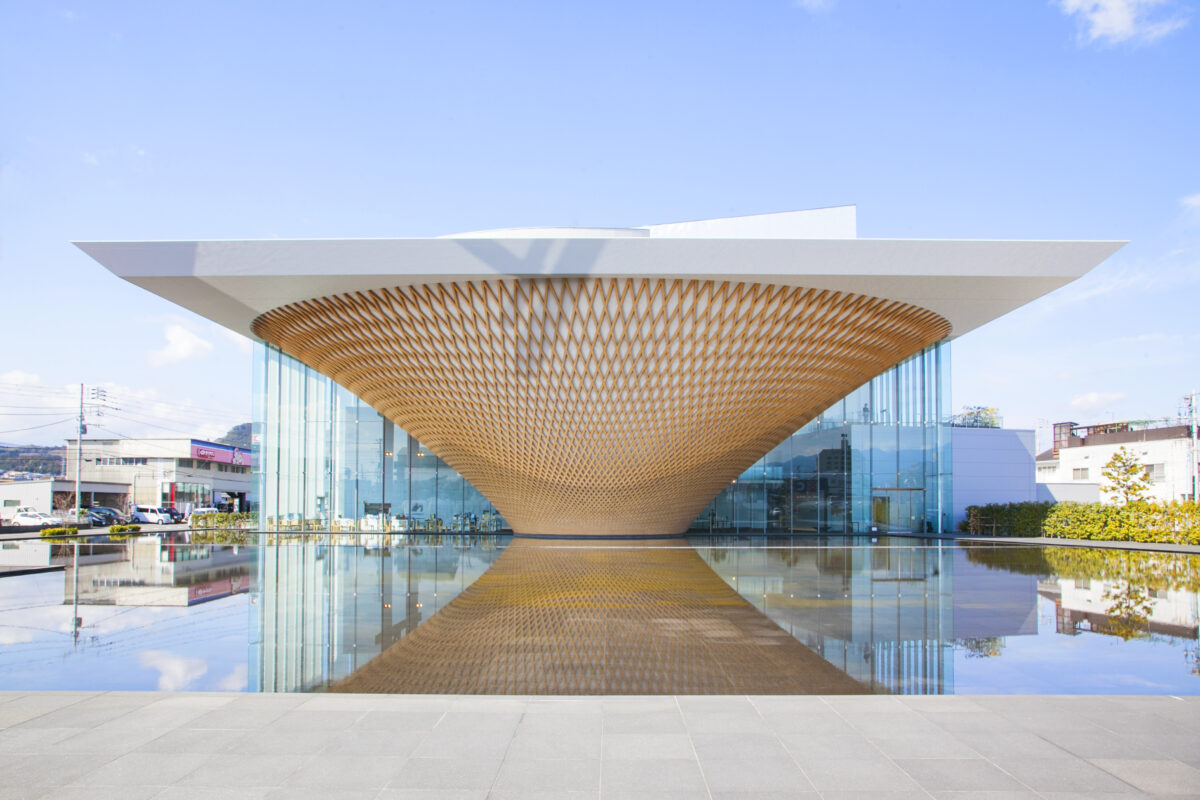
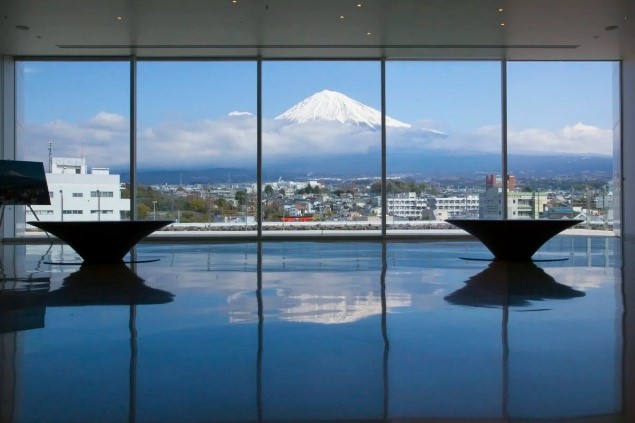
A striking feature is the inverted lattice cone as the centerpiece of the building. The water from Fuji, drawn in from underground, forms a basin at the front of the building, and the composition of an “upside-down Fuji” becomes a reflection of Mt. Fuji.

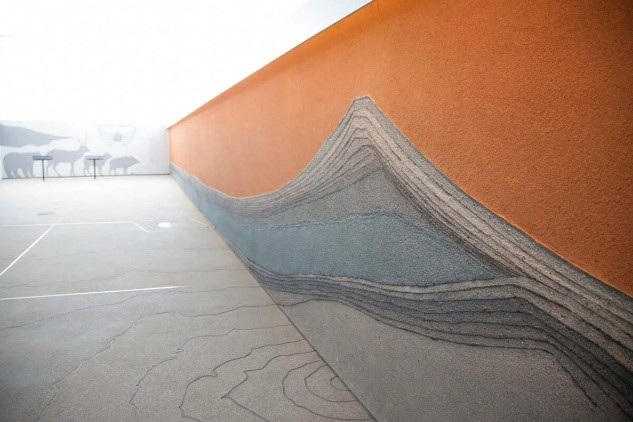
The 190-metre-long walkway that spirals inside the cone to the top floor, allows visitors to experience a simulated mountain climbing experience.  You can see elements of Shigeru Ban’s signature cardboard cylinders also used in this building.

Nihondaira Yume Terrace – Kengo Kuma

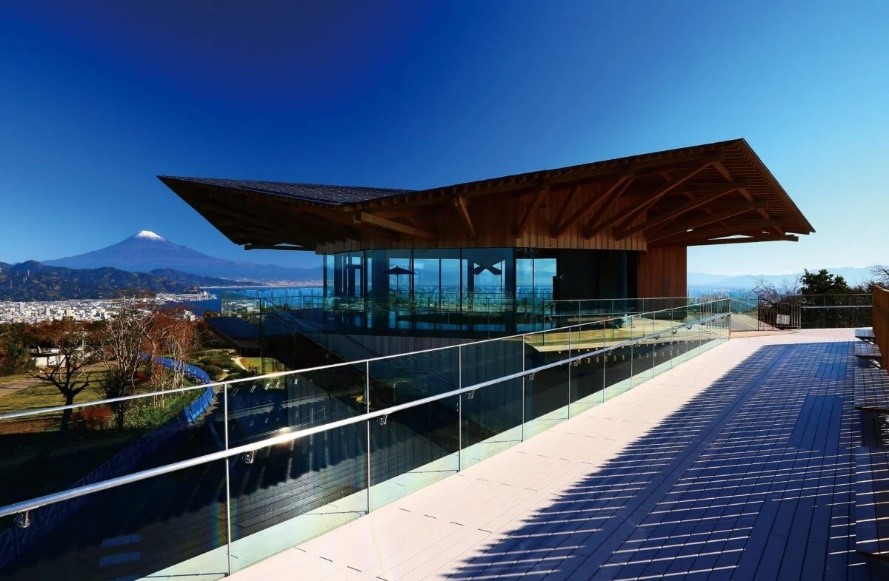
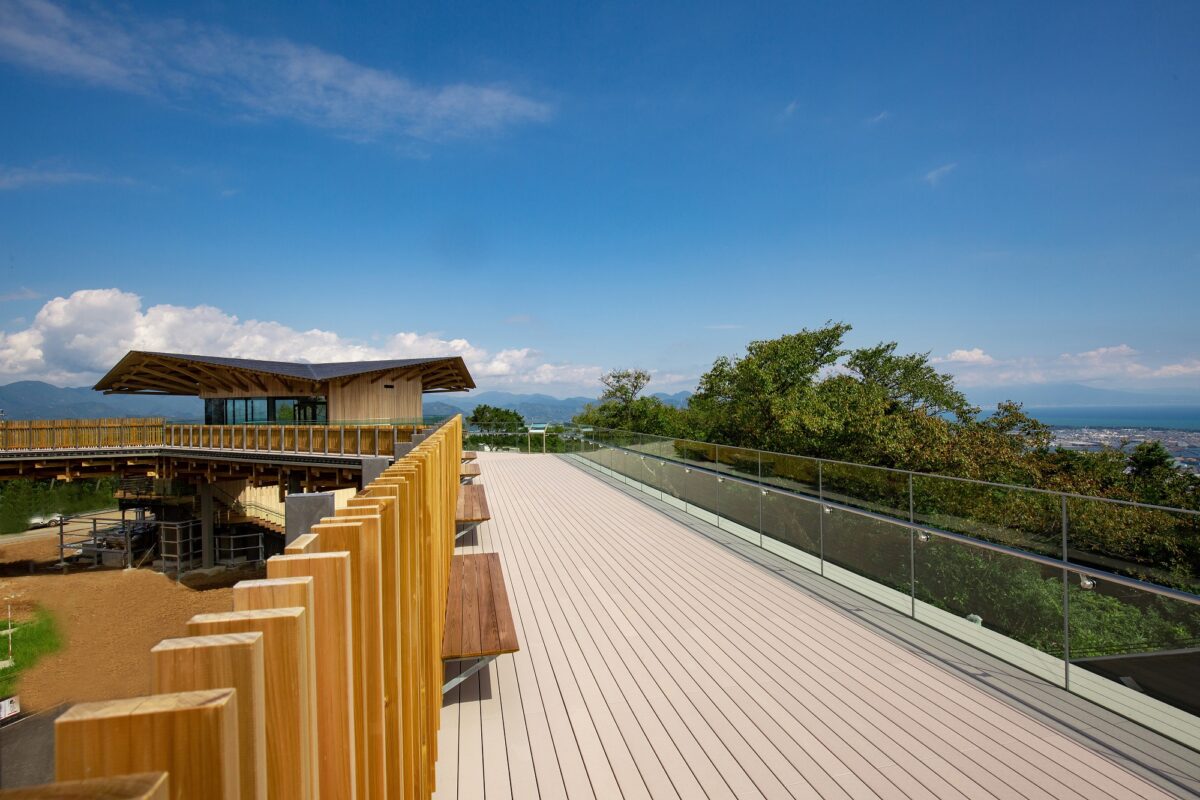
This observation facility is built at the top of Nihondaira, a famous scenic spot overlooking Mt. Fuji and Suruga Bay. Inspired by the Horyu-ji Temple’s Yumedono, the octagonal geometry of the building uses local Shizuoka cypress wood to give it the complexity of a tree branch, creating a forest-like interior that calls out to the grandeur of Mt. Fuji.

Shiseido Art House – Yoshio Taniguchi &Shinsuke Takamiya

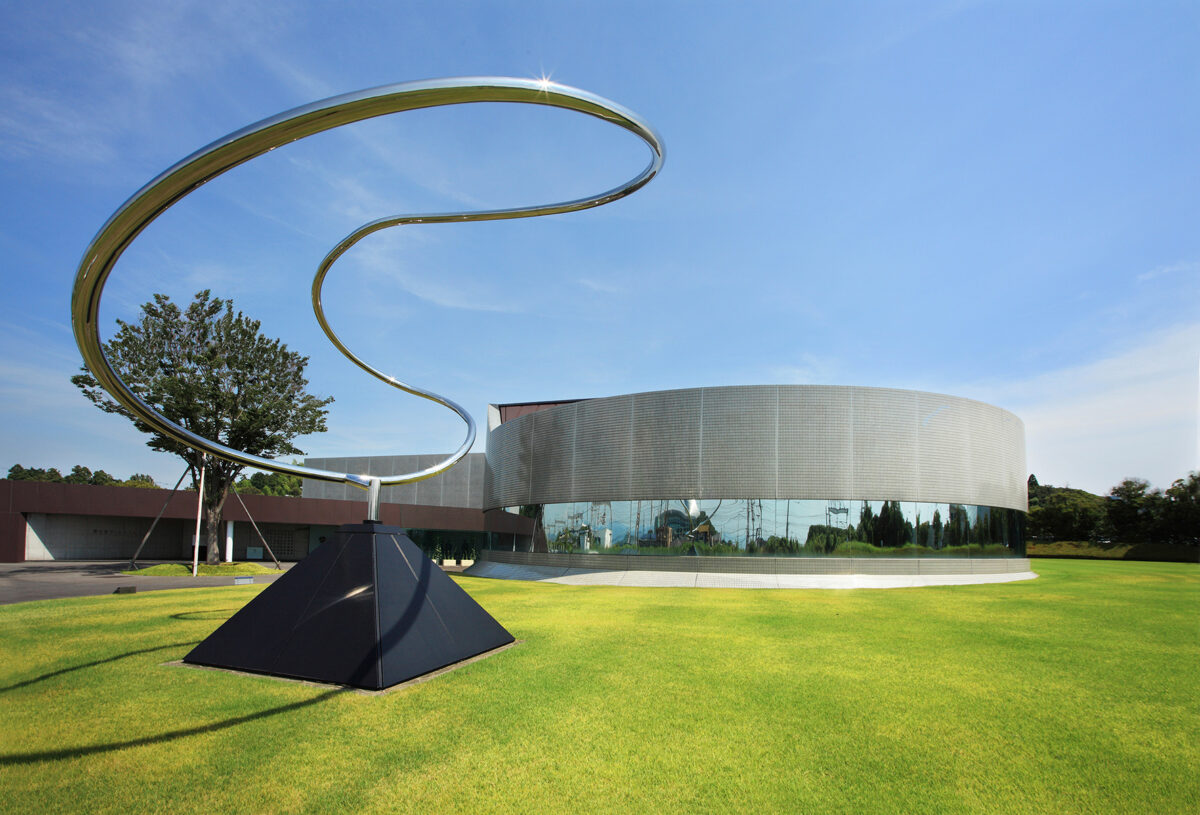
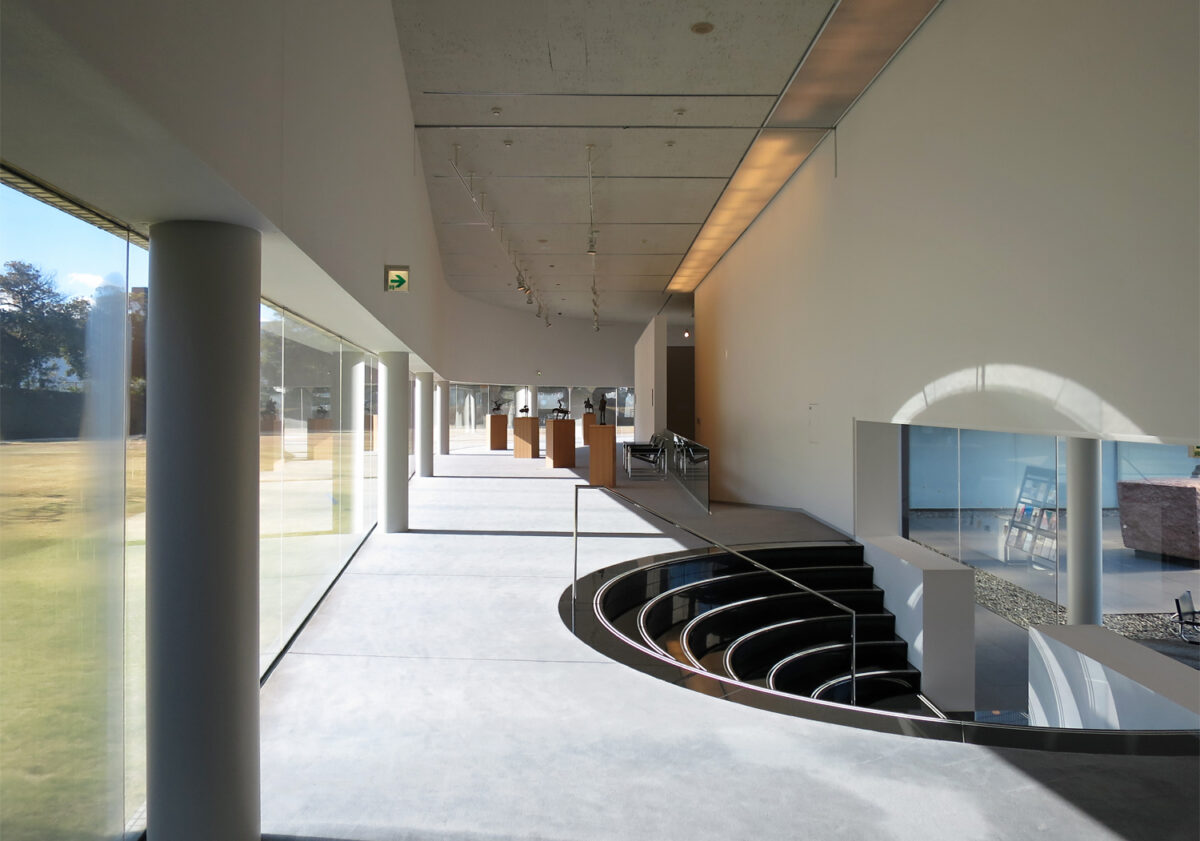
The building is a masterpiece of modernist architecture of the 1970s and was awarded the 1980 Architectural Institute of Japan Prize. The curved glass mirrored windows are designed to beautifully reflect the Shinkansen (bullet train) as it passes by.

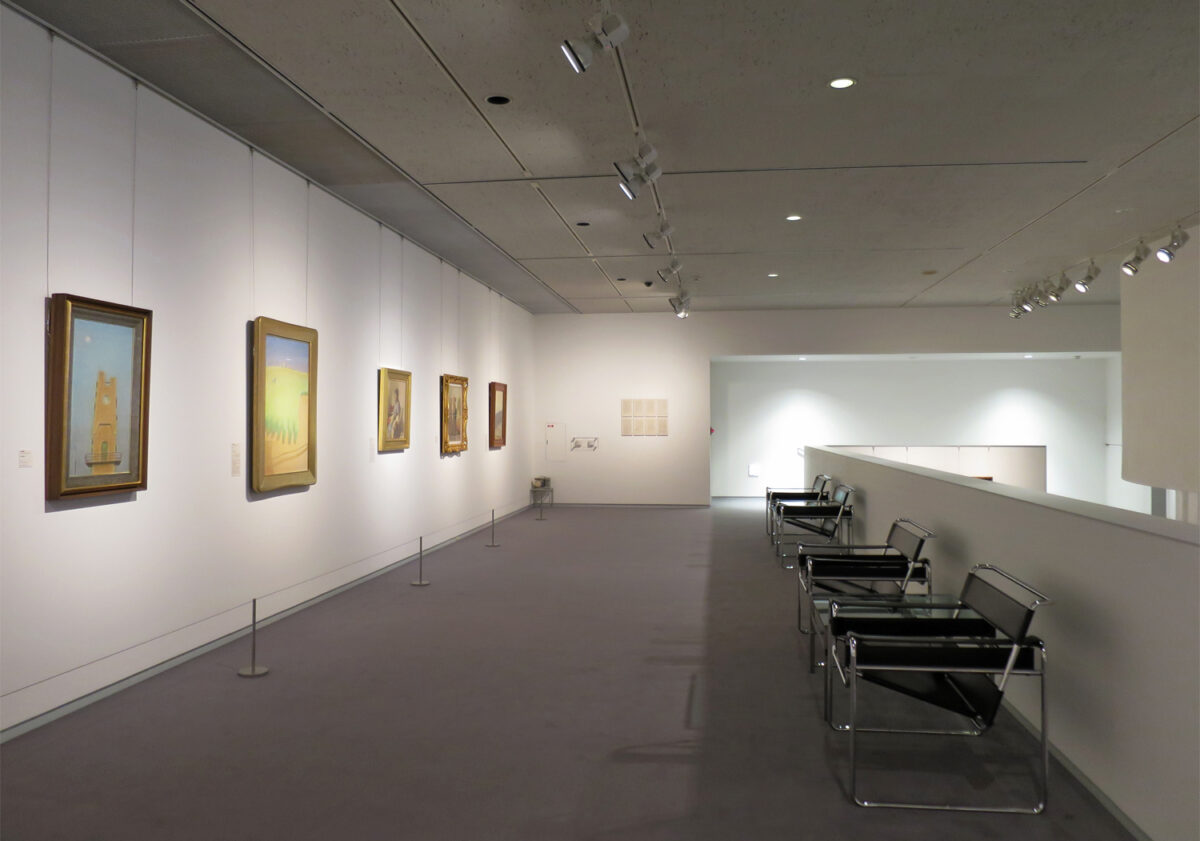
Since its renewal in 2002, the Shiseido Art House has enhanced its function as an art museum, collecting and preserving outstanding modern and contemporary works of art, as well as acting as a cultural facility open to the public.

Akino Fuku Museum – Terunobu Fujimori

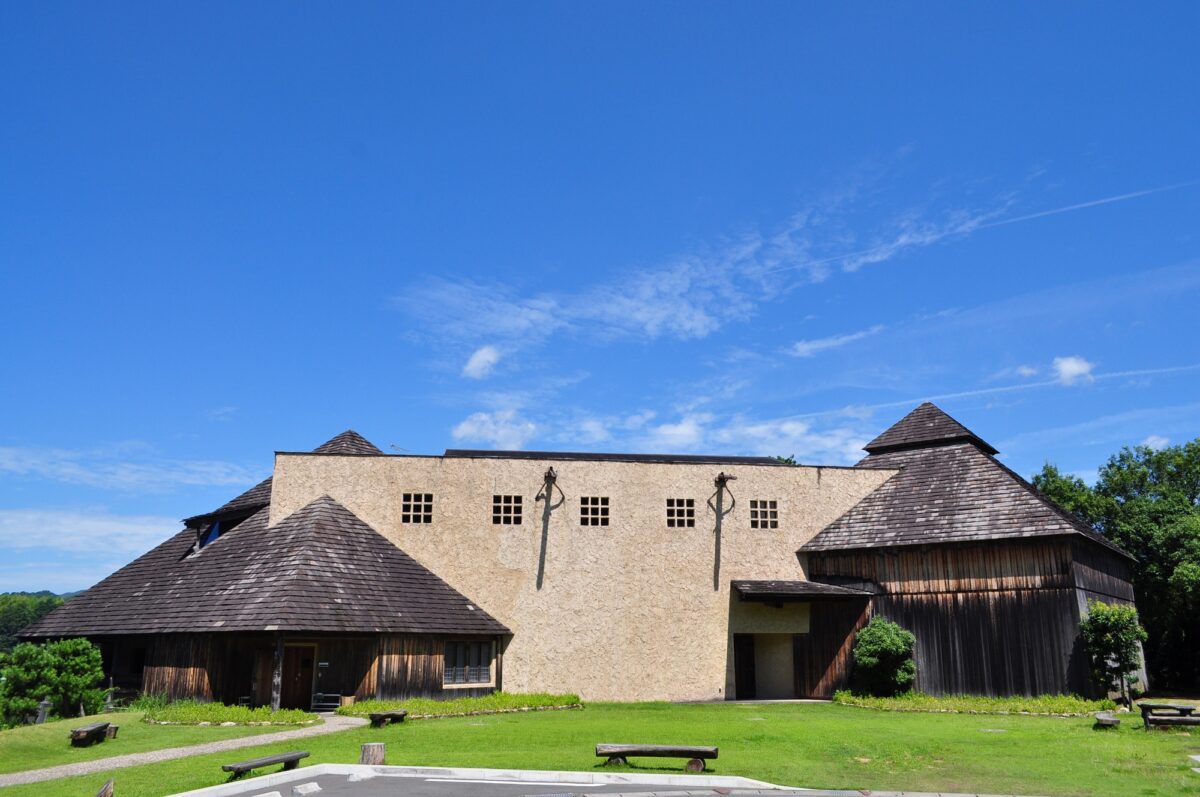
The building is made of natural materials, such as locally produced Tenryu cedar and plastered walls, to ensure a harmony with nature. The floors of the exhibition rooms are covered with rattan and marble, and visitors are encouraged to take off their footwear to connect with the ground.

5 Famous Autumn Festivals in Shizuoka

0

Centuries old festivals can be seen throughout Shizuoka in Autumn.

SHIZUOKA AUTUMN FESTIVALS TO EXPERIENCE

Japanese people love festivals – from fireworks and dancing in Summer, cherry blossom festivals to celebrate Spring and new beginnings through to Winter fire festivals there is a festival for every season and every occasion.

In the autumn months, Shizuoka comes alive with a vibrant array of festivals.

Japanese festivals have evolved to become a way for local communities to come together and strengthen local bonds and relationships.

Hamamatsu Station Area

[blogcard url=”https://exploreshizuoka.jp/en/stations/hamamatsu-station/”]

AKIHA SHRINE FIRE FESTIVAL

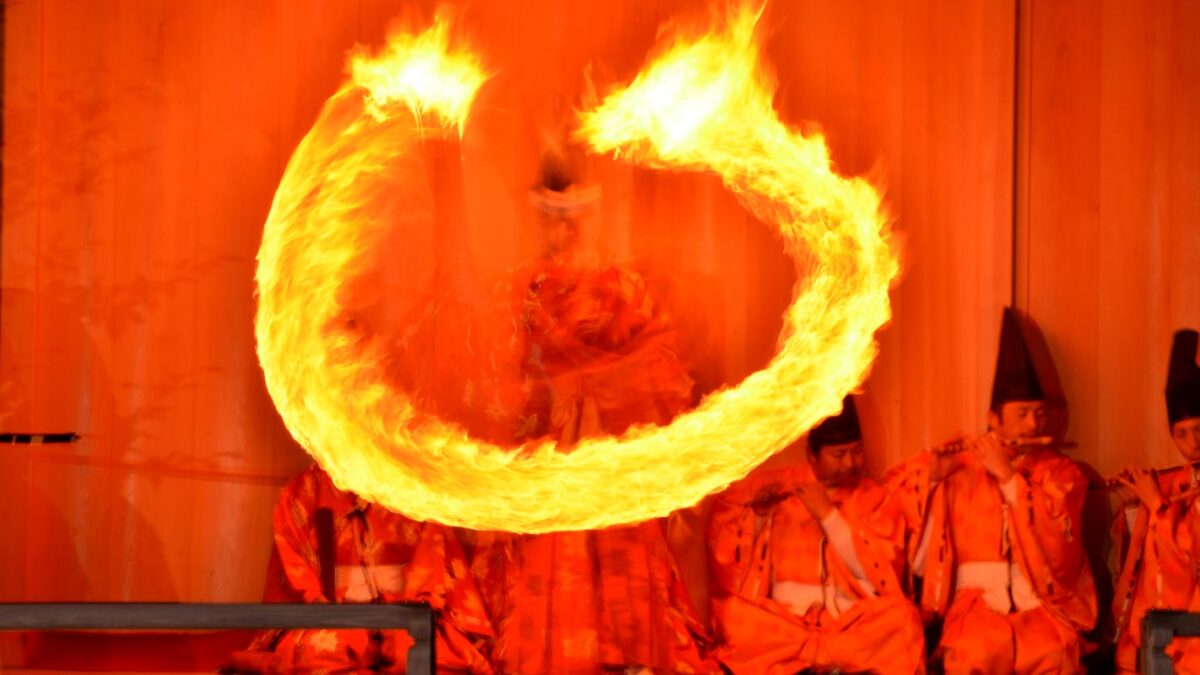
Akiha Fire Festival

On December 15th and 16th every year the Hongu Akiha Shrine in the Tenryu Area of Hamamatsu, known as a shrine that enshrines the God of Fire Prevention, celebrates the Fire Festival on Mt. Akiha.

The mountainous area around Tenryuji is susceptible to forest fire, and ancestors witnessed the terrifying power of fire.

It is said that the festival that dates back to the 8th Century Nara Period. The priests of the shrine perform dances with fire, sword and bow, to to burn away natural disasters and other forms of sickness.

[blogcard url=”https://www.inhamamatsu.com/culture/akihasan-hongu-akiha-jinja.php”]

Kakegawa Station Area

[blogcard url=”https://exploreshizuoka.jp/en/stations/kakegawa-station/”]

KAKEGAWA GRAND FESTIVAL – GIANT LION FLOAT

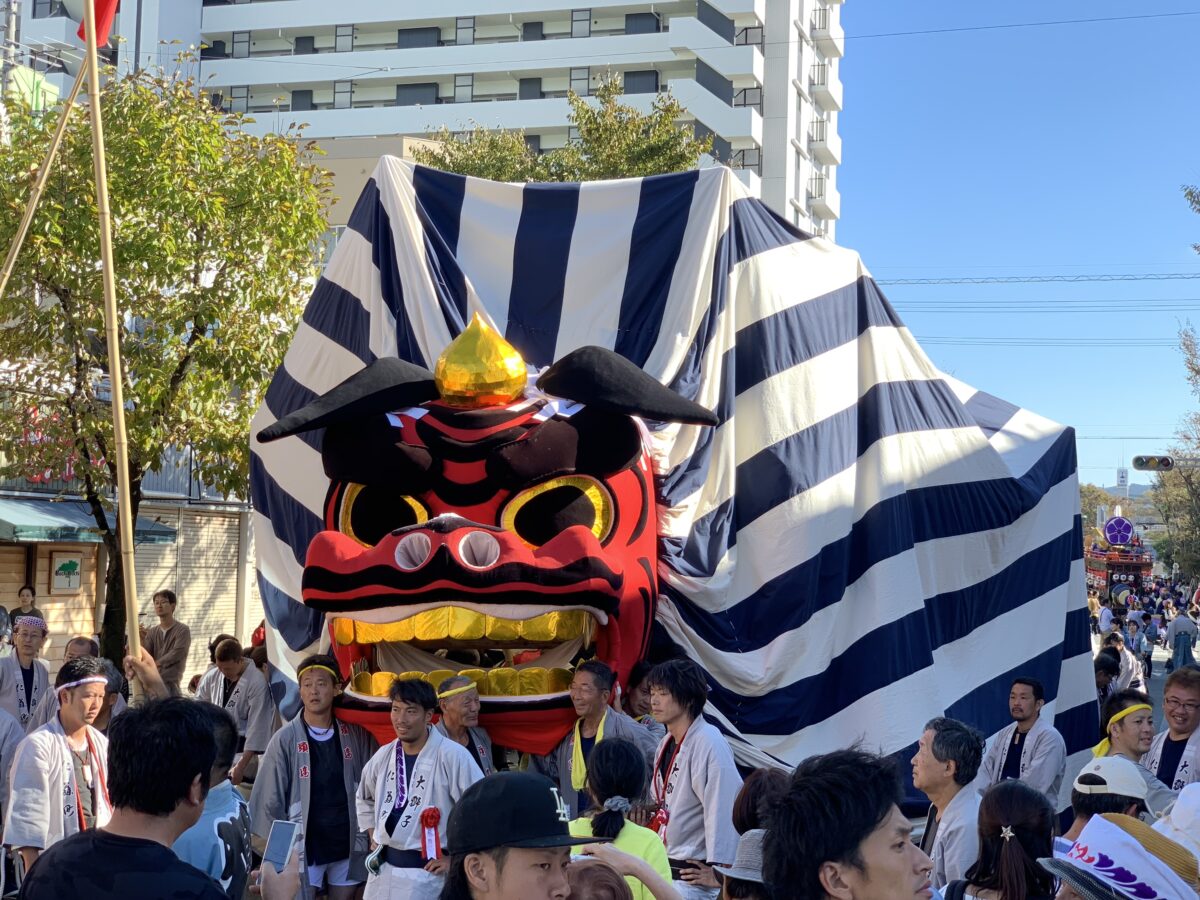
Lion float, Kakegawa Omatsuri

The Enshu area of Shizuoka (Hamamatsu & Kakegawa areas) is famous for its use of ‘Yatai’ floats which are, in essence, elaborately decorated portable shrines with wheels that are pulled through the town.

In early October, the Kakegawa Omatsuri (Grand Festival) sees many of the locals pulling Yatai floats through this lovely castle town.

Once every 3 years, a giant lion that weighs 220kg, the largest of its kind in Japan, is carried by hundreds of people dancing through the town.

It is due to make another appearance in October 2027.

[blogcard url=”https://www.bt-r.jp/wp-kakegawa-english/archives/24″]

Shizuoka Station Area

[blogcard url=”https://exploreshizuoka.jp/en/stations/shizuoka-station/”]

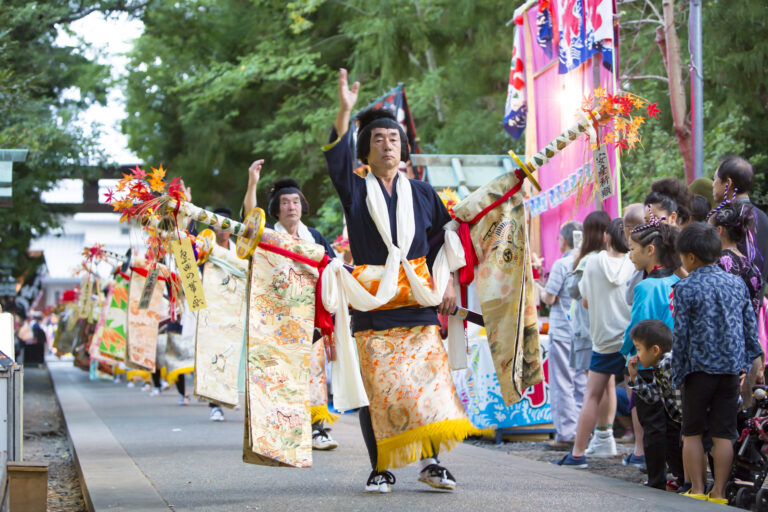
SHIMADA OBI FESTIVAL

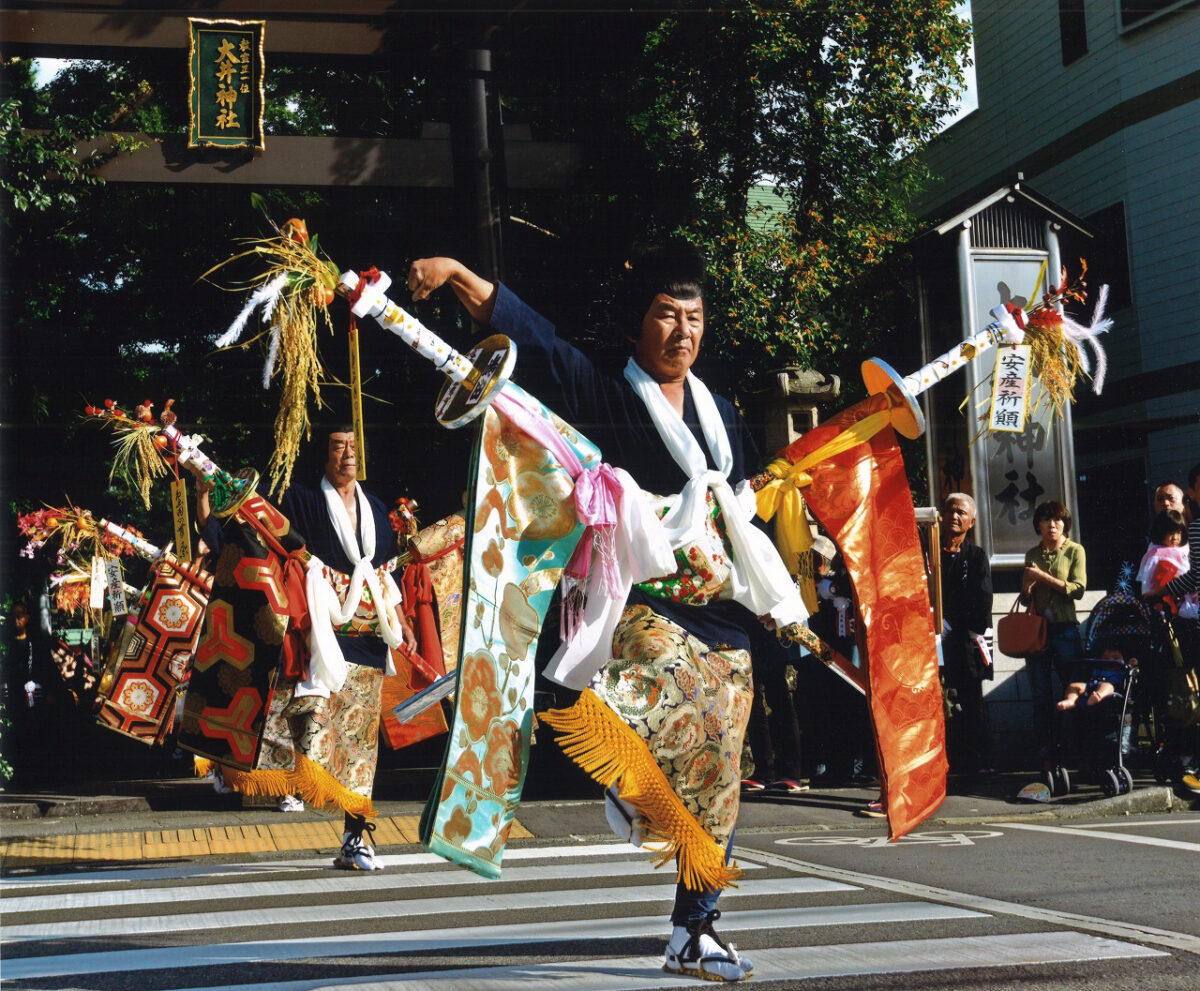
Shimada Obi Matsuri
Shimada Obi Matsuri

The Shimada Obi Festival only happens every 3 years in October – with the next one scheduled for 2025.

It is said that this festival has been held since 1695, consists of a procession of decorative floats, drummers, dancers and many others wearing traditional robes and carrying elaborate obi (traditional sash belts worn with kimono).

The festival is a ceremonial event of Oi Shrine, which is revered as the protector of the Oi River and a deity of safe childbirth.

[blogcard url=”https://shimada-ta.jp/city/event/index.php?lan=1″]

FUJIEDA GRAND FESTIVAL

Fujieda Omatsuri

Held every three years in Fujieda, Shizuoka, the Fujieda Omatsuri (Grand Festival) is a vibrant event rooted in Edo-period traditions. The festival now spans three days in early October.

Local communities parade beautifully crafted floats with live performances of traditional arts, such as music and the graceful “jiodori” street dance. The festival is said to be the best in Japan in terms of both its scale and quality among festivals of this kind.

The next festival is scheduled for October 2025.

[blogcard url=”https://www.fujiedataisai.jp”]

Shin-Fuji Station Area

[blogcard url=”https://exploreshizuoka.jp/en/stations/shin-fuji-station/”]

FUJINOMIYA FESTIVAL

Fujinomiya Festival
Fujinomiya Festival

People have been flocking to Fujinomiya for centuries to pay homage to Mt. Fuji and throughout the year there are a number of festivals held with the majestic mountain as a backdrop.

The Fujisan Hongu Sengen Taisha Shrine which is found in the center of Fujinomiya Town, is the head shrine of about 1,300 Sengen shrines located throughout Japan.

The Fujinomiya Festival takes place annually from November 3rd to 5th, coinciding with the autumn festival of the Sengen Taisha Shrine.

To show respect to Mt. Fuji and appreciation for an Autumn harvest the locals parade elaborately decorated floats through town and compete to make the most noise and get as close as possible to collide with each other.

[blogcard url=”https://akimiya.com/”]

Embark on a Spiritual Journey – Exploring Shuzenji Keikoku 88 Sacred Sites and Jizo Wood Carving Experience

Shuzenji Onsen in Izu City, Shizuoka Prefecture is not only attractive as a hot spring town, it is a place where history and culture live on. The “Making good luck charm of Jizo statue (wood carving)” experience you can try here is a special program that touches the depths of Japanese culture. This experience is especially deeply connected to the pilgrimage culture of Shuzenji Keikoku 88 Sacred Sites, and offers a spiritual journey that goes beyond simple craftsmanship.
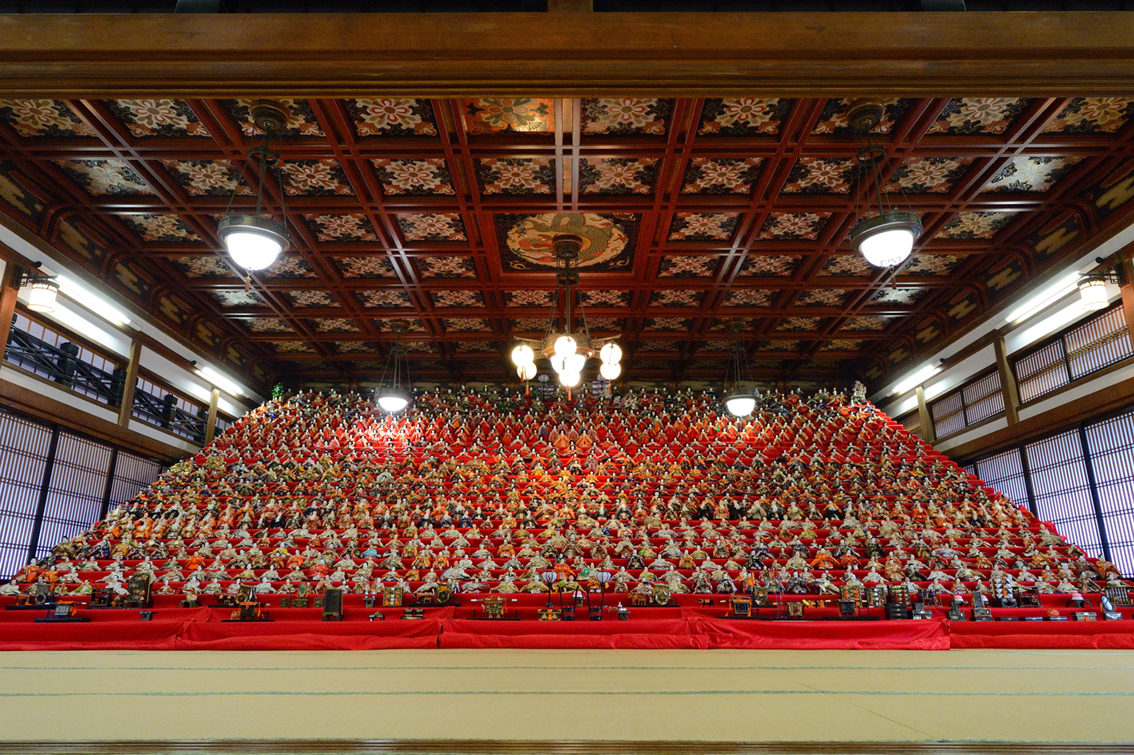
Depart for the tour

Temple meeting point

The stone monuments of Jizo bosatsu

We recommend using public transportation or a taxi to get to the meeting point. If traveling by public transportation, take the bus from the stop in front of Shuzenji Station on the Izuhakone Railway, get off at Momijibayashi-mae about 20 minutes away, and walk about 5 minutes to your destination. By taxi, it is about 15 minutes from Shuzenji Station.

Once the participants have gathered, a brief explanation of the experience will be given. There will also be an explanation of the historical background of Jizo Bosatsu (Ksitigarbha Bodhisattva) and the Shuzenji Keikoku 88 Sacred Sites, offering a good opportunity to get a deeper understanding of the experience.

Jizo Bosatsu and the Shuzenji Keikoku 88 Sacred Sites

Jizo Bosatsu is widely worshipped across Japan as a Buddha that rescues travelers and people in distress. In the Shuzenji area, various Buddhas including Jizo Bosatsu are enshrined, and these are known as the Shuzenji Keikoku 88 Sacred Sites. This pilgrimage route was modeled after the Shikoku 88 Temple Pilgrimage. The pilgrimage is small in scale but a profound experience that is easy for beginners to enjoy, and will give you momentary peace of mind. The story behind this woodcarving experience and the history of this pilgrimage will leave visitors with unforgettable memories.

Craft Experience

Explaining the background of Buddhist statues

The Buddhist statues used

Carving a Jizo statue

In this experience program, you will learn about the Jizo Bosatsu enshrined as part of the Shuzenji Keikoku 88 Sacred Sites and feel a special connection by making a carved wooden good luck charm.

In the woodcarving experience, you can carve a Jizo Bosatsu with your own hands. First, with the guidance of a craftsman, you will gradually carve the wood with a carving knife to give it shape. It is very relaxing to smell the scent of wood and feel the warmth of nature.

While you are working on your good luck charm, you can listen to the craftsman tell interesting stories about Jizo Bosatsu and the Shuzenji Keikoku 88 Sacred Sites. While the work may seem difficult at first, you will feel a sense of accomplishment as your good luck charm slowly takes shape. Your completed good luck charm will be a personal symbol of good luck that reminds you of your trip. At the end of the experience, you will have time to make a wish on your finished work, and this moment will also be a part of the special experience.

Tour the Shuzenji Keikoku 88 Sacred Sites and the historic hot spring town

After the woodcarving experience, you can enjoy sightseeing in the surrounding area. In addition to Shuzenji Onsen, which boasts a history going back 1,200 years, we also recommend visiting some of the spots in the Shuzenji Keikoku 88 Sacred Sites.
In particular, it is worth visiting Shuzenji Temple, one of the nearby sacred sites, and Tokko-no-Yu hot spring along the Katsura River. Tokko-no-Yu is known as one of the oldest hot springs in Japan and is a symbol of Shuzenji hot spring town.
This experience will not only provide you with the fun of crafting, it will be a special memory of your trip in which you encounter the spirituality of the Shuzenji Keikoku 88 Sacred Sites. It is a unique program that will let you feel the depth and charm of Japanese culture. If you come to visit the Izu Peninsula, try this experience to soothe your soul and create a special story for your trip.

Shuzenji Temple

Katsura River

Tokko-no-Yu hot spring

Bamboo Forest Path

Making a Reservation

Please make your booking at least one week in advance.
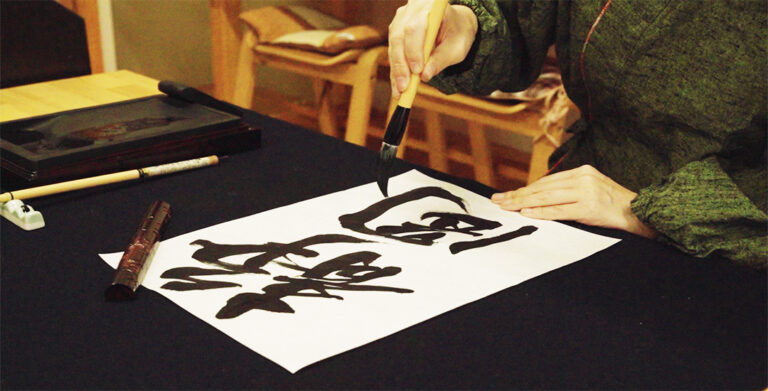
For full details about the Jizo wood carving experience, check the website:
https://exploreshizuoka.jp/activities/places/making-good-luck-charm-of-jizo-statue-wood-carving/

10 Spots to Get Spring Views of Mt. Fuji in Shizuoka

0

Visit Shizuoka on a clear Spring day and you will be treated to breathtaking views of Mt. Fuji – here are 10 great spots to get up close with Japan’s iconic mountain.

SEE MT. FUJI IN SPRING IN SHIZUOKA

BETWEEN 1830 TO 1832, FAMOUS UKIYO-E ARTIST KATSUSHIKA HOKUSAI CREATED HIS 36 VIEWS OF MT. FUJI AS A COLLECTION OF WOODBLOCK PRINTS.

Visiting Shizuoka in Spring it is easy to see how Hokusai was inspired to create these famous works – here are 10 locations to visit to get the best views of Mt. Fuji.

Mishima Station Area

[blogcard url=”https://exploreshizuoka.jp/en/stations/mishima-station/”]

1. FUJI PEACE PARK – GOTEMBA

Fuji Peace Park
Fuji Peace Park

Enjoy a Japanese Garden, Buddhist Stupa and beautiful cherry blossoms make for a great backdrop for photos of Mt. Fuji.

Nearby Chichibunomiya Memorial Park also has a magnificent garden with a wide variety of flowers and blossoms

[blogcard url=”https://gotemba.jp/information/1141/”]

2. HOTEL CLAD – GOTEMBA

Hotel Clad
Hotel Clad

Hotel Clad is a terrific addition to the popular Gotemba Premium Outlet Mall facilities that provide visitors an opportunity to rest from a day of shopping and enjoy views of Mt. Fuji from their room, the restaurant, and while soaking in a hot onsen bath.

[blogcard url=”https://www.premiumoutlets.co.jp/en/gotemba/”]

3. IZU PANORAMA PARK – IZUNOKUNI

Izu Panorama Park
Izu Panorama Park

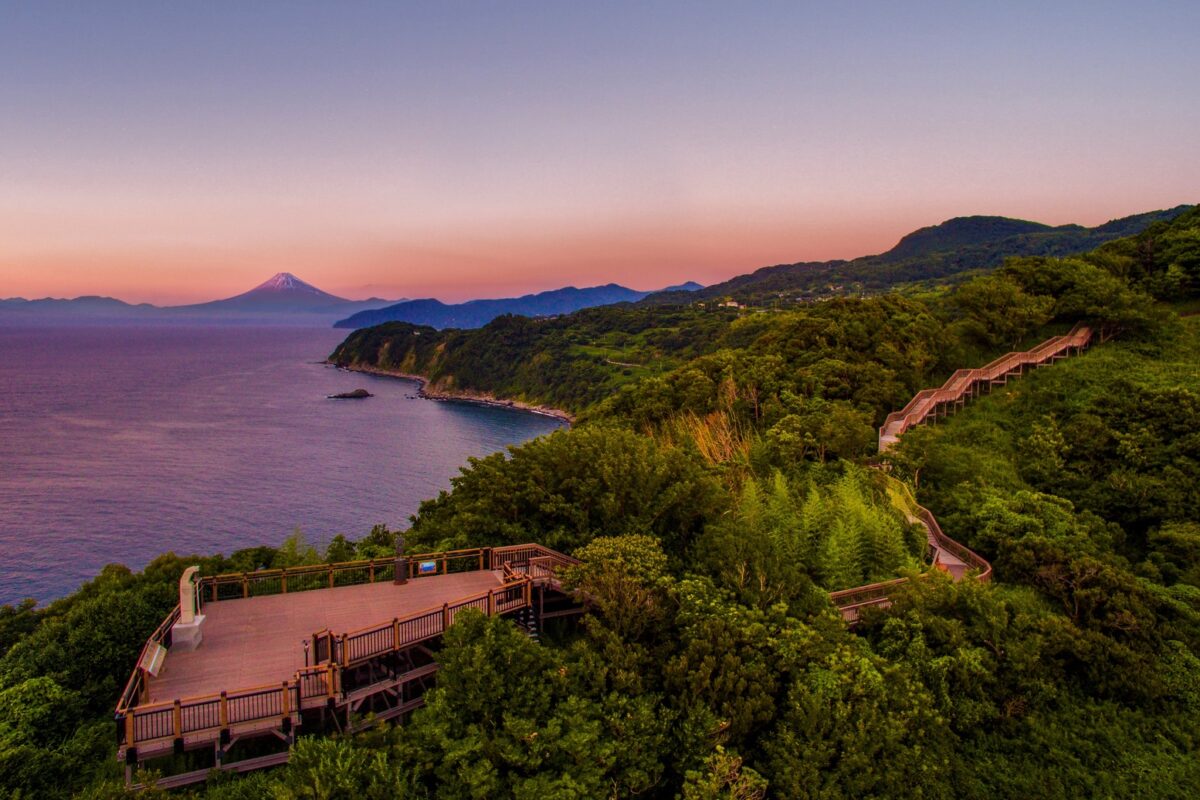
Take the ropeway to the summit of Mt. Katsuragi, which is a vast park connected by walking paths, featuring a wooden terrace, observation deck, and a shrine.

Enjoy a Shizuoka Green Tea, coffee, or lunch while you relax and enjoy expansive views of Mt. Fuji.

[blogcard url=”https://www.panoramapark.co.jp/en”]

Shin Fuji Station Area

[blogcard url=”https://exploreshizuoka.jp/en/stations/shin-fuji-station/”]

4. OBUCHI SASABA – FUJI CITY

Obuchi Sasaba
Obuchi Sasaba

A green tea plantation at the base of Mt. Fuji – 25 minutes drive from Shin Fuji Station.

Power lines & fans have been removed to ensure unobstructed views of Mt. Fuji.

5. URUI RIVER SAKURA – FUJI CITY

Ryuganbuchi
Ryuganbuchi

15 minutes from Shin Fuji Station by car this spot on the Urui River close to Daishinji Temple, known locally as ‘Ryuganbuchi’ is a popular spot for photographers when the riverside cherry blossom trees are in full bloom in late March.

6. MT. FUJI & BULLET TRAIN – FUJI CITY

Mt. Fuji and Shinkansen

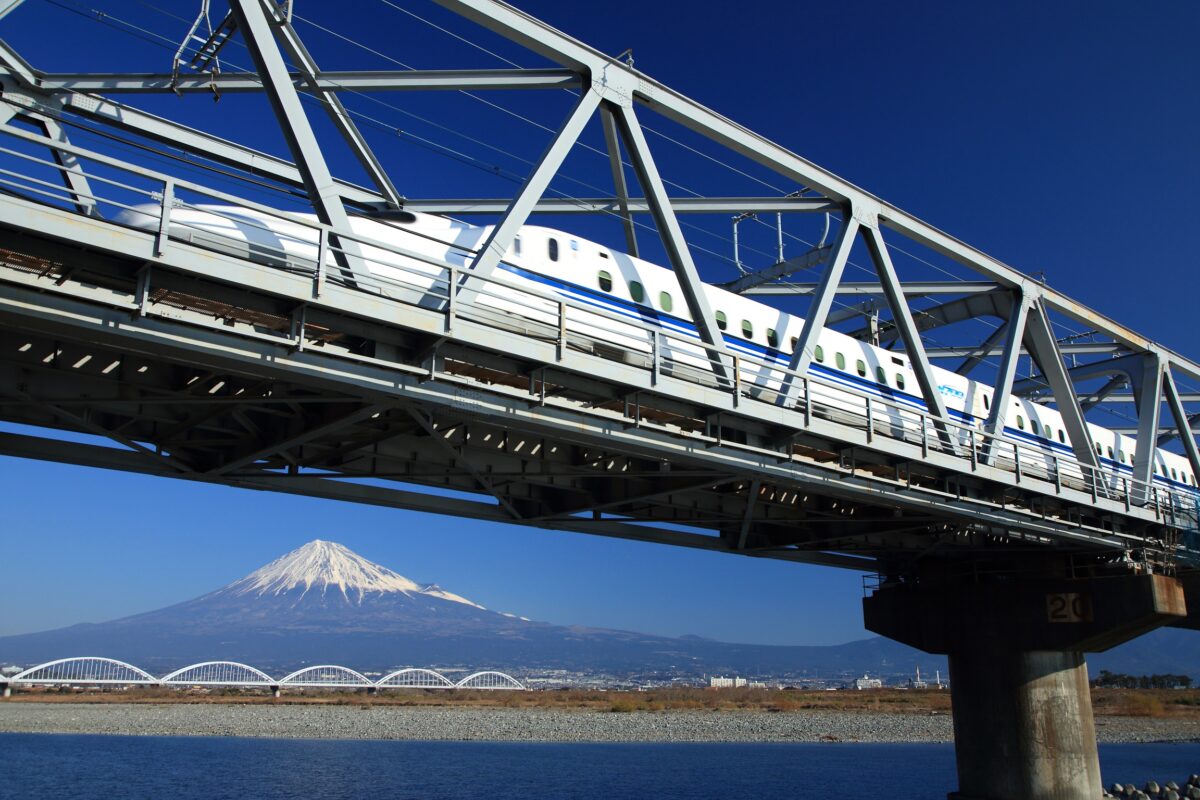
This iconic location seen on many Japanese travel brochures is about 10 minutes drive from Shin-Fuji Station and a popular spot for photographers between March and May as Spring arrives in Shizuoka.

7. LAKE TANUKI – FUJINOMIYA

Lake Tanuki
Lake Tanuki

This idyllic lake in the Mt. Fuji countryside is about 30 minutes from Fujinomiya Station.

Camping is available in the area so that you can awake before sunrise and capture the iconic sunrise and get a shot of Mt. Fuji reflecting in the lake.

8. MT. FUJI PARAGLIDING – FUJINOMIYA

Mt. Fuji and Paragliding

Take off, catch the wind and fly high into the sky.

Located in the heart of the Mt. Fuji Countryside 30 minutes drive from Fujinomiya this popular activity is a great way to get a unique view of Mt. Fuji.

[blogcard url=”https://exploreshizuoka.jp/en/mtfuji/activities/”]

[blogcard url=”https://exploreshizuoka.jp/activities/places/mt-fuji-paragliding-experience/”]

Shizuoka Station Area

[blogcard url=”https://exploreshizuoka.jp/en/stations/shizuoka-station/”]

9. NIPPONDAIRA – SHIZUOKA CITY

Nihondaira
Nihondaira

In the hills high 25 minutes drive from Shizuoka Station Nippondaira is a great spot to get amazing views of Mt. Fuji across Suruga Bay.

Stop for a Shizuoka green tea and sweets at Nippondaira Hotel or Yume Terrace.

10. MIHO NO MATSUBARA – SHIZUOKA CITY

Miho no Matsubara
Miho no Matsubara

Part of the Mt. Fuji World Heritage Miho no Matsubara is just over 30 minutes drive from Shizuoka Station.

Walk through the pine forests to the coast and enjoy views of Mt. Fuji with waves lapping on the beach.

SOME OTHER GREAT OPTIONS

MISHIMA SKYWALK – MISHIMA

SENBONHAMA PARK – NUMAZU

MT. DARUMA – IZU CITY

FUJI MILK LAND – FUJINOMIYA

MT. FUJI WORLD HERITAGE CENTRE, SHIZUOKA – FUJINOMIYA

Tokaido Highway – Yui Juku

0

YUI JUKU

Highlights of the Area: SATTA PASS, TOKAIDO HIROSHIGE MUSEUM, SAKURA SHRIMP, KURASAWA DISTRICT

INTRODUCTION

Yui Juku - Utagawa Hiroshige’s “Fifty-three Stations on the Tokaido”
Satta Pass in Yui depicted in Utagawa Hiroshige’s “Fifty-three Stations on the Tokaido” 

The Old Tokaido Highway became firmly established in the early 17th century as the main thoroughfare for travelers between the new capital of Edo (Tokyo) and Kyoto.

The 16th Post Town of Yui is a small fishing port, and it is said that the town was originally settled by the Yui family after fighting at the Battle of Okehazama as a vassal of the Imagawa Clan in the mid-1500s.

In its day Yui was said to have been a bustling little town during the peak of the Tokugawa Shogunate.

Today Yui Port is most well known as ‘The Town of Sakura Shrimp’ which are caught by local fishermen in Suruga Bay and visitors come to Yui from all over Japan to enjoy them.

Some remnants of the small but bustling post station of Yui remain just to the West of Yui Station in an area called Kurasawa ,which was once dotted with inns.

Just to the West of the Kurasawa area is a winding path up to the iconic Satta Pass viewing deck which offers views of Mt. Fuji towering over Suruga Bay and the Tomei Highway winding along the coastline.

SUGGESTED ITINERARY

It is possible to start your day at either Kambara or Yui Stations.

From either of these stations it is about a 25 minute walk (5 minute taxi ride) to the Yui Honjin Park and Shizuoka City Tokaido Hiroshige Museum of Art – both open at 9am and are closed on Monday.

This is a great place to spend a couple of hours, especially if the weather is good, taking time to walk through the Japanese garden and enjoy a tea ceremony in the historic Miyukitei tearoom.

After a cup of tea stop in at the Tokaido Hiroshige Museum and learn about the process of creating ukiyo-e woodblock prints like the master Hiroshige did 200 years ago.

Ukiyo-e workshop at the Tokaido Hiroshige Museum.

A visit to Yui Port is not complete without tasting the local Sakura Shrimp – Yui Sakura Ebi Kan has a local favorite restaurant just 5 minutes walk from the Hiroshige Museum.

Sakura Shrimp
Sakura Shrimp are called “Jewels of Suruga Bay”.

After enjoying the meal it is about 75 minutes walk along the coast to Satta Pass.

On the way you will pass through the Kurasawa District which is a good place to take a break before the up hill section to the Satta Pass lookout area.

The view from Satta Pass looking out over Suruga Bay to Mt. Fuji is stunning and it is easy to see why Hiroshige chose this location for his iconic woodblock print.

[blogcard url=”https://shizuoka.tokaido-guide.jp/walking_course/4?locale=en”]

MORE INFORMATION

For more information on Tokaido related attractions in English check www.shizuoka-tokaido.biz

[blogcard url=”http://www.shizuoka-tokaido.biz/en/map/pdf/map08en.pdf”]

More Travel ideas around Yui

[blogcard url=”https://exploreshizuoka.jp/en/inspirations/stories/spotlight/spotlight-shizuoka-port-towns-2/#YUI_Shizuoka_City”]

[blogcard url=”https://exploreshizuoka.jp/en/blog/meet-the-locals/discover-the-sights-of-the-tokaido-on-a-two-day-tour-of-shizuoka-city/”]