Home Blog Page 7

An Intimate Fuji Experience: Explore the Deep Forests Surrounding Mount Fuji

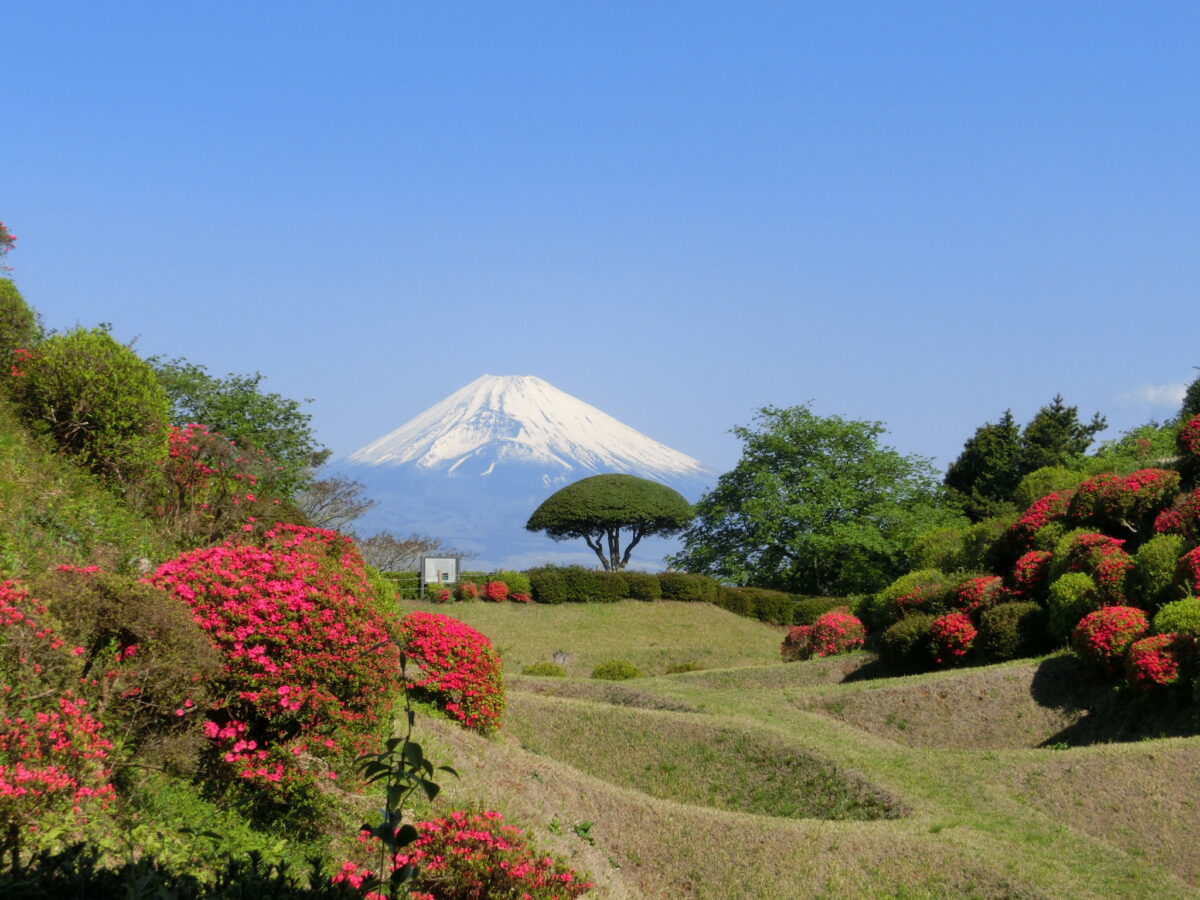
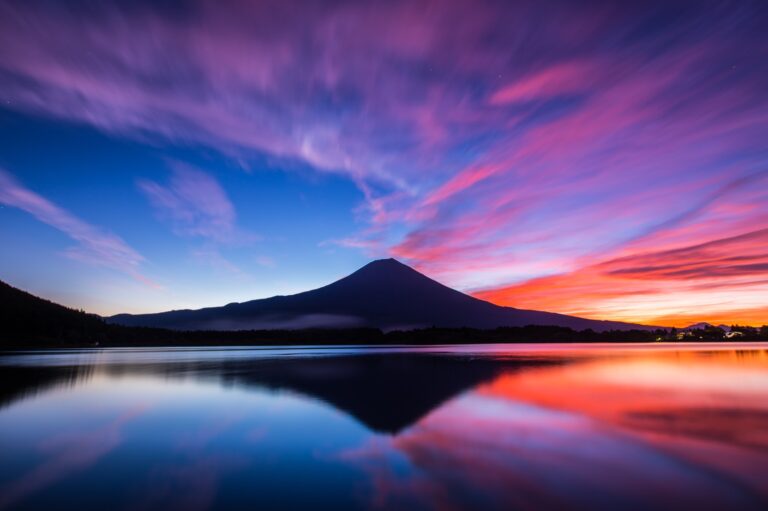
Despite being a resident of Tokyo where one can get clear views of Mount Fuji, Japan’s highest mountain (3.776-meters), on most winter days, any glimpse of this picture-perfect mountain still manages to evoke the delightful feeling of awe in me. The iconic and perfectly symmetrical conical shape of Mount Fuji is a sight so impressive that it unintentionally overshadows anything else that surrounds it.

FujiEcoWalk
©Burcu Basar

Mount Fuji`s snow covered peak is, however, not the only outstanding aspect of Japan’s highest mountain. Recognized by UNESCO as a World Cultural Heritage in 2013, Mount Fuji and its surrounding area is a “sacred place and source of artistic inspiration” where the landscape beauty and the cultural significance of the region are irrevocably integrated. Believed to be home to gods, the volcano has, since the 12th century, been the center of religious training, mountain-top worship sites and many pilgrimage routes and has continuously inspired many artists, both Japanese and western. In addition to its cultural significance, features of its unique geology, including lakes, lava tree molds, and springs, have also been recognized as part of 25 unique components that make up the UNESCO designated heritage area.

FujiEcoWalk
©Burcu Basar

Today I am in Gotemba, accessible by train within 2-hours from central Tokyo, for my most intimate Mount Fuji related experience yet. I will explore one of the many hiking trails at the footsteps of the mountain that will make my way through the dense forests that host ancient pilgrimage routes, shrines, and caves.

Hiking Through the Mystical Forests Guarding Mount Fuji

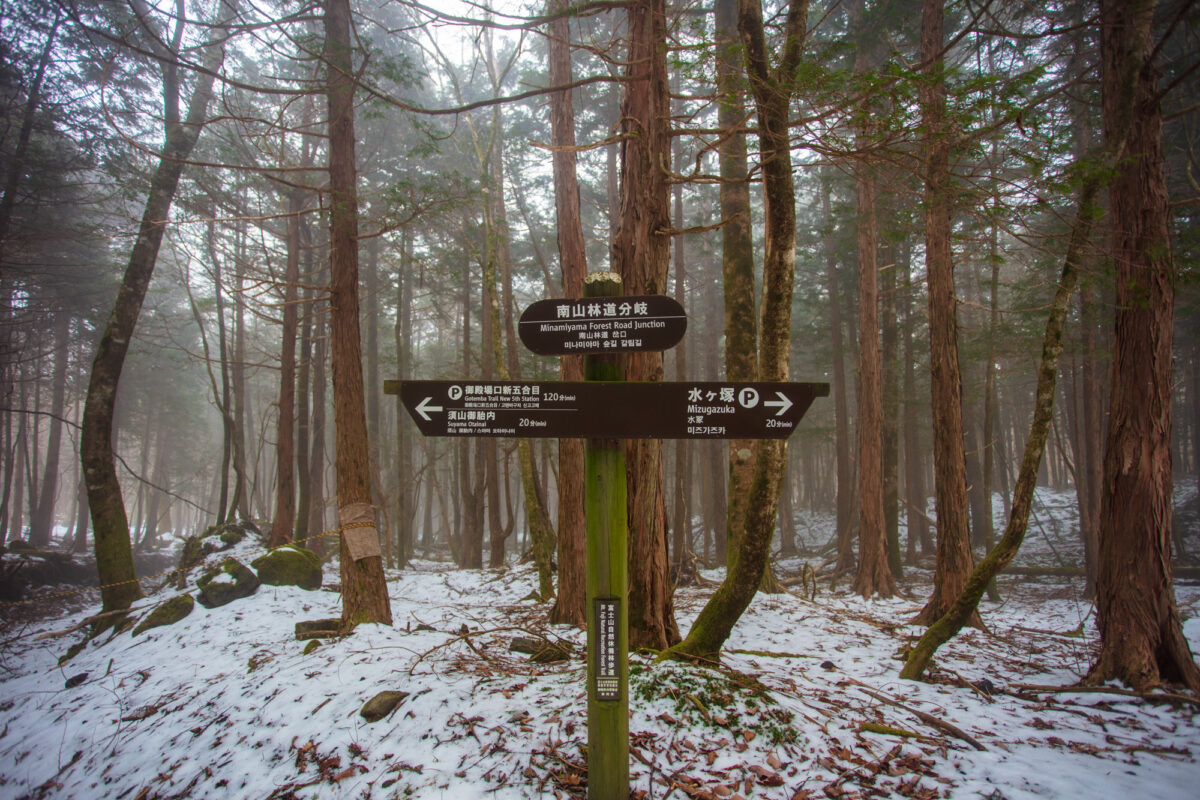
We meet our guide at Mizugazuka Parking Lot – a 30-minutes car ride from Gotemba (and also easily accessible by bus during the climbing season). This is also where climbers leave their cars to get on the shuttle services that take them to the trailhead of Fujinomiya climbing route, one of the more popular of many routes leading to the peak of Mount Fuji. However, we are here today not to hike to the summit but to explore one of the 13 hiking trails that will introduce us to some of the cultural and geological aspects that make Mount Fuji special beyond its iconic peak.

13 Moderately Difficult Hiking Courses to Choose From

According to our guide, our course for today, Course E, will approximately take 2.5-3 hours at a leisurely pace. The trail will first take us to Suyama Otainai, a lava cave hidden behind a modest torii gate. The route will then start to gently climb to Suyama Kudari where the hikers can take a short detour to Makuiwa, a lava formation created as a result of volcanic eruption. We will then walk by Minamiyama Rest House and slowly make our way back to our starting point through an almost entirely flat path that passes by Suyama Nobori. Occasionally, hikers can also encounter deers or their footsteps on the trail.

FujiEcoWalk
©Burcu Basar

Our starting altitude is 1,450-meters and the highest point of our climb will take us to 1,620-meters. Thanks to the gentle terrain and relatively minor altitude increase, this trail is recommended for most people including families traveling with their kids.

Follow the Fir and Oak Trees

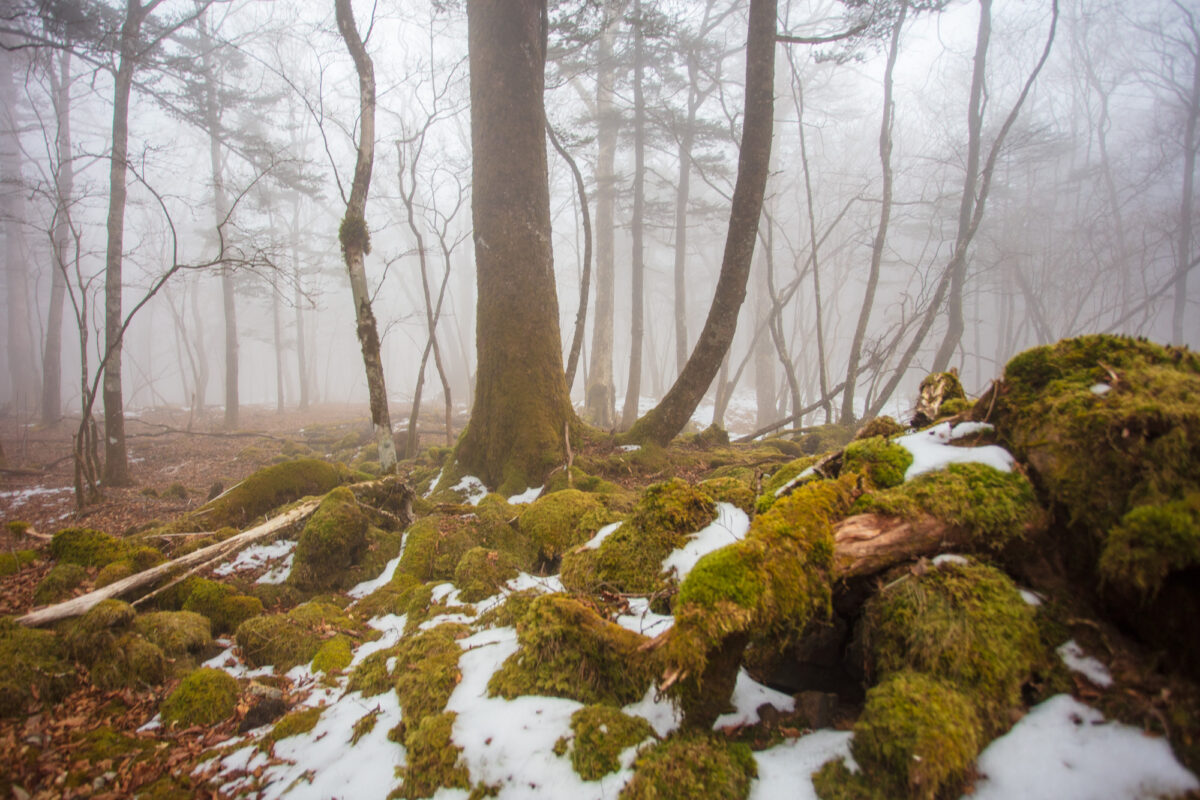
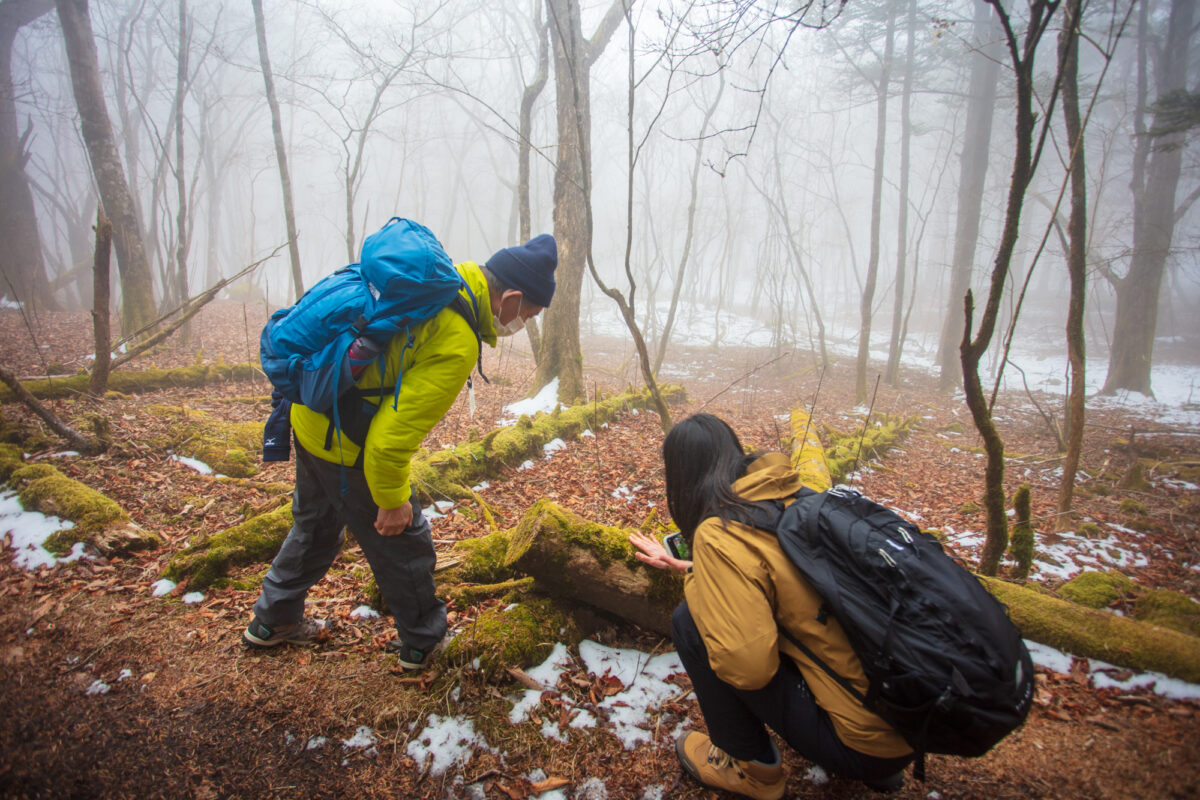
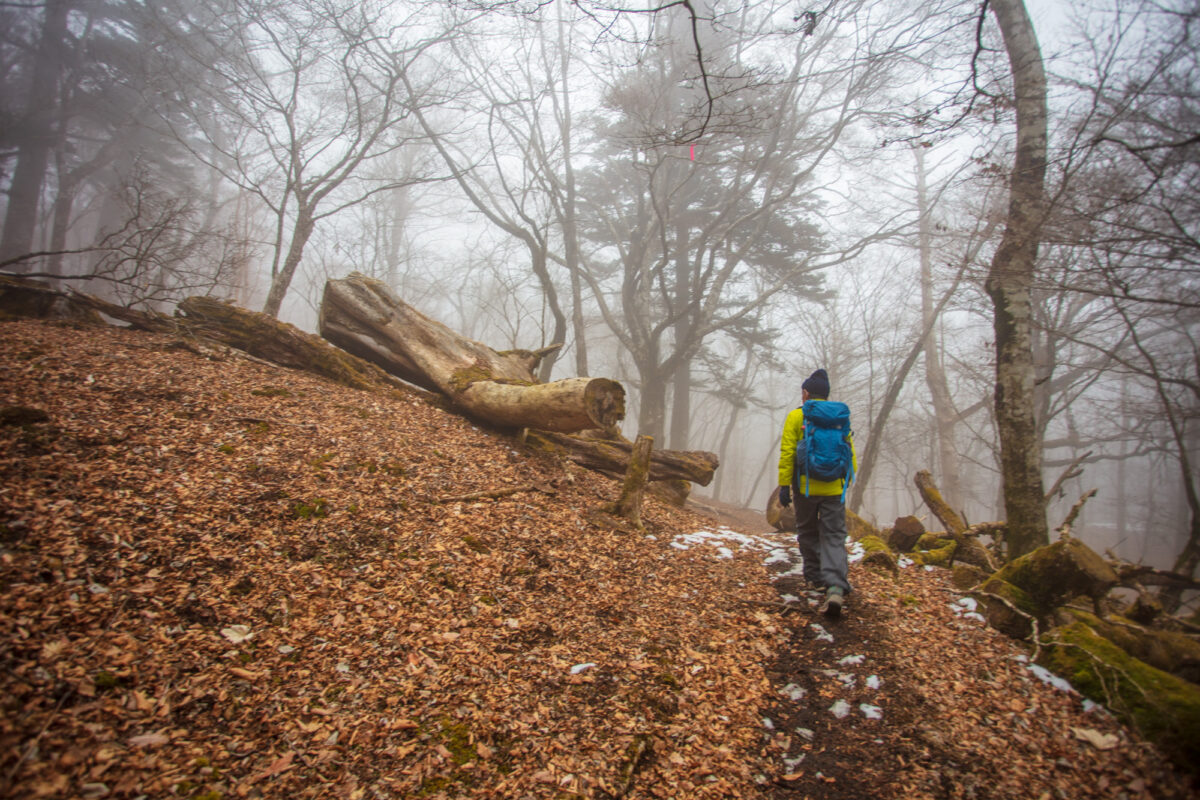
While we are right at the foot of Mount Fuji, the closest that I ever got to this beloved mountain, today the peak is entirely hidden by a thick layer of fog. I am, however, secretly happy about the weather conditions today. The light rain and the fog elevate the mystic aura of the forests guarding Mount Fuji and somehow allow me to better connect to and appreciate all the other components that make the area unique. The dense fog dominating the forest creates the perfect mystic atmosphere that matches the allure of the intriguing accounts of the historical pilgrimage routes dating back to the 14th century and the legends surrounding mountain goddesses. 

FujiEcoWalk
©Burcu Basar

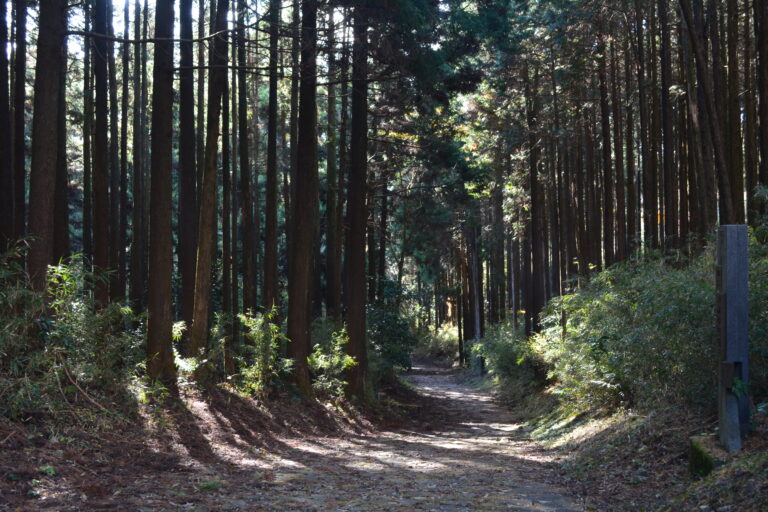
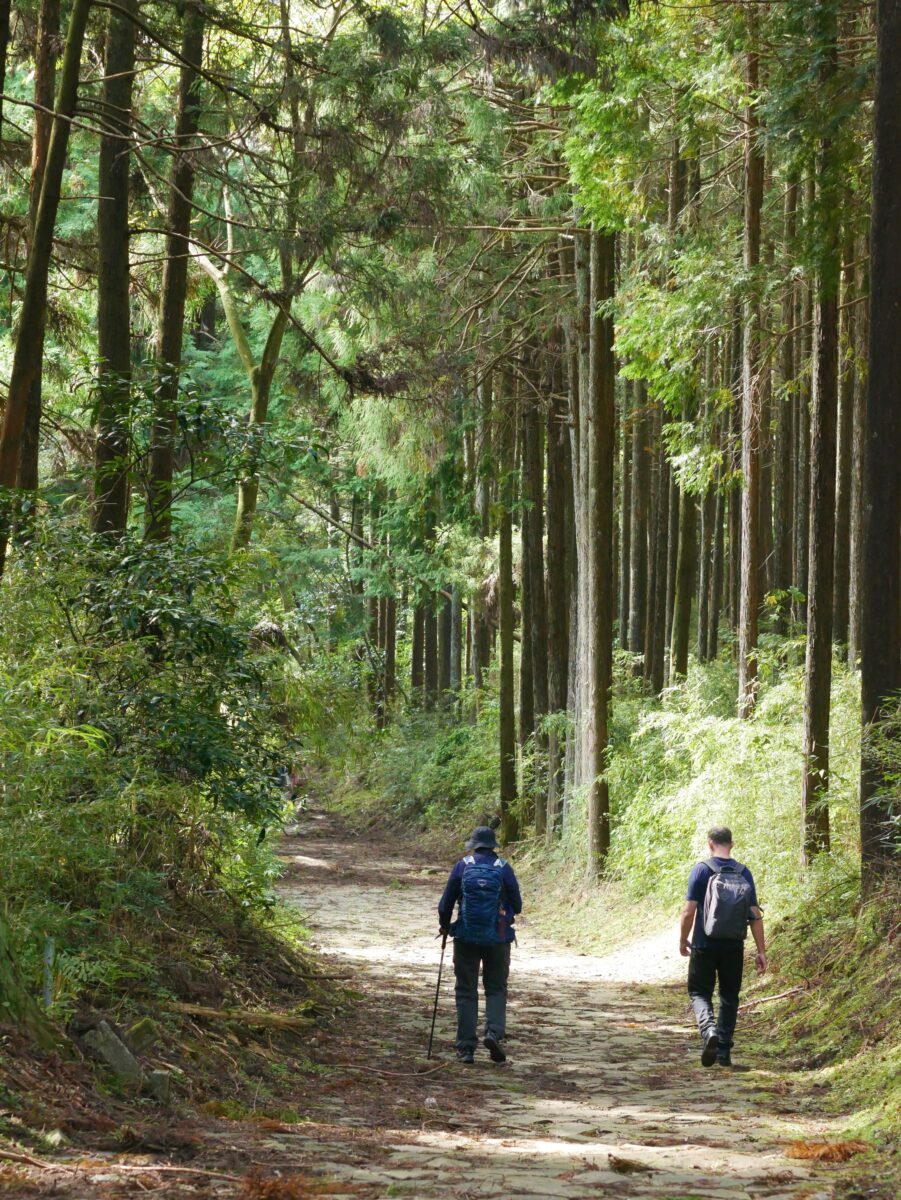
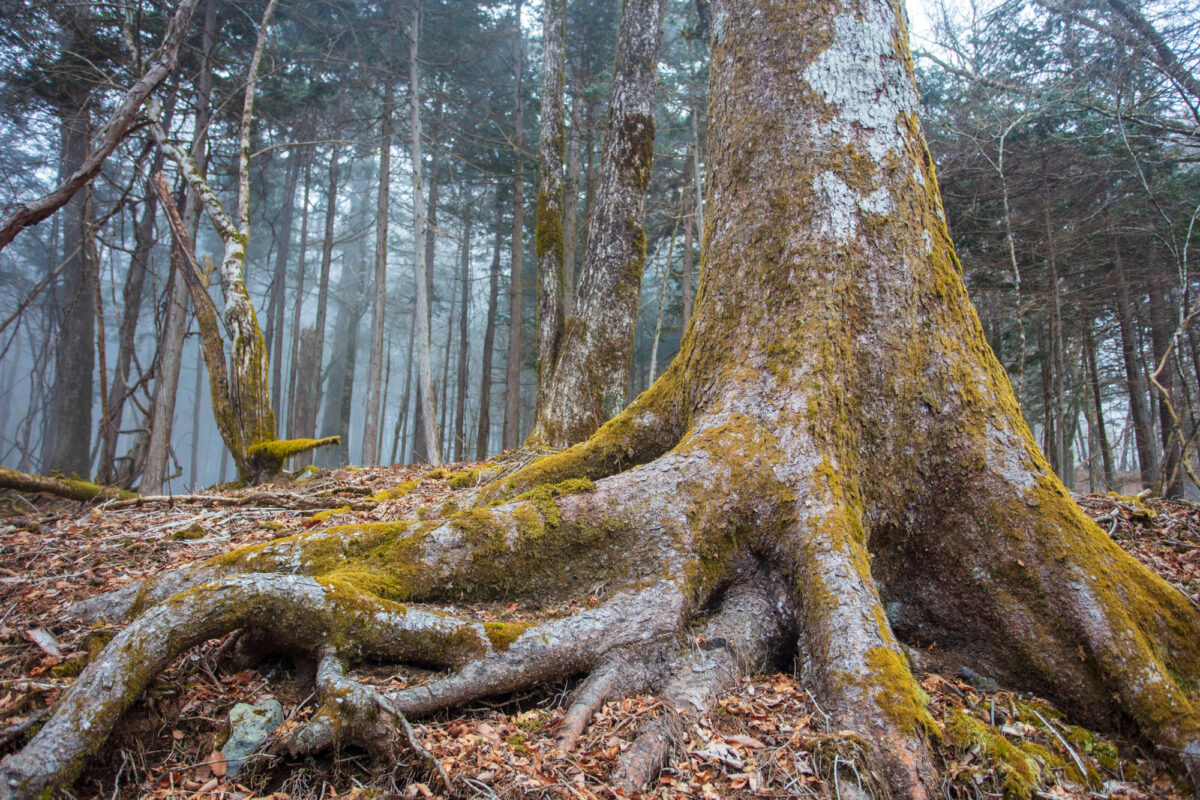
The trail starts with a mixture of planted fir trees, native oaks, and Japanese larch, among many other specimens. This section of the forest where moss covered trees and rocks create a perfect contrast with the partly snowy and foggy scenery takes us to Suyama Otainai in a short 20-minutes – a volcanic cave created by gas exploding inside the lava.

Suyama Otainai, a Cave Guarded by the Sea of Trees

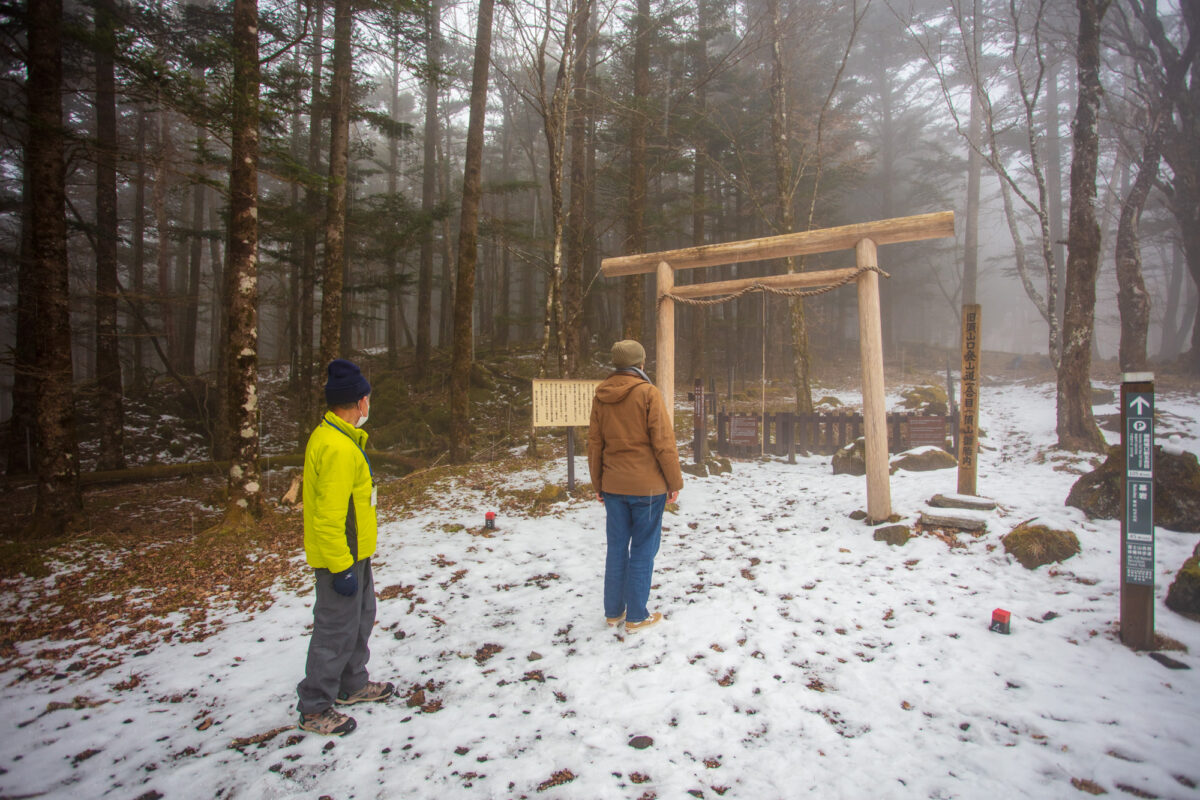
The almost unnoticeable entrance to the cave is hidden right behind a picturesque torii gate. This is also one of the stops along the historical Suyama Ascending Route to Mount Fuji (present day Gotemba Ascending Route), the history of which is traced back to 1486. The Suyama route, with the longest distance and the largest elevation difference, is known to be one of the most challenging routes to climb Mount Fuji.

Suyama Otainai cave was named “Otainai” because its shape resembles inside of human body. The cave is large enough to accommodate our group of three people (but make sure to watch your head!). 

FujiEcoWalk
©Burcu Basar

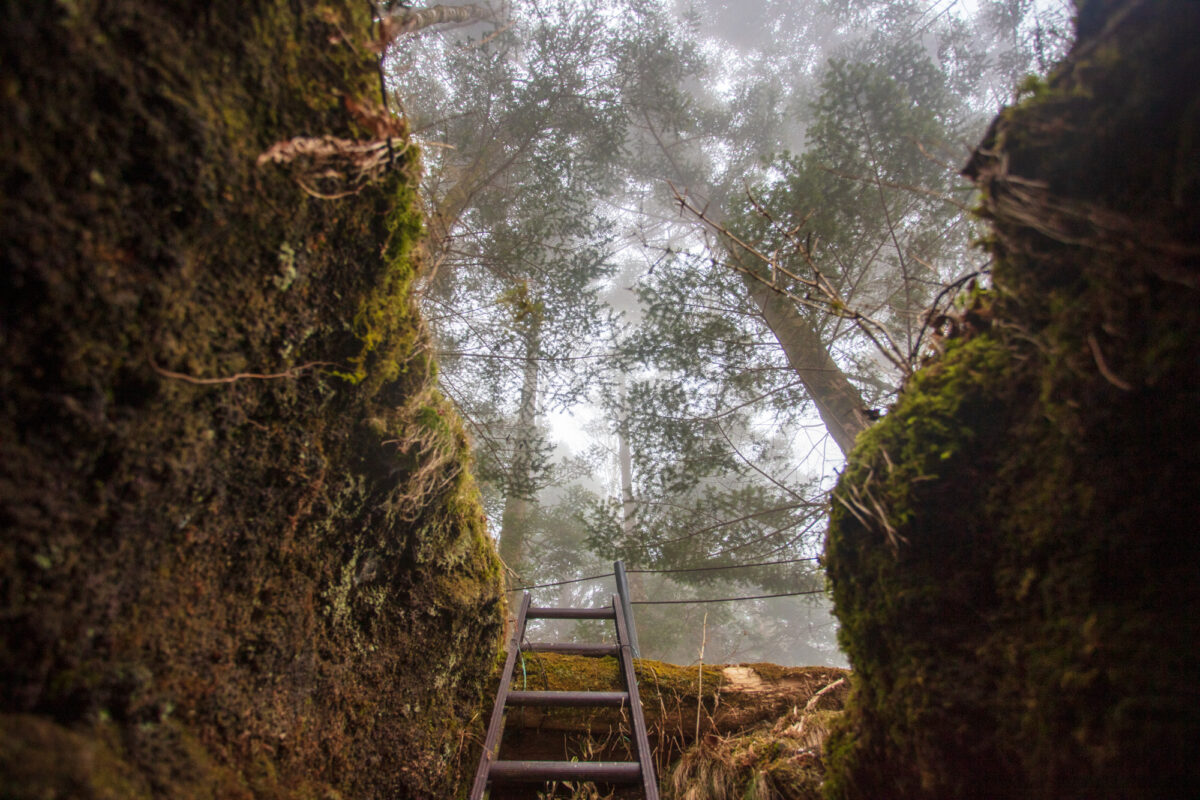
Konohanasakuya-hime is the goddess of Mount Fuji. Inside the cave, there is a small statue of her holding three kids. The cave was known as a place of praying for safe births because she was also believed as a guardian goddess of that. We enter the cave from the opening at the torii side and leave at the other end by climbing the steel ladders that open to a forest – creating the feeling of being embraced by the sea of trees. 

FujiEcoWalk
©Burcu Basar

After our brief stop at Suyama Otainai, the route starts to climb gently for 30-minutes leading to Suyama Kudari Station. While the weather is still comfortably mild, it soon starts to snow. This is our guide`s sign for today to skip the short detour to Makuiwa – a rock formation formed as a result of the pile of lava and scoria stream.  

Closing the Loop

To close the loop and get back to the Mizugazuka Parking Lot where we started our hike, we have another 40-minutes to hike on a very flat but picturesque trail, made even more delightful thanks to the light snow. We soon pass by Minamiyama Rest House, a relatively large shelter for those looking for a break. However, we do not feel tired, and each enjoy silently walking through the forest enjoying the misty atmosphere and the light snow.

FujiEcoWalk
©Burcu Basar

There are a number of sections along this route where one can get almost face to face with the peak of Mount Fuji, but not today. Today is a day to momentarily forget about the peak and more intimately enjoy the moss-covered trees and rocks, the trees affectionately embracing each other, and the infinite sea of branches that dominate the skyline. Lost in our own thoughts in the welcoming silence of the forest, we are soon back at the trailhead. The snow is now getting stronger, signaling to us that it is time to head back to Gotemba. 

How to Book the Mount Fuji Eco Study Walk

The hiking tour can be booked for any day of the week with three days advance notice. The meeting point is Mizugazuka Parking Lot. There are two slots to choose from – the morning hike starting at 9am and the afternoon hike starting at 1:30pm. There are both English and Japanese speaking guides. For pricing and booking, please check this link.

How to Get to Mizugazuka Parking Lot from Tokyo for Mt. Fuji Eco Study Walk

Tokaido Main Line connects Tokyo Station to Kozu Station in 70 minutes. From Kozu, visitors can take the Gotemba Line to travel to Gotemba (about 50 minutes). Gotembaguchi 5th Station Bus Line connects Gotemba Station to Mizugazuka Parking Lot (55 minutes) during climbing season in summer or take a taxi from Gotemba Staion.


Discover the Traditional Japanese Art of Chusen Some Dyeing at Nihashi Somekoujyo in Hamamatsu

In the city of Hamamatsu in Shizuoka Prefecture an ancient Japanese dyeing technique called chusen some is still practiced to this day. Originating from the 19th Century, a handful of craftsmen in the city specialize in chusen some, a skill that has long been associated with Hamamatsu. 

Just to the north of Hamamatsu city center is the workshop of Nihashi Somekoujyo. Founded in 1927, Nihashi Somekoujyo continues to practice this traditional and unique hand dyeing technique. Their spectacularly decorative fabrics are used primarily to make yukata, a light kimono worn during the summer, as well as decorative hand towels made from cotton, called tenugui. 

At Nihashi Somekoujyo visitors are able to learn the basics of chusen some by creating their own tenugui hand towel. This hands-on experience introduces each stage of the dyeing process, using traditional tools, materials and methods to create your very own tenugui.  

Making Your Own Hand Dyed Tenugui at Nihashi Somekoujyo’s Workshop

Inside Nihashi Somekoujyo dyeing workshop
©James Daives

Situated on a normal residential street, from the outside Nihashi Somekoujyo’s headquarters gives no indication to the labyrinth-like workshop that lies inside. On stepping into the factory you’re met by all manner of whirring machines, bundles of fabrics, a maze of pipes, plumes of steam, and a whole lot more besides. 

Dotted around the factory are numerous examples of the gorgeous fabrics that are made here, from scraps of works in progress to huge rolls of finished pieces ready for shipping. In one corner of the workshop is the workstation where you’ll begin creating your own tenugui, led by the expert hand of one of the factory’s employees. Here you are taken through the first steps involved in the techniques of traditional hand dyeing. 

Learning the Traditional Dyeing Technique of Chusen Some

Chusen some tenugui print stencil
©James Davies

The process begins by carefully spreading a unique liquid over a stencil which sits on top of a small section of a long roll of cotton fabric. The stencil is pre-made and features a collection of symbols and images of things that Shizuoka Prefecture is famous for, including Mount Fuji, green tea, cherry blossoms and local foods such as oranges and eel. 

The liquid that is spread over the stencil is a brown gooey mixture made from seaweed, rice flour and clay. This is evenly applied to the fabric firstly by spread from right to left, and then back across the stencil from left to right. 

Applying mixture to tenugui fabric
©James Davies

The stenciled areas will later be decorated using different colored dyes. Later on in the process the seaweed, rice flour and clay mixture that’s spread across the fabric will be washed away and this area will be left as the same color as the fabric. 

After the first application of the seaweed, rice flour and clay mix is spread over the fabric the stencil is raised. Another layer of the roll of fabric is carefully laid out on top of the area to which the gloopy mix has just been applied. The stencil is then lowered back into place and another spread of the mixture is applied. 

First spread of tenugui mix on fabric
©James Davies

As the total length of the cloth is around 7 meters, this process is repeated several times. This will create a repeated pattern along the whole length of the fabric which will be neatly folded into several layers by the time this stage is completed.

Preparing the Fabric for Dyeing

Once the clay mixture has been applied several times across the full length of fabric the next step is to quickly dry it and seal it in place. For this the folded fabric is unceremoniously placed on the floor of the workshop and covered with sawdust. The sawdust is brushed over the fabric with a broom before limestone is also applied, sticking to the clay mix and helping it to dry out.

Brushing sawdust onto the tenugui print
©James Davies

The next step is to add color to the patterned print. Still folded into layers, the fabric is scooped up off the floor and placed onto a special work surface not too dissimilar to a grill. This work surface is connected to an air pipe on the underside, the reason for this will become clear later. Before adding the dye the first thing to do is to separate the various sections of the print so that different colors can be applied to different areas without running into each other. 

Applying the Dye and Adding Color

Creating borders before applying dye colours
©James Davies

To do this, another thick glue-like mixture is carefully poured around each motif using a method that is very similar to piping icing onto a cake. With this done the colors can now be added. 

There are a whole range of coloured dyes available to use to decorate your tenugui. The dye is poured directly onto each section from metal cans with long thin spouts. It’s entirely up to you which colors you use on which image, and you can let your creative side go wild. 

Adding dye to chusen some fabric
©James Davies

There are also a few additional advanced techniques that you can use when adding the dye to create an extra special final tenugui. Firstly you can pour more than one color onto a motif to create decorative patterns. To take it up a notch, you can also create clever gradients by carefully staggering different colored dyes across specific areas of the pattern. This advanced technique can give parts of the image even more depth and colorful detail. 

Adding dye to chusen some fabric
©James Davies

Because the cloth is folded into layers, the dyes run through to each pattern that has been printed onto the fabric. This is how the colors are applied to all layers of the fabric with one pouring of dye. When the colors are poured the air pipe underneath is opened up which sucks the dyes through to the underside, ensuring an even spread of color on each print. Once dye has been applied to all areas, a solution is poured over the top which binds the colors to the fabric.  

The Final Stages – Washing and Drying the Cloth

With the color added, the tenugui is starting to take shape. The next stage is to thoroughly wash the fabric to remove the original seaweed, rice and clay mix as well as the thick borders that were applied for coloring. In days gone by this would have been done by hand in a river, but today the fabric is unfurled and tied to a purpose-made contraption that splashes it through a large tank of water at a frenetic speed. Within a few minutes all of the remnants of the unwanted mixtures are gone, leaving behind only the colorful dyes and the stenciled symbols of Shizuoka Prefecture.

©James Davies

After being washed the full fabric needs to be unraveled and hung up briefly to dry and to regain its shape. This is when you truly appreciate the full size and scale of the piece that you have just created. Fully unfurled and hanging from the rafters of the workshop’s drying room, the final fabric is close to seven meters in length. 

Creating the Final Tenugui – The Perfect Souvenir from Hamamatsu

©James Davies

After hanging for a short while, the fabric is taken back to the main workshop and placed inside an industrial drying machine that will remove any remaining moisture within a couple of minutes. Once fully dried the full length fabric is cut down into individual tenugui, creating a wonderful souvenir from your time learning all about the traditional dyeing technique of chusen some in Hamamatsu.

How to Book a Chusen Some Dyeing Experience

You can enjoy your own chusen some dyeing experience at Nihashi Somekoujyo. Click here for more information about the tour and to book your own visit to the workshop by completing the booking form at the bottom of this page. 

How to Get to Nihashi Somekoujyo

Nihashi Somekoujyo’s workshop is a two minute walk from Enshubyoin Station in Hamamatsu. Enshubyoin Station is just two stops from Shin-Hamamatsu Station in the center of the city on the Enshu Railway Line. The train ride from Shin-Hamamatsu to Enshubyoin Station takes only two minutes.

Feast for the Stomach and Eyes, Experience Sushi Making Dressed in a Kimono

Sushi/nigiri and kimono are likely the two features of Japanese culture that are best known by international audiences. One is a feast for the stomach and the other for the eyes. What if you could experience both at the same time?

The atmospheric Miyoshi Restaurant located in Susono City in Shizuoka Prefecture offers a nigiri/sushi making experience while dressed in traditional kimono in a very welcoming environment in the company of the restaurant owners. Needless to say, the experience also involves eating the delicious sushi prepared under the guidance of the masters. And for those looking for something more, there is the option of matching your sushi with delicious sake, a Japanese alcoholic drink prepared by fermenting rice.

Miyoshi Restaurant in Susono of Shizuoka Prefecture

Within a mere ten minutes of Iwanami Station is Miyoshi, where I am greeted by a mother and daughter duo with big inviting smiles on their faces. While I took the taxi today, the restaurant offers a free pick-up and drop-up service from the station. 
Our three-hour long program will start by picking the kimono and obi – the decorative belt – that the two masters will help us put on. Once dressed in our kimonos, we will then prepare our own sushi and enjoy a long leisurely lunch. We will then have the opportunity to have our photos taken, all dressed up in the kimono, at various photo spots around the restaurant premises. 
While the experience offers the unique opportunity to combine two beloved aspects of Japanese culture, kimono and the art of sushi making, I can sense that what will make it even more special is the two masters who will guide us through the experience of wearing a kimono and making sushi. Right from the beginning, in the company of the mother and daughter duo, I feel like I am surrounded by family. There is a heartwarming coziness in the air. It feels as if, while giggling and chatting, we are all together getting ready for a celebratory event. 

Pick Any Kimono You Like

SushiKimonoExperience
©Burcu Basar

After a brief discussion on the content of our program today, I am soon guided to one of the large back rooms of the restaurant where a large selection of kimonos each featuring a different yet equally captivating pattern and color awaits us. Visitors are free to choose any of the kimonos on display. The colors of the kimonos on display look and feel particularly bright and cheerful – matching the spirit of my hosts. The kimono featuring flower patterns on a beige background looks very classy yet colorful. We match it with a dark blue obi to create a color contrast to make each component stand out on its own.
SushiKimonoExperience
©Burcu Basar

We are now ready to get dressed in the kimono. One can never truly appreciate the efforts that go into wearing a kimono without personally experiencing the process. While the two masterful ladies make the whole process feel smooth and easy, this is a process that requires experience that comes from years of practice.
The Admirable Effort Beyond Kimono Dressing

What makes the kimono wearing process a more technical task than regular clothing is the layers that go underneath and over it. While the three main components of a kimono that are visible from the outside are the obi, the specific belt worn with kimono, tabi, the socks worn under kimono, and the kimono itself, the garments worn underneath it are equally as important.

SushiKimonoExperience
©Burcu Basar

Hadajuban is the robe worn under the kimono. It can come either as one piece or two top and bottom pieces. The hadajuban helps to eliminate the direct contact between the skin and the fabric of the kimono to keep the fabric fresh and clean. Datejime is another garment, invisible from the outside, that is put on to secure the hadajuban.

Being dressed by two kimono masters is a special and truly pampering experience. With all the attention focused on the person getting dressed, one feels like they’re getting ready for their own wedding. Once the underlying garments are put on, followed by the kimono, the more difficult task of putting on the obi begins. The obi does not have any fastenings, so it needs to be tied in a bow or another form of knot to be worn. Today, we are in good hands and this final process is completed in no time. 

Make and Eat Your Own Sushi

Once dressed in a kimono and feeling particularly stylish, we move to the next room where we will use the pre-cooked and seasoned rice and raw fish to make our own nigiri/sushi. This process, under the guidance of the master, involves shaping the pre-cooked rice, adding wasabi (as a fan of spiciness, I may have been a little too generous), and then assembling it with the already cut raw fish.

Sushi
©Burcu Basar

There are many available ingredients that, fortunately, also include my favorites – salmon and tuna fish. In addition to the nigiri, we also roll some sushi using seaweed. The main difference between nigiri (raw fish put on top of vinegared rice) and the gunkan-maki sushi is the seaweed that is used to roll the rice and fish into. While I enjoy raw fish almost daily in Japan, either in the form of sashimi, nigiri or sushi, this is the first time that I get to prepare it for myself.

SushiKimonoExperience
©Burcu Basar

Again, as we are like a family, we giggle and chat while each preparing our own sushi. I must admit that – thanks to the help I got from the master – my lunch set tastes particularly good. Instead of sake, today we are enjoying hot tea alongside our sushi. But I would love to come back another day to taste the sake alongside the sushi. While the generous set of sushi that we prepare is more than enough to feel full, the restaurant also offers delicious tonkatsu sets (breaded, deep-fried pork cutlet) for those who are hungry for additional tastes. 

Get Your Photo Taken Dressed in a Kimono

kimono
©Burcu Basar

Once we finish our delicious lunch, it is time to take various photos on the large premises of Miyoshi Restaurant. The owner guides us to different sections of the property that make for an ideal spot to showcase our kimonos. To add to the allure of the scenes, she also provides us with umbrellas. Miyoshi Restaurant occupies a large yet atmospheric area. The venue, which can also be booked for memorial or celebratory events, includes many different spots ideal for photography sessions. 

3 hours pass by very quickly. Undressing from the kimono takes less time than the dressing phase. Once we are back in our regular clothes, which now feel a little too bland to be honest, we hug the owners and say our goodbyes. It sure feels like saying goodbye to family.

How to Book the Sushi Making and Kimono Wearing Experience

The experience can be booked for any day of the week except for Thursday. Advance notice of five days is required. The facility offers free pick-up and drop-off service from JR Mishima and JR Iwanami Stations. Miyoshi also accommodates any dietary preferences as long as it is communicated two days before the date of the experience. For pricing and booking, please check this link.

How to Get to Miyoshi Restaurant from Tokyo

Tokaido-Sanyo Shinkansen connects Tokyo Station to Mishima Station in 50-minutes. The restaurant offers a free pick up service from the Mishima Station to the facilities. 

Discover Shimoda on Foot, an Idyllic Town with Rich History

As the train moves along the Izu coast – from the comfort of the warm wagon – I feel grateful for the rain. Thanks to the dramatic waves, the coastal route that connects the major onsen town of Atami to the port town of Shimoda on the southeast coast of Izu peninsula looks exceptionally atmospheric and picturesque today.

On a sunny day, Shimoda is one of Japan’s best answers to idyllic Mediterranean beach towns centered around a small and cozy port. There are many tiny yet stylish cafes ready to host its guests who had likely spent the day at one of the many beaches around the town. While the light rain today partially hides the town’s summerish vibes, it creates the perfect atmosphere to delve into the history of Shimoda that holds a very influential place in Japan`s history.

I am here today to join a walking tour of Shimoda facilitated by the Izu Peninsula Geoguide Association to introduce visitors to the history of the town that is also greatly linked to its unique geography and geology. Izu Peninsula’s geological history dates to 20 million years ago when the peninsula was formed of a group of submarine volcanoes that were located about 800-kilometers (500 miles) south of mainland Japan. The peninsula is today recognized as a “global geopark” by UNESCO, which underlines the fact that Izu Peninsula is one of the very few places where it is possible to trace the numerous and dramatic changes of volcanism for such an extended period of time. Our friendly guide Nakada-san is from Izu Peninsula Geoguide Association, a group admirably devoted to introducing many wonders of the Izu Peninsula, including unique geology, biodiversity, culture and history, to the visitors. Shimoda, like the rest of Shizuoka Prefecture, is a place with multiple layers and many wonders.

Shimoda, the Town Where Japan Officially Opened Its Doors to Westerners

Our tour today mainly focuses on the sites that relate to the history of Shimoda and highlight the importance of this beautiful seaside town in terms of the relation between Japan and the western world. Shimoda is one of the places that witnessed the signing of a series of treaties between the United States of America and Japan, which ended Japan’s decades long isolationist policy that closed the country’s borders to foreign ships (except for the Chinese and Dutch). 

Shimoda station

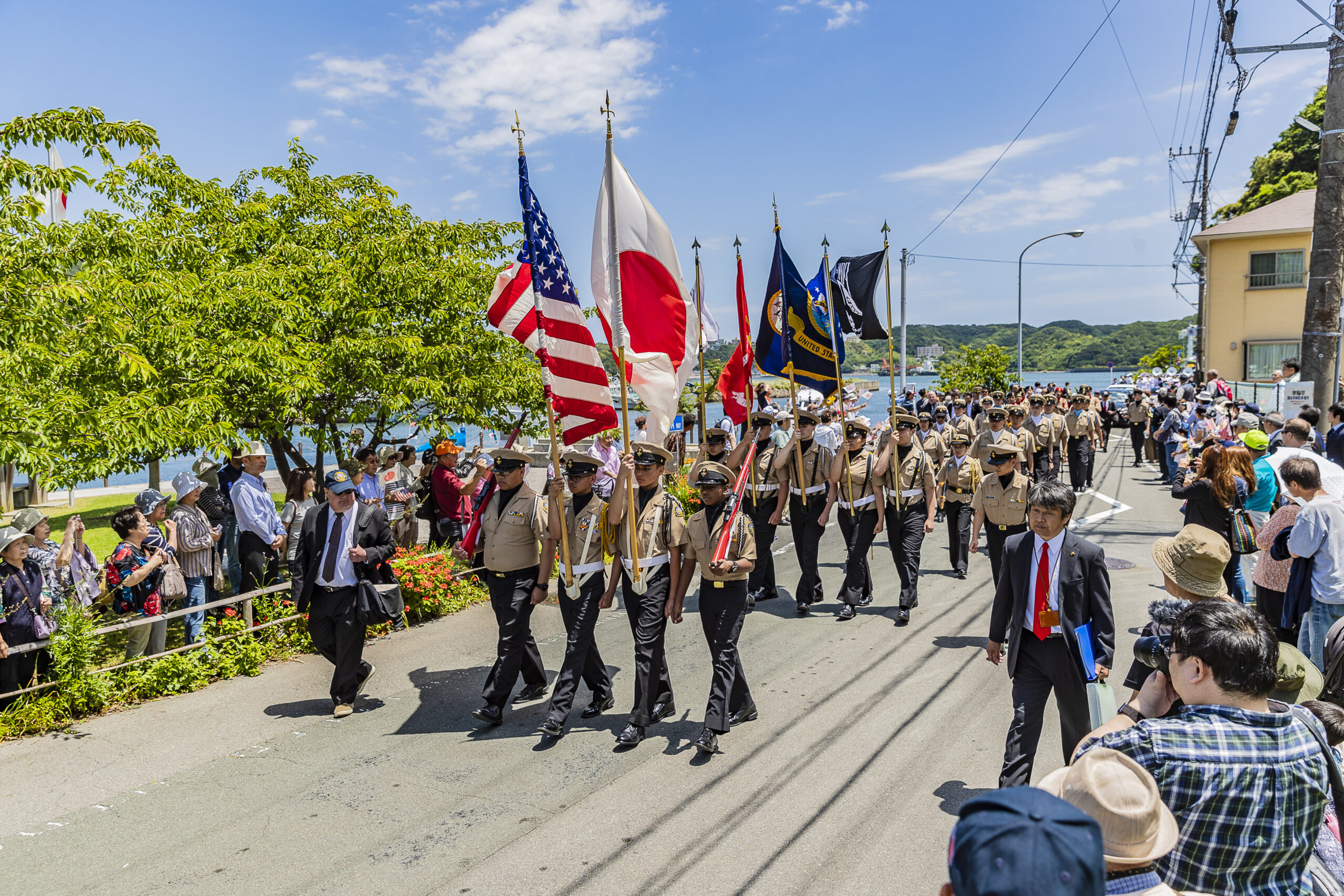
Right outside the train station, we are greeted by the small replica of what is referred to as Perry’s Black Ship. The name comes from the American commodore Matthew C. Perry who traveled with its fleet to Japan and eventually to Shimoda in 1853 to initiate the opening of Japan’s ports to US ships. This influential event, which in 1854 resulted in the signing of a treaty between Japan and the United States that legally formalized Japan`s opening of its borders to the world, is annually celebrated in May to pay tribute to the history of the town and once again recognize the importance of maintaining good relations with the outside world. The set of treaties executed following Perry`s arrival (that include both the Kanagawa Convention executed in Yokohama and the Treaty of Friendship executed in Shimoda) gave the American ships the trading rights at Shimoda and Hakodate ports, located in Hokkaido, and also enabled the opening of an American consulate in Shimoda.

Ryosen-ji Temple, a Picturesque Journey to the Days of Exploration

Shortly after, our tour takes us to the atmospheric Ryosen-ji Temple – the very same location where the Treaty of Friendship was signed between Japan and the USA in 1854. 

Ryosen temple

Ryosen-ji Temple feels very cozy with its many rooms and an inner garden – almost like a house, especially on this rainy day. I soon find out that the temple, established in 1635 during the reign of Tokugawa government, was originally used as a guest house for government officials.

ShimodaTemple
©Burcu Basar

The head priest, who is fluent in English, leads us to one of the larger rooms. Following a brief introduction about the history of Ryosen-ji Temple, he introduces us to the replica of some of the original pieces from the Black Ship Collection that is in the possession of the temple. The large collection entails around 3,000 original items from a period between the 16th and 19th centuries and includes maps, drawings and various crafts. Around 30 to 40 pieces from this large collection are displayed on a rotating basis in the museum located on the temple grounds. The displays change once every four to five months. 

Black Ship Collection and Museum

Some of the most interesting pieces from the collection include earlier maps of the world. We carefully review each map and notice how the accuracy of the maps improve as the years go by and navigation and mapping techniques improve. We play a little game of finding our respective countries and Japan on these earlier maps, which is a much harder task than one might imagine when judged from the perspective of the information we now have available. 

ShimodaTemple
©Burcu Basar

There are also many paintings and drawings that reflect the perception of the Japanese by the outside world and also the depictions of non-Japanese people by Japanese artists. I feel very fortunate to have the company of the priest – he patiently guides us through the sets of drawings and maps and explains subtle points that one may otherwise miss. The overwhelming desire to define the unknown at an age where information about the outside world was very limited and gaps had to be filled with one’s wild imagination is undeniably visible in the drawings. My time spent with the priest going over these drawings and maps reminds me that I often tend to take the information age that we live in for granted and makes me more appreciative of the efforts our ancestors had to put in to get to know the world around them in the absence of technology.

ShimodaBlackShipMuseum
©Burcu Basar

After our engaging and highly informative session with the priest, we move to the Black Ship Museum located right next to the temple, where a rotating selection of the Black Ship collection is on display. The museum is impressively modern, well maintained, and informative. In addition to a display room where select pieces from the large collection can be viewed and a tempting gift shop, there is also a movie room where visitors can watch a 15-minute video about the history of Black Ship and its overall impact on Japan in English. 

Follow the Footsteps of Commodore Perry Along Perry Road

Once we leave the temple grounds, our guide leads us through picturesque Perry Road, a pedestrian street that connects Ryosen-ji Temple to the Perry Landing Monument (a bust of Perry and a plaque) positioned by the seaside that honors his arrival. This is the same road that Perry walked when he arrived at Shimoda Harbor. Divided by a canal, Perry Road carries the aura of atmospheric and narrow streets of Kyoto with a touch of the picture-perfect beauty of European towns. While it only takes 10-15 minutes to walk the entire road, one can easily spend hours along the Perry Road enjoying the cafes and shops lining the street.

perry road

The street is also home to an old warehouse built using the Izu Stone – a special type of stone formed as a result of submarine volcanic eruptions that occurred more than 10 million years ago.

Centuries Old Toden-ji Temple

Toden temple

Ryosen-ji Temple is not the only temple visit on our tour. The modest Toden-ji Temple, which is a 10-minute walking distance from Ryosen-ji, dates to the 15th century. The temple belongs to the Jodo-shu sect of Pure Land Buddhism. It is also a site where a moving statue was built in memory of the lives lost due to a tsunami that struck Shimoda after the Tokai earthquake in 1854.

Looking Over the Harbour from Shimoda Park

Shimoda park
©Shimoda tourist assosiation

Our tour ends at Shimoda Park, which is the perfect place to wrap up the day. The park overlooks the picturesque harbor of Shimoda. Our guide notes that in June, the park becomes a colorful paradise with approximately 150,000 hydrangeas with nearly a total of 3,000,000 flowers in bloom. The colorful event is celebrated with the Hydrangea Festival held each year in June. Shimoda is a town of many different layers warranting multiple visits. I promise to come back during the hydrangea season and for a longer stay.

How to Book the Shimoda Walking Tour

The Shimoda walking tour can be booked for any day of the week with four days advance notice. The tour takes around two hours, and the meeting point is the Black Ship replica located right in front of the station. The experience is available in both English and Japanese. For pricing and reservation, please check this link. Please note that the availability of the priest at Ryosen-ji Temple may vary.

How to get to Shimoda from Tokyo

The easiest way to get to Shimoda is to Tokaido-Sanyo Shinkasen from Tokyo Station to Atami (43-minutes) and change to Ito Line (Local Izukyu-Shimoda Line) for Shimoda  (1-hour 41-minutes).

Enjoy a Mini Break in the Japanese Countryside on a Green Tea Farm Experience in Kawane

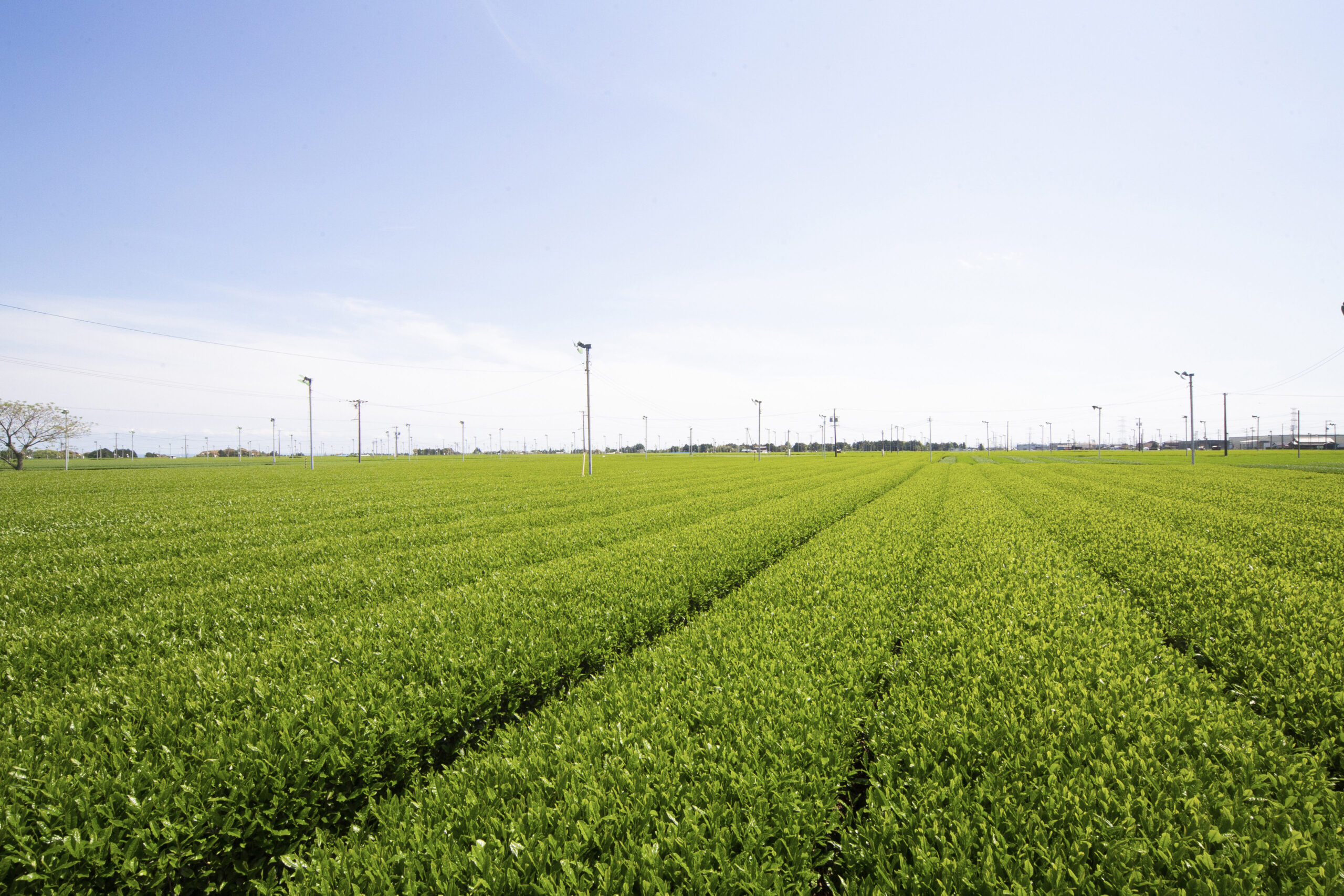
As the largest producer of green tea in Japan, Shizuoka Prefecture is blessed with mile after mile of picture-perfect countryside. Venture deep into the heart of Shizuoka, and the landscape becomes a glorious patchwork of enormous green tea plantations, winding over mountainsides and valleys bisected by rivers and that are peppered with tranquil towns and villages. One such town is Kawane, a fairly wide area amongst the mountains that spreads along the snaking Oi River about an hour northwest of Shizuoka City. 

Kawane is as beautiful as it is remote. An endless sea of green tea fields, Kawane is the type of remote and rural scene in which time seems to stand still. Dotted amongst Kawane’s many green tea farms are some of the most idyllic farmstays in Japan. If you’re looking for an incredibly enriching experience amongst some of the most gorgeous and tranquil countryside in Japan, look no further than a farmstay in Kawane.

Getting to Kawane

Local train from Kaneya to Ieyama
©James Daives

A huge part of the appeal of staying in Kawane is in getting there. It’s around an hour by train from Shizuoka City, with a change needed at Kanaya Station. The journey from Kanaya is simply breathtaking, with the train winding along and across the beautiful bending Oigawa River into the rising hillsides that pave the way to Kawane. 

During the journey it quickly becomes clear why Shizuoka Prefecture is Japan’s largest producer of green tea, as no free patch of ground goes to waste. Almost every spare spot of land that passes the train window is taken up by neatly trimmed green tea plants, no matter how small or impractical they seem. 

Arriving in Kawane

Green tea fields in Kawane Shizuoka
©James Daives

The local train travels along the Oigawa Main Line as far as Ieyama Station. Here, you’ll be met by your friendly host who will drive you through even more of Kawane’s sumptuous scenery further along the Oi River to the green tea farm where you’ll be spending the night. The landscape en route consists almost entirely of sloping tea fields, all perfectly tended and stretching as far as the eye can see. 

Reaching the Green Tea Farm Accommodation

Interior of Kawane green tea farm cabin
©James Daives

The farmstay accommodation is a beautiful cabin that sits right in the heart of the countryside. The cabin’s bucolic setting is matched by its beautifully decorated interior. The modern cabin is designed in a traditional Japanese style that is commonly seen in the countryside and perfectly suits its setting. 

Sunlight streams in through the sliding doors that open onto the engawa veranda that skirts around the edge of the main room. In the center of the cabin is a hearth, over which both the evening meal and the next day’s breakfast will be cooked. In the bedroom, fluffy futons are laid on the tatami floor.

View from green tea farm stay cabin
©James Daives

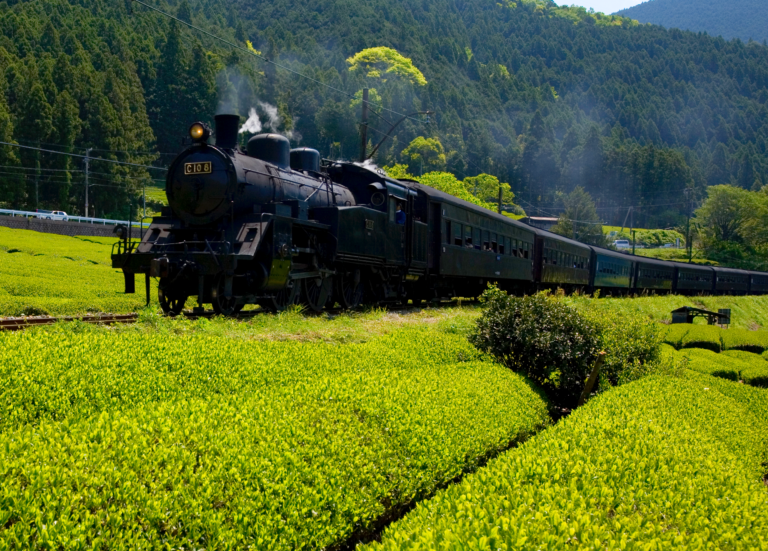
There are several nods to the nearby Oigawa Railway line that passes by the front of the cabin. Today, this section of the line is mostly used by historic trains including steam-powered locomotives that carry passengers on special scenic excursions between Kanaya and the town of Senzu further north. Just outside the cabin is a terrace that faces the platform of Jina Station.

Helping Out on the Farm

Picking vegetables at the Kawane green tea farm experience
©James Daives

After settling in there are a few small things to take care of, starting with some early preparations for dinner. Even the nearest luxuries such as supermarkets and convenience stores are quite a distance away, but being in the heart of a farming community in the middle of the Japanese countryside means that there’s an abundance of ingredients very close by. 

In fact, many of the vegetables are grown in the cabin’s garden, and you’ll be expected to get your hands dirty and help dig up some of the locally grown vegetables, including the enormous daikon, that will be used in your evening meal.

Time for a Spot of Sightseeing

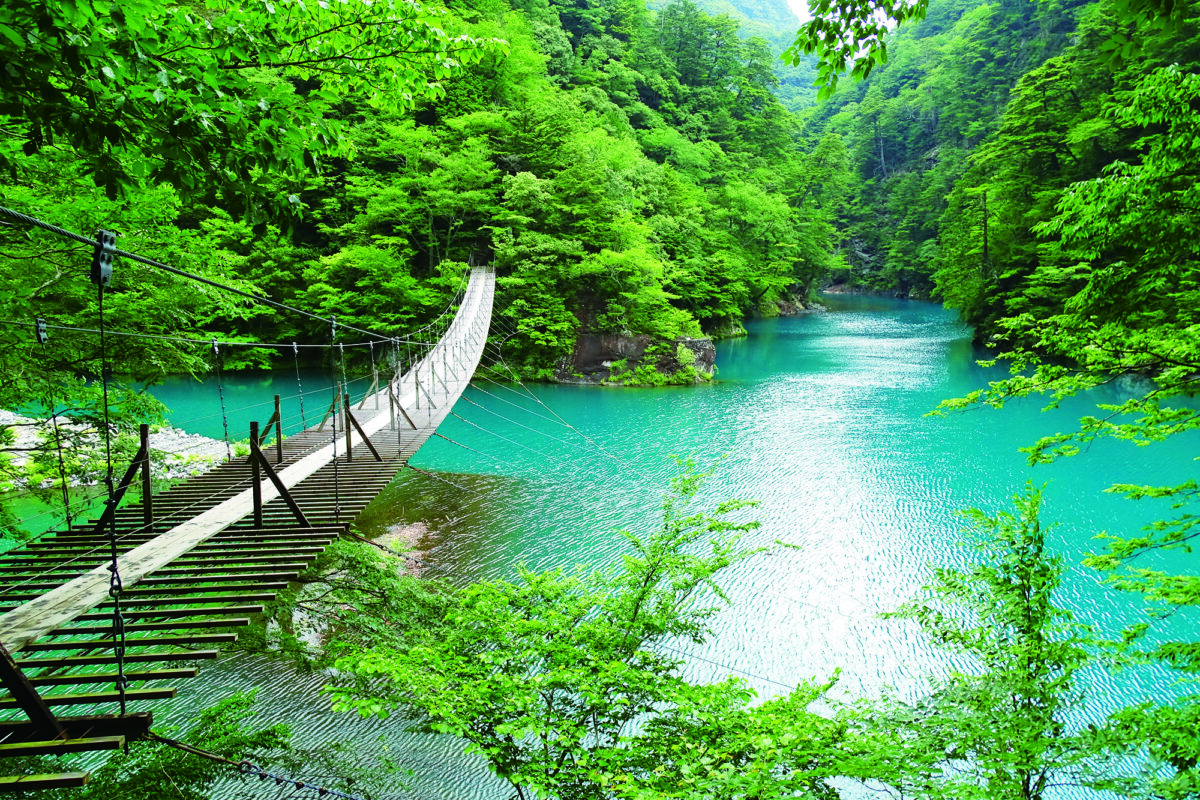
Shiogono Suspension Bridge
©James Daives

Before dinner is served there is just enough time to explore some of stunning scenery and local landmarks. A short drive north of the farm stay is the Shiogo Suspension Bridge. Originally built in the 1930s the bridge was once a vital crossing for local residents needing to reach the opposite side of the Oi River. Today, if you brave the incredibly wobbly and narrow rope bridge, you’ll be treated to mesmerizing views of the river and the sweeping green hills of the surrounding valley. 

Oigawa River in Shizuoka
©James Daives

Meanwhile, a short drive south of the farm stay brings you to a group of onsen spa resorts. Located on the banks of the Oi River, the cluster of spas offer a range of indoor and outdoor public baths that are fed from local hot springs. Besides the hot springs, the resorts also have several dining options, such as cafes and restaurants that serve up traditional, hearty Japanese dishes.

Lending a Helping Hand Cooking the Evening Meal

Fish cooking at Kawane green tea farm experience
©James Daives

As the late afternoon becomes the early evening, there is the chance to spend a few hours unwinding and relaxing back at the green tea farm. Before the evening is out, before or after the evening meal, be sure to take advantage of the cabin’s glorious bath. A soak in this heavenly bath is more than just re-energizing. Combined with the relaxing nature of the rural retreat, you will almost feel reborn.

Nabe ingredients
©James Daives

With the night beginning to draw in, hot coals are placed in the hearth, where the main dishes of a healthy, hearty and delicious evening meal will be cooked. Having helped pick the vegetables from the farm earlier in the day, you’ll also be tasked with helping cook parts of tonight’s meal. 

As grilled fish and yakitori sticks are placed on a grill over the glowing coals you’ll be taught how to make traditional countryside fare, such as a thick soup made from grated yam and a Japanese potato salad. A large metal pot is hung from the ceiling over the coals in the hearth once they have reached a high enough heat. 

Nabe cooking over a fire in green tea farm experience
©James Daives

Inside the pot, a rich broth bubbles away before a mix of regional ingredients of a nabe, or stew, are added, including boar meat and plenty of fresh vegetables, including mushrooms, cabbage, and daikon. Once the ingredients are cooked through, the nourishing nabe is eaten whilst sitting next to the hearth, looking out onto the night sky. 

After dinner the rest of the night is yours to relax and unwind even further in the comfort of the cabin. With barely a sound to be heard outside and the darkness of the night illuminated by a sky full of stars, the nighttime makes it clear just how tranquil and wonderfully peaceful the countryside of Shizuoka really is. Roll out the futon and you’re guaranteed a wonderful night’s sleep among Kawane’s tea fields.

A Country Breakfast To Set You Up for the Day

Early the next morning, a typically traditional Japanese breakfast is served, once again cooked over coals in the hearth. Breakfast is a little more modest than the previous night’s meal but no less delicious. Freshly grilled fish and a soup of vegetables accompanied by traditional side dishes of pickles, tofu, and sliced omelet are the perfect setup for the day ahead. After checking out, your host will drop you off back at Ieyama Station fully reinvigorated from a restorative mini break amongst Shizuoka Prefecture’s green tea farms. 

How to Book a Green Tea Farm Stay

Click here for more information about the green tea farm experience in Kawane including how to book your own stay via the booking form at the bottom of the page.

How to Get to Kawane

To get to Kawane take the Oigawa Railway line from Kanaya Station to Ieyama Station, a journey which takes just over 30 minutes. Kanaya Station can be reached via the Tokaido Line and is a 30 minute train journey from Shizuoka Station or 40 minutes from Hamamatsu Station. On arrival at Ieyama Station you will be met by your host who will drive you the rest of the way to the green tea farm.

Experience the Allure of Indigo Dyeing – the Japan Blue – at a Family Run Atelier in Gotemba

It is a sunny day in Gotemba, the getaway to Japan’s highest mountain – Mount Fuji. While the glorious Fuji is entirely visible on this perfectly sunny day and looks very inviting, I am here to experience another side of Gotemba. I will visit one of the few remaining ateliers, Shoaizome Koharaya, where the visitors can experience the traditional way of indigo dyeing and learn about the history of this unique traditional process.

Indigo dyeing is a fabric or thread coloring technique that had its heyday during the Edo Period of Japan (1603-1867). The process results in a color known as Japan blue that many of us may remember from the beautiful color of the jersey that the Japan National Soccer team wore during the 2022 Soccer World Cup. 

IndigoBlueExperience
©Burcu Basar

An Indigo Dyeing Atelier as Old as 160 Years

After a pleasant 10-minute walk from the train station, I arrive at Koharaya and am greeted by the master at the door. Rather than an industrial or a business building, this feels like a home. The master, with a heartwarming smile, leads me into his cozy atelier. While I had experienced indigo dyeing in Japan before, right from the start, this experience feels different. I feel like I am being invited into the private studio of an artist to experience the process rather than being part of a more mainstream or commercialized experience. Seeing the drawings produced by the master’s grandkids on the walls ensures me that I am indeed here for a more intimate and special craft experience. 

Before trying my hand at the entirely manual dyeing process, we sit around a wooden table where the master explains the history of his studio and the techniques that they use, which make the indigo dyeing practiced here special. Their atelier was initially founded in Matsumoto City in Nagano Prefecture in 1861 towards the end of the Edo Period. Shortly after its establishment, the second-generation members of the family moved the atelier to its current location in Gotemba.

Indigo Dyeing – a Technique That Became Popular During the Edo Period

Referred to in Japanese as “aizome”, indigo dyeing is an old traditional technique that became particularly popular during the Edo Period (1603-1867). The dye is extracted from the indigo plant, which, as the master notes, is a popular ingredient in traditional Chinese medicine. A technique, which was originally praised for the bright and sharp colors that it produces, has – as the time passed – also been recognized for its insect repellent and even deodorizing quality. The master also notes that the thread and the fabric become 50% stronger when dyed with the traditional indigo dyeing technique.

Commitment to Original and Non Harmful Techniques

While indigo dyeing started as an entirely organic technique that didn’t rely on additives and chemicals, the fundamentals of the process changed substantially during the Meiji Period (1868-1912), the age of industrial revolution in Japan that followed the Edo Period. Chemical ingredients were introduced to cut costs and to serialize the process for faster manufacturing. As a result of the industrial revolution that also impacted the traditional indigo dyeing technique, the number of ateliers adhering to traditional techniques was substantially reduced in this period. Koharaya Atelier of Gotemba is one of the rare ateliers where visitors can still experience the traditional process. As a result, the atelier is rightfully registered as a local craft of Shizuoka Prefecture.

The master is, understandably, proud of their commitment to the traditional indigo dyeing process. It is a method which is substantially more environmentally friendly and sustainable compared to synthetic indigo dyeing processes. Koharaya Atelier not only adheres to the traditional techniques that are better for the environment but also does its part to support the shrinking community of the original indigo dyers.

IndigoBlueExperience
©Burcu Basar

One of the things that never ceases to fascinate me about Japan is the sense of community that manifests itself in many different aspects of life. When the master explains that they continue to buy the dye that is made of fermented indigo leaves from a manufacturer in Tokushima Prefecture on the island of Shikoku to support the manufacturer, I am once again reminded that it is this sense of community, that isn’t only bound by geography but also by crafts, as is the case here, that makes Japan special. It is a country where one can still experience various traditional techniques that, in the absence of this community spirit, may have been long erased from the cultural memory. Tokushima is one of the major centers for traditional indigo dyeing in Japan thanks to the Yoshino River, which runs from west to east of the prefecture and creates an ideal environment for cultivating the indigo plant used in the dyeing process. Hearing about the cooperative spirit that extends from Shizuoka all the way down to Tokushima puts a smile on my face. 

Time to Try My Hands on the Indigo Dyeing Process

IndigoBlueExperience
©Shizuoka Prefectural Tourism Association

I forget about the time while listening to the master, whose enthusiasm and affection for this unique craft is contagious. It is now time to try my hands at the process.

First, I pick a pattern based on the various samples that are displayed in the atelier to apply to my fabric. As a very modest dresser, I settle on an uncomplicated pattern, but there are many patterns that will make the more fashion forward visitors happy. I pick a t-shirt among many other choices that include handkerchiefs and scarves.

Indigo Blue Experience in Gotemba

The second stage involves a process that makes me truly appreciate the patience that goes into adhering to manual processes to keep the tradition alive. I roll up the stark white t-shirt and start the process of dipping in the water and lifting it out again. In the beginning of the process, only the lower end of the t-shirt goes into the water held in a small well that contains the indigo dye. The process involves dipping the fabric in the water and lifting it repeatedly. The master guides me through the process and underlines the importance of dipping the fabric into the water and lifting it softly. He also sets up an alarm for 60 seconds and notes that I need to repeat the process ten times. 

IndigoBlueExperience
©Burcu Basar

When the part of the fabric dipped into the water is exposed to the air, it results in a green-brown color.

As my work with the lower end of the t-shirt ends, I move on the second part of the t-shirt and repeat the same process ten times. While the first results are far from the mesmerizing indigo color that dominates the atelier, instead reflecting a greenish and brownish color, it is the final washing process that brings out the indigo blue.

IndigoBlueExperience
©Burcu Basar

It is fascinating to see the white t-shirt that I picked merely 20-30 minutes ago is now dyed in the alluring indigo blue color without having gone through any machine led process. The entirely manual process where one needs to be individually involved at each stage feels very therapeutic. The ambient lighting in the atelier, the smiling face of the master, and the cozy atmosphere really turn the whole experience into a very relaxing one. After a little over an hour spent at the atelier, it is time to say goodbye. I convey my gratitude to the master for the opportunity to observe his dedication to this traditional craft and be inspired by his efforts to support the remaining community of indigo dyers. 

IndigoBlueExperience
©Burcu Basar

While the experience includes dyeing your own fabric to take back home with you, the atelier also features a showroom where visitors can buy the clothes masterfully dyed by the master and his son.

How to Book the Japan Blue Indigo Dyeing Experience

This experience can be booked for any day of the week. The meeting point is the Gotemba City Tourist Association, which is located right behind the west exit of Gotemba train station, accessible from Tokyo Station with a 2-hours train ride.  The atelier is ten minutes walking distance from the tourist association. The atelier visit takes around 70 minutes and is followed by a lunch that is also included in the price of the experience. For booking and pricing information, please visit this link

How to Get to Gotemba from Tokyo

Local Numazu line of the Tokaido Line connects Tokyo Station to Kozu Station in 1-hour 12-minutes. From Kozu, visitors can take the Gotemba Line (Local Shizuoka) to travel to Gotemba (48-minutes) or take a shinkansen bullet train to Mishima Station and transfer to Tokaido Main Line to get to Numazu Station (1-hour 4minutes), and then take the Gotemba Line to arrive at Gotemba Station (34-minutes).

Discover the Sights of the Tokaido on a Two Day Tour of Shizuoka City

The city of Shizuoka is situated along a historic highway that once ran between Tokyo and Kyoto. During the Edo Period, the old Tokaido highway was a vital route that connected the capital city with Kyoto. Along the road were over 50 post towns, important resting points where travelers could stop for a bite to eat or stay for the night. Several of the former post towns that lined that Tokaido route are now part of Shizuoka City, and much of their history and heritage can still be admired today.

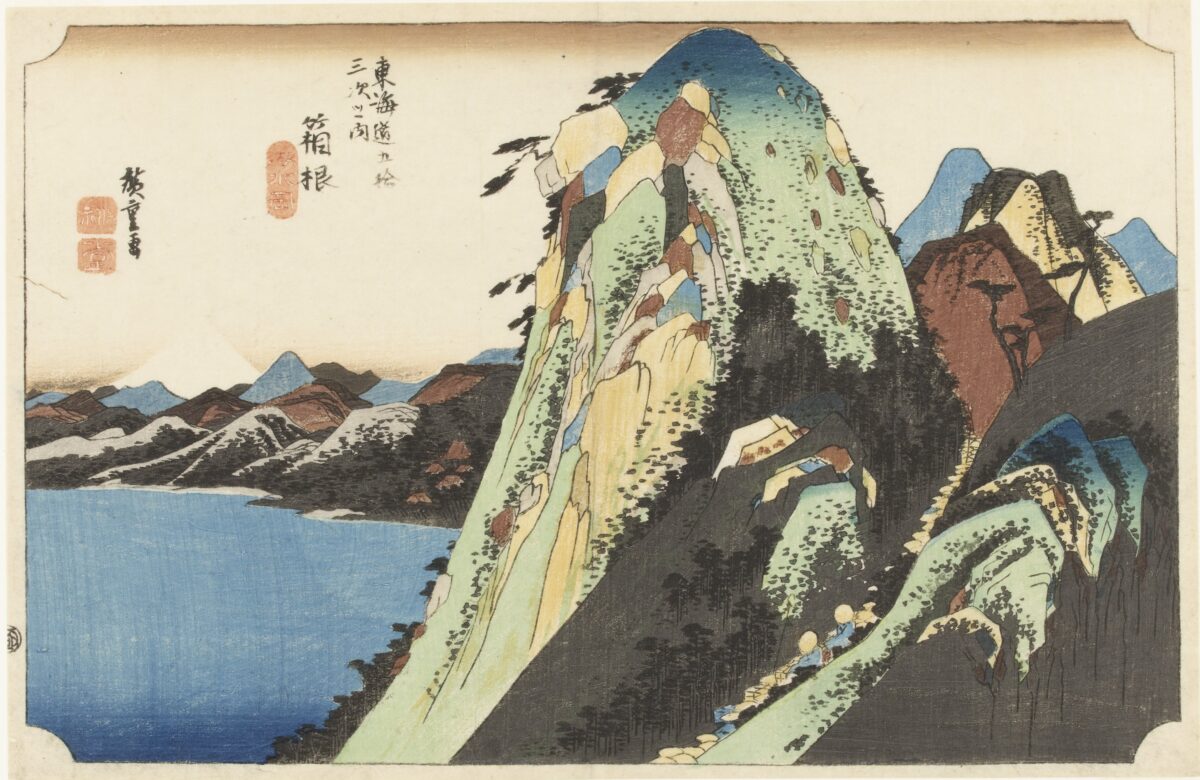
Many spots along Shizuoka’s Tokaido route are also blessed with wonderful views of Sugura Bay and are overlooked by the unmistakable majesty of Mount Fuji. These scenes inspired many of the famous woodblock prints created by Utagawa Hiroshige as part of his series that documented the Tokaido, many of which are still recognisable today. A two-day tour of Shizuoka takes in many of the beautiful and fascinating spots that line this stretch of the old Tokaido highway.

Day 1 – Joining the Tokaido at Kambara

The two day tour of Shizuoka starts just outside Shin Kambara Station, which stands on what was the original Tokaido road. Kambara is one of the Tokaido highway’s former post towns and is located on the eastern edge of the city, not far from the shoreline of Suruga Bay. Just a few moments walk from Shin Kambara station is a long stretch of the original Tokaido road, where there are still a number of Edo-era homes and buildings of important historical significance. 

Kambara post town monument Hiroshige print
©James Davies

Alongside a narrow river next to the turning that leads to the Tokaido road stands a monument that marks the site of the Kambara post station. At the top of the monument is a replica of one of Hiroshige’s famous woodblock prints. 

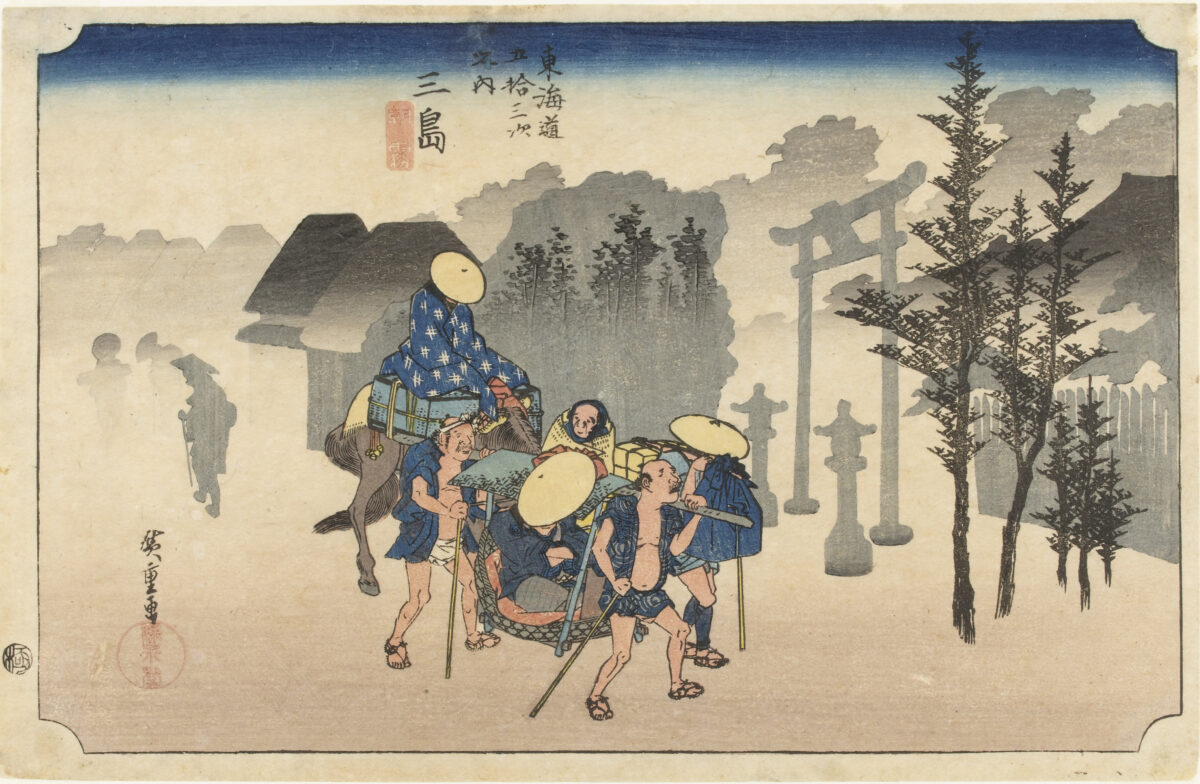
In 1834, Hiroshige created a series called “The Fifty-three Stations of the Tokaido” that contains 55 artworks documenting each of the post towns located along the Tokaido road. The print of Kambara shows travelers passing through the snow covered post town during the Edo Period. It is one of the most famous pieces of the series. It’s fair to say that Hiroshige used a heavy dose of artistic license as snow is incredibly rare in Shizuoka. 

Living History Along the Tokaido 

Hatago Izumiya on the Tokaido road in Kambara Shizuoka
©James Davies

The large number of beautiful historic buildings that still line the road means that it’s easy to imagine what the Tokaido highway might have looked like when Hiroshige created his masterpieces. A short walk along the Tokaido road leads to Hatago Izumiya. During the Edo Period, Hatago Izumiya was a place of accommodation for the retainers of high-ranking feudal lords who traveled along the Tokaido road. The feudal lords would stay in an even more prestigious resting house that is now a private home, located directly opposite the Hatago Izumiya. 

Hina matsuri dolls in Kambara Shizuoka
©James Davies

Today, Hatago Izumiya is open to the public, and on venturing inside you’ll be able to admire the beautiful interiors and traditional architectural details that were a common feature of such buildings during the Edo Period. Make sure to climb the staircase up to the second floor to appreciate the incredible collection of antique hina dolls. 

Hinamatsuri is a traditional Japanese festival that takes place in March every year. During the festival, elaborate hina dolls that represent members of the royal court dressed in traditional robes are put on display on a tiered stand decorated with a red cloth and various decorations. Hatago Izumiya exhibits a wonderful collection of traditional Japanese artifacts that are rotated throughout the year. 

The former Igarashi Dental Clinic in Kambara on the Tokaido road
©James Davies

There are more examples of Kambara’s Edo-era history a little further along the Tokaido road, including the former Igarashi Dental Clinic. Built towards the end of the Edo era, this elaborate home was later developed in the early 20th century by Jun Igarashi, a dentist who used a room at the top of the house for his practice. 

The interior of Igarashi Dental Clinic in Kambara Shizuoka
©James Davies

Though the exterior has a strong early Western influence, the inside is an exceptional example of exquisite Japanese interior design of the late Edo Period. Each room is filled with beautiful traditional details, including intricately carved depictions of Mount Fuji in the ranma that sit above original sliding doors decorated with hand-painted seasonal scenes. 

On the opposite side of the road is Shida House, home to the Tokaido Municipal Life History Museum. The building was once a grand shophouse that stood beside a soy sauce factory. Inside, the house remains identical as to how it would have been during that time, with a long corridor running alongside raised tatami rooms that can each be divided or opened up by sliding doors. 

Tokaido Municipal Life History Museum in Kambara Shizuoka
©James Davies

During the late Edo Period and early Showa Period, each room of the house had a specific function. The front of the house acted as a store which sold a variety of goods such as rice and salt alongside soy sauce, while business matters were taken care of in the room at the center of the house. Today, there are various items on display from the house’s past, as well as maps and information about the town during the heyday of the Tokaido route.

Lunch on Hand Rolled Sushi

After exploring some of the historic highlights of the Tokaido road, it’s soon time for lunch. At Sushi Yamashichi nearby, there’s the chance to learn how to make your own hand-rolled sushi. On arrival, a host of ingredients are laid out, including fresh seafood, rice, wasabi, and sheets of edible seaweed, called nori. Much of the seafood, including the bright pink sakura shrimp, is caught locally from the nearby waters of Suruga Bay. A regional and seasonal speciality, Suruga Bay is the only place in Japan where these tiny shrimp are caught. 

Hand rolled sushi in Kambara in Shizuoka
©James Davies

Making the sushi rolls is relatively straightforward. Layer a strip of rice on top of the seaweed sheet and then simply add any combination of the provided ingredients to fit your taste. As well as sakura shrimp, there’s a selection of other seafood and fish including raw tuna, salmon, prawn, and ikura. When you’re done, simply wrap the seaweed sheet around the ingredients and tuck in.

Learning More About Hiroshige 

After lunch, it’s time to learn more about Hiroshige and his artworks at the Shizuoka City Tokaido Hiroshige Art Museum. The museum holds a huge collection of original Hiroshige woodblock prints that depict the post towns on the Tokaido road. Hiroshige’s excellently curated artworks are beautifully displayed. 

The Shizuoka City Tokaido Hiroshige Art Museum
©Shizuoka Prefectural Tourism Association

Alongside Hiroshige’s prints of the Tokaido road is a history of woodblock printing during Japan’s Edo Period, as well as explanations on how woodblock prints are made, a long and complicated process that requires an incredible level of artistic skill. In the lobby of the museum you can try your own hand at creating your own Hiroshige-esque print using a similar, if simplified, set of inks and precut woodblocks. 

Illuminating History at the Yui-shuku Tokaido Akari no Museum

Exhibits at the Yui-shuku Tokaido Akari no Museum
©James Davies

Before hiking further along the Tokaido road to the Satta Pass, there’s time to stop off at the Yui-shuku Tokaido Akari no Museum. Housed inside another beautiful old home, the museum features an impressive and unique collection of over 1,000 Japanese lamps and light fittings dating from the late Edo Period right through to the mid 20th century. The insightful museum is just one man’s collection acquired over many years and makes for a fascinating nostalgia trip.

Hiking to the Sensational Views of Mount Fuji From the Satta Pass

From the Yui-shuku Tokaido Akari no Museum, the tour continues on foot with a thirty minute hike to the famous viewpoint at the Satta Pass. Still a part of the Tokaido highway, the stretch of road at the start of the hike still retains much of the historic post town feel. The road begins to rise towards the Satta Pass, flanked by mikan trees and blessed with wonderful views of Suruga Bay.

Satta Pass

The reward for the steep but short hike to the Satta Pass are the mesmerizing views of Mount Fuji. This is another scene that was captured by Hiroshige, one of the most famous of his woodblock prints that depict the post towns of the Tokaido highway. Today, Japan’s tallest mountain still towers over Suruga Bay as well as the modern multilane highways that have long since replaced the old Tokaido road. 

Two Day Tour of Shizuoka City – Day 2

A Tour of the Chojiya, Shizuoka’s Oldest Restaurant

The following day begins with a visit to Chojiya restaurant. Chojiya first opened in 1596 in Mariko, one of the Tokaido’s 53 post towns that is now part of Shizuoka City. The oldest restaurant in Shizuoka, Chojiya is now run by the 14th generation owner. Chojiya was also portrayed in another of Hiroshige’s famous prints from his series of artworks from the post towns of the Tokaido road. 

Chojiya Restaurant in Shizuoka
©James Davies

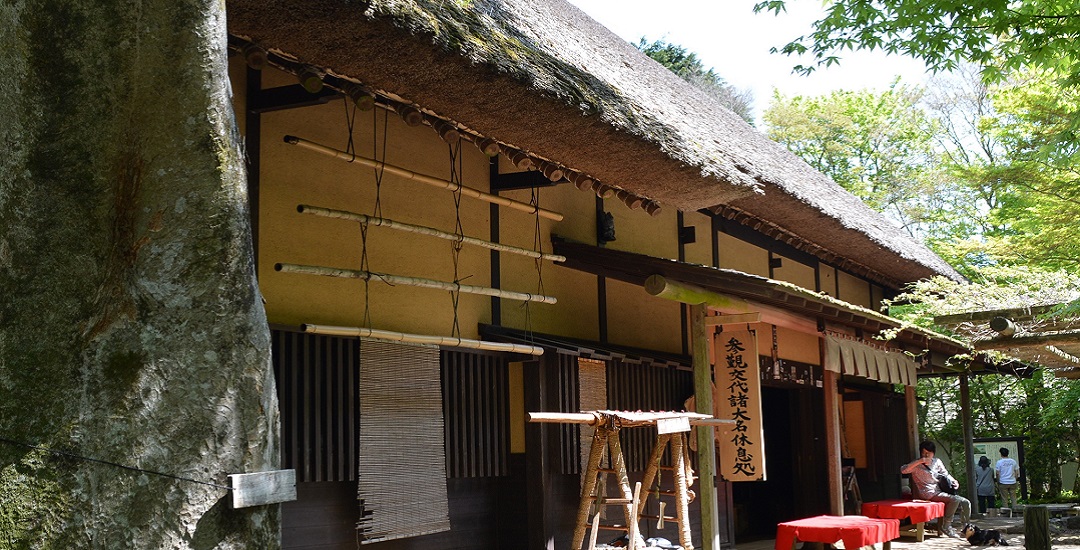
Hiroshige depicted Chojiya as a tea stop with a thick thatched roof catering to weary travelers taking a break from their journey. From the outside, Chojiya still looks exactly as it was portrayed by Hiroshige, though the restaurant has expanded in size over the decades, having added a collection of additional connecting buildings. Chojiya remains famous for the traditional nourishing Tororo-jiru soup, which they have been serving since the days when Hiroshige stopped by.  

The interior of the original building is a beautifully maintained rustic yet inviting Japanese restaurant, complete with a traditional hearth and huge wooden beams supporting the thatched roof. As well as the restaurant inside, there’s also an exhibition space dedicated to the history of the Tokaido road with many of Hiroshige’s prints on display.  

Exploring the Utsunoya Pass and Meiji Tunnel

Utsunoya Pass

The tour continues with a trip to the Utsunoya Pass, a short drive from Chojiya restaurant. The Utsunoya Pass is another ancient part of the old Tokaido route and one that retains a sense of a bygone time. There is a kilometer long stretch of road on the way to the pass that’s lined with gorgeous old wooden-paneled Japanese houses that help to evoke another era. The route continues up into the hillside behind the houses, beyond which is the entrance to the Meiji Tunnel. 

Meiji Tunnel

The Meiji Tunnel opened in 1876, making the journey through the mountain pass a little less arduous. Today, the entrance to the tunnel is framed by a thick layer of trees. Inside, the tunnel is lit by a series of hanging lights overhead, creating a slightly haunted atmosphere. The first tunnel to charge a toll in Japan, the Meiji Tunnel was registered as a tangible cultural property by the Japanese government in 1997. 

Enjoy a Kaiseki Lunch at Fugetsuro

The two day tour of Shizuoka ends with an exquisite lunch at yet another spot that is steeped in history. Fugetsuro is a kaiseki restaurant located in the grand home of Tokugawa Yoshinobu, the last shogun of Japan. Tokugawa Yoshinobu resigned from the position of shogun in 1867, bringing an end to the Edo Period and over 250 years of rule by the Tokugawa shogunate. 

On his retirement, Yoshinobu moved to this house with a traditional Japanese garden in the center of Shizuoka City. Today, the house and breathtaking garden are the grounds of the Fugetsuro, a long established restaurant that specializes in beautifully prepared Japanese kaiseki dishes made from the highest quality local and seasonal ingredients. There’s no better way to end your two day tour of Shizuoka than to enjoy a meal at Fugetsuro.

How to Book a Two Day/One Night Tour of Shizuoka

Click here for further information on this two day tour of Shizuoka’s historic Tokaido highway, including a full breakdown of the trip itinerary. Here you can also book your own tour via the booking form at the bottom of the page. 

Access Information:

The two day tour begins by meeting your guide outside Shin-Kambara Station on the Tokaido Line, which can be reached from both Shizuoka and Mishima Shinkansen Stations. Apart from the short hike from the Yui-shuku Tokaido Akari no Museum to the Satta Pass, all other journeys over the two days will be taken by a private taxi that is included as part of the tour.

Discover Shizuoka’s Green Tea on a Guided Bike Tour to a Green Tea Farm

Around 40% of the green tea produced in Japan is grown in Shizuoka Prefecture, making it the largest producer of green tea in the country. There are a great many tea fields located on the outskirts of Shizuoka City, the capital of Shizuoka Prefecture. One of the best ways to visit one of these nearby tea farms is on a guided bike tour from Shizuoka Station in the center of the city. On a bike tour you can see the beautiful tea fields up close before sampling a selection of delicious locally grown green teas.

Cycling to a Green Tea Farm – The Practicalities

Green tea bike tour bicycles
©James Daives

The cycle tour to Moriuchi Tea Farm on the outskirts of Shizuoka starts and ends outside Shizuoka Station. Led by a knowledgeable tour guide, the bike ride from Shizuoka Station to Moriuchi Tea Farm takes around an hour, cycling at a gentle pace. 

The bicycles are modern bikes, which are a cross between road and mountain bikes. Light and easy to ride, the bikes are perfect for cycling through the streets of Shizuoka and alongside the tea farms located towards the outskirts of the city. A range of different sized bikes are available depending on your height, and helmets are also provided. 

If you’re nervous about cycling on Japan’s roads or sidewalks there is really nothing to fear. Cycling in Japan is incredibly common and one of the most popular modes of transport. Cyclists are respected by drivers and pedestrians alike, so as long as you exercise due care and pay attention then there is no need to worry. Almost all of the journey is flat and the tour guide will be happy to go at a pace that suits you and stop for breaks whenever needed.

Reaching Shizuoka’s Tea Fields by Bike

Abe River in Shizuoka
©James Daives

From Shizuoka Station the tour passes through the bustling streets of Shizuoka’s city center. Heading north, it doesn’t take long to reach the Abe River near the outskirts of the city, thanks largely to the city’s easy to navigate grid system and flat terrain. Over 30 miles long, the Abe River begins deep in Shizuoka Prefecture near the mountains that form Japan’s Southern Alps. 

The view as you cycle along the bending river is framed by the foothills of the Southern Alps that wrap around the city. If the weather is clear you might just spot the unmistakable tip of Mount Fuji to the east. 

The view along the banks of the Abe River is beautiful all year round, but is particularly special in the spring, when the riverbank’s azaleas burst into color. 

Arriving at Moriuchi’s Beautiful Tea Plantations

Tea plantation on the edge of Shizuoka City
©James Daives

The tour continues by crossing the Abe River via the Kano Bridge. It’s on the west side of the river that you suddenly find yourself in a much more rural setting, where the first rows of neatly arranged tea fields appear. From here it’s just a few more minutes’ until you find yourself amongst some of the most picturesque natural scenery in Japan, surrounded by breathtaking green tea plantations that sweep across the rolling hillsides. 

Hybrid bikes at Shizuoka green tea fields
©James Daives

Here, you can jump off the bike and take a walk amongst the carefully-tended tea fields. A truly mesmerizing sight, these are amongst some of the most spectacular and picturesque tea fields in Japan. After arriving at the tea plantations, the tour guide explains about the methods used in Japan for green tea cultivation. You will also learn about the long history of green tea in Japan, from its introduction from China over 1,000 years ago to how the Japanese developed green tea to become an essential part of their culture.

A Masterclass in How to Enjoy Shizuoka’s Finest Green Teas

Sampling green tea at a green tea farm in Shizuoka
©James Daives

From the tea plantations, it’s just a few minutes further on the bike to the Moriuchi Tea Farm. Inside a beautiful traditional Japanese home that forms part of the tea farm’s estate, you’ll get to sample a selection of the tea leaves grown in the nearby fields. The teas produced by the Moriuchi Tea Farm are known for being of the highest quality. Many of their teas are exported to customers all over the world. Moriuchi’s black tea is even served at afternoon tea in Claridges Hotel in London.

A plate of green tea leaves
©James Daives

Prepared and poured by one of the local expert tea farmers, there’s no better way to explore the richness and complexity of Japanese green tea. As part of the tasting, you’ll discover the variety of techniques that are used to process green tea leaves to create different types of Japanese teas. Treating the same tea leaves in different ways can result in a huge variety of different types of green tea. For example, in order to make sencha, green tea leaves are steamed after they are picked, and the same leaves can be fermented to produce oolong tea.

Freshly brewed green tea in Shizuoka
©James Daives

During the tasting you will also learn how different flavors are created from just a single type of tea leaf. A number of factors can affect the taste of the final cup of tea, from the temperature of the water used to brew the tea to the amount of time the leaves are brewed. You’ll also see how the same leaves can be used more than once and how a second or third pouring of the same tea leaves can bring out a much different taste in the final cup of tea. 

Exploring the Shizuoka Sengen Jinja Shrine

Sangen Shrine in Shizuoka City
©James Daives

After tasting some of the finest green teas in Shizuoka, it’s time to return back to the city center. The return journey follows a slightly different route, taking a detour to Shizuoka Sengen Jinja Shrine, located in the center of the city. In fact, Shizuoka Sengen Jinja Shrine houses a collection of seven Shinto shrines, the oldest of which, Kambe Shrine, can trace its history back to over 2,000 years. 

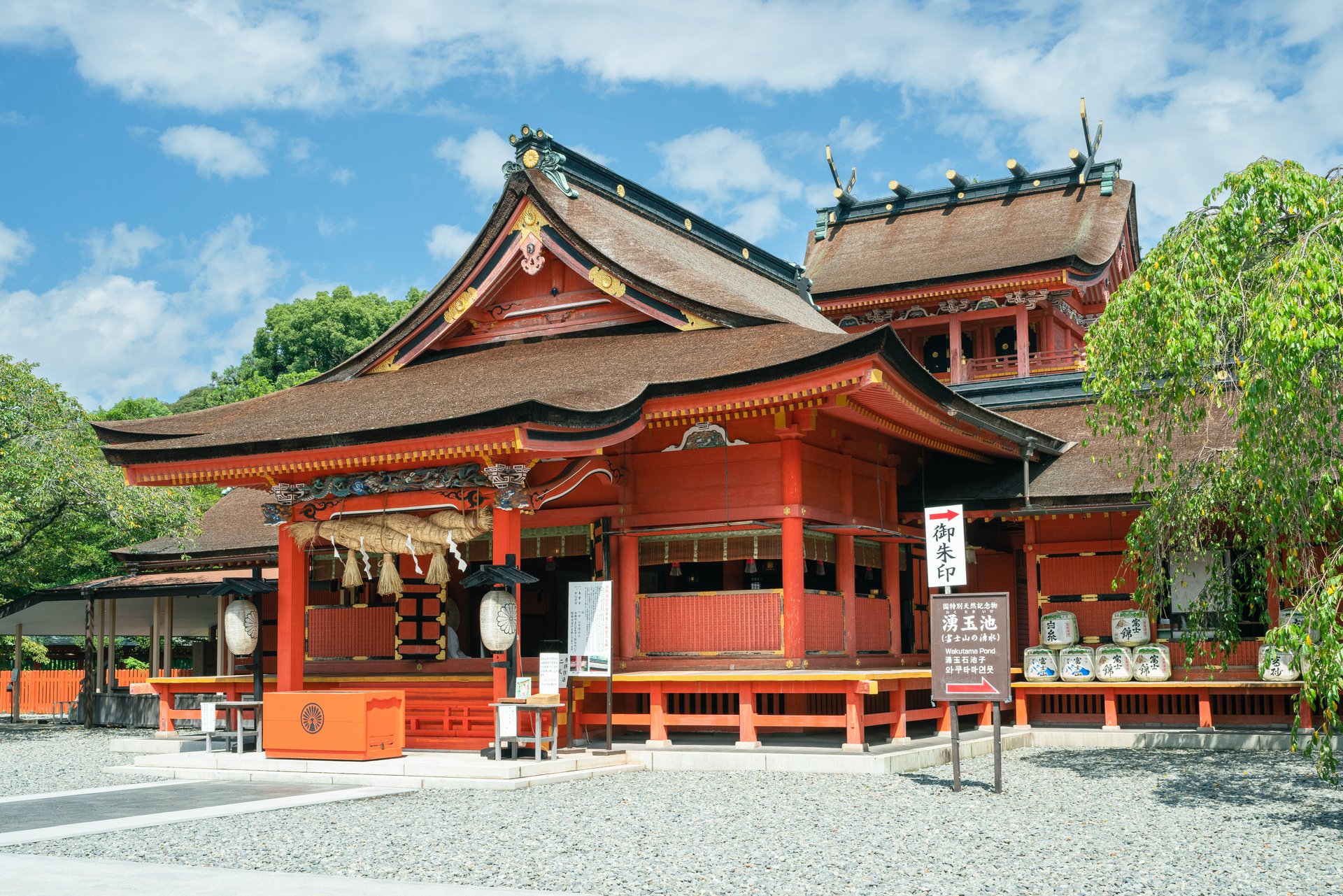
Shizuoka Sengen Jinja Shrine is closely associated with Ieyasu Tokugawa, the revered shogun who united Japan in the 16th Century. Ieyasu Tokugawa lived in Shizuoka for many years and it was at Shizuoka Sengen Jinja Shrine that his coming of age ceremony was held. Today, most of the buildings within Shizuoka Sengen Jinja Shrine date from the Edo Period, with the whole complex featuring a number of incredibly impressive buildings. Over 20 of Shizuoka Sengen Jinja Shrine’s buildings have been designated as National Important Cultural Properties by the Japanese government. 

Details of Sengen Shrine Shizuoka
©James Daives

The shrine’s main halls and entrance gates are each adorned with beautifully intricate details and embellishments, including colorful hand-carved tigers and golden ogres riding on the back of mythical lion dogs. Numerous deities are enshrined in each of the seven shrines located inside the Shizuoka Sengen Jinja Shrine complex. Worshippers come to the Shrine to offer prayers to the deities in the hope of receiving good fortune in business, success at work, to pass exams or to find love.

Ending the Tour Back at Shizuoka Station

From Shizuoka Sengen Jinja Shrine, it’s a short cycle along the picturesque Sengen Dori and past Sumpu Castle Park back to Shizuoka Station in the center of the city. The whole tour lasts approximately four hours, during which you’ll see stunning natural landscapes, enjoy countless cups of Japan’s finest green tea and explore Shizuoka’s most important and historic shrine. 

How to Book a Bicycle Tour to a Shizuoka Green Tea Farm

You can book your very own bike tour to a green tea farm through Visit Shizuoka. Click here for more information and also to book your own bicycle tour by completing the booking form at the bottom of the page.

How to Get to Shizuoka’s Green Tea Farm

The bicycle tour to the green tea farm begins at the north exit of Shizuoka JR Station. From here, the tour guide will lead the way for the entirety of the ride, from Shizuoka Station to the Abe River, on to the Moriuchi tea farm and then to Shizuoka Sengen Jinja Shrine. After visiting Shizuoka Sengen Jinja Shrine, the guide will lead you back to Shizuoka Station where the tour ends.

Make Your Own Bottle of Soy Sauce at a Historic Soy Sauce Brewery in Hamamatsu

Soy sauce is an essential staple of Japanese cuisine. No mouthful of sushi or sashimi is complete without a dip in rich and delicious soy sauce first. At Meijiya Shoyu, a historic soy sauce brewery in Hamamatsu, you can make your own bottle of soy sauce, the perfect souvenir from your trip to Shizuoka Prefecture. You can also take a fascinating tour of the 140 year old soy sauce brewery whilst learning all about how Japan’s beloved condiment is made.

The History of the Meijiya Shoyu

Meijiya Shoyu Soy Sauce Brewery
©James Davies

Meijiya Shoyu’s soy sauce brewery is located in a quiet residential area in the north of Hamamatsu, where it has been for over 140 years. Founded in 1875, the company’s current president is the fifth generation owner of the business. At the front of the Meijiya Shoyu complex is the first original building where the brewery was founded towards the end of the 19th Century. Later buildings have been added over time as the business expanded and as production methods developed through the generations. 

Touring Meijiya Shoyu’s Brewery

Barrels in Shizuoka soy sauce brewery
©James Davies

Before trying your hand at making your own bottle of soy sauce, there’s a fascinating tour of the Meijiya Shoyu brewery. Soy sauce is made from just a handful of ingredients, namely soybeans, steamed or roasted wheat, salt, and a special type of mold called koji. Stepping inside the brewery feels like stepping back in time. The interior of the brewery looks as though it hasn’t changed since the Meiji Period. In 2016 the factory was designated as a Tangible Cultural Property by the Japanese government.

The brewery is a warren of vast rooms filled with enormous barrels of ingredients and vats of slowly fermenting mash that will eventually become a rich and smooth soy sauce. On first impression, it seems like a miracle as to how anything gets made in what seems like a mishmash of cavernous rooms that appear to have no real order. In fact, the brewery has been purposefully and cleverly designed over many decades to be the perfect space for producing soy sauce. 

How Soy Sauce is Made

The brewery tour is a fascinating insight into how soy sauce is made in a process that has hardly changed in generations. Before entering the brewery you can’t help but notice the unmistakable smell of soy sauce that fills the air. On entering the brewery, you are instantly thrown into the soy sauce making process in a building dripping with history. 

Roasted wheat grain used in soy sauce
©James Davies

As soon as you walk into the brewery, you’re met by a jetstream of wheat shooting from a huge tank half hidden above head height into a piping hot oven to be roasted. There is a climb up an old wooden staircase to the first floor from the ground floor, where the roasted wheat is steamed inside huge wooden barrels with soybeans that have been soaked and boiled in water. The wheat and soybeans are later mixed with koji and water. 

Storage tanks at Meijiya Shuyo soy sauce brewery
©James Davies

The tour then leads through a huge room full of massive sunken vats that look several meters deep. Inside each are various different mixes of the wheat, soybean, water, koji mash as well as salt. Meijiya Shoyu produces a wide range of different types of soy sauce, and depending on the final product these mixtures will sit and slowly ferment for between 18 months to three years. The mixtures need constant attention as well as stirring in order for the flavors to develop over that time. 

Soy sauce moromi mixture at Meijiya Shoyu Brewery
©James Davies

When it has been aged for the required amount of time, the fermented mash, which is called moromi, is ready to be processed into soy sauce. The moromi is removed from the vat and pressed through several layers of linen cloth. This is done in order to separate the sauce from any solids that are left behind in the final mixture. The sauce that is pressed out of the mixture is collected and the final stage is simply to heat the sauce to remove any remaining mold or yeast that might have been left behind.

Making Your Own Bottle of Soy Sauce

Preparing to press moromi into soy sauce
©James Davies

Opposite the main brewery building is Meijiya Shoyu’s modern visitor center and shop where you can make your own bottle of soy sauce. The process is essentially a greatly scaled down and shortened version of the same methods described in the main brewery and is a lot of fun. First, a tub of the thick fermented moromi mix of soybeans, wheat, salt and water is brought out as the base for the final bottle of soy sauce. This is part of a batch that has been brewed for around a year and a half. 

Next, a layer of linen is laid out in a small wooden box and a few scoops of the moromi mixture is poured on top. The box has a spout which is blocked with a stopper. The soy sauce will eventually pour out from this spout. The moromi needs to be spread out into all four corners of the box and leveled so that the surface is flat and even before the linen is neatly folded over the moromi. This process is repeated two more times until there are three layers of the moromi mixture neatly wrapped inside the box.

Soy sauce pressing machine
©James Davies

From here, the box is placed inside a purpose-made hand press. At the top of the press is a handle which is connected to a plate that pushes down onto the mixture inside the box. Force needs to be applied for around 30 seconds, after which time the soy sauce will have passed through the linen and separated from the moromi mixture. Remove the stopper from the spout and the freshly made soy sauce pours out of the box into a bowl. 

The pressing process is repeated a few more times in order to get as much of the soy sauce from the mixture as possible. By the end, you’ll have just enough to fill a small bottle. The final step is to heat the soy sauce over a flame until it reaches 75 degrees, the right temperature to remove any lingering mold or yeast that may still be left. 

Freshly made soy sauce
©James Davies

Then it’s time to bottle up the sauce, add a label and stamp on the expiry date. The finished bottle of soy sauce will be good to use for up to a year. Once opened make sure to store the soy sauce in the refrigerator. After you’ve made your own bottle, there’s the chance to sample a few of Meijiya Shoyu’s own professionally made soy sauces, as well as a gift of a few extra souvenirs to remember your visit.

How to Use Your Home Made Bottle of Soy Sauce

The finished soy sauce bottle
©James Davies

As well as being the perfect condiment for Japanese dishes such as sushi or gyoza, soy sauce can also be used as an ingredient in other dishes too. Why not try it as a marinade or as a way of adding a rich umami flavor to stews or pasta sauces? You could also add a dash to enhance gravy or even mix it with a vinaigrette for a salad dressing. Each time you add a splash of your own bottle of soy sauce to a dish, you’ll remember your trip to Hamamatsu and the historic Meijiya Shuyo Brewery. 

Booking/Access

How to Make Your Own Bottle of Soy Sauce

You can make your own bottle of soy sauce at Meijiya Shoyu by booking through Explore Shizuoka. Click here for more information on the tour of the brewery and to book your own trip by completing the booking form at the bottom of the page.

How to Get to Meijiya Shoyu

The Meijiya Shoyu brewery is located in the north of Hamamatsu City. It’s around a 10 minute walk or 3 minute taxi ride to Meijiya Shoyu from Enshu-Komatsu Station, the nearest train station that is on the Enshu Railway. Enshu-Komatsu Station is a 20 minute train ride on the Enshu Railway line from Shin-Hamamatsu Station in the center of the city.