Home Blog Page 16

5 Famous Onsen Regions in Shizuoka, Japan

0

One of the most unique and pleasurable experiences you can have in Japan is soaking in a traditional hot spring or onsen in Japanese.

Shizuoka is blessed with many onsen areas that have been popular with weary travelers for centuries.

Here are 5 famous onsen destinations in Shizuoka to help you relax…

KAWAZU – ATAMI STATION

Odaru onsen at one of 7 waterfalls in Kawazu.

In early February, thousands of visitors flock to the small coastal town of Kawazu in Izu Peninsula to enjoy the early blossoming ‘Kawazu Zakura’ cherry blossoms.

As with many areas on the Izu Peninsula, Kawazu is also blessed with a steady supply of hot spring water.

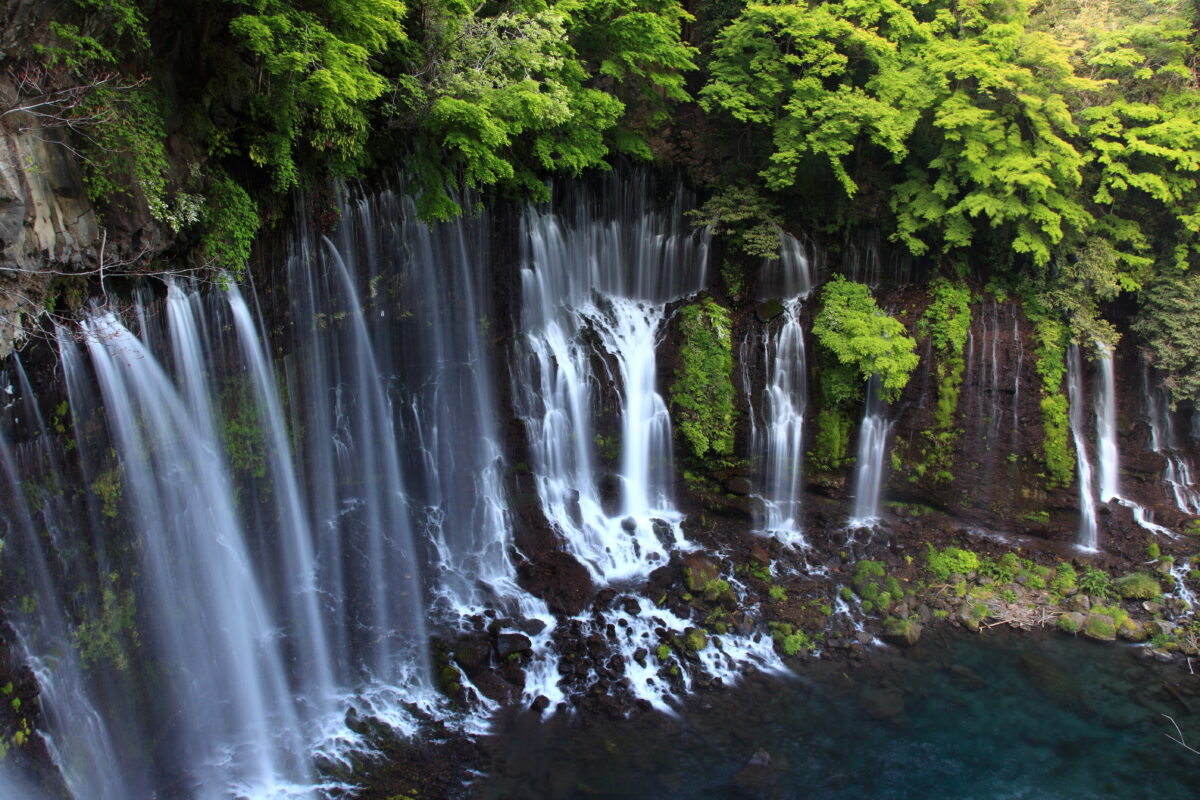
A short bus ride from Kawazu station is the famous Nanadaru 7 Waterfall area where you can enjoy one of the only ‘waterfall onsen’ in Japan.

LEARN MORE

SHUZENJI – MISHIMA STATION

Outdoor bath at one of traditional Ryokan inns in Shuzenji.

The hot spring water in the small town of Shuzenji in Izu City, is said to have been discovered by the famous Buddhist monk, Kobo Daishi.

Today the Tokko-no-Yu spring is a centerpiece of Shuzenji located at the spot that Kobo Daishi struck a rock with his Tokko (Buddhist ritual tool) to produce the onsen water more than 1,200 years ago.

Shuzenji hot spring town retains a mystical aura today and it epitomizes the classic Japanese onsen town.

Shuzenji has remained as a place of sanctuary that people have been coming to for many years to relax, reflect and recharge.

LEARN MORE

ATAMI – ATAMI STATION

Take in the ocean view while soaking in onsen in Atami.

Atami could possibly boast that it is the most easily accessible traditional onsen town from Tokyo.

Just 45 minutes from Tokyo station, visitors can settle into a hot spring resort hotel with expansive views of the ocean or wander around the town enjoying the onsen town atmosphere.

Because of Atami’s location on the coast, you can be sure that you will be able to enjoy the freshest seafood that Izu Peninsula has to offer.

LEARN MORE

KANZANJI – HAMAMATSU STATION

Feel the breeze flowing into from Lake Hamana.

The influence of Kobo Daishi can also be felt in the lakeside hot spring town of Kanzanji in Hamamatsu.

Located on the east coast of Lake Hamana, Kanzanji is easily accessible from Hamamatsu station and boasts a number of hot spring resort hotels that offer stunning sunset lake views.

There are also a number of great experiences on and around Lake Hamana that make this a great getaway for all ages.

LEARN MORE

GOTEMBA – MISHIMA STATION

Outdoor bath with a view of Mt. Fuji in Gotemba.

Many visitors to Japan will be familiar with Gotemba as it has become famous for its outlet mall located at the foot of Mt. Fuji.

However not so many would be aware that Gotemba has some fantastic onsen options also – and soaking in an outdoor bath with views of Mt. Fuji is about as Japanese as you can get!

Check out the family friendly Gotemba Kogen Resort or Hotel Clad to make all of your Mt. Fuji onsen dreams come true.

LEARN MORE

Shimoda & Minami Izu – Explore White Sand Beaches and Unspoiled Coastline

0

At the Southern tip of Izu Peninsula, Shimoda and Minami Izu are great destinations to spend a few days. Explore the crystal clear waters, the amazing coastline and discover quaint little fishing villages that have existed in this area for centuries.

SHIMODA – AN IDYLLIC BEACH TOWN WITH A FASCINATING HISTORY

HISTORICALLY PRESERVED TOWN AND QUAINT PERRY ROAD

Take a scenic train ride down the East Coast of Izu Peninsula and you will come to the idyllic coastal town of Shimoda.

Shimoda is perhaps most famous as the first landing spot of Commodore Perry’s “Black Ships”.

The Shimoda Treaty which was signed in 1854 between the US and Japan effectively ended 200 years of Japanese isolation and eventually began the Meiji Restoration.

Today, there are many remnants in the town to provide visitors a glimpse of life 170 years ago.

Perry Road is perhaps the centerpiece of the town. The picturesque willow tree-lined cobbled street follows a small canal with stone bridges connecting to a number of cafes and other shops.

Charming shops and restaurants welcome visitors on the historic Perry Road.

At the end of Perry Road, you can pop into Ryosenji Temple where they singed the Shimoda Treaty. The temple also has a museum (MoBS/The Museum of Black Ship) with a large collection about Perry and the black ships housed.

WHITE SAND BEACHES – SURFING, SNORKELING & MORE

If you enjoy sitting on the beach or prefer to get in the water, then there is plenty to do in and around Shimoda.

White sand beaches such as Shirahama and Iritahama are popular in the summer with sun seekers looking to escape the city and year round for surfers when the swell is up.

Many water sports and activities available in Shimoda.

The nearby Suzaki Peninsula is a popular coastal hiking spot – check the Suzaki Walking Trail. The area also boasts a number of sea kayaking, snorkeling, scuba diving and fishing operators that provide tours.

MORE INFORMATION

Find experiences in Shimoda here.

Shimoda Tourist Association Website

MINAMI IZU – COASTLINE AND OCEAN WAITING TO BE EXPLORED

RUGGED COASTLINE, FISHING VILLAGES & MONKEYS

Although you could get to Minami Izu in just 3.5 hours from Tokyo, the town feels like a million miles away.

The Southern Coastline of Izu Peninsula provides an endless supply of adventures and activities to help you explore the area. Here, you can also find the kind of seclusion that is hard fought for these days.

Hirizo Beach is known for its cristal clear water.

Some of the highlights of Minami Izu include Sea Kayaking around Yumigahama Beach, Irozaki Cape and snorkeling at Hirizo Beach.

Another great spot to check out is Hagachizaki Monkey Bay. It is a stretch of rocky coast that is home to more than 300 Japanese monkeys.

Hagachizaki Monkey Bay in Minami Izu is home to more than 300 wild Japanese monkeys.

Please note that travel in this part of Izu can be challenging especially if you do not have a car. Buses are infrequent so timing is important and besides, there are not many places to get food in the area.

This, in many ways, adds to the charm of the area and is the reason many travel to Minami Izu. However, visitors should plan ahead and prepare themselves.

MORE INFORMATION

Minami Izu Tourism Website

BEST TIME TO VISIT

As this part of the peninsula is sub-tropical, the winters here are much shorter than the rest of Japan.

Early blooming Kawazu Zakura can be enjoyed as early as February.

The weather starts to warm in mid-April and although the sea is still a little cold, it is a great place to be to enjoy an early Spring.

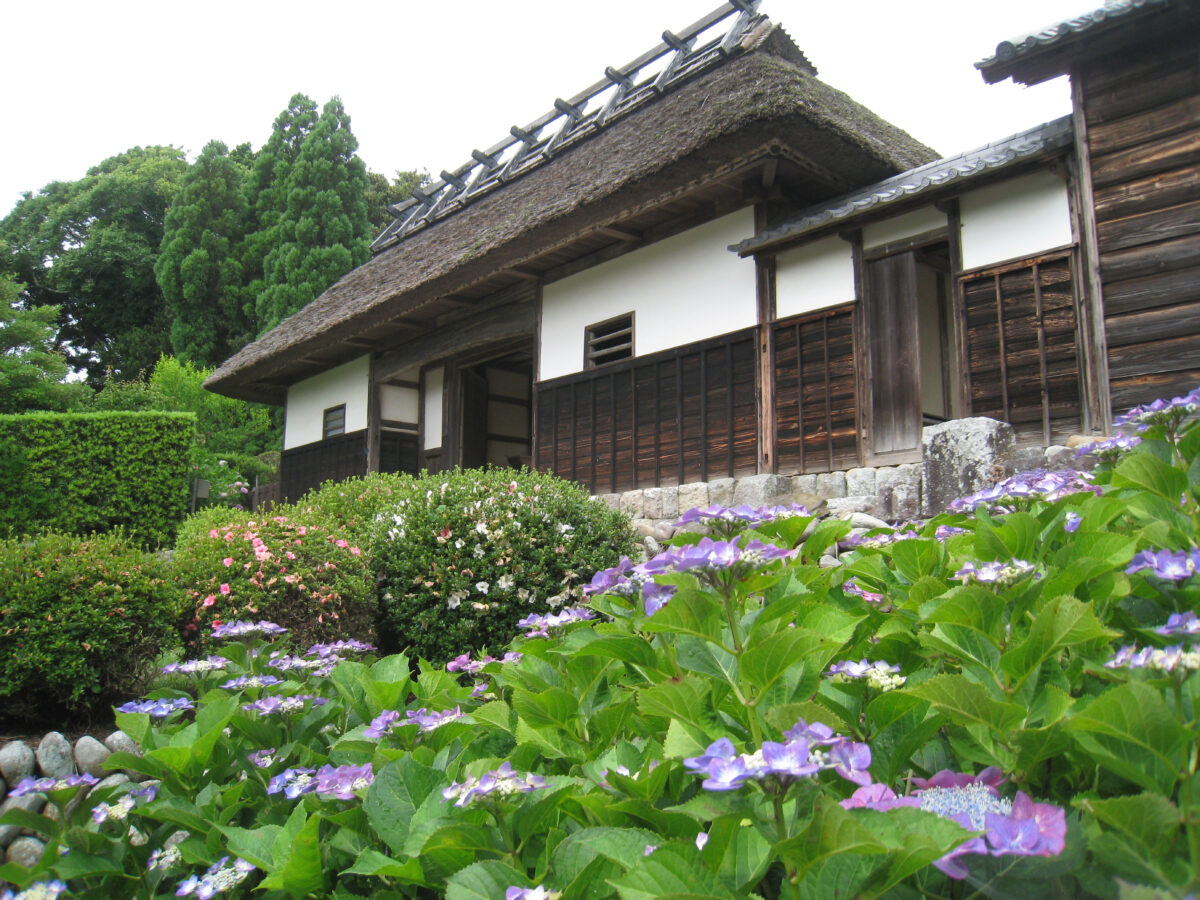
Rainy season starts mid June at which time the weather is very changeable. However, it is the time that the hydrangea are at their peak and the Shimoda hydrangea festival is worth a visit.

The Summer season from July through to late September is when this area is at its best if you like the beach and ocean with long hot days with many people out enjoying themselves.

Although not as famous as nearby Kawazu, Minami Izu is also boasts blossoms starting to bloom in February. It is a great way to escape the coldest month of the year in many other parts of Japan.

HOW TO GET THERE & AROUND

The train journey to Shimoda follows the East coast of Izu and offers spectacular coastal views on the way down.

If you buy a Izu Dream Pass at Ito Station (just South of Atami Station), you will have 3 days to travel down to Shimoda.

With the Izu Dream Pass you have the option to travel by bus to through Minami Izu and up the West Coast of Izu to catch the Suruga Bay Ferry to Shizuoka city – a great diversion trip for JR Rail pass holders traveling from Tokyo to Kyoto.

For traveling to Minami Izu, we reccomend picking up a rental car in Shimoda to travel around. This gives visitors more opportunities to get off the beaten track.

Mishima – A city built on the lava flow of Mt. Fuji

0

Spend a day in Mishima City wandering through pure streams flowing with snow-melt from Mt. Fuji.

CITY OF WATER – LUSH GREEN PARKS AND WATERWAYS

Mishima City, just one hour from Tokyo Station on the Tokaido Bullet Train, is a green oasis town blessed by Mt. Fuji.

Mishima Baikamo
Tiny cute flowers of Mishima Baikamo – a water-crowfoot which is native to Mishima and only lives in the crystal-clear cold water.

Much of the city has been built on lahar and mud flow from Mt. Fuji’s eruption several thousand years ago.

As a result, the soil is rich in nutrients and there is an endless supply of fresh filtered water that flows through like a natural irrigation system.

Mishima is a Garden City with waterways running alongside many of the residential streets and a number of parks that spring to life in April.

Like most of the Shizuoka cities that have stations along the Tokaido Bullet Train line, there a number of attractions within walking distance that make a stop at Mishima Station worthwhile even if you just have half a day to spare.

Why rush to your destination when you can enjoy the journey along the way?

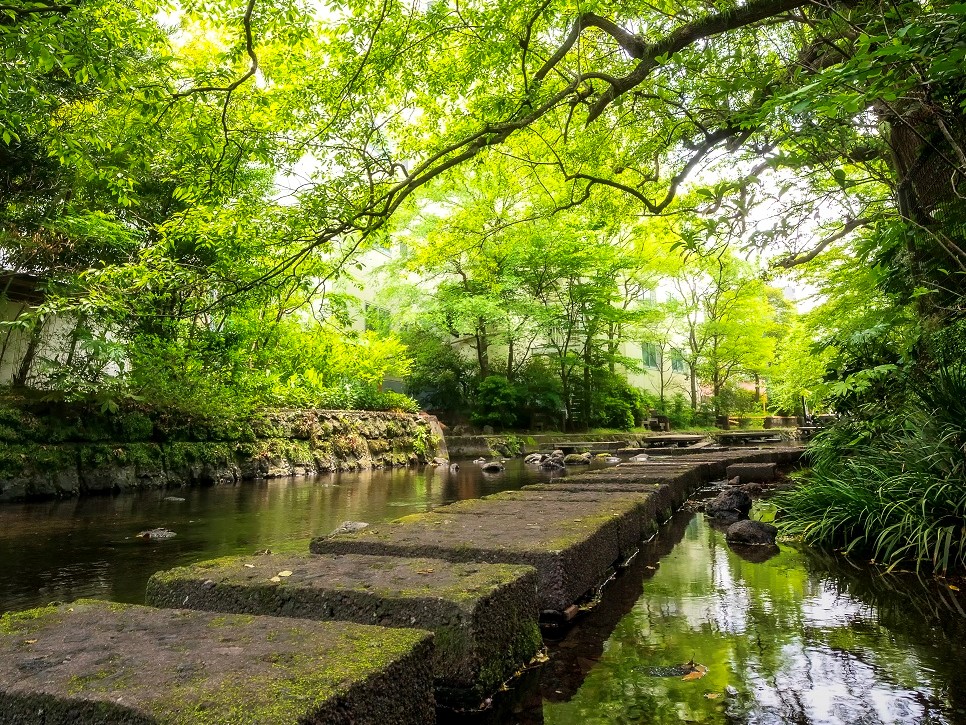
You can walk on the paving stones down the stream. 
You can walk along the paving stones down the stream. 

A RIVER RUNS THROUGH

The Genbe River is the centerpiece of the city – a lovely slow flowing river that winds through the city and brings with it filtered snow melt from Mt. Fuji.

Stepping stones placed along the river to allow you to almost walk on water as you follow them through the town to Mishima Taisha Shrine.

Check out a walking tour to discover the natural wonders and cultural attractions the city has to offer.

A TOWN FOR FOODIES

Mishima is famous for its charbroiled eel that is prepared and washed in the naturally filtered Mt. Fuji water which is said to give it a fresh and clean taste.

People have been coming to Mishima from all around Japan for centuries just for the eel. The town’s most famous restaurant, Sakuraya, has been serving this dish since 1856.

Grilled eel glazed with a sweet sauce
Grilled Unagi (eel) glazed with a sweet sauce.

If eel is not to your taste, Mishima has plenty of other options. Read more…

Enjoy the soothing sound of the stream.

In the area around Mishima Station, there are alleys of classic Japanese food options that cater to the crowd returning home from work and the restaurants and Izakaya bars in this area are buzzing at night.

If you are looking for a Western option the number of Italian restaurants and cafes have increased in recent years.

One of the local favorites is Dilettante Cafe – an Italian fusion cafe right on the edge of the river.

For more food options (including where to buy the popular Mishima Croquette) – Click Here

MISHIMA SKYWALK

If you would like to get closer to Mt. Fuji, take a trip up notrth to the picturesque Mishima Skywalk.

Stretching 400 meters across a lush valley, the bridge boasts an unparalleled view of Mt. Fuji, rising majestically in the distance and Suruga Bay shimmering on the horizon.

If you are looking for more thrilling activities, there is a tree top park, a long zip slide and other outdoor activities available in the north area across the bridge.

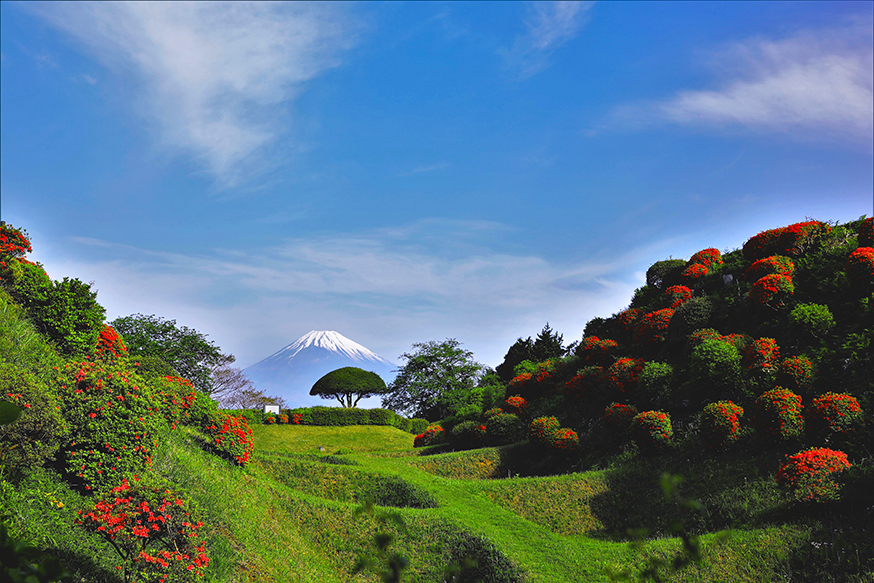
Take in the awe-inspiring view of Mt. Fuji on a clear day.

BEST TIME TO VISIT

From the end of March, when cherry blossoms start to bloom, through to the start of the rainy season in mid-June is an excellent time to visit this vibrant city.

Mishima Taisha shrine in Spring
Mishima Taisha Shrine in spring.

From late May, fireflies can be seen along the banks of the Genbe River and as the rainy season approaches the hydrangea are in full bloom.

Wading through the fresh Mt. Fuji water flowing through Mishima is a great way to cool down on hot summer days.

If you want to improve your chances of seeing Mt. Fuji, visit Mishima in the cooler months. Although cold, the weather is stable and the snow-clad mountain contrasts against clear blue skies. Read more…

HOW TO GET THERE & AROUND

A great thing about Mishima is that it is easy to get to – On the Tokaido Bullet Train from Tokyo Station you can get to Mishima Station in about an hour.

Once you are at Mishima Station most of the main attractions are easy walking distance from the South Exit.

Bicycle rental is also available from the station and other locations throughout the city.

MORE INFORMATION

Activities in and around Mishima City Tours

Mishima City Tourism Website

Mishima – A City made for walking tour courses

Activities in and around Mishima

Lake Hamana – A large ‘Ocean Lake’ full of surprises

0

Lake Hamana in Shizuoka is a large brackish lake that stretches inland from the coast with a unique ecosystem that provides a wide variety of experiences & activities. 

It was a freshwater lake until a 1498 earthquake that connected it to the Pacific Ocean, so it is technically a lagoon.

The water in Lake Hamana is brackish. It means the water is a mix of salt water from the Pacific Ocean and fresh water that flows down from the Japanese Southern alps. Therefore, the lake water does not have the same amount of salt content as the ocean.

LAKE HAMANA – HISTORY, SEAFOOD, CYCLING AND MARINE ACTIVITIES

Lake Hamana is the second largest brackish lake in Japan at 65km² with a total circumference of 114 km. The lake is most famous for its Food, Activities and Onsen – More Information – PDF.

Due to the size of the lake and the land formations, there are many areas and districts around the lake ready to be explored. It is difficult to define Lake Hamana and what each area provides – there are three ‘destinations’ that are worth checking out.

Various activity options available at Lake Hamana

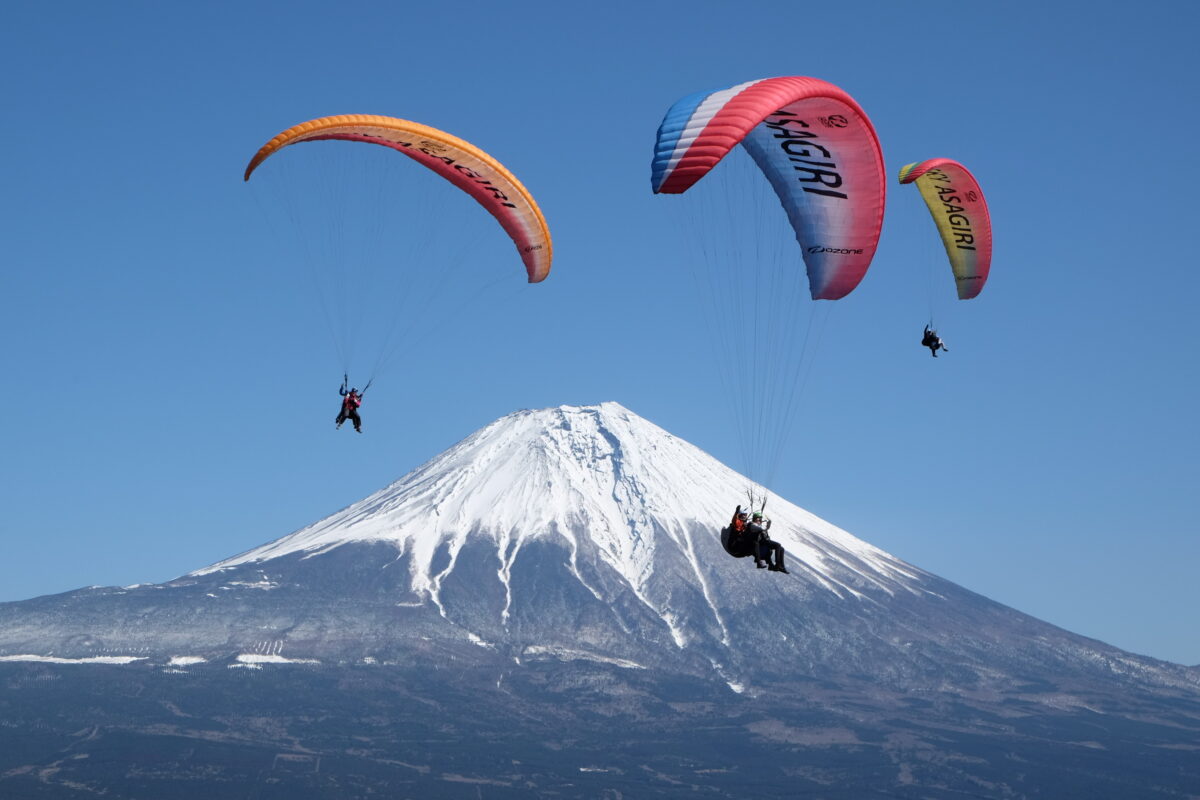
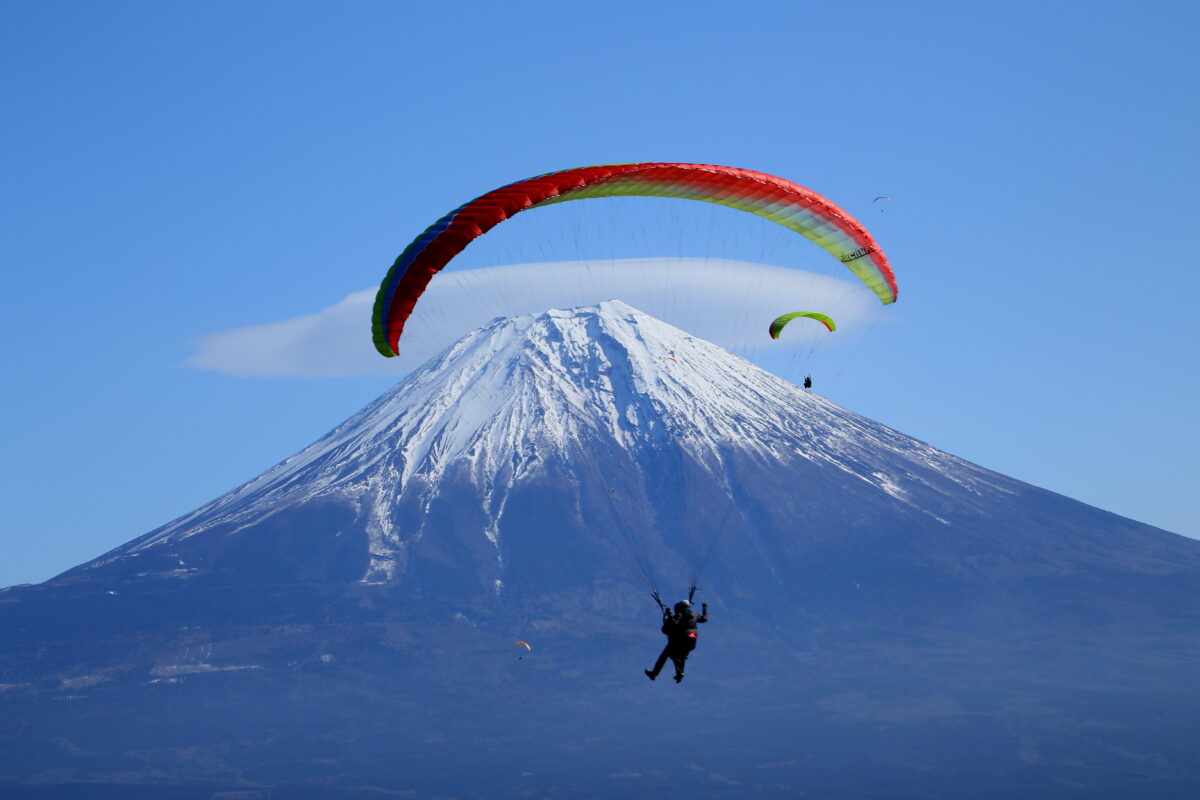
Oku-Hamana is the name used to describe the mountainous area North & West of the Tenryu Hamanako Line –See Map. Highlights of this area include 1,300 year old Ryotanji Temple, Mandarin Orange Picking, Paragliding & the Ryugashido Cavern.

Central / Eastern Lake Area is a section of land on the East Coast in the middle of the lake. This area includes the famous hot spring resort town of Kanzanji, the Hamamatsu Flower Park and the Hamanako Garden Park.

Southern Coastal Area follows the Local JR Tokaido Line and offers access to beaches, historic buildings, amazing sunsets and unique activities.

The options for things to do here are endless and varied depending on which areas and which season you visit.

OKU-HAMANA

‘Oku’ in Japanese means ‘back’ or ‘behind’ and is a prefix that is often used to refer to areas that are off the beaten track and commonly describes a sparsely populated, forested or mountainous area.

Ryotanji Temple – one of the 5 temples of Oku-Hamana

Oku-Hamana consists of the Northern Coastline of Lake Hamana and the mostly forested area at the foothills of Japan’s Southern Alps.

The area offers many great opportunities for adventurous travelers to enjoy lake activities, onsen, hiking and exploring the “5 temples North of the Lake” which own some of the nationally-designated important cultural assets.

CENTRAL / EASTERN LAKE AREA

The Central and Eastern areas of the Lake are perhaps the most popular destination for visitors.

Kanzanji Hot Spring resort area includes hot spring hotels, culturally significant Kanzanji temple, many great restaurants and other activities.

Just South of Kanzanji, the Hamanako Garden Park is a popular destination for visitors looking to relax and unwind.

Nemophila in bloom in spring at Hamanako Garden Park

SOUTHERN COASTAL AREA

The Southern Coast of Lake Hamana that primarily consists of 2 stations on the JR Local Tokaido train line – Bentenjima and Araimachi.

Within this area there are some unique experiences for the whole family that make it worth a stop.

Have a flutter at the local Boat Race, stop off in Arai-cho and visit the old Tokaido Highway Checkpoint and museum, relax on Bentenjima beach or set out for some night fishing using traditional spears with local fishermen.

Takiya-ryo – the traditonal night spearfishing

HOW TO GET THERE & AROUND

Hop off the Bullet Train at Hamamatsu Station and it is a 12 min local train ride to Bentenjima Station on the Southern Coast.

Oku – Hamana is a little more difficult to get to – taking the Tenryu Hamanako Line from Shinjohara Station (one stop from Hamamatsu Station on the JR Tokaido Line) will get you there in about an hour.

Lake Hamana prides itself on its cycling routes, aid stations and rental bike options it is a great destination for all levels of cyclists and bikes are a great way to explore the area.

MORE INFORMATION

For assistance, luggage storage and more information make the Hamamatsu City Tourist Information Center your first stop.

Find experiences in and around Lake Hamana here.

Lake Hamanako Tourism Website

Gotemba – a city offering many activities, climbing Mt. Fuji and so much more

0

With a backdrop dominated by the Majestic Mt. Fuji, Gotemba offers visitors a wide range of activities and attractions suitable for everyone.

 MT. FUJI, OUTLET SHOPPING, WHISKY DISTILLERY, HOT SPRINGS, HORSE RIDING, CYCLING & GOLF

SPEND QUALITY TIME WITH MT FUJI IN GOTEMBA

Gotemba is most famous for spectacular views of Mt. Fuji and Japan’s most popular Outlet Shopping Mall.

Many visitors to the area do not realise that Gotemba has so much more to offer – less than two hours from Shinjuku Station by train.

On a clear day in Gotemba wherever you go you can enjoy the skyline is dominated by Mt. Fuji.

Climb Mt. Fuji

Every Summer thousands of people arrive at Gotemba Station with their hiking shoes and day packs ready to climb Japan’s most iconic mountain.

The Gotemba Trail on Mt. Fuji starts at the lowest elevation and is the longest of the 4 trails on the mountain.

It is also less developed than the Yoshida and Fujinomiya trails but is also less crowded in the peak season.

Many Mt. Fuji climbers often climb up the Fujinomiya trail as it is a little shorter and then descend on the Gotemba side of the mountain enjoying the “Osunabashiri” – Great Sand Run which is a large area of loose lava gravel making it possible to almost run down the mountain.

Another advantage of descending the Gotemba trail is that there are plenty of Hot Springs waiting for you and the Romance Car from Gotemba straight back to Shinjuku Station is a comfortable way to travel.

SHOPPING WITH A VIEW

In recent years Outlet Shopping Malls have become very popular popping up all around Japan.

But by far the most popular is the Gotemba Premium Outlets mall.

The mall is easily accessible from Tokyo (1.5 hr direct bus from Shinjuku Express Bus Terminal) with 290 outlet stores including many international brands and a newly opened Hotel and Onsen facility

All of this with, on a clear day, stunning views of Mt. Fuji while you shop.

WHAT TO SEE AND DO

But many visitors don’t realize that Gotemba is so much more than just Mt Fuji and Shopping.

If you like to get outside and get active in Gotemba, you can try Horse Back Riding, Mountain Biking and Golf with Mt Fuji as your backdrop which makes it a truly unique experience.

There are more than 10 golf courses in the close Gotemba area making it a popular destination for golfers on the weekends.

Cycling is also a popular activity in the Gotemba area with a number of challenging cycling routes including the road up to Gotemba 5th Station on Mt Fuji.

Kirin Fuji Gotemba Whisky distillery

indigo dye

If you are not feeling so active you can try your hand at Soba making, traditional indigo dying experience, enjoy a gourmet Italian meal with views of Mt. Fuji or visit the award winning Kirin Fuji Gotemba Whisky Distillery and take a tour.

WHERE TO STAY

After a big day of shopping, hiking, biking, golf or other experiences, there are a number of great accommodation options in the area.

If you are traveling with family, Tokinosumika is a very affordable accommodation “experience” that needs to be seen to be believed.

If you are planning to shop until you drop then the newly built Hotel Clad at the Premium Outlet offers views of Mt. Fuji from more than half of the rooms and gives you an opportunity to soak in an Onsen with spectacular views.

 HOW TO GET THERE & AROUND

Gotemba is incredibly easy to get to from Tokyo with a number of different options available.

From Shinjuku Station both JR and Gotemba Premium Outlets have direct buses to the shopping Mall.

If you prefer to travel by train the Odakyu Romance Car is a very comfortable way to travel – there are several direct trains per day from Shinjuku Station.

If you are planning to play golf in Gotemba you can hop on the early Romance Car from Shinjuku and be on the first tee by 09:00am.

If you are traveling with a JR Rail Pass or you are traveling along the Tokaido Bullet train line, Gotemba is easily accessible from Mishima Station – taking the local Tokaido line to Numazu and then changing to the Gotemba Line.

If you are traveling from nearby Hakone, there are many buses available from the area.

Getting around Gotemba once you are there is a little more challenging.

Many of the local accommodations, golf courses and the Mall offer pick up services from Gotemba and some from Mishima Station.

There are many taxis available from Gotemba Station and most of the activities and attractions are close to the station so it is not too expensive to get around.

Renting a car from Gotemba Station or a bicycle from the Gotemba Station Tourist Office are other great ways to get around the city and give you a little more freedom to move around.

About us

0

This is the official website of the Shizuoka Prefectural Tourism Association. The objective of exploreshizuoka.jp is to convey the appeal of Shizuoka Prefecture as a travel destination, and to introduce unique tourist resources and experiences that only Shizuoka Prefecture can offer. We hope that this website will help more visitors to Japan to get to know Shizuoka Prefecture, travel around it, create wonderful memories, and return someday.

The Shizuoka Prefectural Tourism Association lays emphasis on showcasing the beauty and grandeur of Shizuoka Prefecture to the world and to work with local tourism officials to provide the best possible experience for visitors to Japan.

We work in cooperation with the Shizuoka Prefectural Government, the Prefectural Government Overseas Representative Offices, cities and towns in the prefecture, and DMOs and tourism organizations in the prefecture.

The following DMOs in the prefecture provide tourist information about each region to visitors to Japan. We encourage you to visit their websites and find a travel itinerary that works for you.

Izu Peninsula Tourist Bureau – https://www.explore-izu.com

SURUGA Marketing & Tourism Bureau – https://www.visit-shizuoka.com/en/

Hamamatsu & Lake Hamana Tourism Bureau – https://www.hamamatsu-japan.com/en/

Prefectural Government Representative Office – https://www.shizuoka.sg/

Safety Tips

0

Stay safe while traveling in Japan with the “Safety Tips” App

“Safety tips” is a free application developed under the supervision of the Japan Tourism Agency. It notifies a user with disaster information in Japan. Please utilize this app for your pleasant trip.
“Safety tips” notifies a user with EEW, Tsunami Warnings, Volcanic Warnings, Weather Warnings, Tropical Cyclone Information, Heat illness Warnings, Civil Protection Information and Evacuation Information issued in Japan. It is a free application developed under the supervision of Japan Tourism Agency.
The Application provides various functions useful for foreign tourists in Japan. The application is available in 15 languages: English, simplified and traditional Chinese, Korean, Spanish, Portuguese, Tagalog, Indonesian, Vietnamese, Nepali, Thai, Khmer, Burmese, Mongolian, and Japanese.

Terms of Use

Please make sure that the device which has not been changed a prediction point for more than 1 month from final change date of setting will not be able to receive notifications. If you turn automatic setting of a point on, you can receive notifications even in the case that it has been more than 1 month since you set a prediction point.
*It is necessary to activate the Location Information Service (GPS), if you wish to set locations by using GPS. GPS is also used to display your current location on the map.
Download Links

For iOS – https://apps.apple.com/jp/app/safety-tips/id858357174
For Android – https://play.google.com/store/apps/details?id=jp.co.rcsc.safetyTips.android&hl=ja&pli=1

Shizuoka National Parks

Shizuoka Prefecture is home to three National and Quasi-national Parks each of which has its own characteristics and charm.
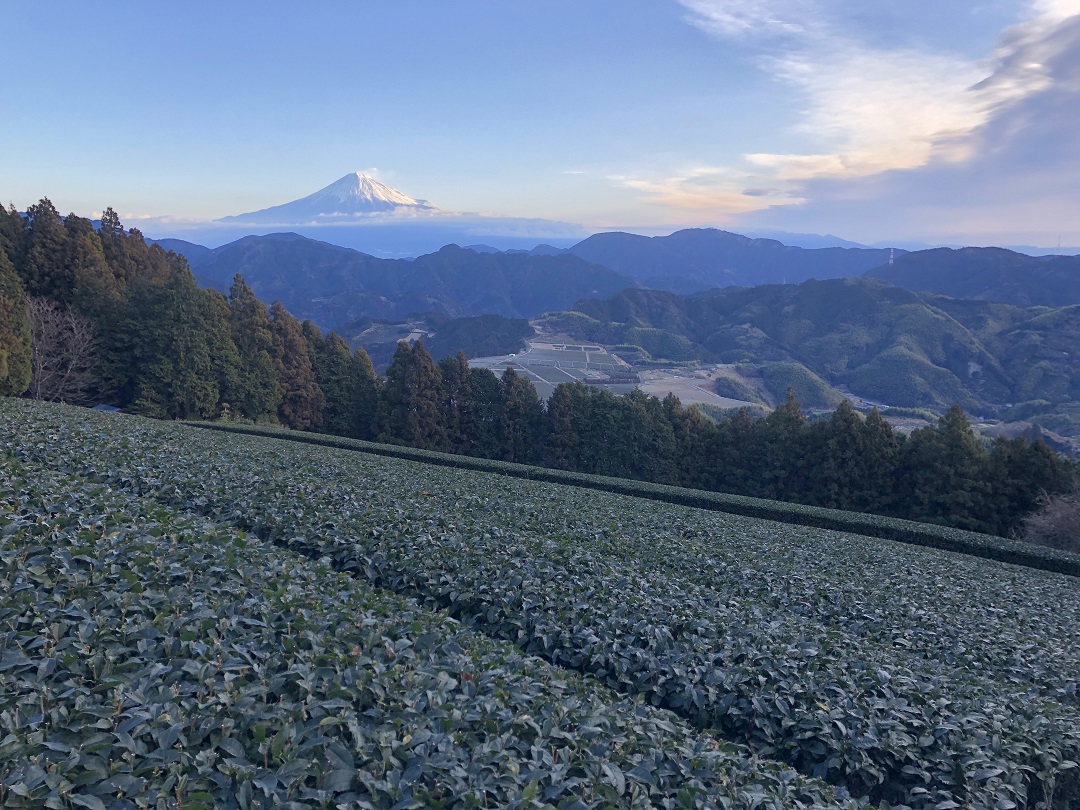
FIND NATURE IN SHIZUOKA

Shizuoka is blessed with an abundance of nature – mountains, rivers and ocean – so it is not surprising that large parts of the Prefecture are included in Japan’s National Park system.

Parts of Shizuoka are included in 2 National Parks and a Quasi-national Park each with its own characteristics and charm and all 3 are easily accsessible from any of Shizuoka’s 6 Bullet train stations on the Tokaido Shinkansen line.

In Japan, the concept of National Parks is not simply nature conservation areas, but a deep interconnection between the people and the land.

The primary drawcard of all National Parks is the beautiful natural environment to enjoy various outdoor activities. On closer inspection, you will quickly discover the relationship between the land, seasons, and local culture.

Most importantly – the local people, for whom lifestyle, culture, and legends have all coexisted in these special areas long before they were designated as National Parks.

Fuji-Hakone-Izu National Park

By far the most visited park in Japan with its proximity to Tokyo, it stretches from Mount Fuji to a chain of islands in the Pacific Ocean south of the Izu Peninsula.

It is divided into four areas: the Mount Fuji and Hakone areas in the north, and the Izu Peninsula and the Izu Islands to the south.

Highlights include climbing Mount Fuji, hiking the beautiful Edo-period Hakone Hachiri route, sea kayaking the rugged west coast of Izu, and relaxing in the thermal springs of Shuzenji.

Minami Alps National Park

Stretching from Nagano to Shizuoka, the Minami, or Southern Alps National Park is in the southernmost region of the Japanese Alps.

A haven for hikers and climbers with multiday treks that take in some of the most southerly glacial formed mountains in Japan, with peaks and ridgelines of over 2000 meters.

Highlights include hiking through beautiful amphitheater-like valleys, known as cirques, and vast alpine meadows home to unique flora and fauna.

Tenryu-Okumikawa Quasi-National Park

Bordering Aichi, Nagano, and Shizuoka prefectures, this Quasi-National Park (managed by local governments) is centered around the Tenryu River.

A vast mountainous rural area, this park has numerous hiking trails and fishing spots around Sakuma Lake.

Highlights include visiting the villages dotted along the Tenryu and Keta rivers, including Harunocho, with its peaceful shrines and temples.

Tokaido Highway

0

OLD TOKAIDO HIGHWAY

With 22 post stations in Shizuoka the Old Tokaido Highway, an ancient road linking Tokyo to Kyoto, literally paved a way for travelers to Explore this amazing prefecture

In the late 16th century near the beginning of the Edo period, the famous Shogun (and Shizuoka resident) Tokugawa Ieyasu built what was to become the mega city of Edo (now known as Tokyo) out of swamp land and designated it as Japan’s new capital.

However, the Emperor of Japan remained in Kyoto and remained as the spiritual center of the country.

Old Tokaido

Because of this geographical split, the Tokaido route “Eastern Sea Road” linking the two places rose in prominence and became vital to connecting the two main centres of political, religious and economic power.

For centuries Japanese used the Tokaido route to travel, trade and tour between the major centres.

As a result there was a steady flow of foot traffic along this route which in turn increased the number of businesses such as restaurants, supply stores and accommodation established to cater to the needs of the travelers.

Shizuoka had a total of 22 established ‘Shukuba’ or stops on the Tokaido Road and towns / cities grew up and flourished around each of these stops.

Many of these towns, such as Mishima, Numazu, Shizuoka City and Kakegawa still exist and are easily accessible from modern bullet train stations along the modern Tokaido Line.

…the genius of the Japanese race is manifest in its roads.
The Tokaido Highway runs from Osaka to Edo – from the empire’s belly to the head, if you will – and knows of no equal, I assert, anywhere on earth, in either modernity or antiquity.
The road is a city, fifteen feet in width, but three hundred well-drained, well-maintained, and well-ordered German miles in length, served by fifty-three way stations where travellers can hire porters, change horses, and rest or carouse for the night.

The Thousand Autumns of Jacob de Zoet, set in 1800, David Mitchell

TOKAIDO HIGHWAY “JUKU”

The ancient Tokaido Highway follows Shizuoka Prefecture’s winding Pacific coastline and expertly juxtaposes the modern and ancient sides of Japan that the country has come to be known for.

Along the original Tokaido Highway there were a total of 53 Post Stations or ‘Shukuba’ / ‘Juku’. 22 of these post stations are located in Shizuoka Prefecture.

The first Post Station in Shizuoka is near Mishima Station and and the last one is Shirasuka Post Station close to the historic Arai Sekisho Checkpoint in Hamamatsu.

Although much of the original road has become a casualty of modern progress, with many of the old roads becoming new tar-sealed highways and train lines to carry the modern traveler between Tokyo and Kyoto, it is still possible to follow in the footsteps of ancient travelers.

Along the Shizuoka leg of the Tokaido you can still catch a glimpse of what inspired artists and travelers all those years ago as they made their journey along this famous road.

Edo-period travelers would either have started or finished their Shizuoka leg of the Tokaido traveling between Mishima City and Hakone along what is known as the Hakone Hachiri.

Remnants of the old road are still similar to what they once were and it is this leg of the journey that is perhaps the best place to start in order to understand what traveling along this road would have been like 300+ years ago.

THE MODERN TOKAIDO

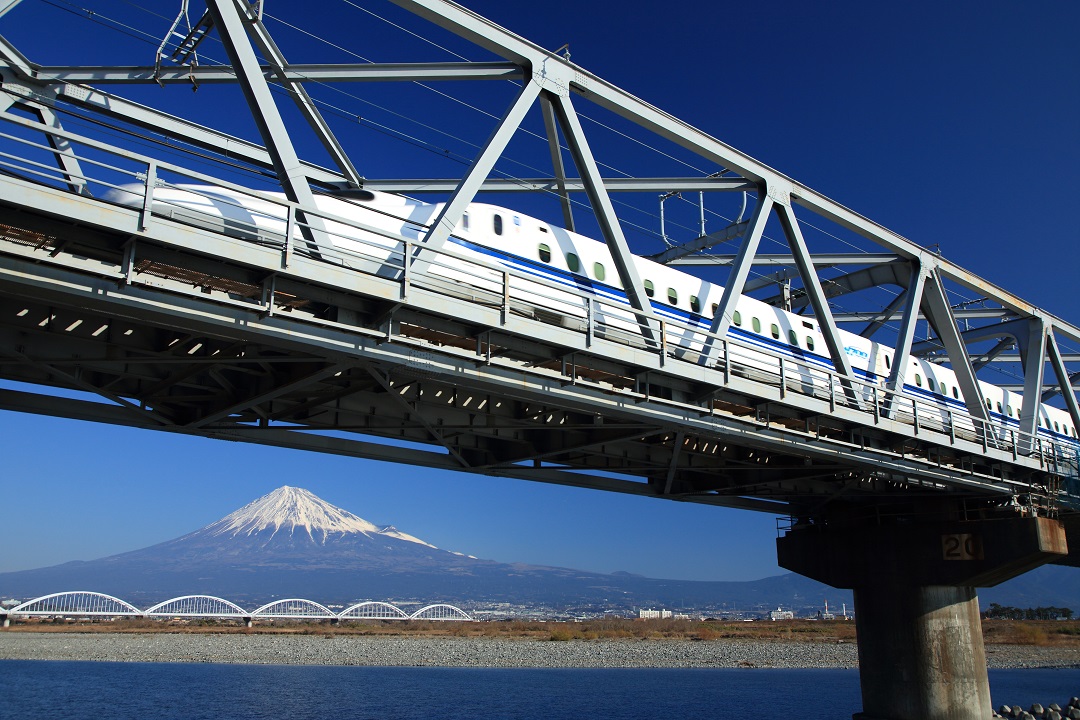
Today, the Tokaido Shinkansen is the modern evolution of the historical highway, and throughout Shizuoka, the route is alive with activities and attractions to explore.

Fast forward 350 years to 1964, and the establishment of the Tokaido Shinkansen.

The line was built at rapid speed and in time for the 1964 Tokyo Olympics, and signified for many the success of Japan’s post-war recovery.

Originally, the train line was called the New Tokaido Line in English as it follows very closely the route of the ancient highway.

In Japan, these travelling routes have been popular for centuries, used to facilitate the flow of people, goods, and information between major centres, and this tradition continues today.

Today, the Tokaido route is more than just a shinkansen line and space-age way to travel between Tokyo and Kyoto, it is, arguably, the most important of all the travelling routes in Japan.

The Tokaido route has a vast array of historical heritage to see, and amazing activities to experience.

Intrepid explorers walk the Tokaido route, enjoying the traditional inns and a taste of ancient Japan, or stop off in cities like Shizuoka to experience performing arts festivals and explore the modern side of Japan.

Shinkansen Stations

TOKAIDO ROAD “UKIYOE”

The Ancient Tokaido Road was made famous Japanese Ukiyoe woodprint artists Utagawa Hiroshige & Katsushika Hokusai who created some of Japan’s most iconic imagery from the 17th century and are said to have influences world-class Western painters such as Claude Monet and Vincent van Gogh.

The ancient side was captured beautifully by 19th century ukiyoe artist Hiroshige, who painted a scene of each of the 53 nightly inn stops along the ancient Tokaido Highway.

Each of the 22 stops in Shizuoka were portrayed through Hiroshige’s work and he was also responsible for some of the more well known illustrations in the series of picaresque novels, written by Jippensha Ikku, known as Tokaidochu Hizakurige which depict the travels of Yaji and Kita from Kyoto to Edo (Tokyo) along the Tokaido Highway during the Edo Period.

It is said that these books were not only the first examples of Japanese ‘Manga’ but also represented some of the first ever tourism guidebooks in the World.

Rail Pass

0

Izu Dream Pass

Izu Dream Pass is a very convenient round-trip ticket for Izu Peninsula for unlimited boarding on 「Suruga Bay Ferry」,「Tokai Bus」, 「Izukyu Line」, 「Izu Hakone Railway Line」,「Izu Hakone Bus」. 

Mt. Fuji-Shizuoka Area Tourist Pass Mini

Take a tour around the Shizuoka and Hamamatsu areas, Japan’s treasure trove of hot springs and sea food, on your way to the World Heritage site of Mt. Fuji!

Unlimited rides on JR local trains, buses, ferry and private railway along the route!

Unlimited rides on non-reserved seats on limited express, rapid and ordinary trains of JR conventional lines!

Izukyu-Line PASS

The Izukyu-line is a sightseeing route running along the East Coast of the magnificent Izu Peninsula – one Japan’s leading tourist destinations.

The Izukyu Pass is 1 – 3 day unlimited Hop-on / Hop-off train pass to help overseas visitors explore the magnificent Izu Peninsula at an affordable price.

Includes discount coupons for many of the most popular attractions in the area.

Enjoy Exploring Izu!

Izuhakone Line 2-Day & 1-Day Pass (RAIL&BUS)

Enjoy riding the Izuhakone Line trains and buses with a special discounted pass. With unlimited rides, you can explore stunning Shizuoka at your pace.

This is an excursion pass for foreign tourists which allows unlimited rides on Izuhakone railway and Izuhakone bus (six lines).