Home Blog Page 17

Kawane Area – The Heartland of Shizuoka

0

Kawane area is nestled in the mountains and has been blessed with the rich nature along the Oi River, one of 2 major rivers that have cut through Japan’s Southern Alps and forged deep valleys in the heart of Shizuoka.

Here you can stay away from the crowds and immerse yourself in nature and the authentic Japanese rural lifestyle.

THE OI RIVER RUNS THROUGH

The Oi River starts as rainfall and snow melt deep in Japan’s Southern Alps mountain range.

The water travels from peaks of some of Japan’s highest mountains such as Mt. Akaishidake 3,121m and Mt. Kitadake 3,193m (Japan’s 2nd highest mountain after Mt. Fuji 3,776m) .

The winding river makes its way through Kawane to the city of Shimada then Yaizu where it flows out into Suruga Bay.

The abundant water that flows in the Oi River is used for irrigating gardens and green tea fields along both sides of the river as it makes its way down to the sea.

HOME TO SOME OF THE FINEST GREEN TEA
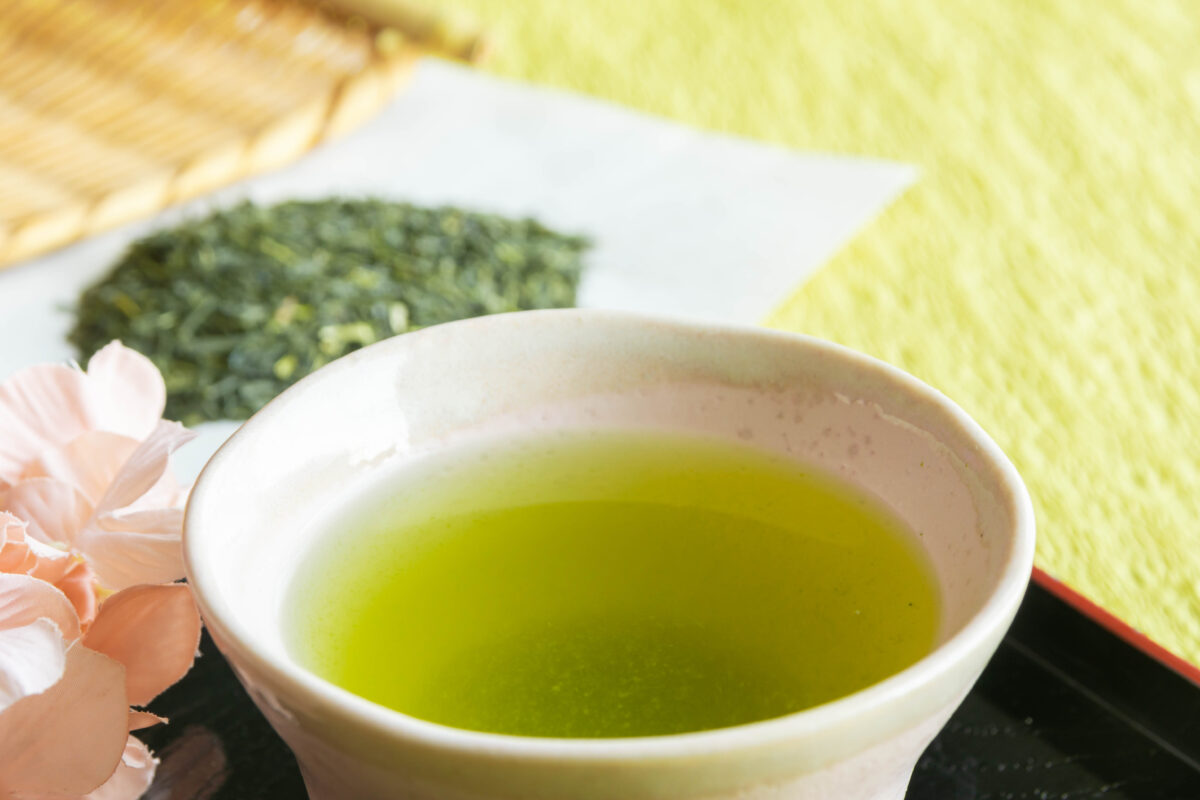
Home to some of the finest green tea
Kawane tea is considered one of the best teas in Japan for its fresh aroma, umami and sweetness.

Among many tea producing areas in Shizuoka, tea from Kawane is known as one of the best teas nationwide.

There are several reasons why Kawane tea is so delicious and one of them is its favourable environment. The Southern Alps brings warmer air in the day and wet cold air at night into villages in Kawane area.

This severe temperature variance reduces bitterness and increases Umami in tea leaves.

TRAVELING BY TRAIN
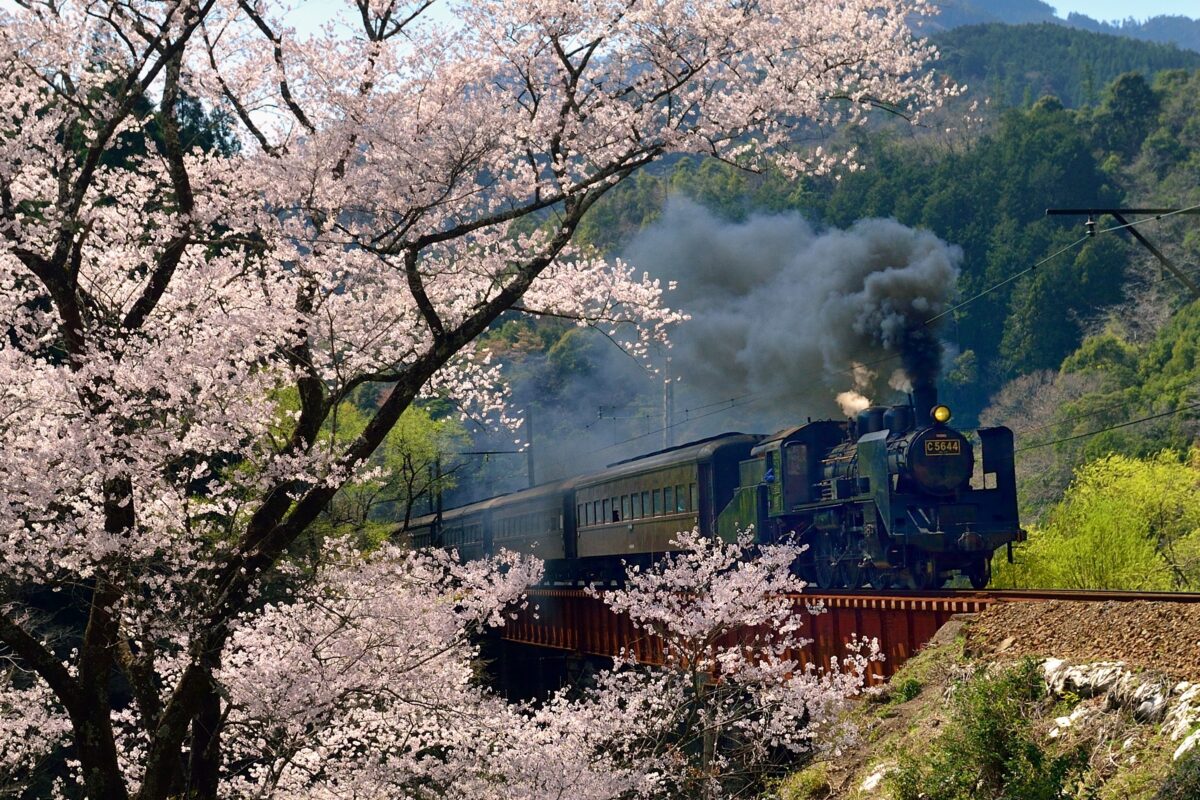
Traveling by train - Oigawa Railway
Great for a family adventure.

The Oigawa Railway operates a number of trains from Shin Kanaya Station, close to Shimada, all the way up to Ikawa Station by Lake Ikawa. Many travelers to the area choose to take the Steam Locomotive Train which offers a nostalgic journey following the river into the valley.

If you are traveling with kids, they will be excited to ride on an authentic Thomas the Tank Engine.

SUMATAKYO ONSEN
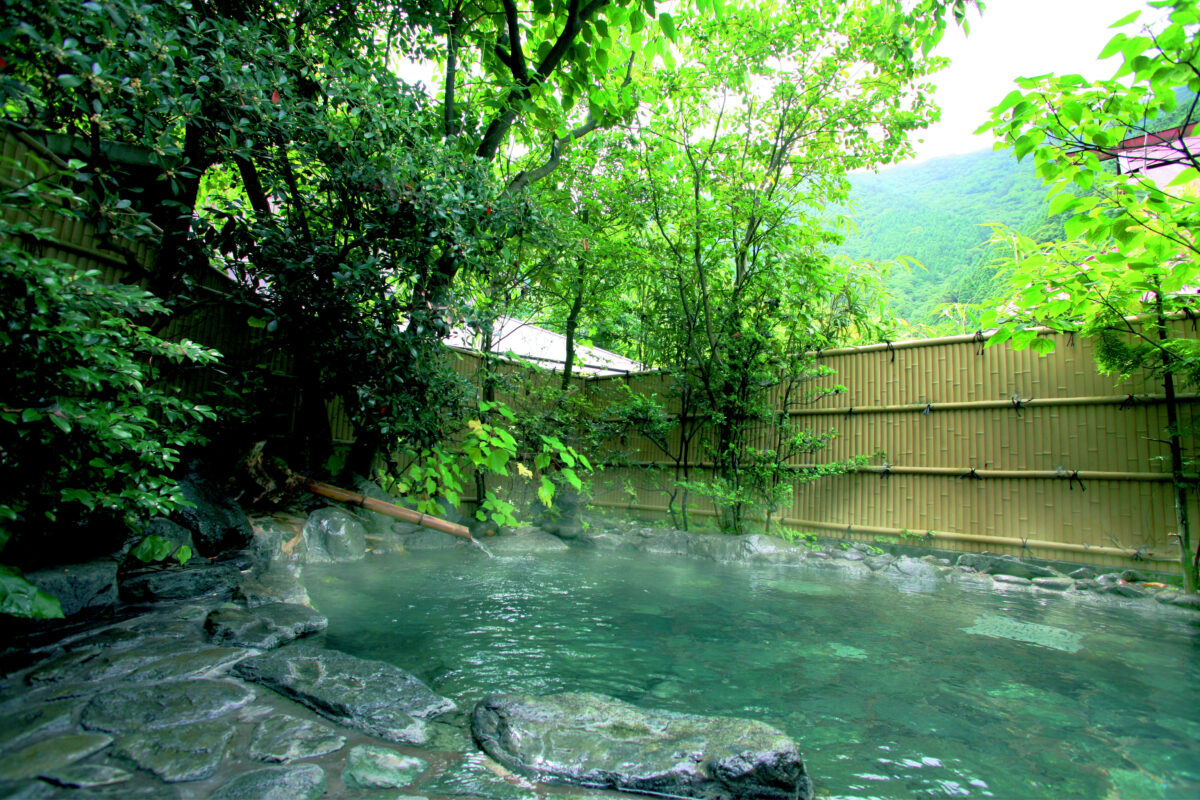
Sumatakyo Onsen
The alkaline Onsen is believed to make the skin smooth.

If you are looking for an escape to a secluded Onsen resort off the beaten path, then Sumatakyo Onsen is one to discover.

A bus ride from Senzu station takes you to this quaint small Onsen town in Sumata Gorge.

There are several day-use spas in town but staying at one of the Ryokan or Minshuku will give you more time to rejuvenate both your body and soul.

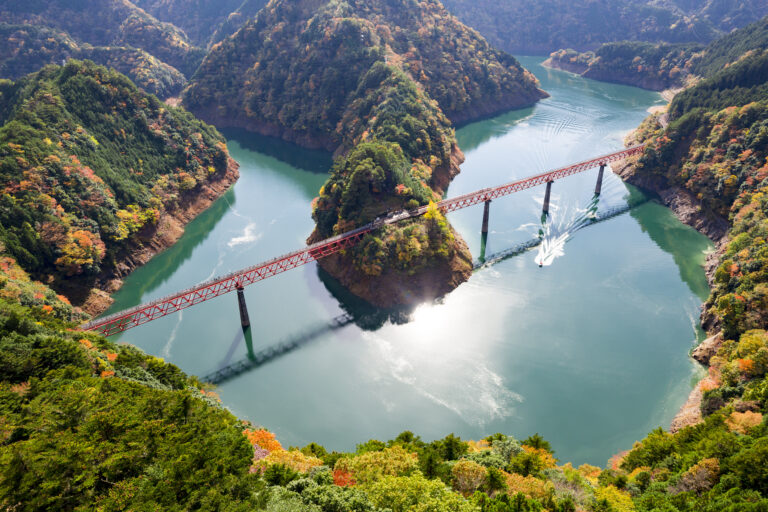
BRIDGE OF DREAMS – WALK ABOVE TURQUOISE BLUE WATER
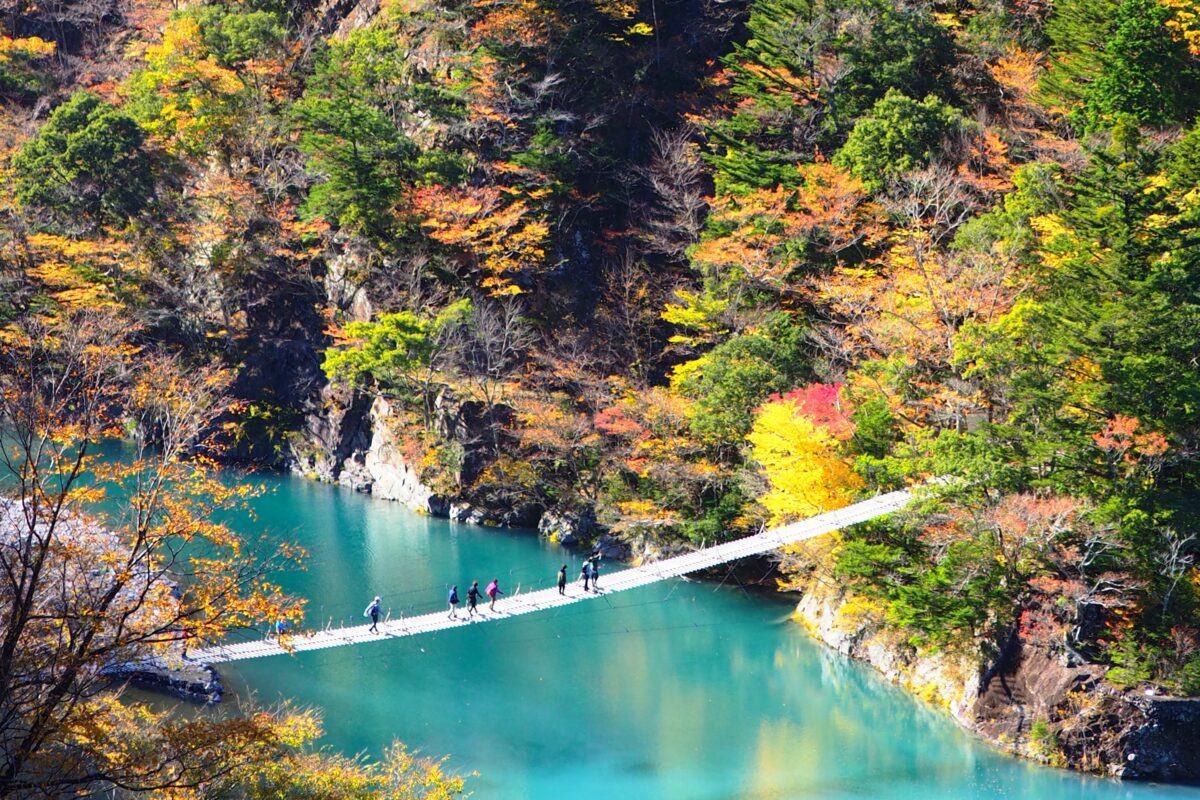
Bridge of Dreams - walk above turquoise blue water
 The hiking course to the bridge is an approx. 90-minute circuit.

If you would like to explore further, take a pleasant walk from Sumatakyo Onsen town and you will find the famous Bridge of Dreams suspension bridge.  

You will marvel at the intense turquoise colour of the water below and the surrounding green nature.

FARMSTAY EXPERIENCES
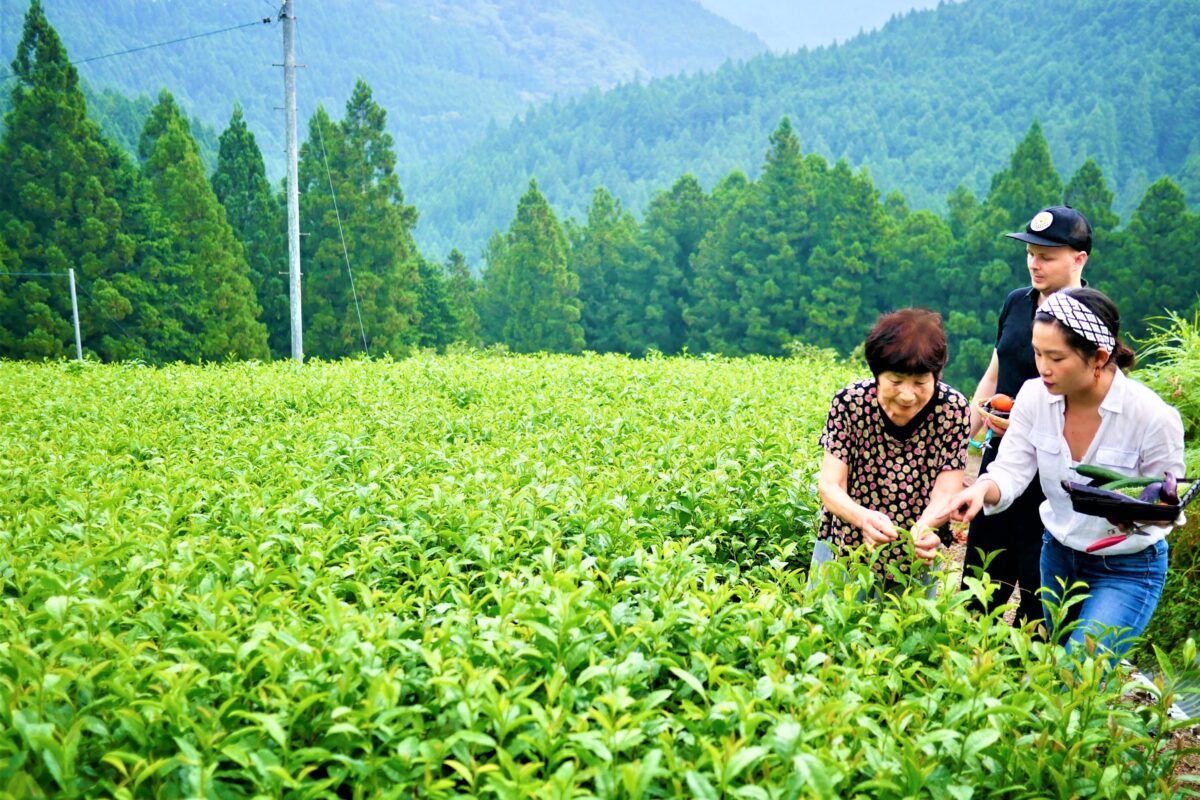
Kawane aarmstay experience
Farm to Table experience with welcoming farmers.

One of the most unique experiences that you can have in the Kawane area is to stay at one of the many Homestay / Farmstay accommodations available.

In addition, most accommodation providers will let you help them prepare your meals with fresh produce sourced from their gardens and farms.

An opportunity to stay with a local resident and learn what life is like living in the area is a truly unique experience for visitors who like to get off the beaten path.

Learn more about farmstay experiences in Kawane.

5 Workshops You Can Do in Shizuoka

0

Hands-on workshops in Shizuoka where you can learn from Shizuoka craftsmen & women skills that have been handed down over generations.

LEARN FROM SOME OF THE BEST IN SHIZUOKA

Many times the best way to experience something while you are traveling is to get hands on and try it yourself.

There are numerous Shizuoka workshops you can do and learn from craftsmen many of whom have had the skills they learned passed down over generations.

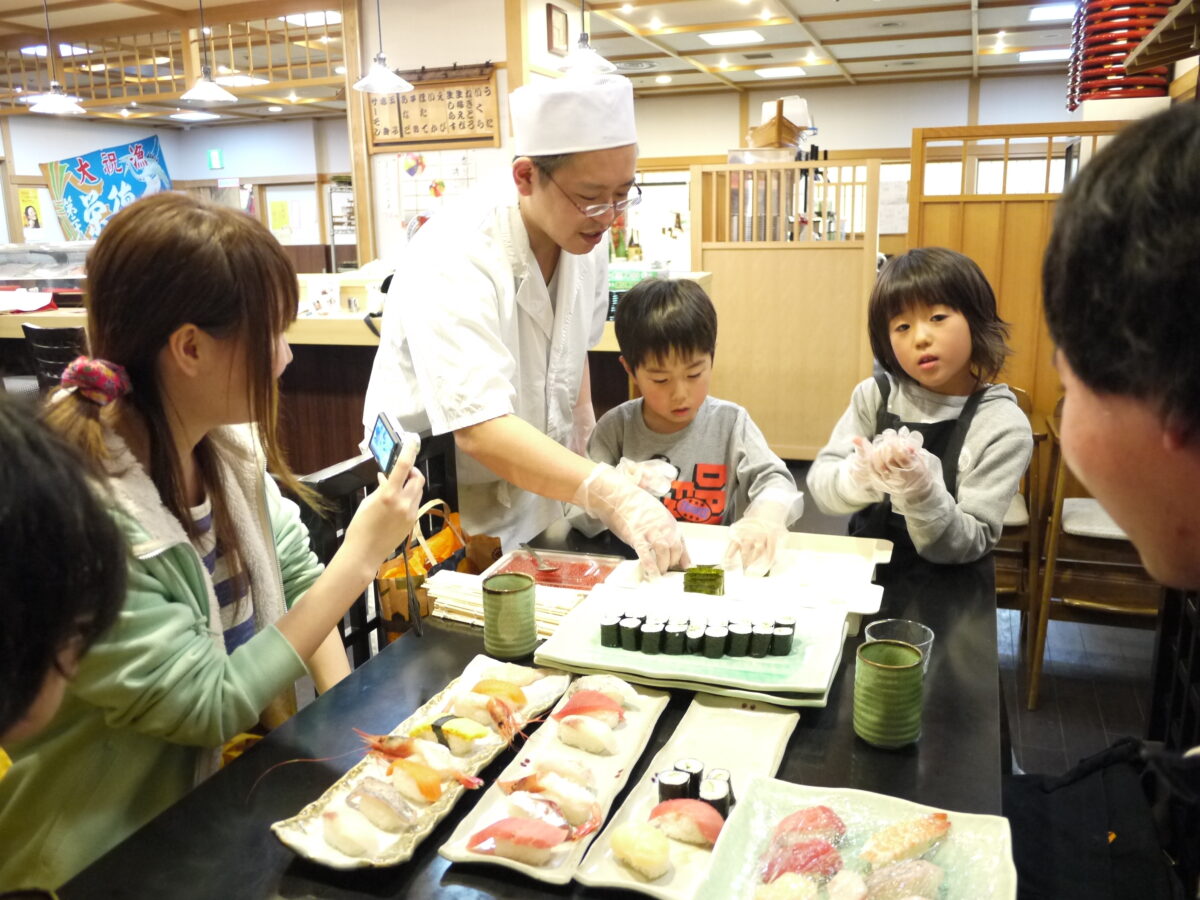
1. SUSHI MAKING IN SHIMIZU – Shizuoka Station

Tairyo Ichiba, Meal disposal large fishing market

There is perhaps nothing more iconically Japanese than sushi.

Anyone that has tried to make this Japanese dish will be aware that it is not as easy as the sushi chef behind the counter makes it look.

At the S-Pulse Dream Plaza in Shimizu Port just outside of Shizuoka City a sushi master will give you step by step instructions on how to make the best sushi from fresh seafood bought at the nearby fish markets.

Additionally, it also has one of Japan’s most extensive sushi museums – try this Sushi restaurant experience at Meal disposal large fishing market on the second floor.

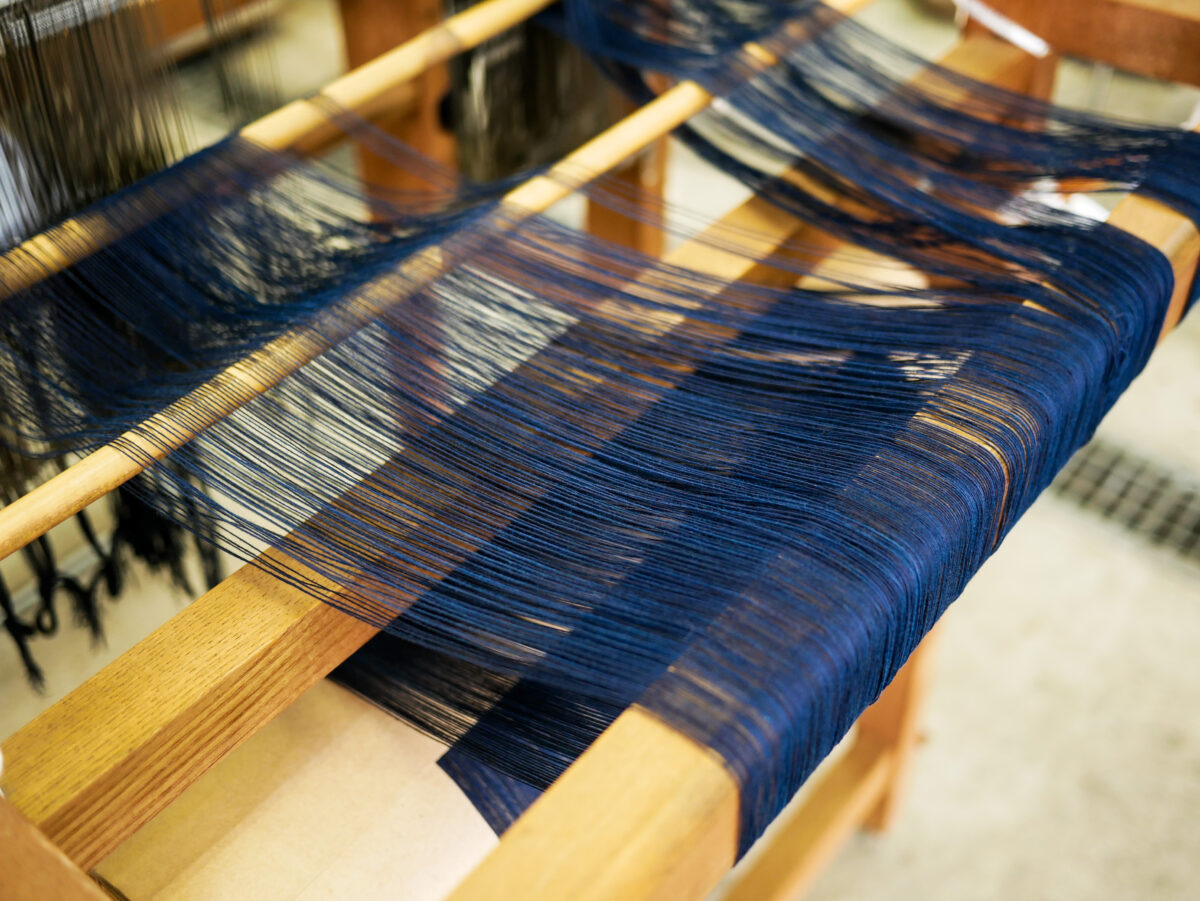
2. INDIGO DYEING IN GOTEMBA – Mishima Station

Shoaizome Koharaya

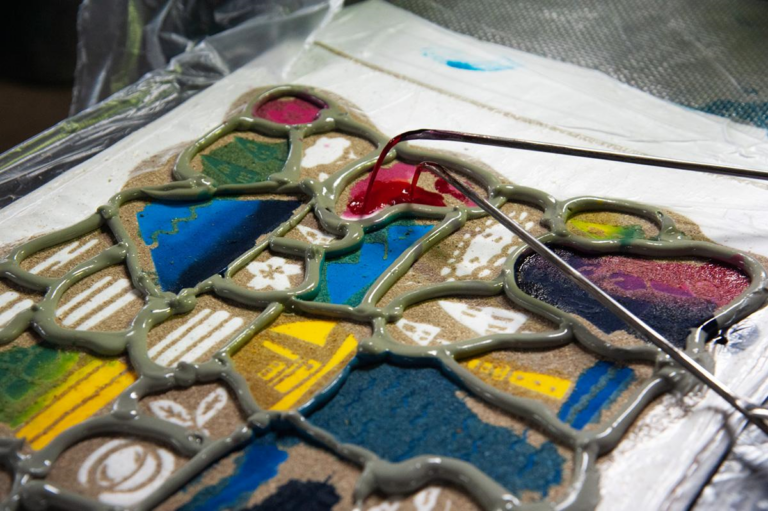
Japanese Aizome (indigo dyeing) has a history that dates back possibly as much as 1400 years in Japan.
The distinctive deep blue dye color common in many Japanese fabrics (and the inspiration for many of the Japanese sports team jerseys and the 2020 Tokyo Olympic logo) is derived from the Indigo Plant which is called “Ai” in Japanese.

It is said that the dye was popular in ancient time as the indigo also acted as a natural insect repellant.

There are a number of different Aizome dyeing techniques such as ‘Danzome’, which produces a striped pattern, ‘Shiborizome”, which is the popular tie-dying technique or ‘Bassen’ which uses stencils to create elaborate designs.

There are 48 different shades of blue.

If you are interested in learning more about this fascinating Japanese craft you can experience creating you own indigo fabrics in Gotemba and is a great side trip from a Gotemba Premium Outlet Mall shopping trip.

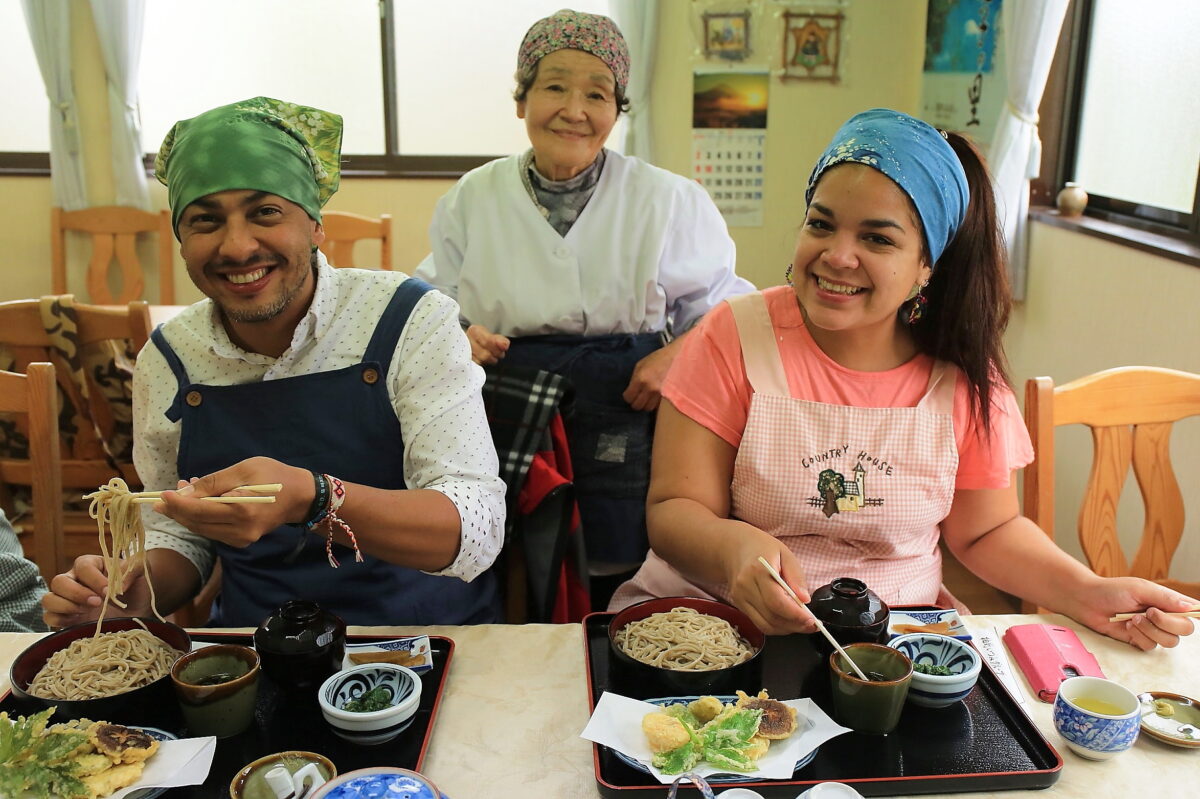
3. SOBA MAKING IN FUJINOMIYA – Shin-Fuji Station

Soba making – Cycling Ecotour at foot of Mt. Fuji

Anyone that has been to Japan will know that once you venture out into the countryside soba noodle restaurants are ubiquitous.

Soba noodles made with buckwheat are served hot or cold and have a wide range of health benefits including improved heart health and blood sugar.

If you venture into the Fujinomiya countryside you can experience making soba noodles from buckwheat that has been grown locally using fresh Mt Fuji spring water.

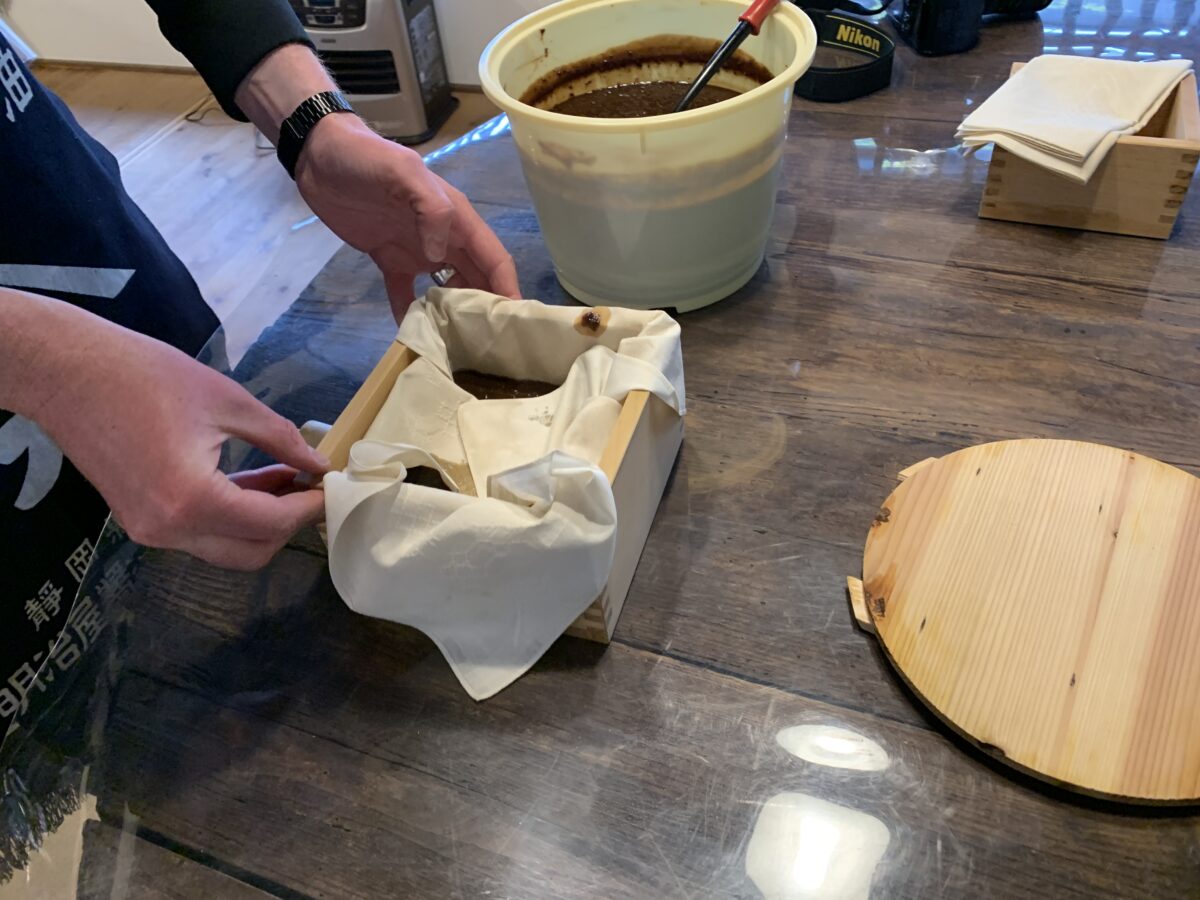
4. SOY SAUCE MAKING IN HAMAMATSU – Hamamatsu Station

Soy souce making – Meijiya Syoyu

Meijiya Shoyu was established back in 1875 to make soy sauce for the local Hamamatsu market and beyond.

The factory has been handed down over 5 generations and is still operating today using many of the same techniques as they did nearly 150 years ago.

A tour of the factory is fascinating and gives visitors a rare glimpse into the craft of creating soy sauce.

Special workshops are available giving visitors an opportunity to press there own soy and take home the sauce that they have made.

5. CHUSEN DYEING IN HAMAMATSU – Hamamatsu Station

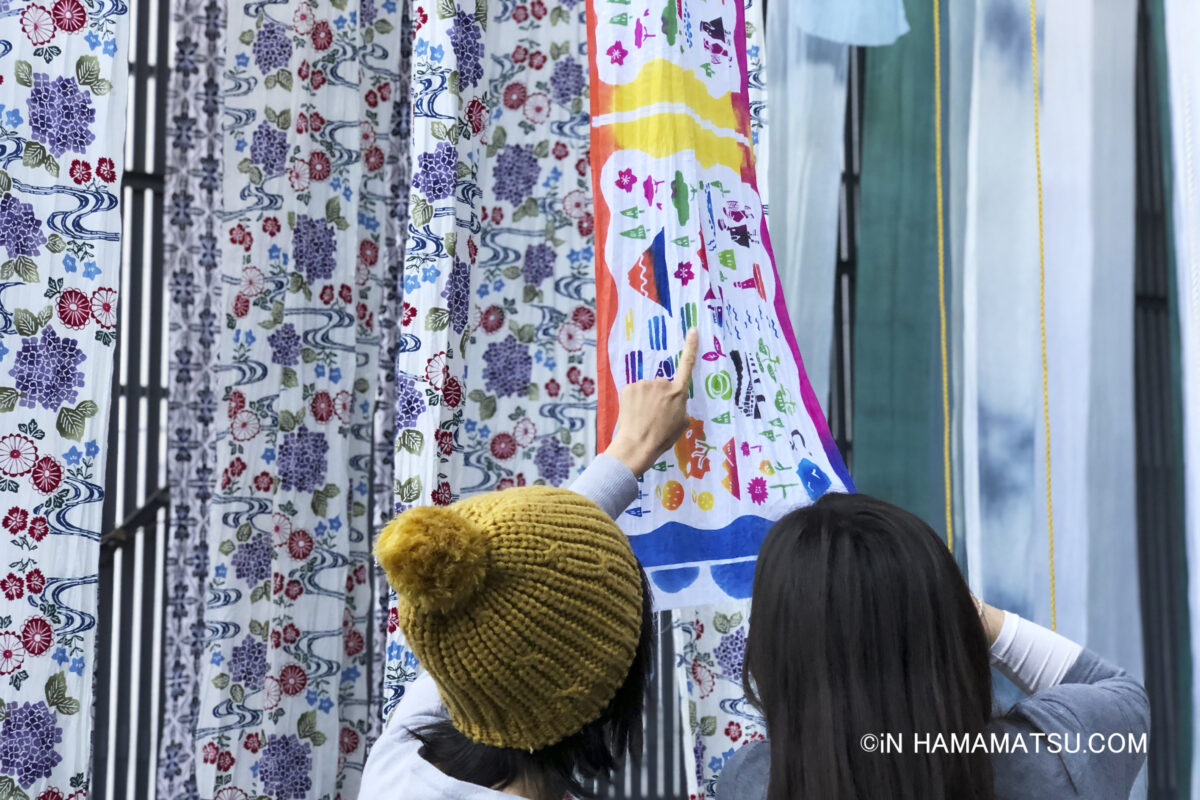
‘Chusen Some’ is a traditional dyeing of ‘Yukata’ (traditional Japanese summer kimono style wear) which has been passed down since the mid-18th Century.

At Nihashi Somekoujyo, which is located in central Hamamatsu city, visitors can observe the authentic dyeing craftsmanship and a hands-on experience dyeing your own special ‘Tenugui’ (Hand Towel) at the factory.

5 Winter Comfort Foods in Shizuoka

As you travel through Shizuoka, you will notice that the locals in each area have their own comfort foods to help them through the cold winter months.

5 SHIZUOKA COMFORT FOODS FOR WINTER

As the Japanese winter approaches and Japanese reach for their favourite winter jacket, the locals in Shizuoka also look forward to some winter comfort foods that help them through the colder months.

Although many of the following are available year-round, there is something about enjoying them especially in the winter months that makes them special.

SHIZUOKA ODEN – Shizuoka Station

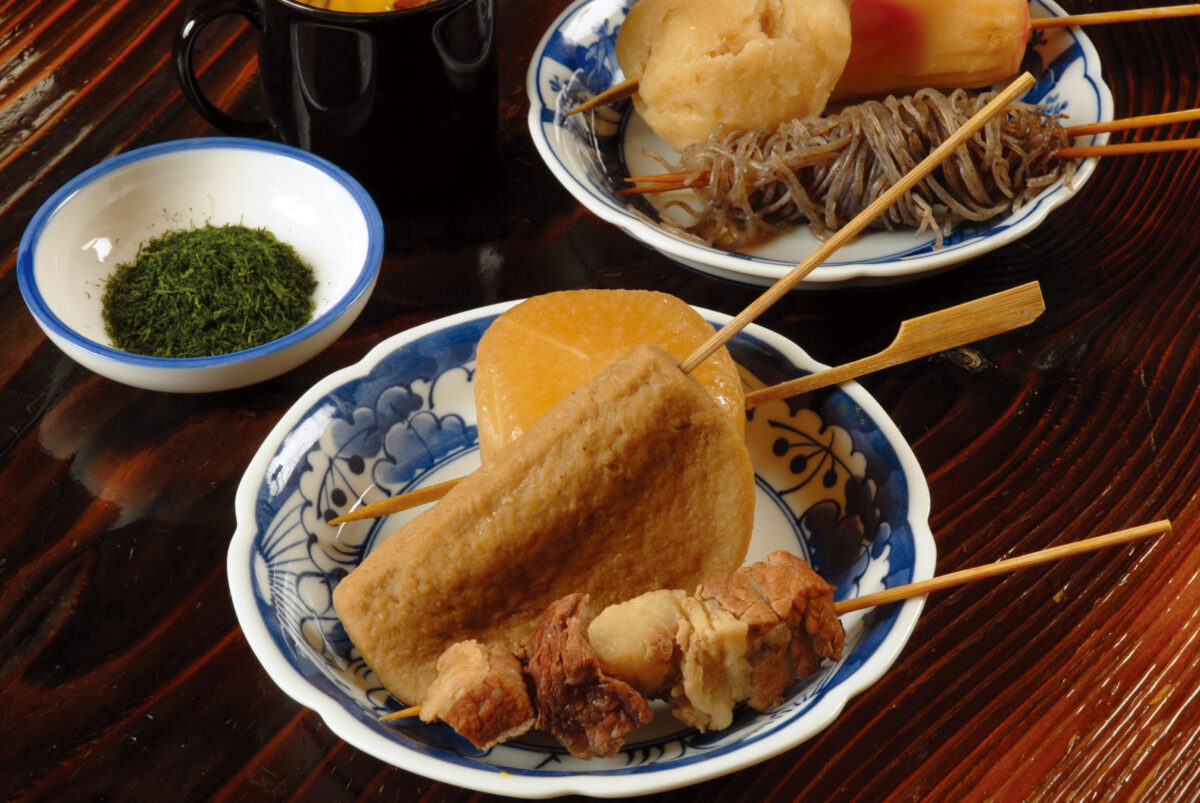
Shizuoka Oden

Walk into any convenience store in Japan during the winter months and you will be introduced to Oden.

Typically taking up a lot of space on the convenience store countertop, Oden is a combination of eggs, fish cakes, squid balls, radishes and fish cakes that are left to simmer in a mix of soy sauce and fish broth.

Shizuoka City has become famous for its local version of this traditional winter fare – simmering the different ingredients in a broth of beef and bringing out more concentrated flavors.

HAMAMATSU GYOZA – Hamamatsu Station

Hamamatsu Gyoza

Gyoza is a pan-fried dumpling that is made with minced pork, leek and cabbage which is dipped into a mix of soy sauce, vinegar and spicy oil.

Gyoza are a popular favorite throughout Japan and is taking hold around the World – it is arguably the perfect accompaniment to a tall cold beer and as such is a good way to finish a hard days work.

Every year in Japan local cities battle for the crown of Gyoza Capital of the year.

Hamamatsu City and Utsunomiya City quite often end up competing against each other for this prestigious title and locals from both cities take great pride in receiving this title.

Spending a day in Hamamatsu City making your own soy sauce and making your own gyoza is a great way to spend a day in Shizuoka.

FUJINOMIYA YAKISOBA – Shin-Fuji Station

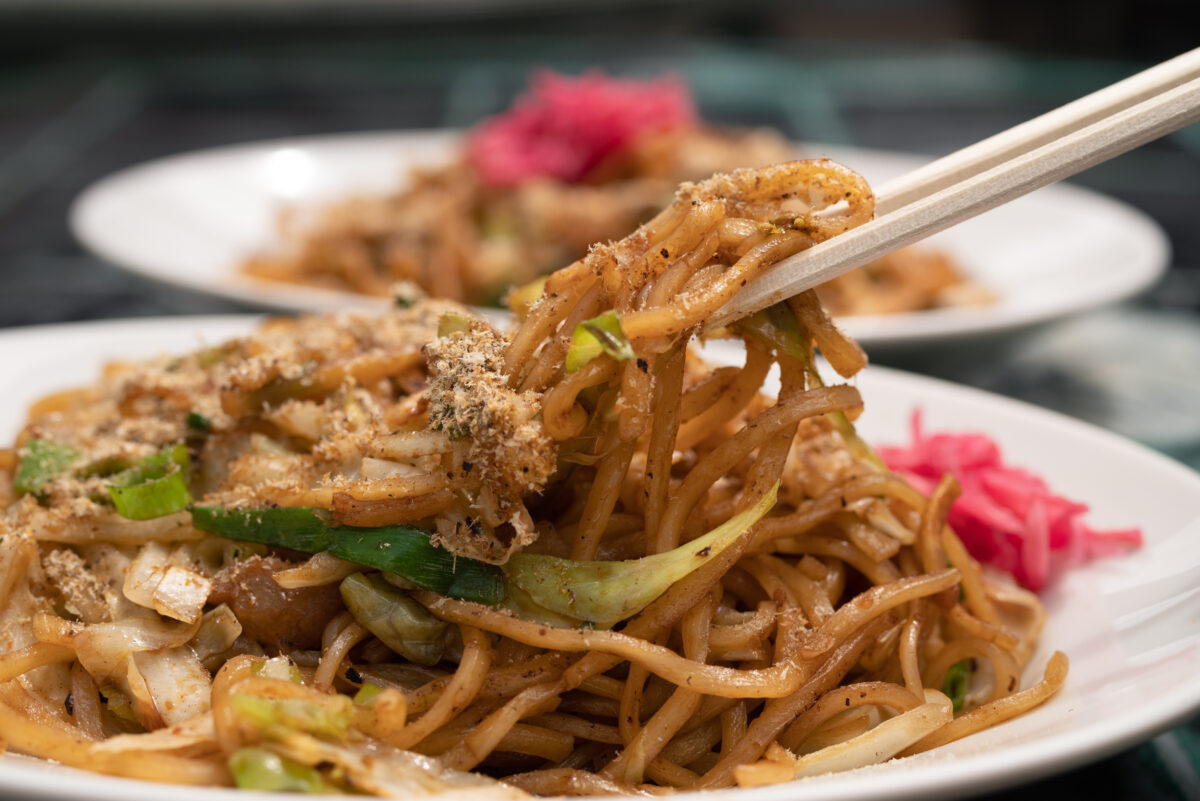
Fujinomiya Yakisoba

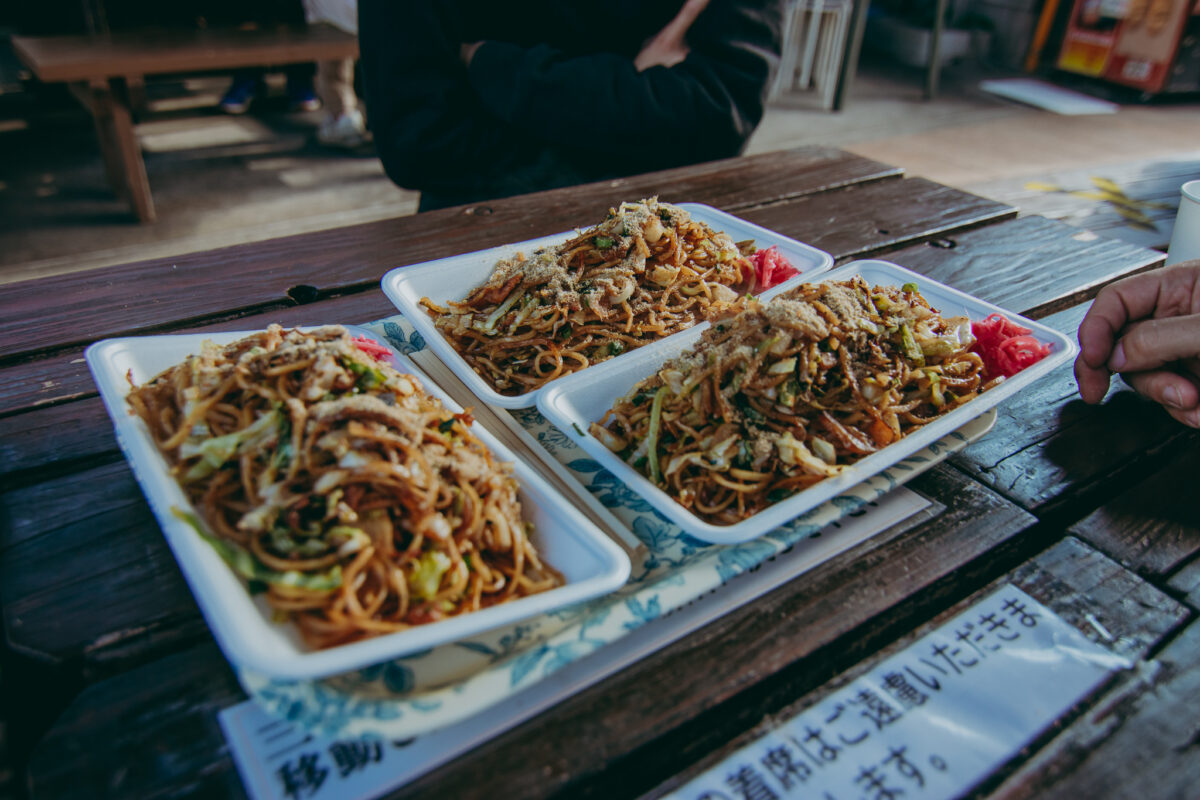
The small town of Fujinomiya located at the foothills of Mt. Fuji is a popular spot for Yakisoba – the classic Japanese fried noodles.

Yakisoba is typically a combination of fried noodles, pork and cabbage and cooked on a large hotplate and served with a side of pickled ginger.

The Fujinomiya version of Yakisoba is topped with a fish powder made from locally sourced sardines giving it a unique taste.

Catch the Yakisoba Express bus from Tokyo and enjoy this staple Japanese street food while you enjoy spectacular views of the Majestic Mt. Fuji.

IZU PENINSULA ISE EBI (Lobster) – Atami Station or Mishima Station

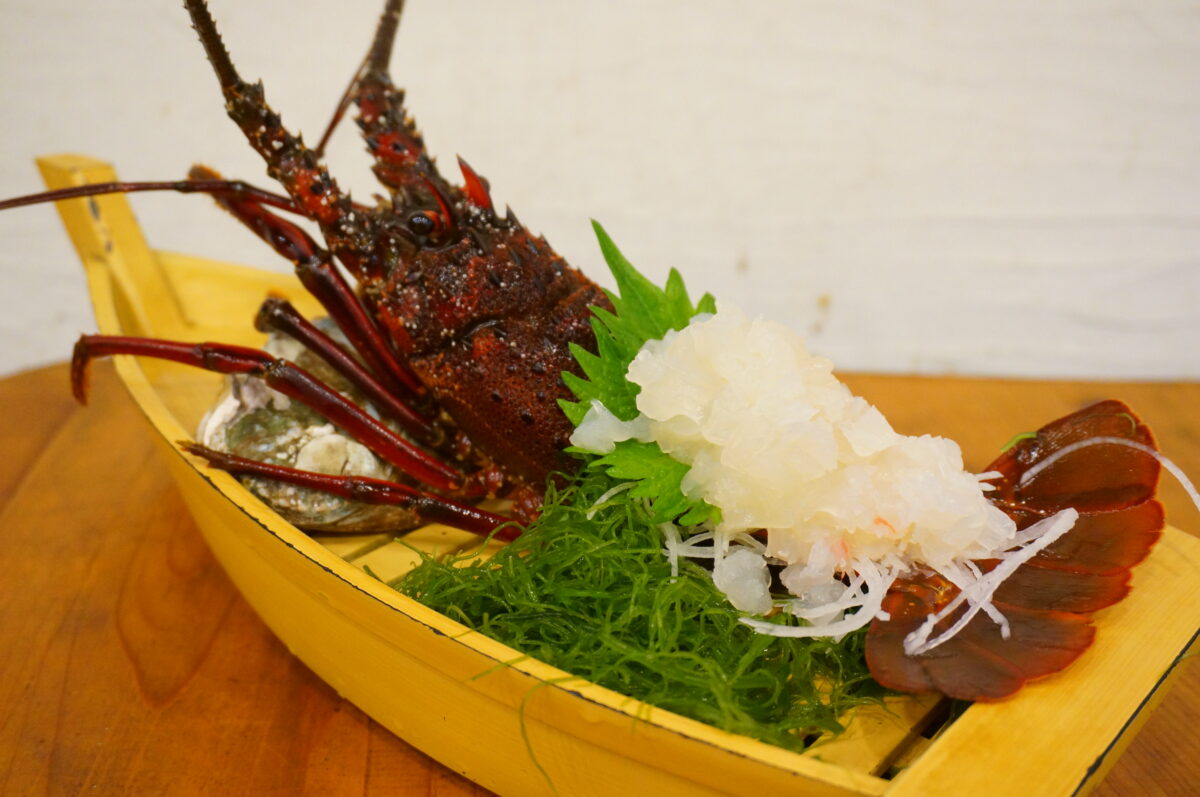
Izu Peninsula Ise Ebi

Japanese spiny lobster is a celebrated seafood for Japanese people and has been used in traditional celebratory meals for centuries – especially the new year.

Izu Peninsula is famous for its yearly catch of Ise Ebi and many of the small fishing ports along the Southern coast of the Peninsula specialize in catching this delicacy.

The Ise-Ebi lobster is typically caught between October and April.

Nets are set as the sun is going down and pulled in early the next morning to catch these nocturnal creatures.

LAKE HAMANA OYSTERS – Hamamatsu Station

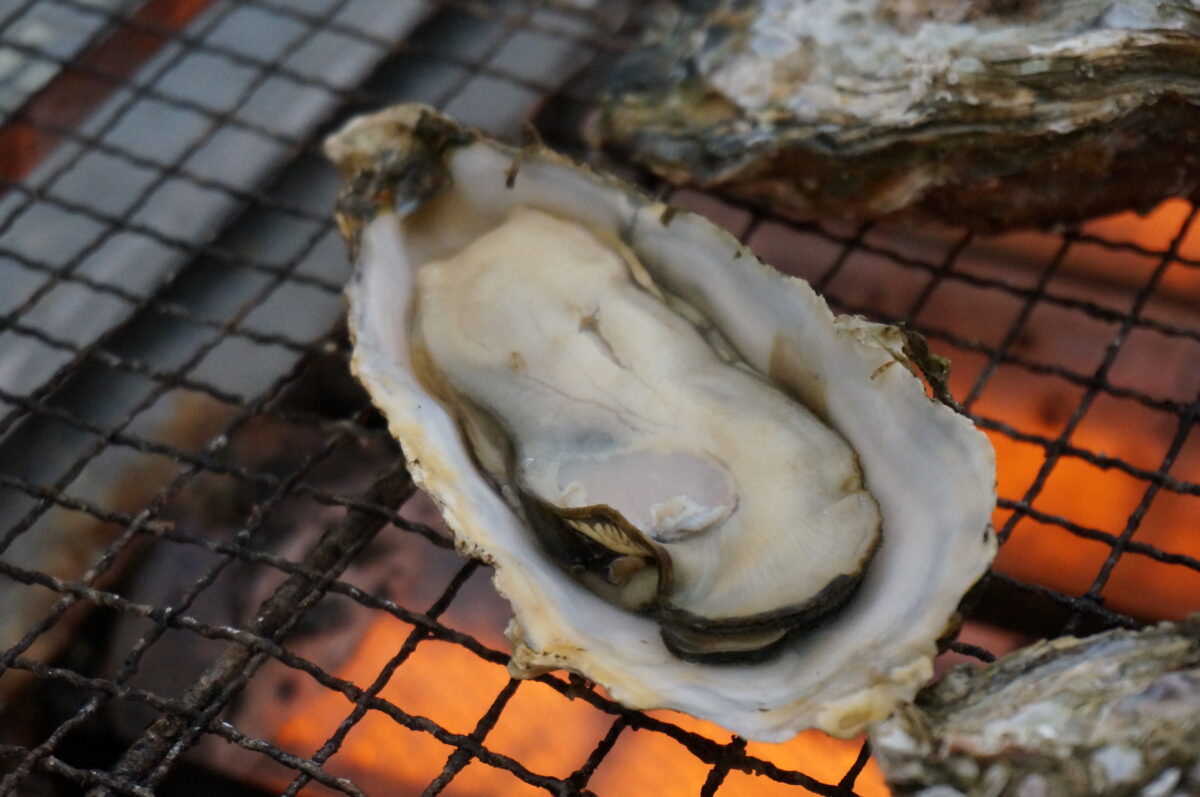
Lake Hamana Oyster

Lake Hamana is famous for its mineral rich brackish waters that produce a wide array of different seafood but it is perhaps most well known for its Eel and Oysters.

Oysters are cultivated in the lake and harvested in the Winter months from January to March.

These mineral rich and meaty oysters are available at a number of Oyster Shacks located around the Lake where oysters straight from the lake are cooked for you on the spot.

OYSTER FARM EXPERIENCE

Fujinomiya – The closest city to Mt. Fuji

0

Fujinomiya City is a perfect place to get up close and personal with Mt. Fuji and experience what life is like for those living at the foot of this magnificent mountain.

UP AND CLOSE TO MT.FUJI

If you’ve ever dreamt of climbing Mt. Fuji, you’ve most likely heard of Fujinomiya. Located in Eastern Shizuoka, most of the town lies within the borders of Fuji-Hakone-Izu National Park.

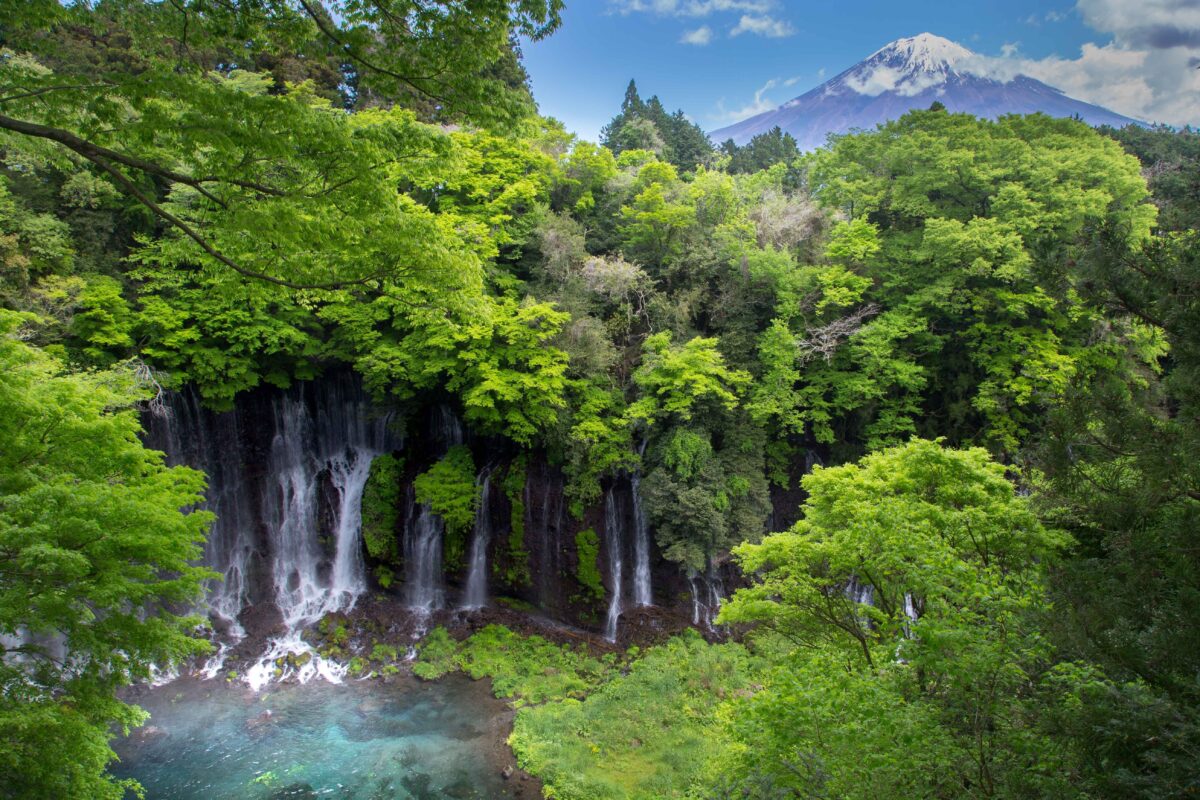
Shiraito Falls – snowmelt water from Mt. Fuji gushes out like thousands of white threads.

Fujinomiya is the main starting point for climbers using the Fujinomiya Trail and also the Prince Route which has become popular in recent years (ascending from Fujinomiya and descending into Gotemba).

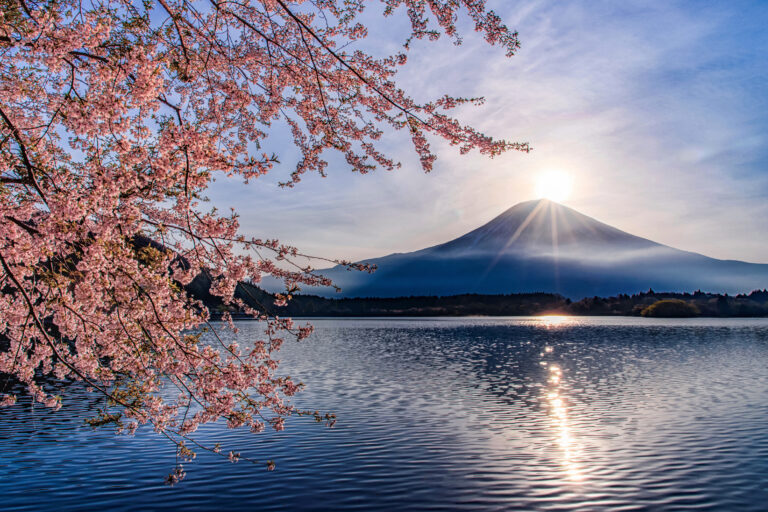
Fujinomiya is the closest town to Mt. Fuji and as such is blessed with remarkable views of the mountain.

Fuji-san to the Japanese is commonly referred to in the female form, because the goddess that resides within the mountain is ‘Konohanasakuya-hime’.

Konohanasakuya is the goddess of Mt. Fuji, all volcanoes and the ‘Princess of Cherry Blossoms,’ symbolizing delicate earthly life.

The goddess is also often referred to as Sakuya-hime or Sengen.

FUJISANHONGU SENGENTAISHA SHRINE

An ancient settlement town, Fujinomiya is a former post and market town affiliated with the Ichinomiya (first shrine), the supreme shrine in each of the ‘Old Provinces of Japan’.

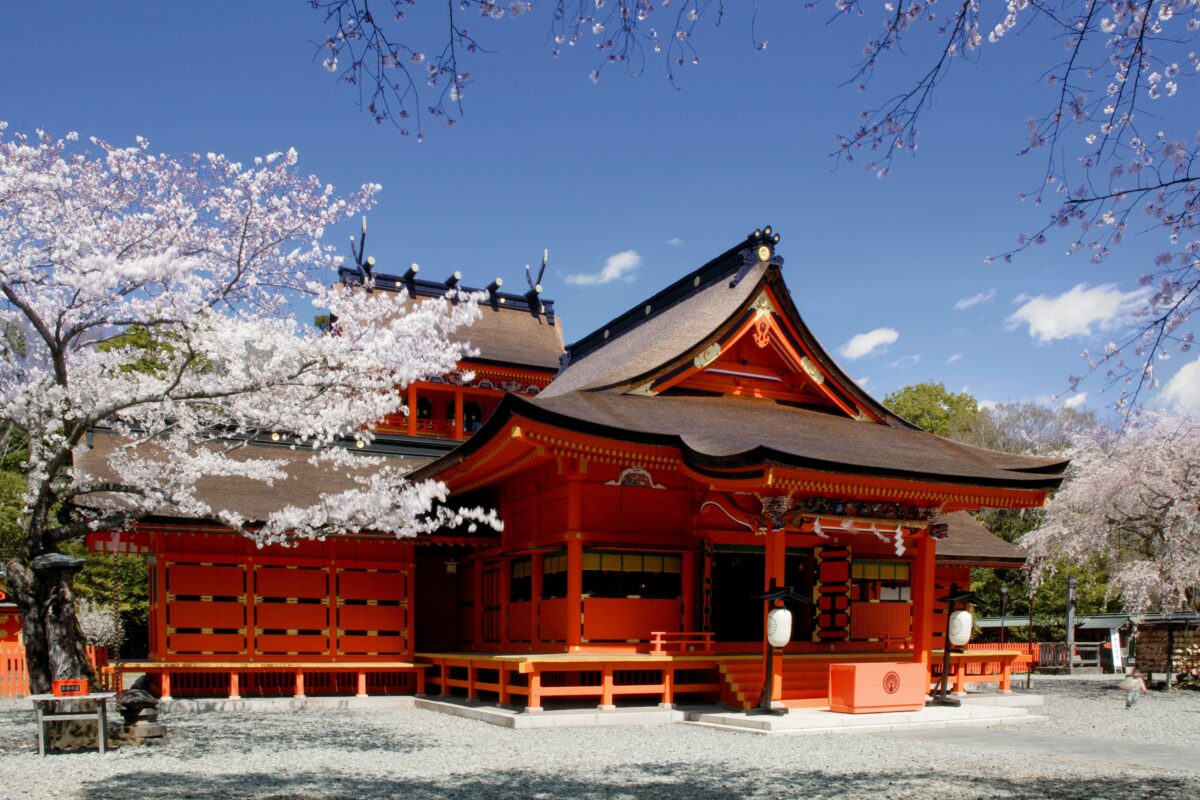
In Fujinomiya, the ‘Fujisanhongu Sengentaisha Shrine’, is the Ichinomiya of Suruga Province which is modern day Shizuoka Prefecture.

The shirine enjoys seasonal beauty.

For over 1100 years, it has been the head shrine for over 1300 shinto shrines in the country which are centered on the worship of volcanoes and Fuji-san in particular.

Such shinto shrines are also known as Asama or Sengen Shrines.

Almost all of these shrines possess views of Fuji-san on their grounds, and if not, a miniature replica called Fujizuka is recreated from rocks from the mountain itself.

Many festivals are held at the shrine – the main one is held on May 5th and features Yabusame horseback archery.

MT. FUJI WORLD HERITAGE CENTRE, SHIZUOKA

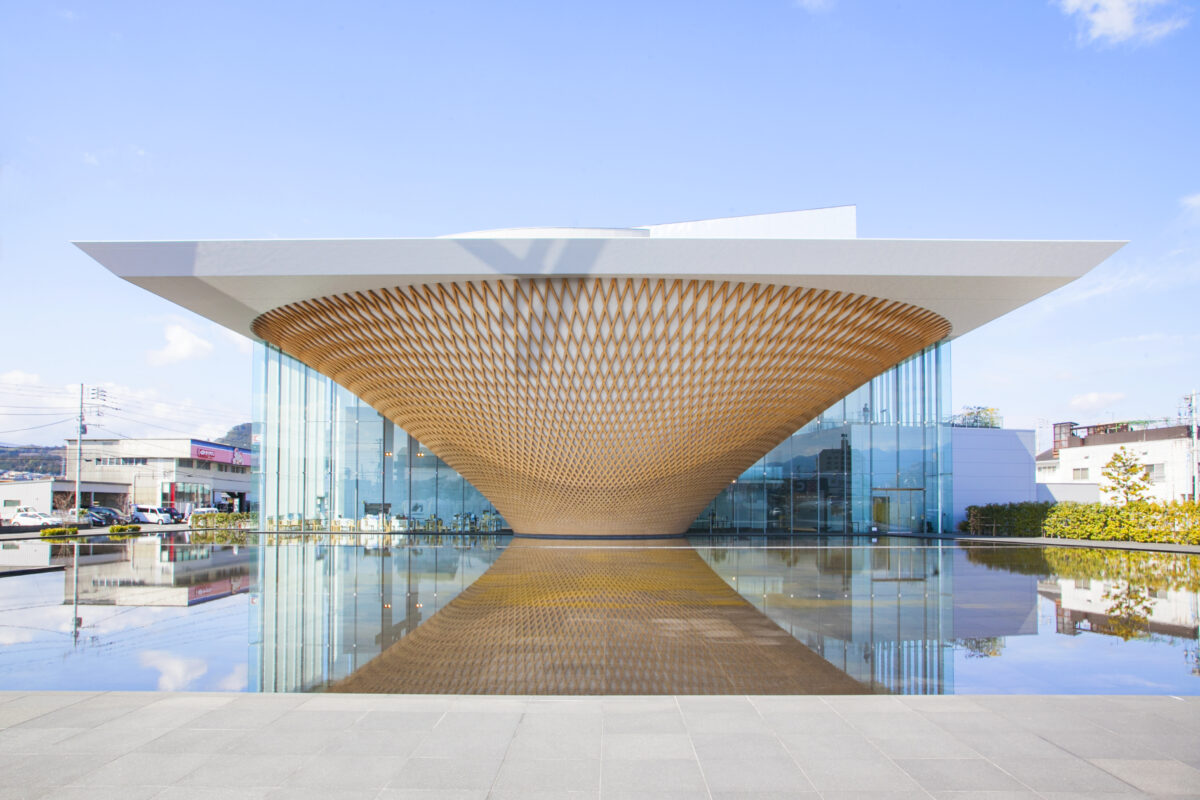
The Mt. Fuji World Heritage Centre, Shizuoka is a stunning museum in Fujinomiya that was opened to commemorate the mountain’s designation as a World Heritage Site in 2013.

On a calm day, a reflected image of Mt. Fuji appears on the water basin.

Designed by famed architect Shigeru Ban, the museum lies adjacent to the Fujisanhongu Sengentaisha Shrine’s main Torii gate.

Visually striking as you approach it, the museum’s inverted conical shape has been constructed from Japanese Cypress and reflects beautifully a mirror image of not only the museum’s design but also the beauty of Fuji-san herself in the reflecting pool on the premises.

The Mt. Fuji World Heritage Centre aims to deepen and educate the conversation regarding Mt Fuji’s preservation, cultural history, and meaning to both individuals in Japan and abroad.

Visitors are able to experience the ascent of Mt. Fuji from the ocean by walking a 193m long spiral ramp while watching time-lapse videos of Fuji’s landscape.

LEARN MORE

FUJINOMIYA YAKISOBA

While in Fujinomiya City be sure to get in some Fujinomiya Yakisoba which is characterized by its firm bite. The firm bite occurs as Fujinomiya Yakisoba is steamed without being boiled once, cooled then coated with oil. Generally, it is boiled in other parts of Japan. Additionally, the soba must be made in Fujinomiya, are cooked with the waters of Mt Fuji, and have ‘dashi-ko’ powder sprinkled on it instead of the typically dried bonito flakes.

There are many locations to enjoy Fujinomiya Yakisoba throuhgout the city.

LIFE AT THE FOOT OF MT. FUJI

Visiting Fujinomiya not only allows you unbelievable views of Mt Fuji but gives you the opportunity to also experience a way of Japanese life that has relatively remained unchanged.

Snowmelt water from Mt. Fuji has blesses local communities with adundant gifts and people have been living in harmony with nature for generations.

Immerse yourself in the local culture and make unforgettable travel experiences – Find experiences in Fujinomiya HERE.

5 Fun Summer Festivals in Shizuoka

If you are in Shizuoka in the summer, there are a number of great festivals that you can experience – here are 5 fun summer festivals to check out

5 FUN FESTIVALS IN SHIZUOKA

EVERY STATION ON THE TOKAIDO BULLET TRAIN LINE PROVIDES ACCESS TO DIFFERENT FESTIVALS IN SHIZUOKA.

As with many regions of Japan the warmer summer months bring festivals and celebrations, some of which are centuries old.

From traditional ‘Mikoshi’, ‘Dashi’ & ‘Yatai’ festivals which see local communities come together to carry a large portable shrine through the town to fireworks festivals that attract thousands of people the summer is a chance for people to get outside, remember their ancestors and strengthen local community ties.

Shizuoka is no different – here are 5 fun festivals from around Shizuoka that are definitely worth checking out if you get a chance.

HAMAMATSU STATION AREA

ENSHU ARAI HANDHELD FIREWORKS FESTIVAL

Enshu Arai Handheld Fireworks Festival

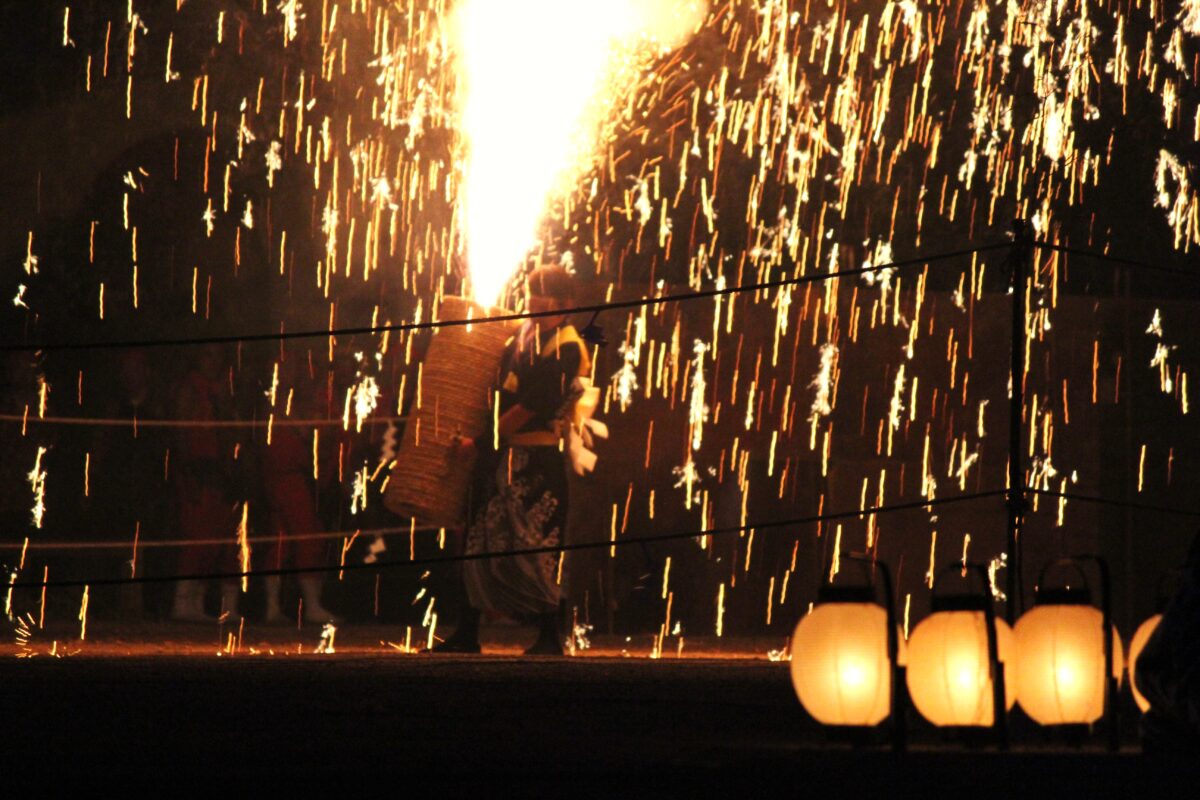
Usually taking place on the last Saturday in July the Enshu Arai Handheld Fireworks Festival will take your breath away.

All of the participants in the festival spend a year making home made cannons out of bamboo and tatami mats for the spectacle – using a traditional technique that has been passed down over 300 years.

The cannons can shoot fireworks and sparks up to 20 meters in the air and during the festival up to 2,000 hand cannons are used to the accompaniment of Japanese drums and traditional Japanese bamboo flute.

This festival takes place at Arai junior high school in the town of Arai which is part of Kosai city located at the Southern end of Lake Hamana.

During the Edo Period, and the prominence of the Tokaido Highway, Arai was the thirty-first Post Station on the Tokaido. It was an important checkpoint on the Highway and was only accessible by water.

MISHIMA STATION AREA

GOTEMBA TAIKO FESTIVAL

Gotemba Taiko Festival

Japanese Taiko Drums have become famous throughout the World and anyone that has been lucky enough to see a performance will understand the skill and precision needed and the power and grace of the performances.

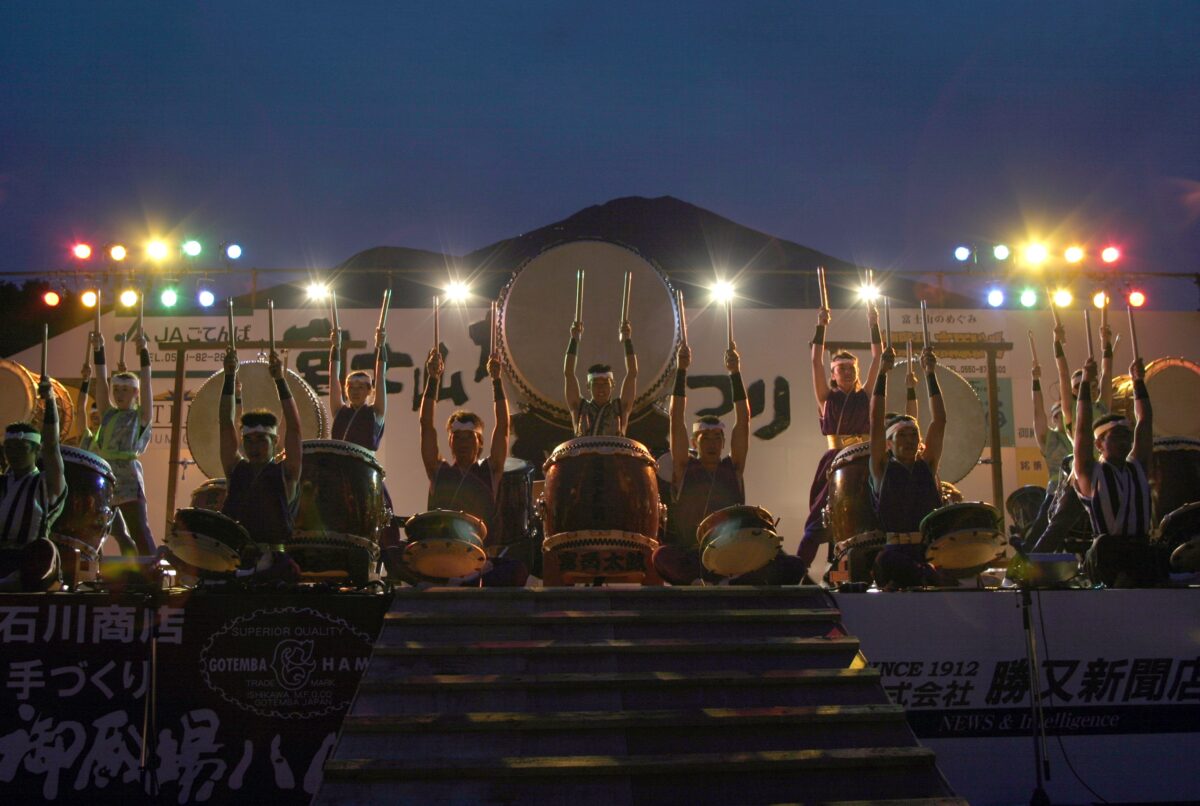
Every year in July high school teams from all around Japan compete in Gotemba, Shizuoka as part of the Fuji Taiko Festival– a 2-day festival that celebrates the art of the Japanese drum.

Perhaps the highlight of the festival is the individual drum competition in which drummers compete against each other on one of the largest Japanese Taiko drums in the World – stands at 3.776 meters high to represent the height of Mt. Fuji (3776 meters high).

KAKEGAWA STATION AREA

FUKUROI FURIN FESTIVAL

Fukuroi Wind-Bell Festival

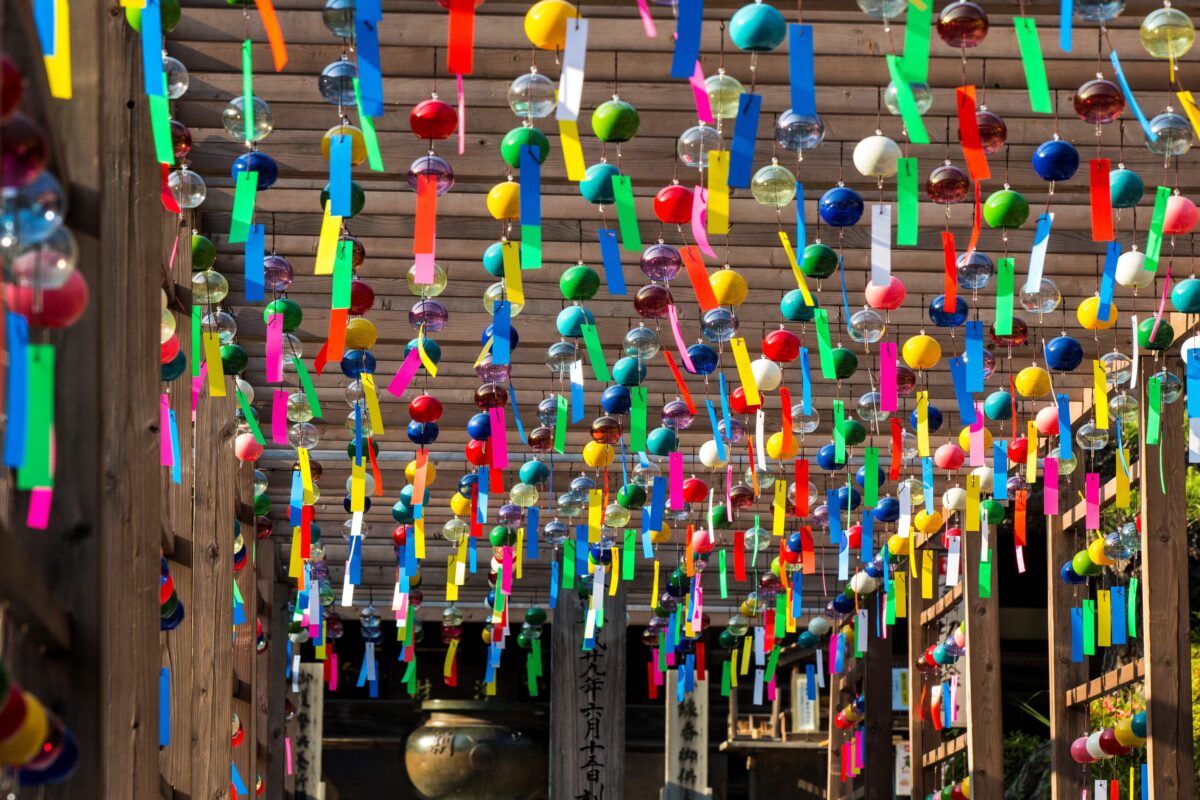
The Fukuroi Wind-Bell Festival is held annually from June to August.

The three “Enshu Sanzan” temples in Fukuroi City hang more than 6,000 wind chimes in total to welcome their visitors.

Hattasan, Yusanji and Kasuisai – three temples with over handreds of years of history – have long been important spiritual destinations for travelers on the Tokaido Highway.

SHIN-FUJI STATION AREA

YOSHIWARA GION FESTIVAL

Yoshiwara Gion Festival

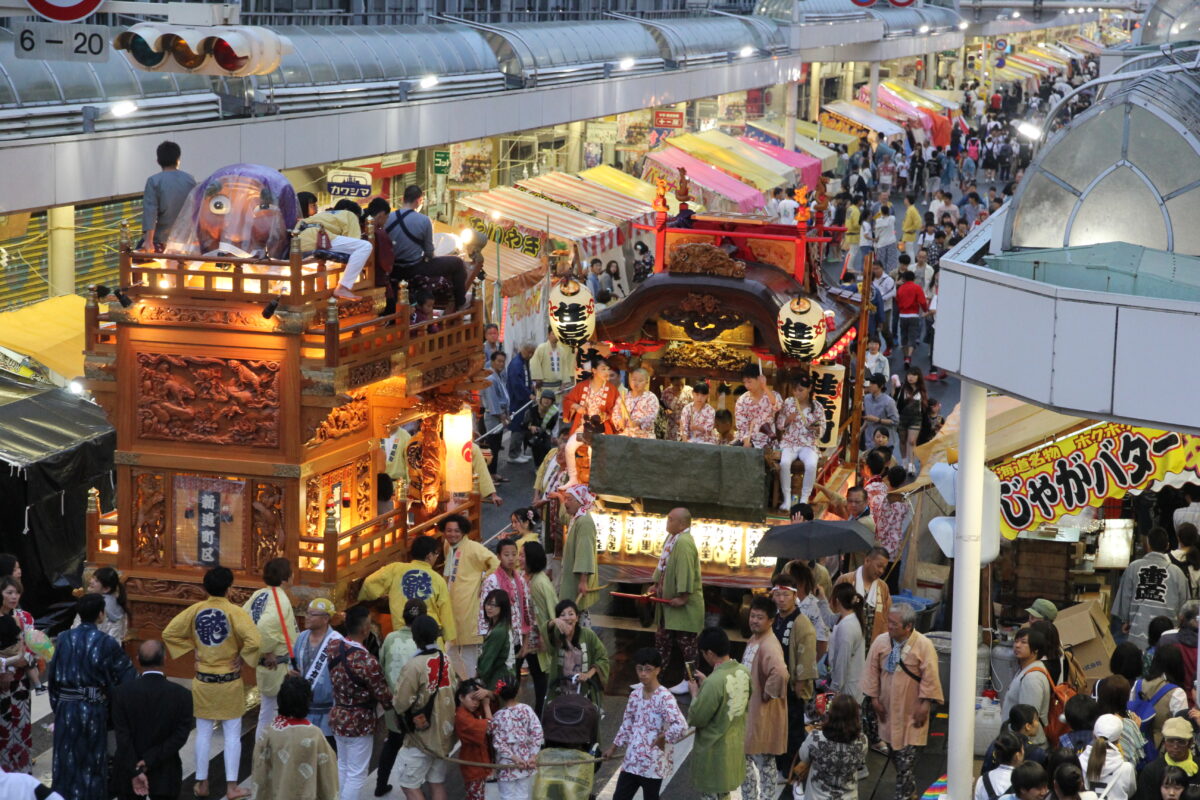
Decorated Floats, taiko drummers and portable shrines (mikoshi) battling each other have been taking over the streets of Fuji City every year for more than 350 years as part of the Yoshiwara Gion Festival.

A lively and colourful festival that starts around midday and continues long into the evening hours.

Aside from the parade of people, music and carrying shrines there are lines of food stalls along Yoshiwara Shopping street selling an array of classic Japanese street food and vendors selling treats for the kids.

ATAMI STATION AREA

ATAMI FIREWORKS FESTIVALS

Atami Fireworks Festival

Summer in Japan is not complete without going to at least one fireworks festival.

Dressing in Yukata, drinking shaved ice or beer and eating watermelon and street vendor food such as yakitori, fried chicken or takoyaki is a Japanese tradition almost that represents Summer as much as Cherry Blossoms in Spring and firework events around the country attract millions of people every year.

Throughout the Summer months (July through to late September) there are fireworks events all through Shizuoka.

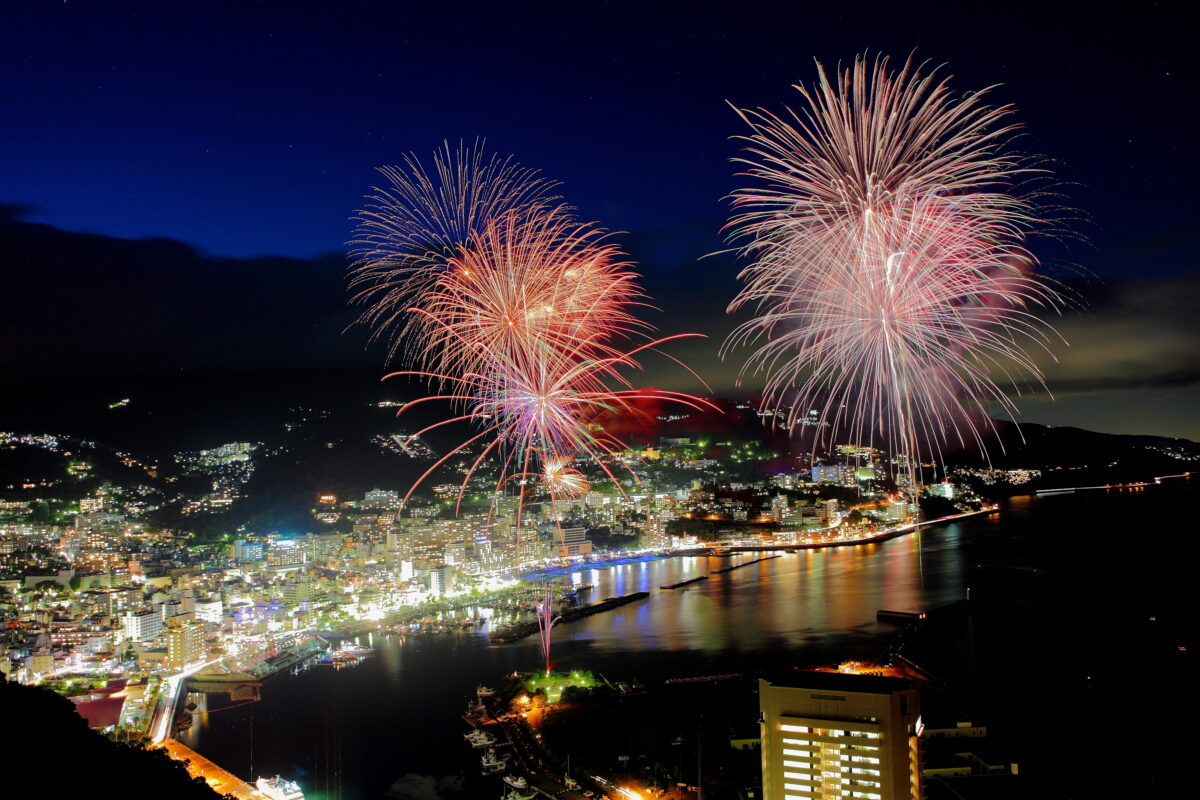
Perhaps the most famous Shizuoka fireworks display is the Atami Fireworks Festival displays in August – there are fireworks in resort town of Atami Onsen almost every week in August. Actually, it takes place more than 10 times throughout the year, even in winter. – you can relax in a Onsen while watching the fireworks light up the sky over the ocean making it quite unique.

OTHER FESTIVALS TO CHECK OUT

5 Great Beaches in Shizuoka

When the city gets to be too much or you have visited about as many shrines and temples as you can manage, why not hit the beach.

Jump in the surf, read a book or just squish your toes into the sand – Shizuoka beaches have something for everyone.

Shizuoka is blessed with over 500 km of coastline starting in Atami in the East, stretching around Izu Peninsula and running all the way down to the Shirasuka Coast in Kosai City in the West.

Along this coastline there are numerous beaches to visit and enjoy – each with its own characteristics and charms.

The following showcases 5 Great Beaches in Shizuoka that are worth checking out no matter if you have 3 days or just a couple of hours to spare.

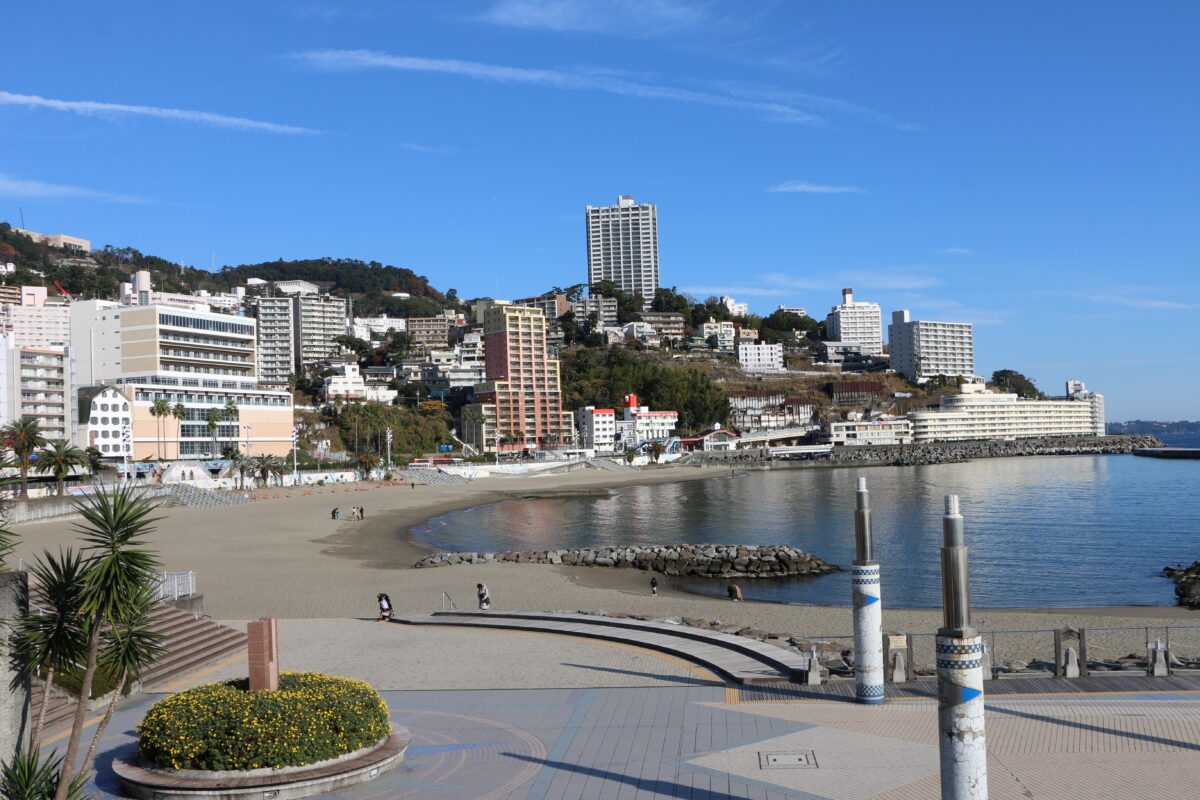
ATAMI STATION AREA

ATAMI SUN BEACH

If the Summer heat is too much and you need to get out of Tokyo for some beach time in a hurry then Atami Sun Beach is a great option.

Although it is not the closest beach, it is perhaps the easiest and fastest beach to get to from Tokyo.

This is because the Bullet Train goes straight from Tokyo Station and in just over 40 minutes you are at Atami Station – from there it is an 10 minute walk to the beach.

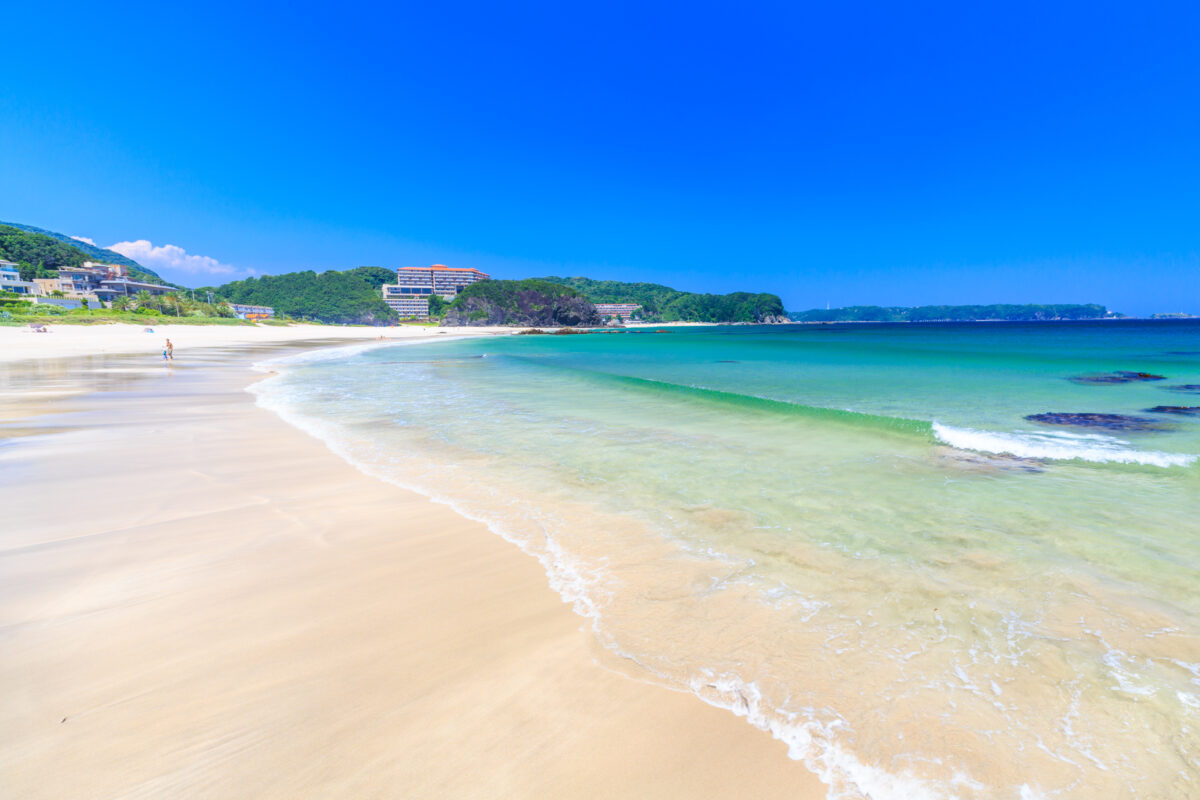
If you are looking for white sand beaches and clear blue water then it is worth traveling a little bit further South along the East Coast of Izu to the towns of Shimoda and Minami Izu.

IRITAHAMA BEACH

The area around Shimoda has a number of great beaches and there is something for everyone – white sandy beaches, secluded bays and cycas trees.

All of the beaches benefit from clean clear water and depending on swell and wind there are a number of water activities available including surfing, snorkeling, and bodyboarding.

Iritahama Beach is just 10 minutes South of Perry Road by car and is often chosen as the top beach in Izu and one of the best beaches in Japan.

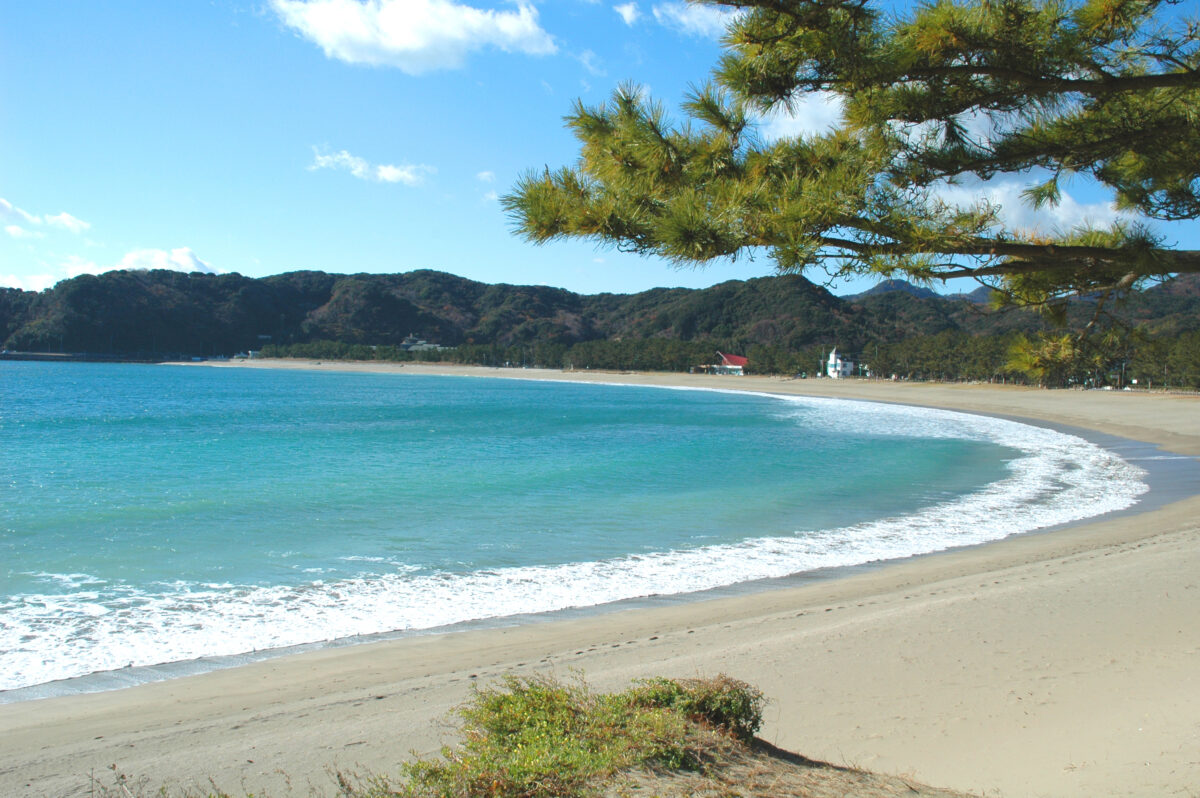
YUMIGAHAMA BEACH

A little bit further around the coast in Minami Izu is Yumigahama Beach.

A large sandy beach that is flanked with palm trees on each end gives this beach a very tropical feel.

The area around the beach has a good supply of accommodation – including some great minshuku – making it easy to settle in for a couple of days, enjoy great Japanese hospitality and dine every night on locally caught fresh seafood.

From Minami Izu many of the great spots along the coast, such as Irozaki Cape.

Read more about Shimoda and Minami Izu here. 

SHIZUOKA STATION AREA

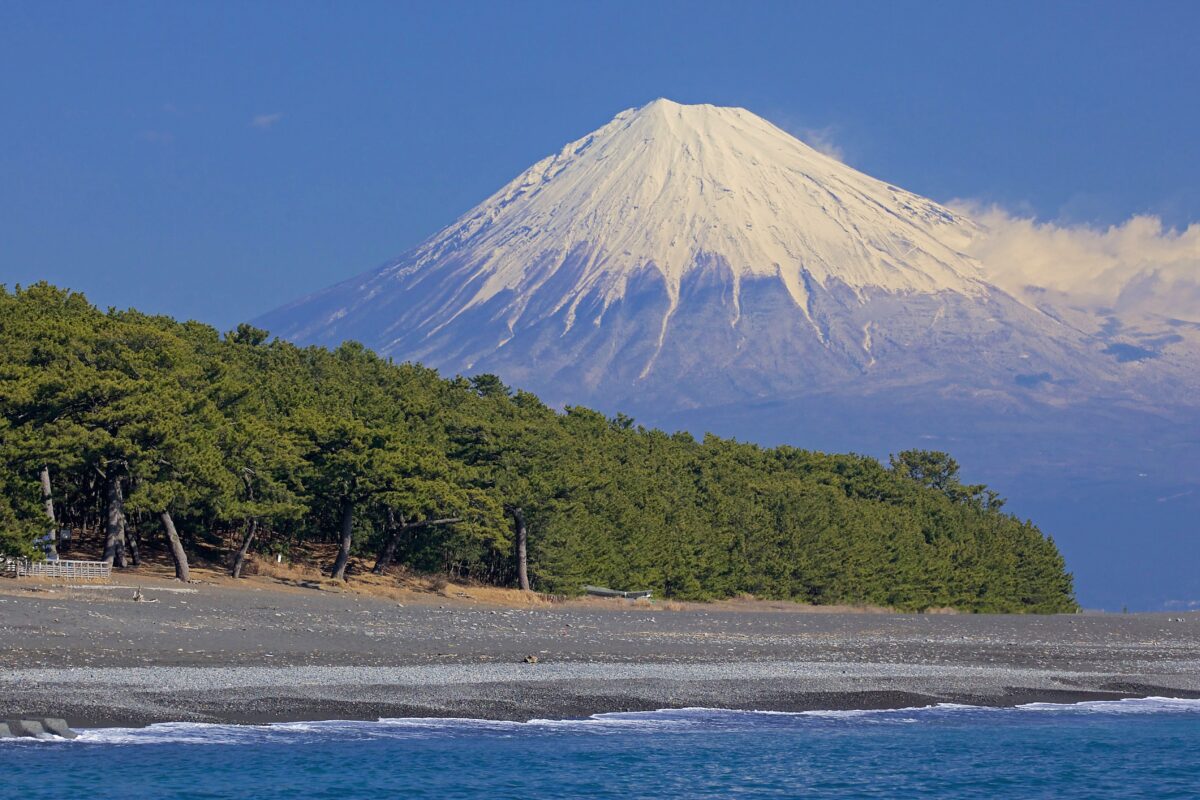
MIHO-NO-MATSUBARA

From the moment that you arrive at Miho-no-Matsubara and you walk through some of the 30,000 pine trees that grow near the beach you feel as though you are somewhere special.

There is a good reason that Miho-no-Matsubara was registered as a part of Mt. Fuji’s world heritage status in 2013.

The beach itself is very different to the white sand beaches of Izu Peninsula and is and it is not really suitable for surfing, swimming or sunbathing.

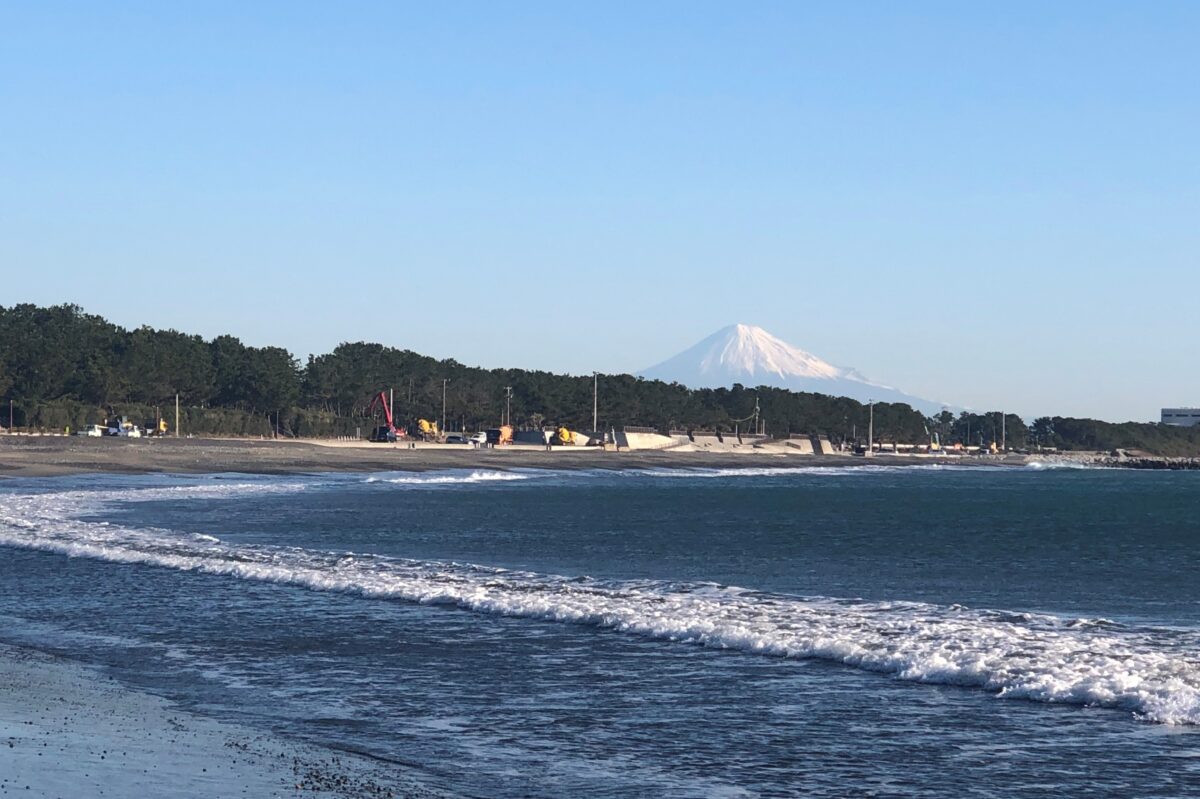
Miho-no-Matsubara Beach is best visited in the colder months between November and March as this is the best time to get a photo of a white capped Mt. Fuji standing proudly above the pine trees.

KAKEGAWA STATION AREA

SHIZUNAMI BEACH

A short 30min taxi ride from Kakegawa Station are the coastal towns of Makinohara and Omaezaki.

Perhaps the most popular beach in this area is Shizunami Beach – one beach on a long stretch of coast that is a great spot for surfing, swimming or sunbathing.

Often overlooked by many travelers the beaches in this area are very much worth a look especially for visitors that like to get off the beaten track – but not too far.

OTHERS BEACHES TO CHECK OUT

Omaezaki Beach – Just down the coast from Shizunami, this beach is famous for hosting Windsurfing Competitions.

Shirahama Beach – Possibly the most famous & popular beach in Izu.

Bentenjima Beach – 20 mins from Hamamatsu Station this inlet beach at the entrance to Lake Hamana is a popular spot to watch the sunset.

5 Famous Onsen Regions in Shizuoka, Japan

0

One of the most unique and pleasurable experiences you can have in Japan is soaking in a traditional hot spring or onsen in Japanese.

Shizuoka is blessed with many onsen areas that have been popular with weary travelers for centuries.

Here are 5 famous onsen destinations in Shizuoka to help you relax…

KAWAZU – ATAMI STATION

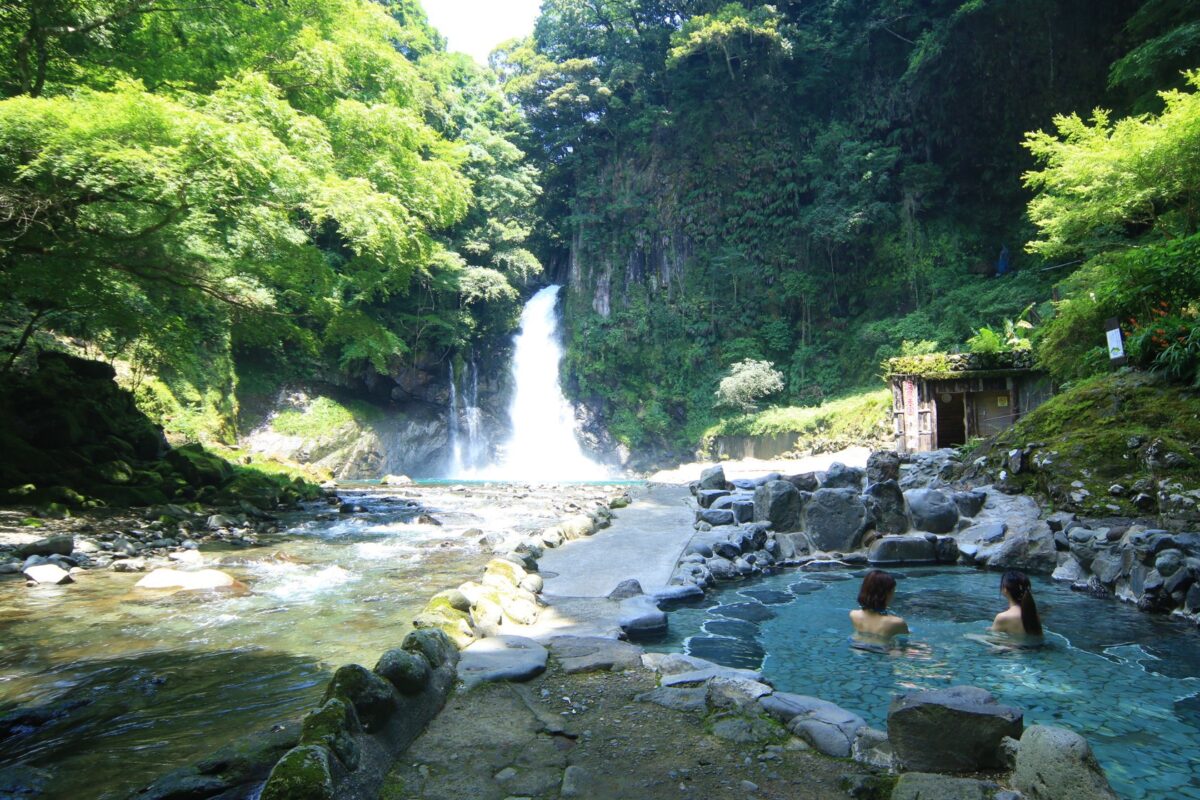
Odaru onsen at one of 7 waterfalls in Kawazu.

In early February, thousands of visitors flock to the small coastal town of Kawazu in Izu Peninsula to enjoy the early blossoming ‘Kawazu Zakura’ cherry blossoms.

As with many areas on the Izu Peninsula, Kawazu is also blessed with a steady supply of hot spring water.

A short bus ride from Kawazu station is the famous Nanadaru 7 Waterfall area where you can enjoy one of the only ‘waterfall onsen’ in Japan.

LEARN MORE

SHUZENJI – MISHIMA STATION

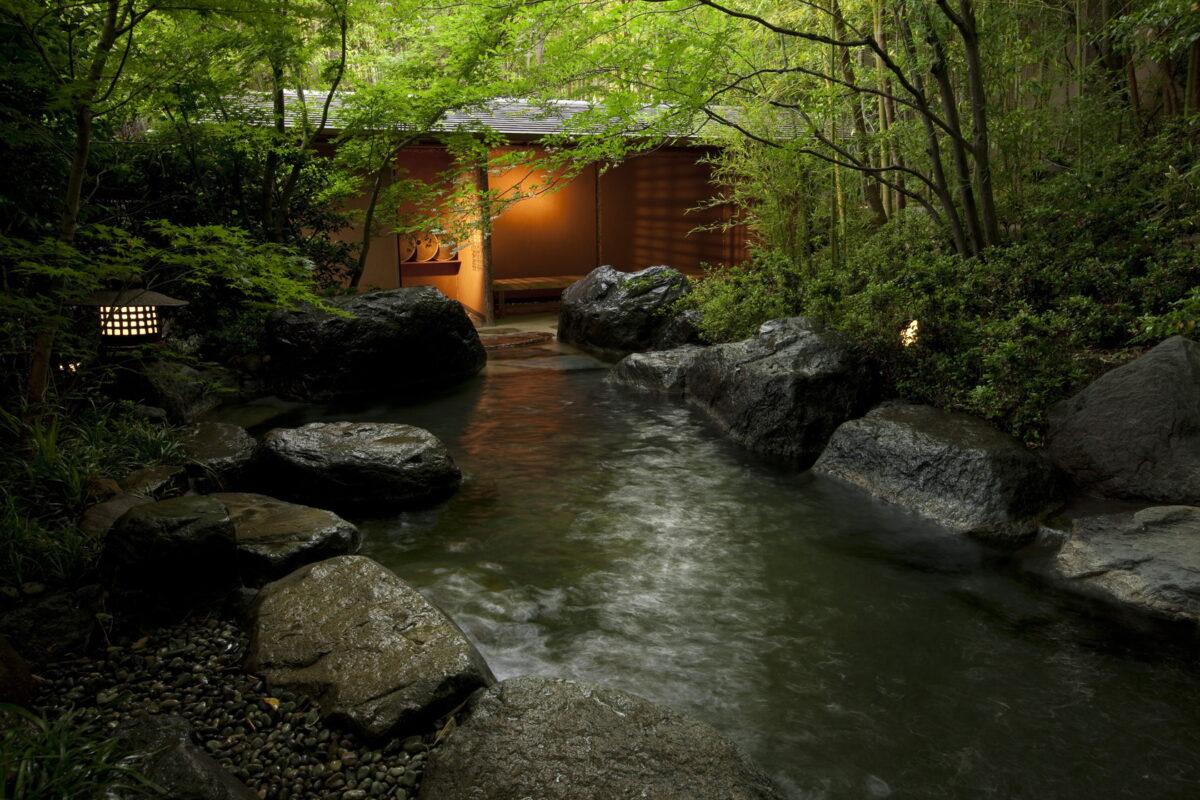
Outdoor bath at one of traditional Ryokan inns in Shuzenji.

The hot spring water in the small town of Shuzenji in Izu City, is said to have been discovered by the famous Buddhist monk, Kobo Daishi.

Today the Tokko-no-Yu spring is a centerpiece of Shuzenji located at the spot that Kobo Daishi struck a rock with his Tokko (Buddhist ritual tool) to produce the onsen water more than 1,200 years ago.

Shuzenji hot spring town retains a mystical aura today and it epitomizes the classic Japanese onsen town.

Shuzenji has remained as a place of sanctuary that people have been coming to for many years to relax, reflect and recharge.

LEARN MORE

ATAMI – ATAMI STATION

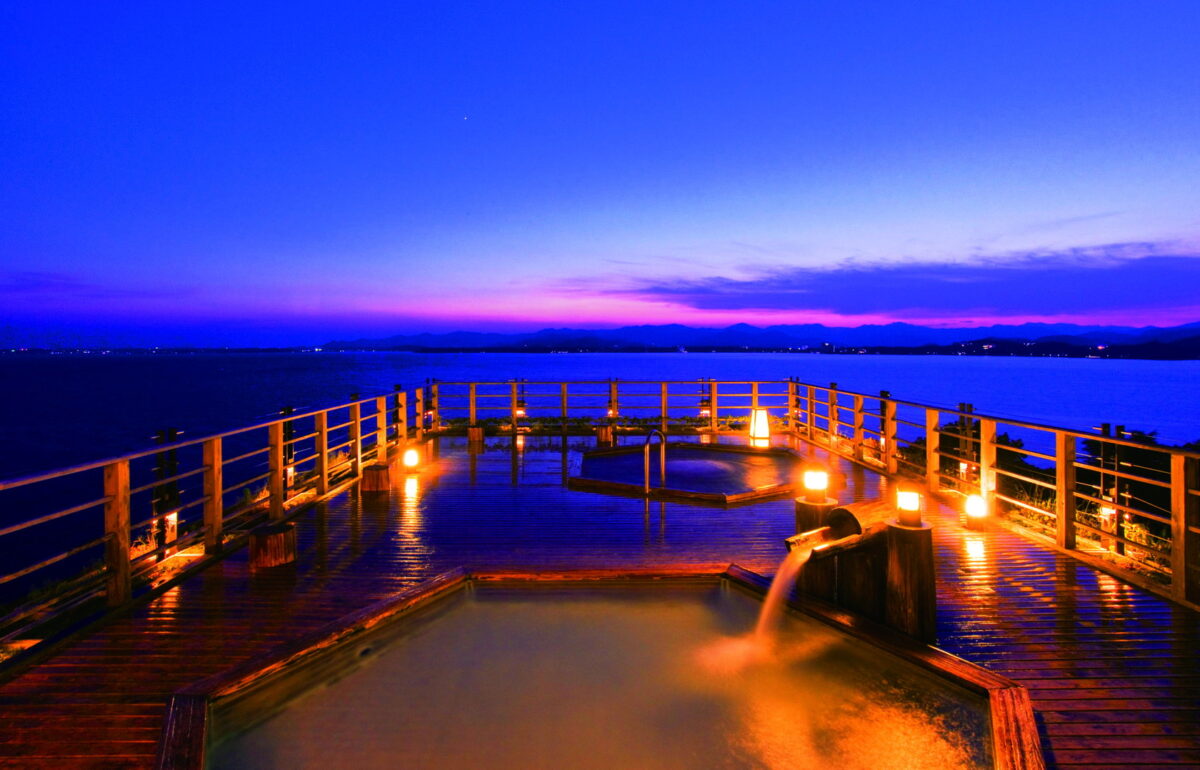
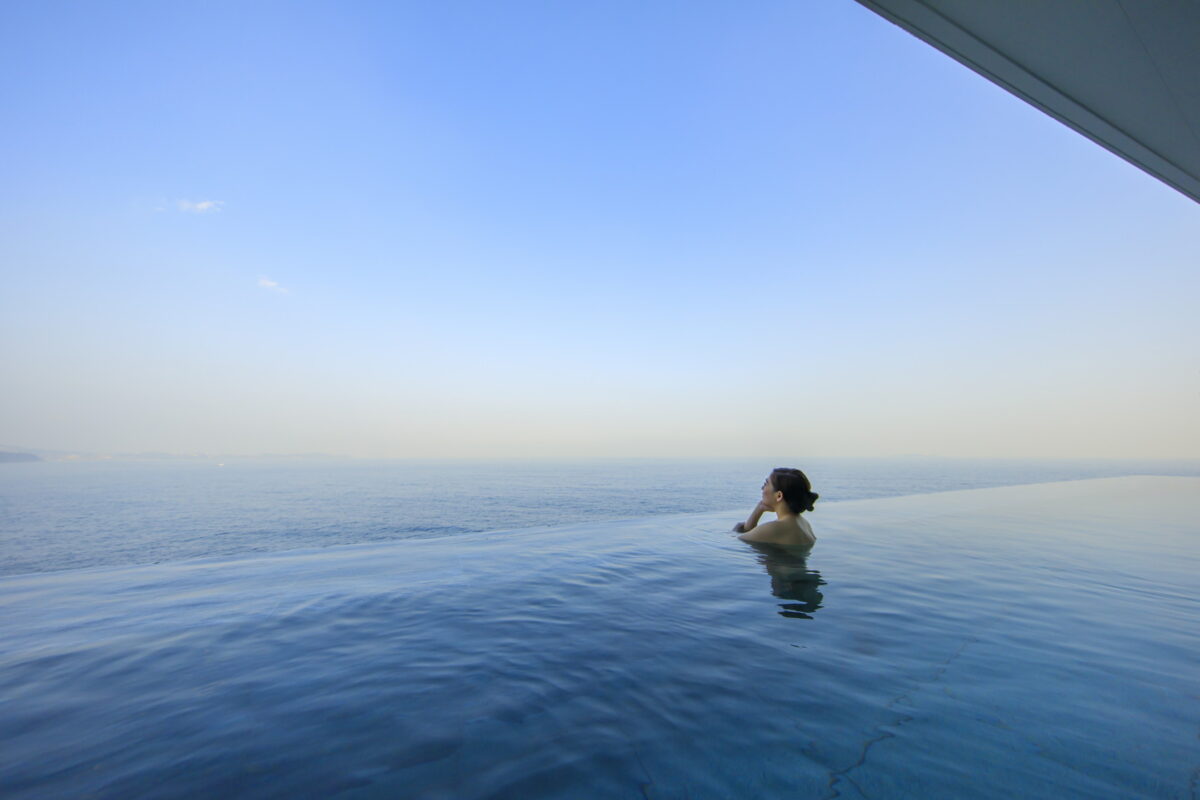
Take in the ocean view while soaking in onsen in Atami.

Atami could possibly boast that it is the most easily accessible traditional onsen town from Tokyo.

Just 45 minutes from Tokyo station, visitors can settle into a hot spring resort hotel with expansive views of the ocean or wander around the town enjoying the onsen town atmosphere.

Because of Atami’s location on the coast, you can be sure that you will be able to enjoy the freshest seafood that Izu Peninsula has to offer.

LEARN MORE

KANZANJI – HAMAMATSU STATION

Feel the breeze flowing into from Lake Hamana.

The influence of Kobo Daishi can also be felt in the lakeside hot spring town of Kanzanji in Hamamatsu.

Located on the east coast of Lake Hamana, Kanzanji is easily accessible from Hamamatsu station and boasts a number of hot spring resort hotels that offer stunning sunset lake views.

There are also a number of great experiences on and around Lake Hamana that make this a great getaway for all ages.

LEARN MORE

GOTEMBA – MISHIMA STATION

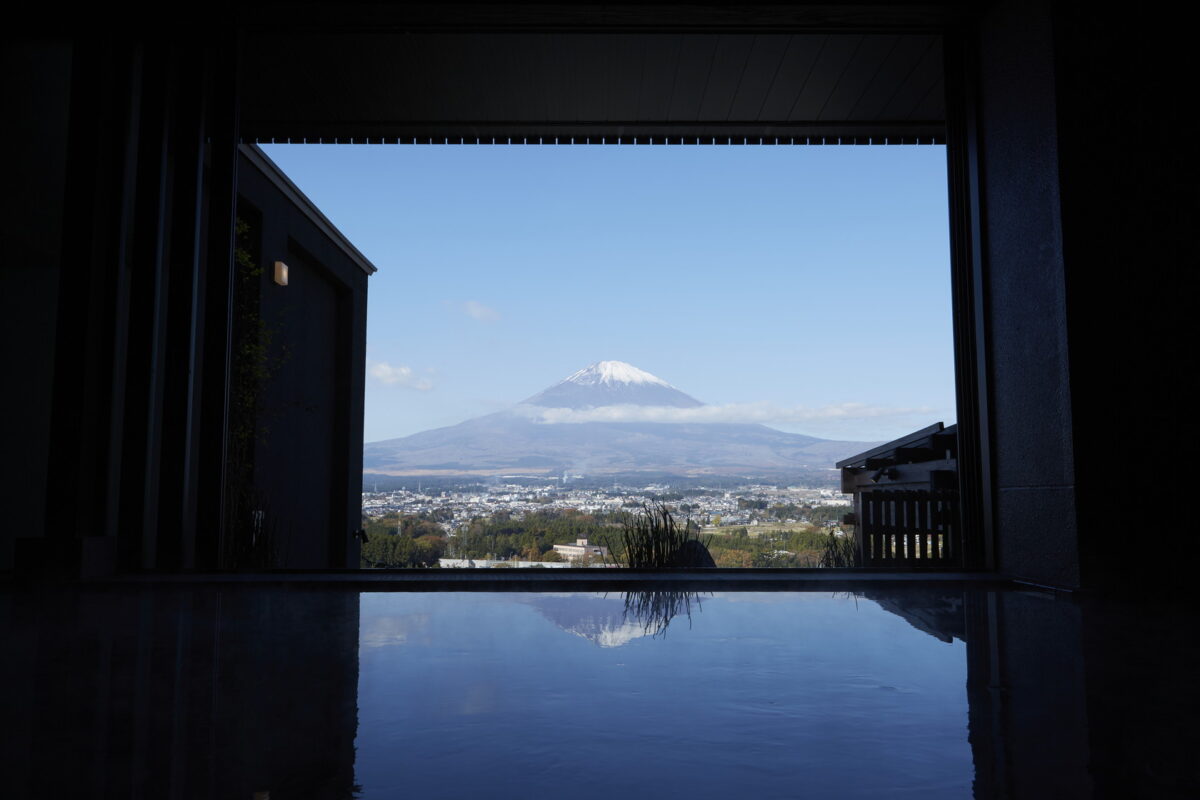
Outdoor bath with a view of Mt. Fuji in Gotemba.

Many visitors to Japan will be familiar with Gotemba as it has become famous for its outlet mall located at the foot of Mt. Fuji.

However not so many would be aware that Gotemba has some fantastic onsen options also – and soaking in an outdoor bath with views of Mt. Fuji is about as Japanese as you can get!

Check out the family friendly Gotemba Kogen Resort or Hotel Clad to make all of your Mt. Fuji onsen dreams come true.

LEARN MORE

Shimoda & Minami Izu – Explore White Sand Beaches and Unspoiled Coastline

0

At the Southern tip of Izu Peninsula, Shimoda and Minami Izu are great destinations to spend a few days. Explore the crystal clear waters, the amazing coastline and discover quaint little fishing villages that have existed in this area for centuries.

SHIMODA – AN IDYLLIC BEACH TOWN WITH A FASCINATING HISTORY

HISTORICALLY PRESERVED TOWN AND QUAINT PERRY ROAD

Take a scenic train ride down the East Coast of Izu Peninsula and you will come to the idyllic coastal town of Shimoda.

Shimoda is perhaps most famous as the first landing spot of Commodore Perry’s “Black Ships”.

The Shimoda Treaty which was signed in 1854 between the US and Japan effectively ended 200 years of Japanese isolation and eventually began the Meiji Restoration.

Today, there are many remnants in the town to provide visitors a glimpse of life 170 years ago.

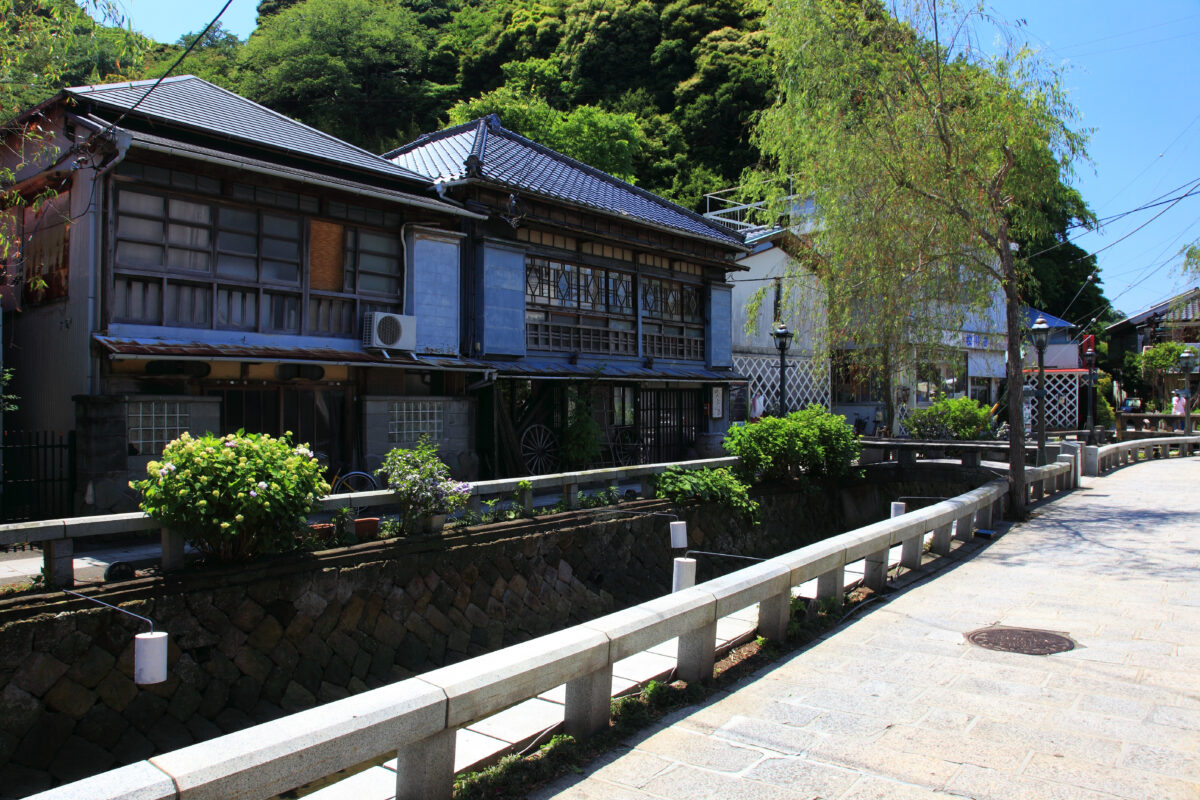
Perry Road is perhaps the centerpiece of the town. The picturesque willow tree-lined cobbled street follows a small canal with stone bridges connecting to a number of cafes and other shops.

Charming shops and restaurants welcome visitors on the historic Perry Road.

At the end of Perry Road, you can pop into Ryosenji Temple where they singed the Shimoda Treaty. The temple also has a museum (MoBS/The Museum of Black Ship) with a large collection about Perry and the black ships housed.

WHITE SAND BEACHES – SURFING, SNORKELING & MORE

If you enjoy sitting on the beach or prefer to get in the water, then there is plenty to do in and around Shimoda.

White sand beaches such as Shirahama and Iritahama are popular in the summer with sun seekers looking to escape the city and year round for surfers when the swell is up.

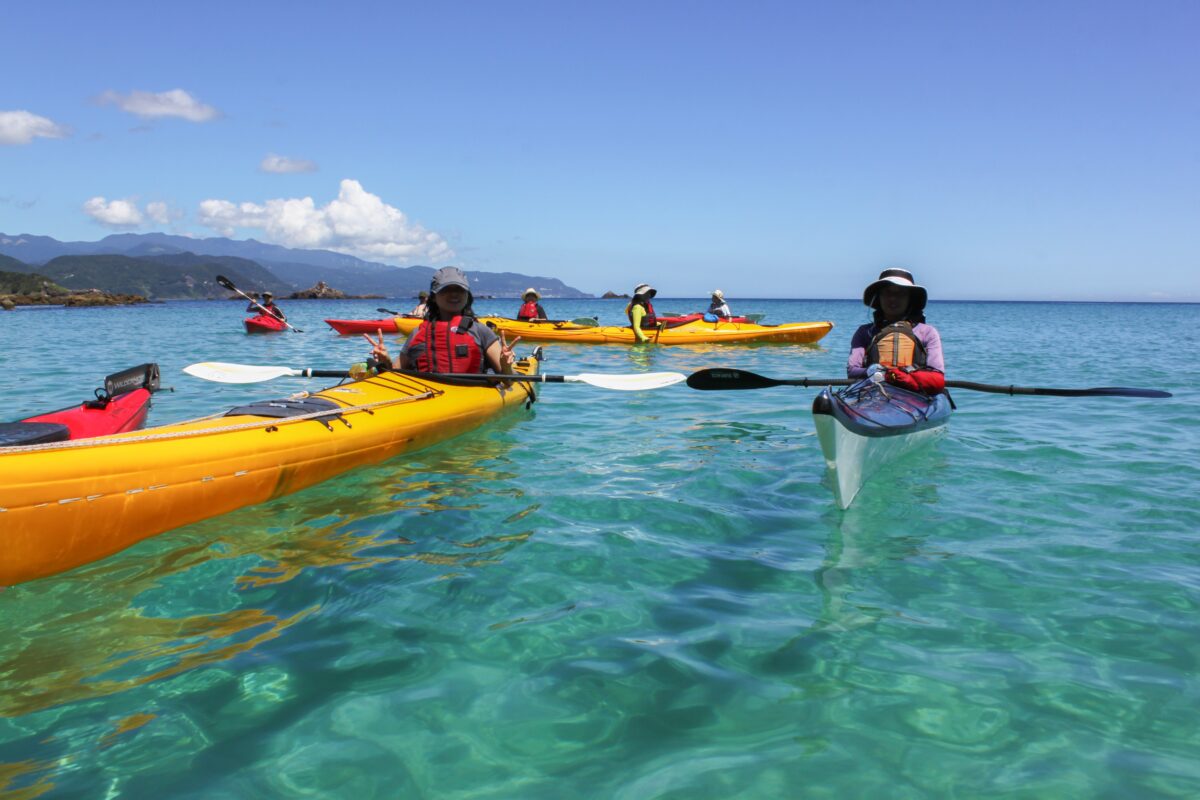
Many water sports and activities available in Shimoda.

The nearby Suzaki Peninsula is a popular coastal hiking spot – check the Suzaki Walking Trail. The area also boasts a number of sea kayaking, snorkeling, scuba diving and fishing operators that provide tours.

MORE INFORMATION

Find experiences in Shimoda here.

Shimoda Tourist Association Website

MINAMI IZU – COASTLINE AND OCEAN WAITING TO BE EXPLORED

RUGGED COASTLINE, FISHING VILLAGES & MONKEYS

Although you could get to Minami Izu in just 3.5 hours from Tokyo, the town feels like a million miles away.

The Southern Coastline of Izu Peninsula provides an endless supply of adventures and activities to help you explore the area. Here, you can also find the kind of seclusion that is hard fought for these days.

Hirizo Beach is known for its cristal clear water.

Some of the highlights of Minami Izu include Sea Kayaking around Yumigahama Beach, Irozaki Cape and snorkeling at Hirizo Beach.

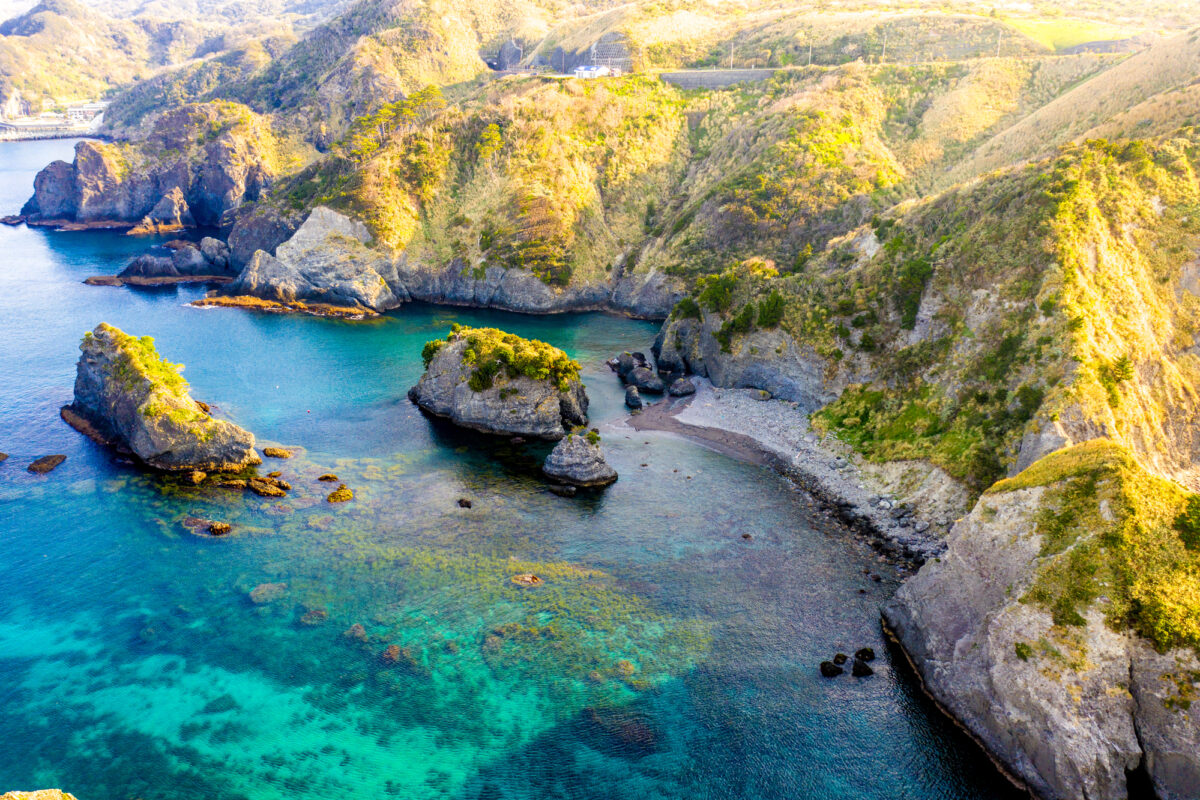
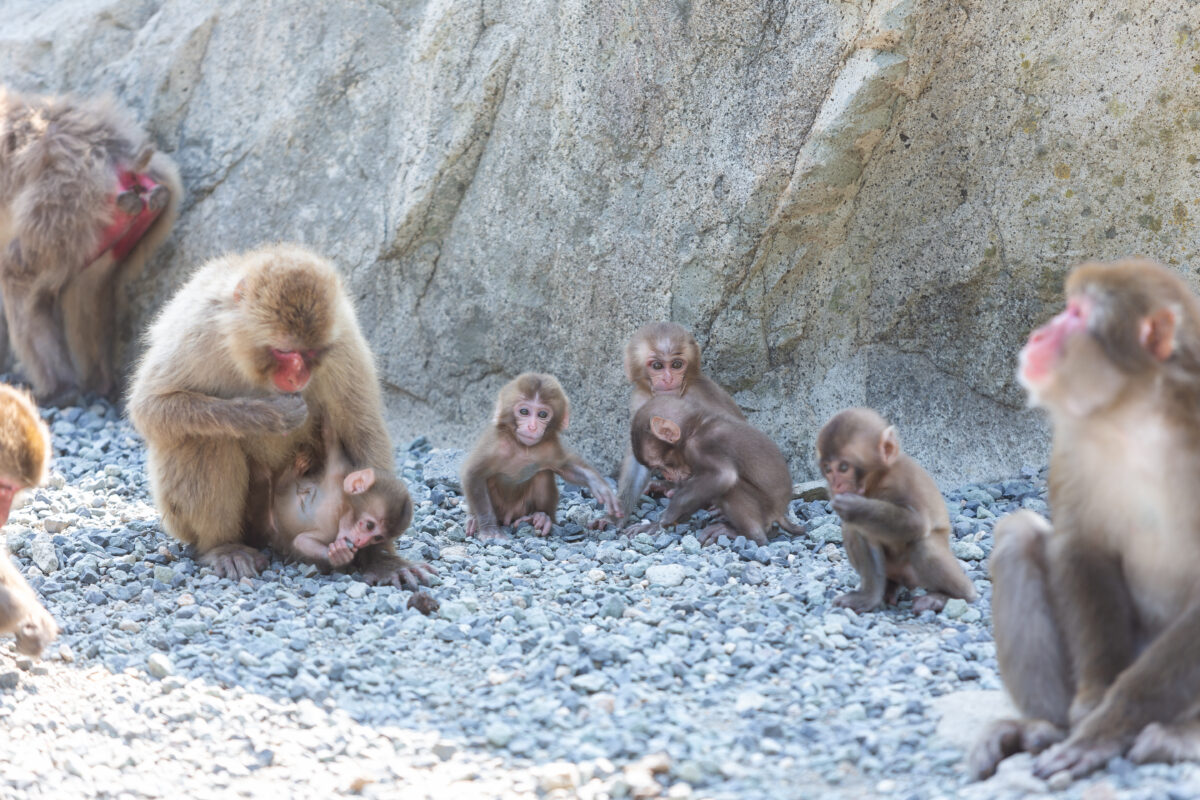
Another great spot to check out is Hagachizaki Monkey Bay. It is a stretch of rocky coast that is home to more than 300 Japanese monkeys.

Hagachizaki Monkey Bay in Minami Izu is home to more than 300 wild Japanese monkeys.

Please note that travel in this part of Izu can be challenging especially if you do not have a car. Buses are infrequent so timing is important and besides, there are not many places to get food in the area.

This, in many ways, adds to the charm of the area and is the reason many travel to Minami Izu. However, visitors should plan ahead and prepare themselves.

MORE INFORMATION

Minami Izu Tourism Website

BEST TIME TO VISIT

As this part of the peninsula is sub-tropical, the winters here are much shorter than the rest of Japan.

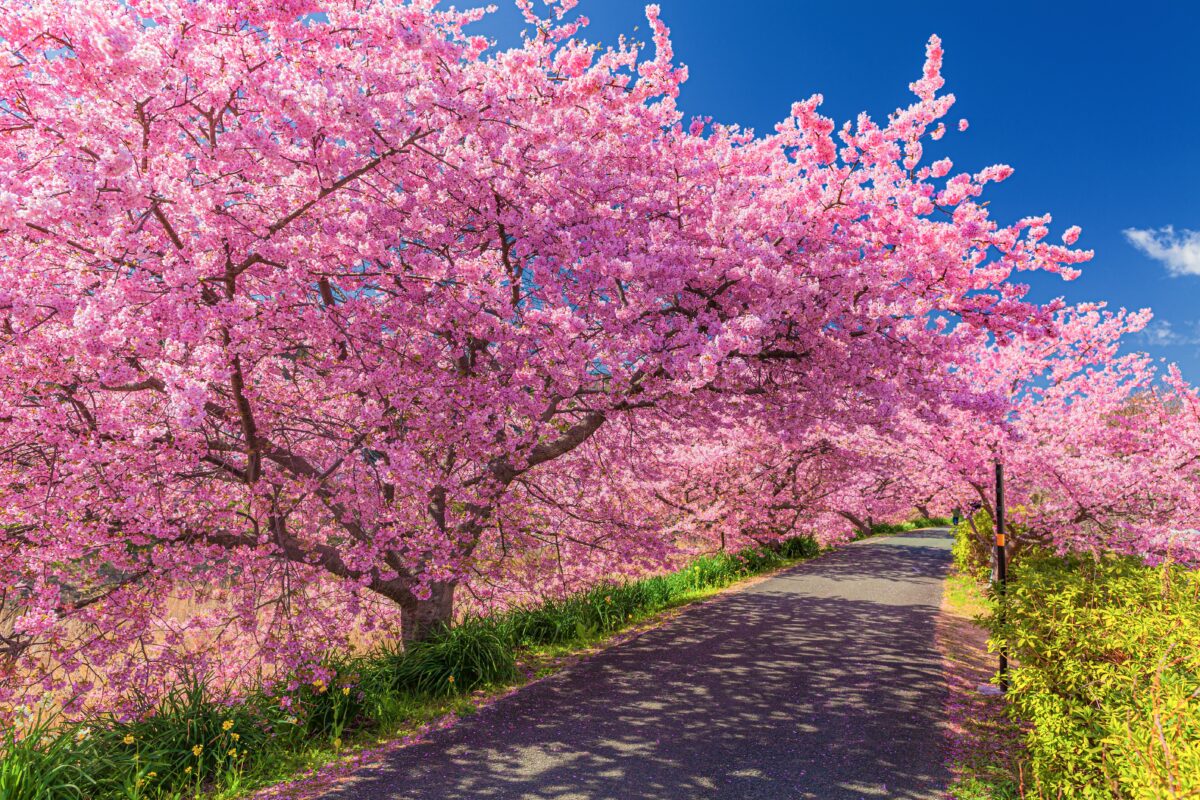
Early blooming Kawazu Zakura can be enjoyed as early as February.

The weather starts to warm in mid-April and although the sea is still a little cold, it is a great place to be to enjoy an early Spring.

Rainy season starts mid June at which time the weather is very changeable. However, it is the time that the hydrangea are at their peak and the Shimoda hydrangea festival is worth a visit.

The Summer season from July through to late September is when this area is at its best if you like the beach and ocean with long hot days with many people out enjoying themselves.

Although not as famous as nearby Kawazu, Minami Izu is also boasts blossoms starting to bloom in February. It is a great way to escape the coldest month of the year in many other parts of Japan.

HOW TO GET THERE & AROUND

The train journey to Shimoda follows the East coast of Izu and offers spectacular coastal views on the way down.

If you buy a Izu Dream Pass at Ito Station (just South of Atami Station), you will have 3 days to travel down to Shimoda.

With the Izu Dream Pass you have the option to travel by bus to through Minami Izu and up the West Coast of Izu to catch the Suruga Bay Ferry to Shizuoka city – a great diversion trip for JR Rail pass holders traveling from Tokyo to Kyoto.

For traveling to Minami Izu, we reccomend picking up a rental car in Shimoda to travel around. This gives visitors more opportunities to get off the beaten track.

Mishima – A city built on the lava flow of Mt. Fuji

0

Spend a day in Mishima City wandering through pure streams flowing with snow-melt from Mt. Fuji.

CITY OF WATER – LUSH GREEN PARKS AND WATERWAYS

Mishima City, just one hour from Tokyo Station on the Tokaido Bullet Train, is a green oasis town blessed by Mt. Fuji.

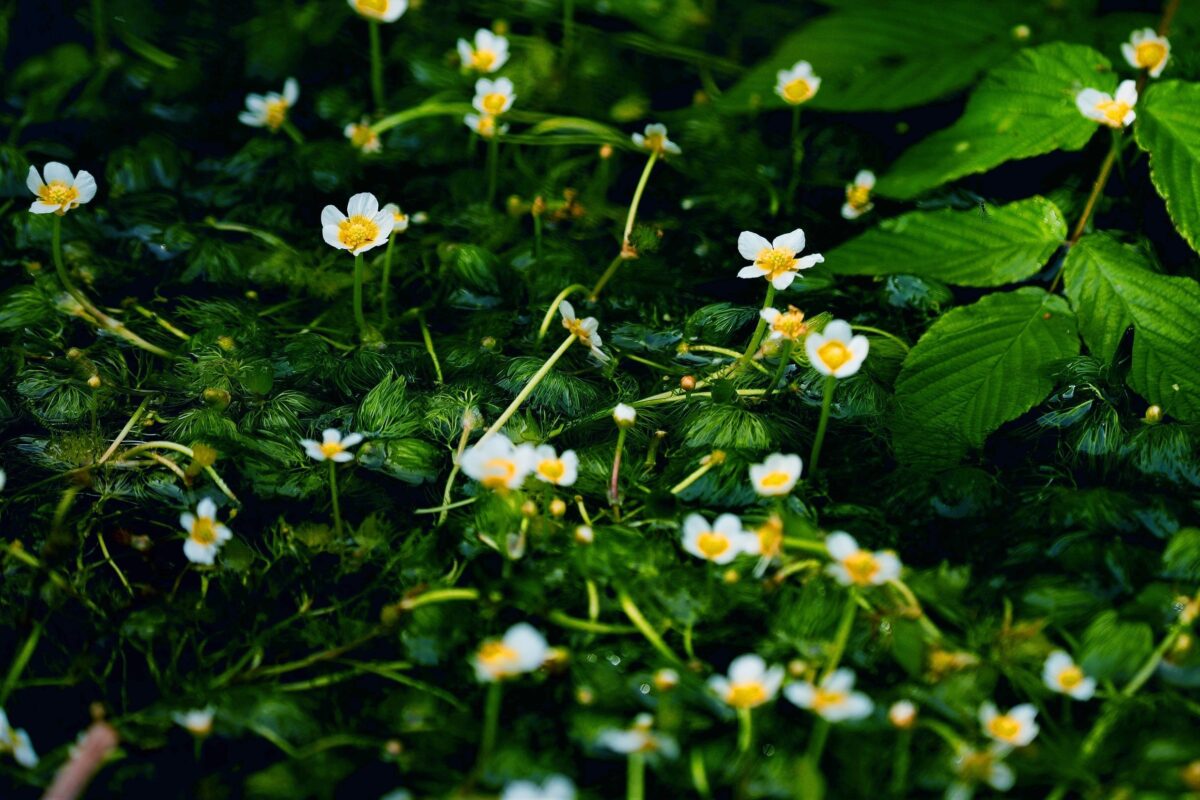
Mishima Baikamo
Tiny cute flowers of Mishima Baikamo – a water-crowfoot which is native to Mishima and only lives in the crystal-clear cold water.

Much of the city has been built on lahar and mud flow from Mt. Fuji’s eruption several thousand years ago.

As a result, the soil is rich in nutrients and there is an endless supply of fresh filtered water that flows through like a natural irrigation system.

Mishima is a Garden City with waterways running alongside many of the residential streets and a number of parks that spring to life in April.

Like most of the Shizuoka cities that have stations along the Tokaido Bullet Train line, there a number of attractions within walking distance that make a stop at Mishima Station worthwhile even if you just have half a day to spare.

Why rush to your destination when you can enjoy the journey along the way?

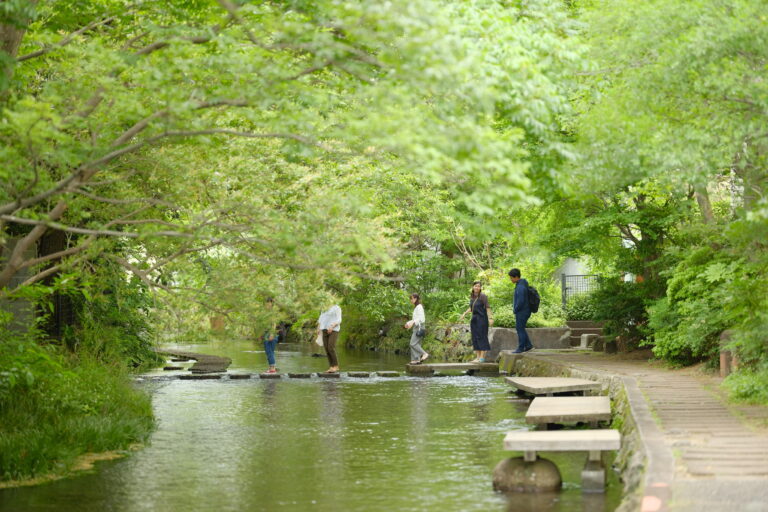
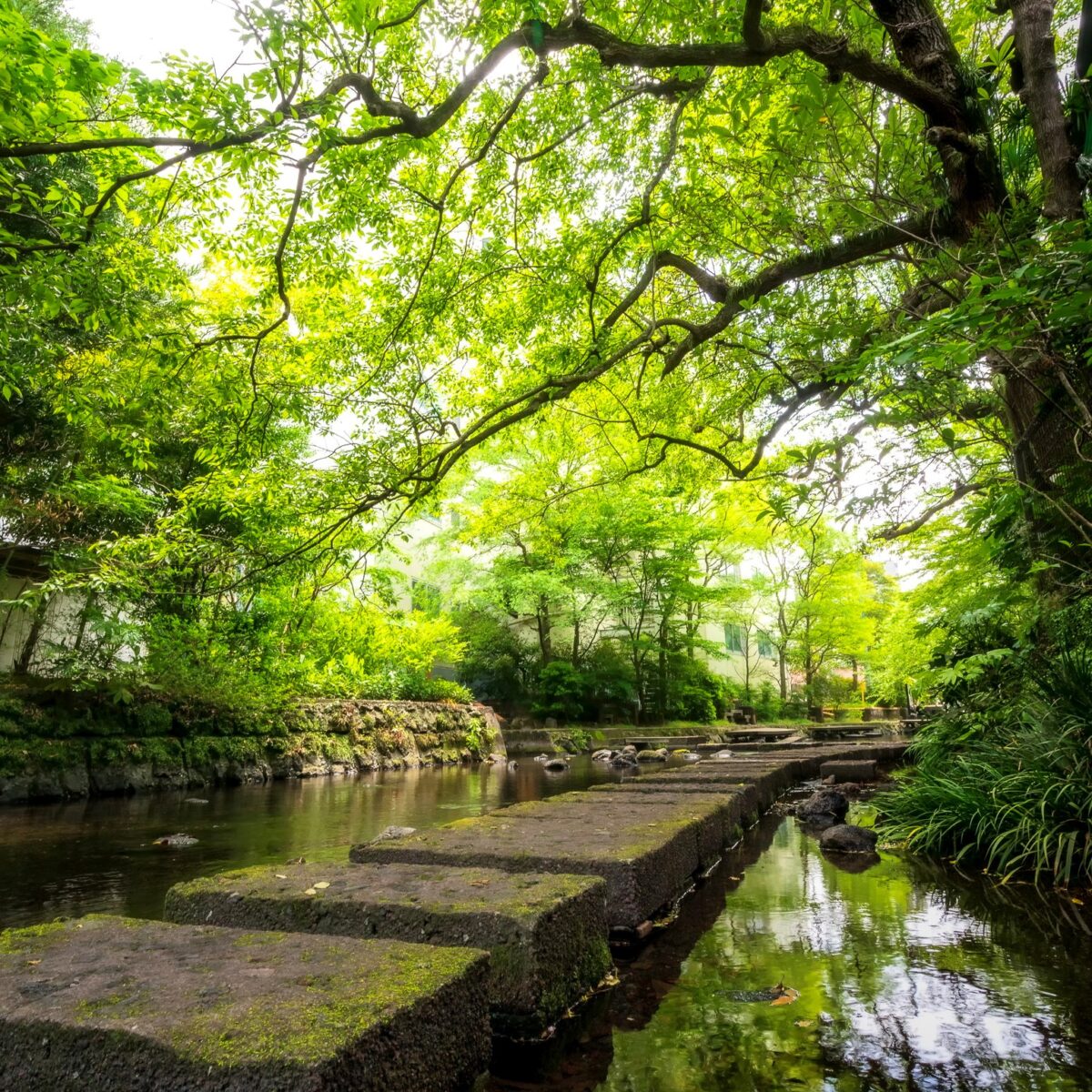
You can walk on the paving stones down the stream. 
You can walk along the paving stones down the stream. 

A RIVER RUNS THROUGH

The Genbe River is the centerpiece of the city – a lovely slow flowing river that winds through the city and brings with it filtered snow melt from Mt. Fuji.

Stepping stones placed along the river to allow you to almost walk on water as you follow them through the town to Mishima Taisha Shrine.

Check out a walking tour to discover the natural wonders and cultural attractions the city has to offer.

A TOWN FOR FOODIES

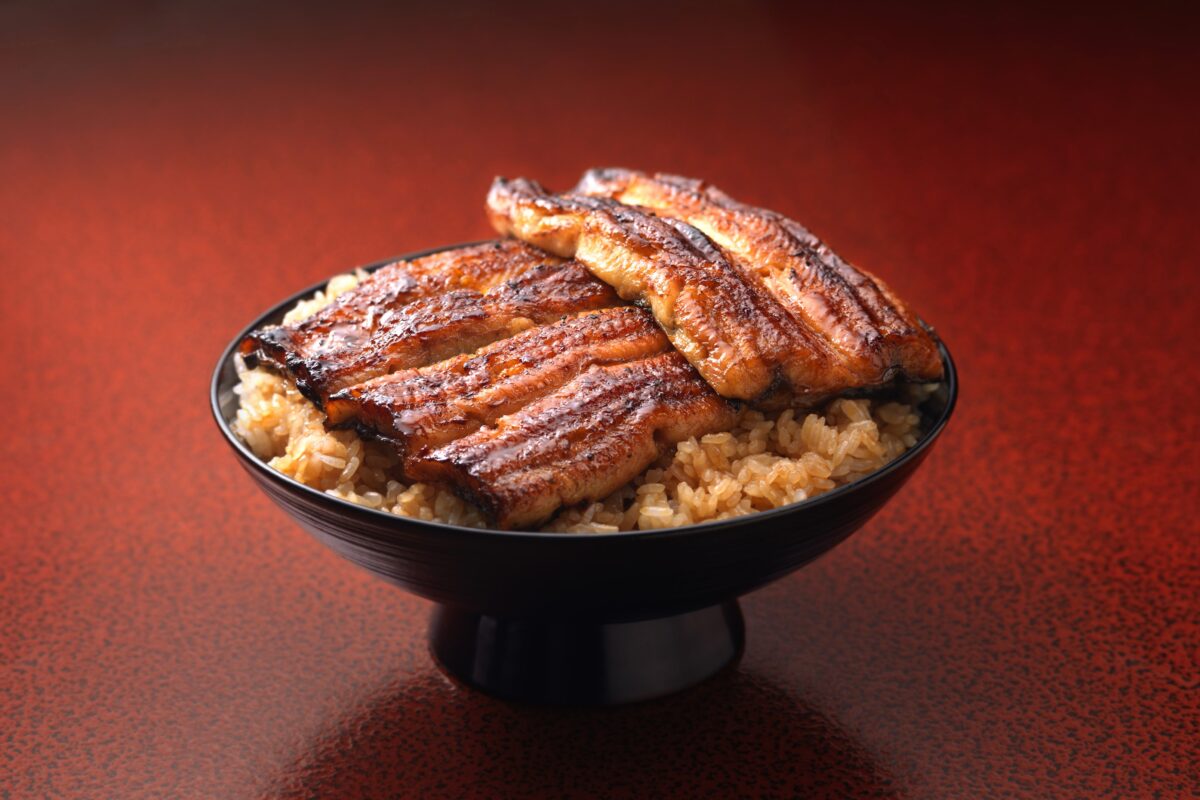
Mishima is famous for its charbroiled eel that is prepared and washed in the naturally filtered Mt. Fuji water which is said to give it a fresh and clean taste.

People have been coming to Mishima from all around Japan for centuries just for the eel. The town’s most famous restaurant, Sakuraya, has been serving this dish since 1856.

Grilled eel glazed with a sweet sauce
Grilled Unagi (eel) glazed with a sweet sauce.

If eel is not to your taste, Mishima has plenty of other options. Read more…

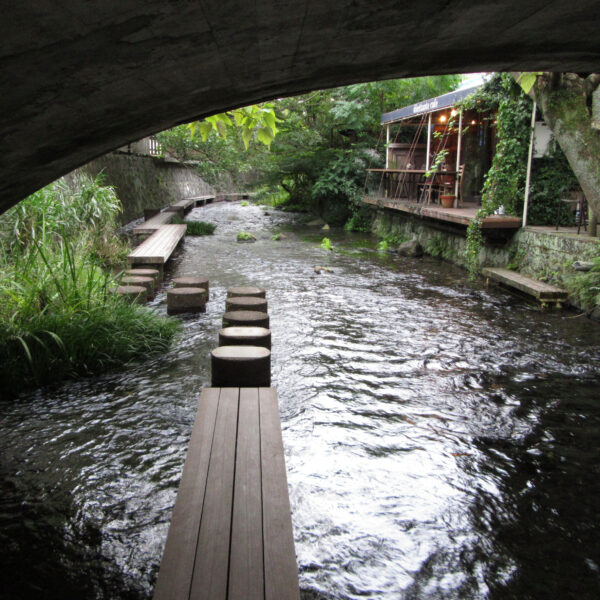
Enjoy the soothing sound of the stream.

In the area around Mishima Station, there are alleys of classic Japanese food options that cater to the crowd returning home from work and the restaurants and Izakaya bars in this area are buzzing at night.

If you are looking for a Western option the number of Italian restaurants and cafes have increased in recent years.

One of the local favorites is Dilettante Cafe – an Italian fusion cafe right on the edge of the river.

For more food options (including where to buy the popular Mishima Croquette) – Click Here

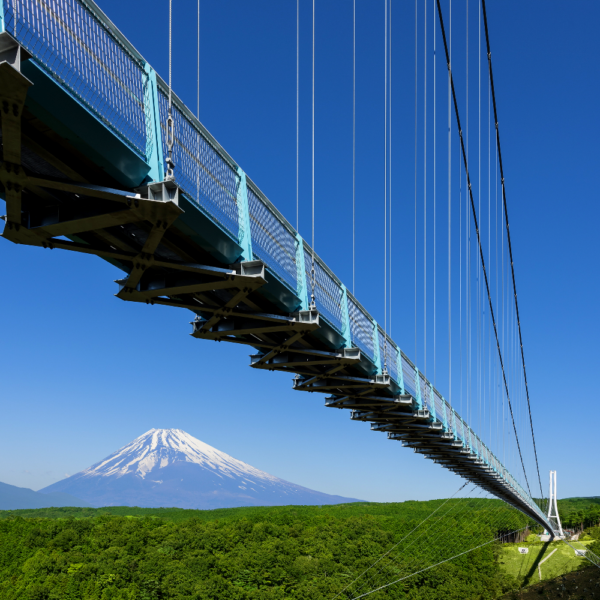
MISHIMA SKYWALK

If you would like to get closer to Mt. Fuji, take a trip up notrth to the picturesque Mishima Skywalk.

Stretching 400 meters across a lush valley, the bridge boasts an unparalleled view of Mt. Fuji, rising majestically in the distance and Suruga Bay shimmering on the horizon.

If you are looking for more thrilling activities, there is a tree top park, a long zip slide and other outdoor activities available in the north area across the bridge.

Take in the awe-inspiring view of Mt. Fuji on a clear day.

BEST TIME TO VISIT

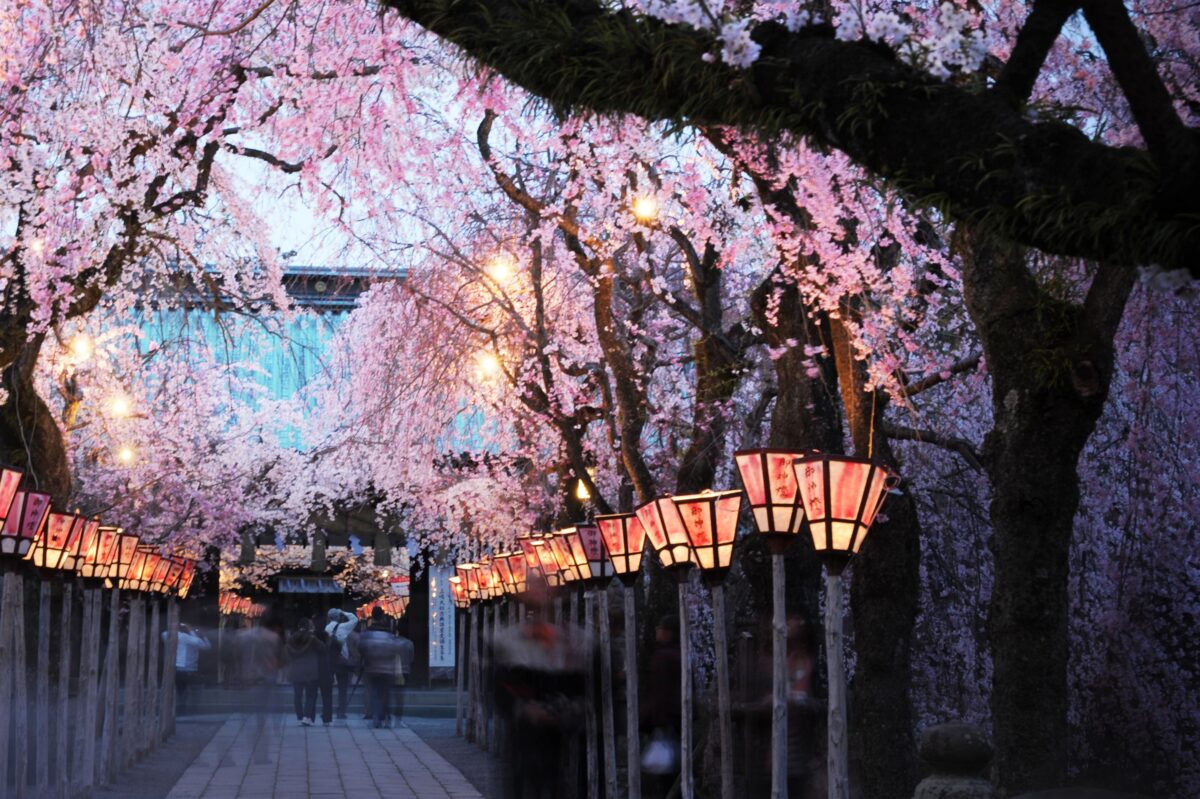
From the end of March, when cherry blossoms start to bloom, through to the start of the rainy season in mid-June is an excellent time to visit this vibrant city.

Mishima Taisha shrine in Spring
Mishima Taisha Shrine in spring.

From late May, fireflies can be seen along the banks of the Genbe River and as the rainy season approaches the hydrangea are in full bloom.

Wading through the fresh Mt. Fuji water flowing through Mishima is a great way to cool down on hot summer days.

If you want to improve your chances of seeing Mt. Fuji, visit Mishima in the cooler months. Although cold, the weather is stable and the snow-clad mountain contrasts against clear blue skies. Read more…

HOW TO GET THERE & AROUND

A great thing about Mishima is that it is easy to get to – On the Tokaido Bullet Train from Tokyo Station you can get to Mishima Station in about an hour.

Once you are at Mishima Station most of the main attractions are easy walking distance from the South Exit.

Bicycle rental is also available from the station and other locations throughout the city.

MORE INFORMATION

Activities in and around Mishima City Tours

Mishima City Tourism Website

Mishima – A City made for walking tour courses

Activities in and around Mishima