Home Blog Page 16

Makinohara – Green Tea & Surf Beaches

0

GREEN TEA PLANTATIONS, SURF BEACHES & LAID BACK LIFESTYLE

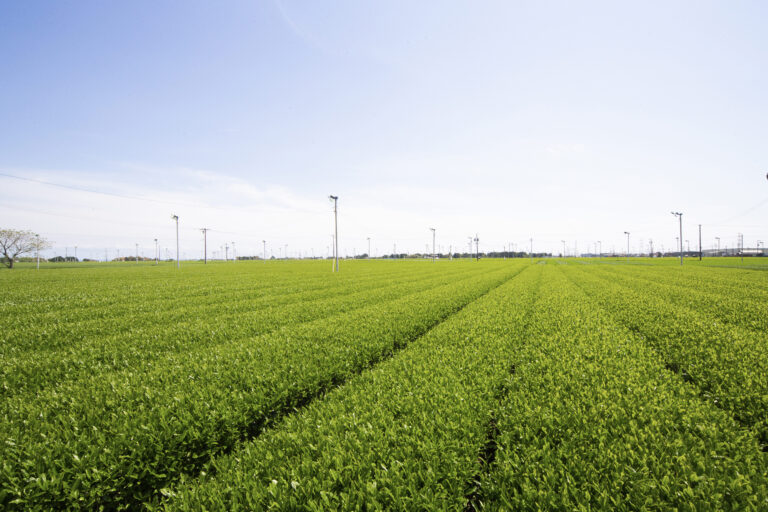
Makinohara City is located in the central region of Shizuoka Prefecture. The city, with a long stretch of Pacific Ocean coastline, is part of the “Makinohara Uplands / Plains”, which is famous for green tea plantations.
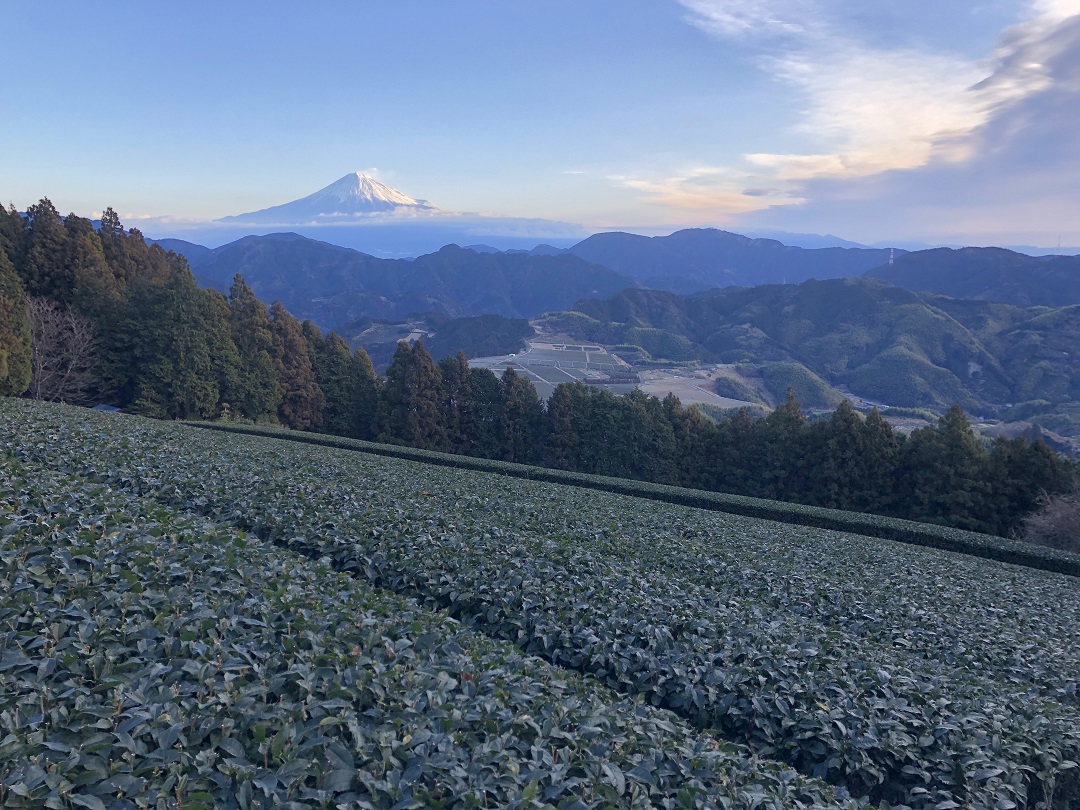
The Makinohara Uplands / Plains area was developed and cultivated to grow green tea after the Meiji Restoration of 1868 by a former retainer of the Tokugawa Shogunate.

Today green tea plantations and fields in the Makinohara Uplands / Plains cover an area of more than 12,000 acres (5,000 hectares) and are said to make up about 12% of all green tea fields in Japan.

GREEN TEA FIELDS / GRINPIA MAKINOHARA

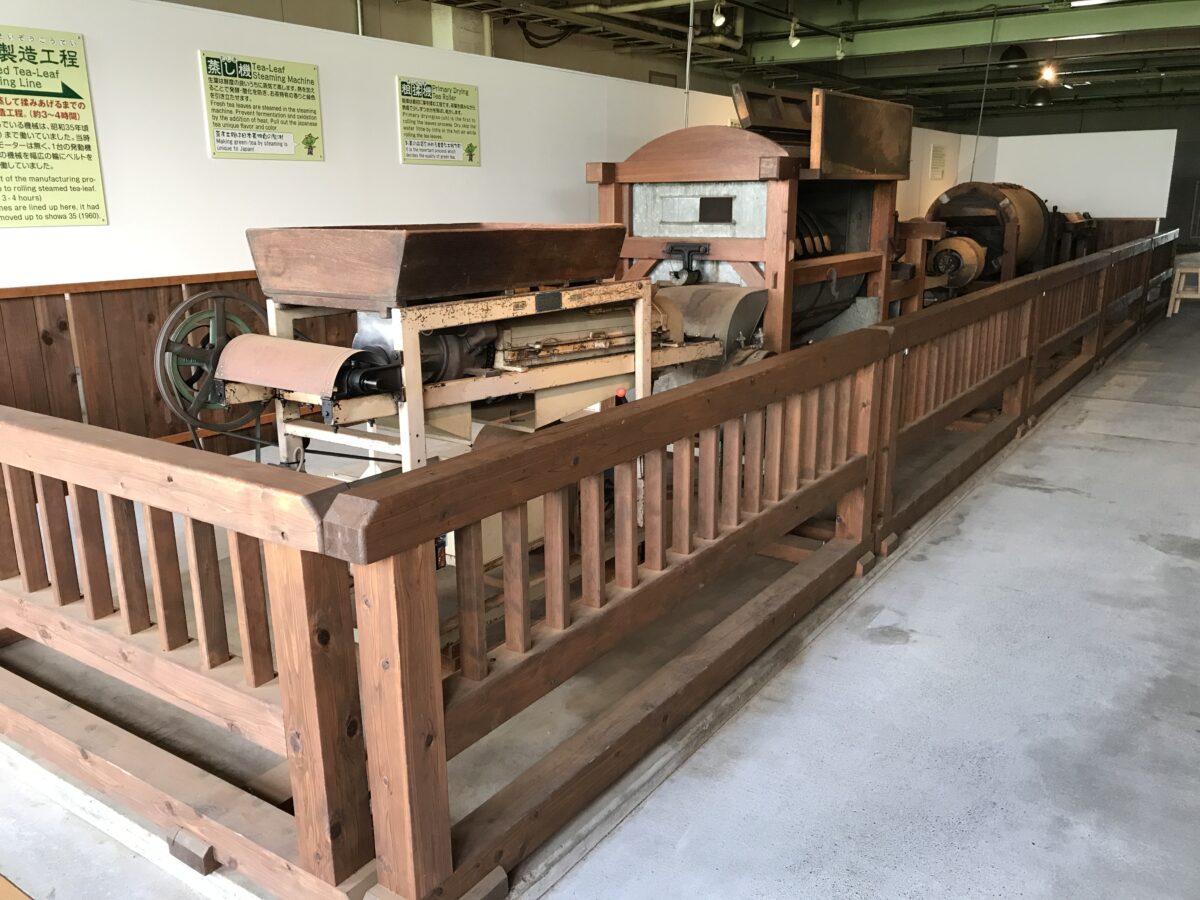
One of the larger plantations on the Makinohara Plains is managed by Grinpia Makinohara, which offers visitors a chance to learn every aspect of green tea including cultivation and processing. Tea-making machines from the early Showa period are displayed in the small exhibition room.

Grinpia Makinohara
old tea-making machines at the small exhibition room

Green tea picking is available for visitors during the harvest season.

Grinpia Makinohara also has a store where you can try different green teas and different green tea flavors of ice cream.

BEACH LIFE

Makinohara is blessed with long stretches of beaches along the Pacific Ocean coast that produce some great waves.

In the Summer the beaches are a popular destination for locals looking to escape the heat, and a laid back beach culture has slowly developed over several decades.

Shizunami and Sagara Sun Beach are the most popular beaches in the area and popular with sun lovers, surfers and families.

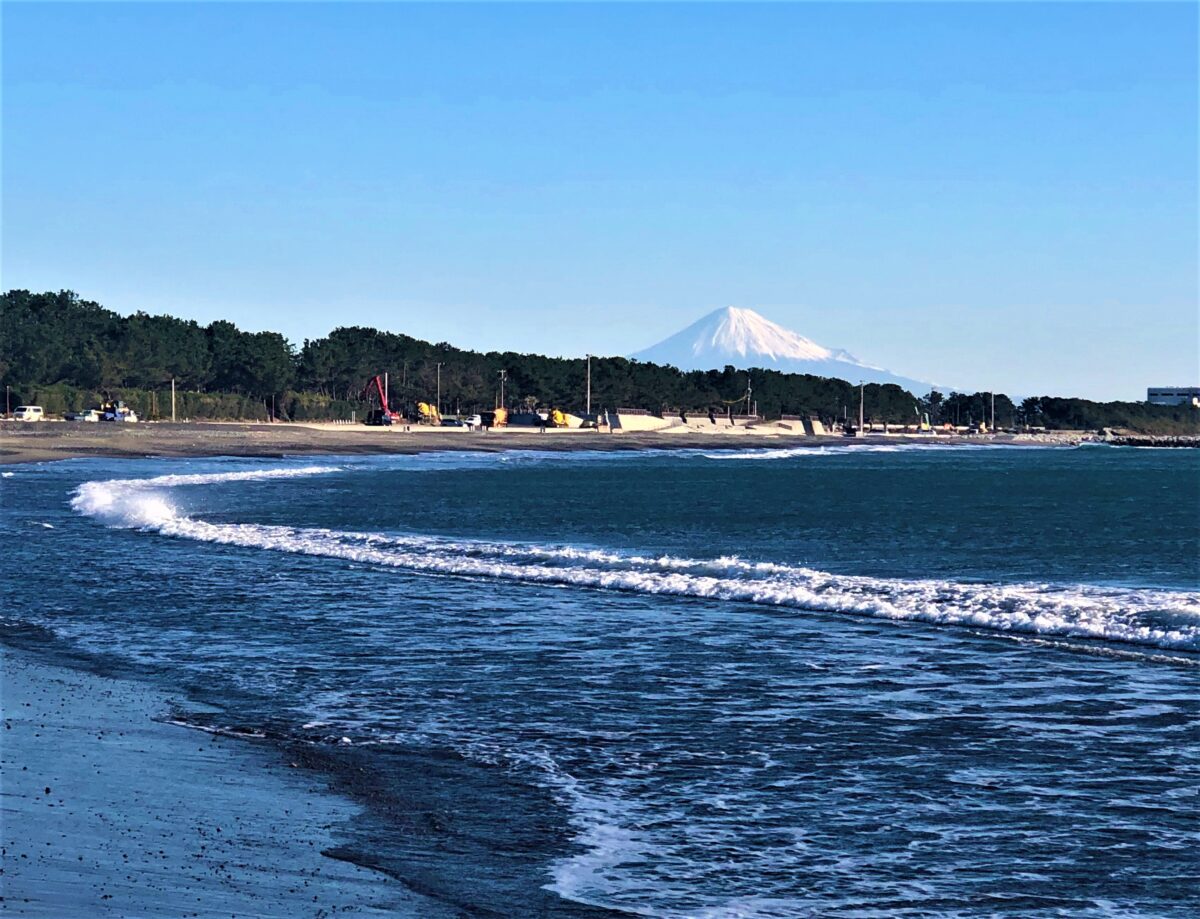
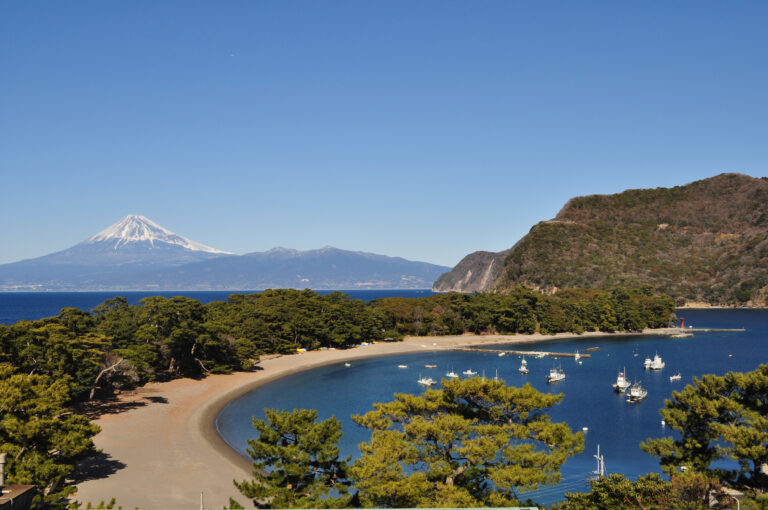
Shizunami Beach
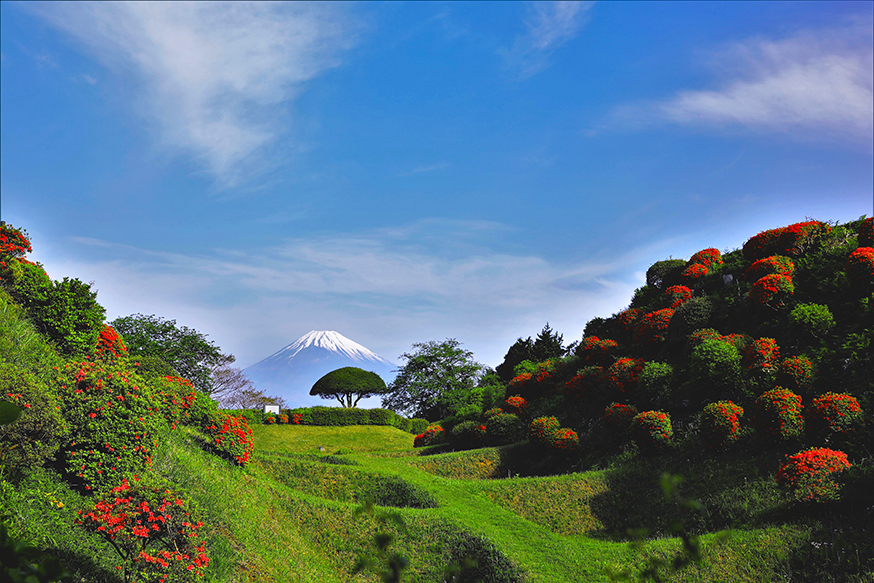
Shizunami Beach with Mt. Fuji in the background

PERFECT WAVES OUTSIDE THE OCEAN

In addition to the beaches, Makinohara offers unforgettable surfing experiences outside the ocean.

In 2021, Japan’s first surf stadium newly opened in Shizunami, which can create ideal conditions for surfing anytime with a variety of waves.

Surfers from beginners to professionals can enjoy riding the waves.

CHILL OUT LIKE LOCALS

In recent years, a number of new cafes, bars and beach-house style accommodations have popped up around the Makinohara beach areas.

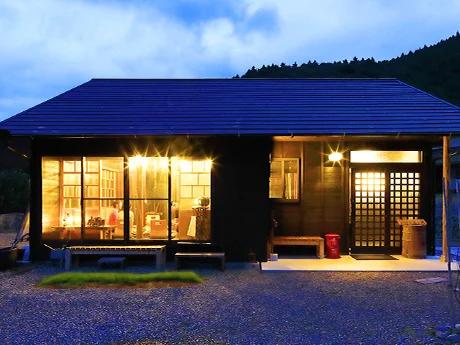
One example of this is HAZ Cottage which is only 15 mins walk from Sagara Sun Beach.

The cottage is a renovated old Japanese style house that has been given a modern beach house feel.

Sit back and relax with local beer in hand while listening to the sound of waves.

OGANE FAMILY RESIDENCE

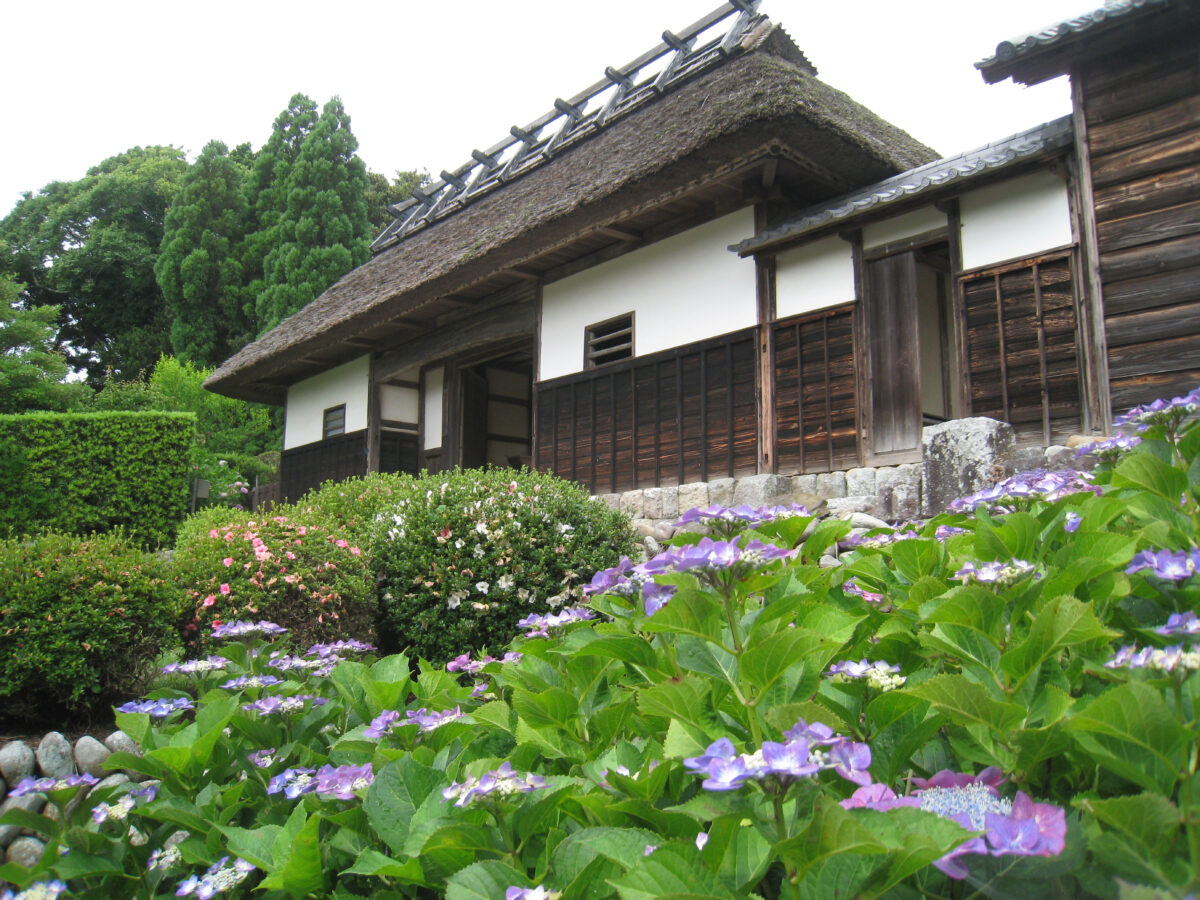
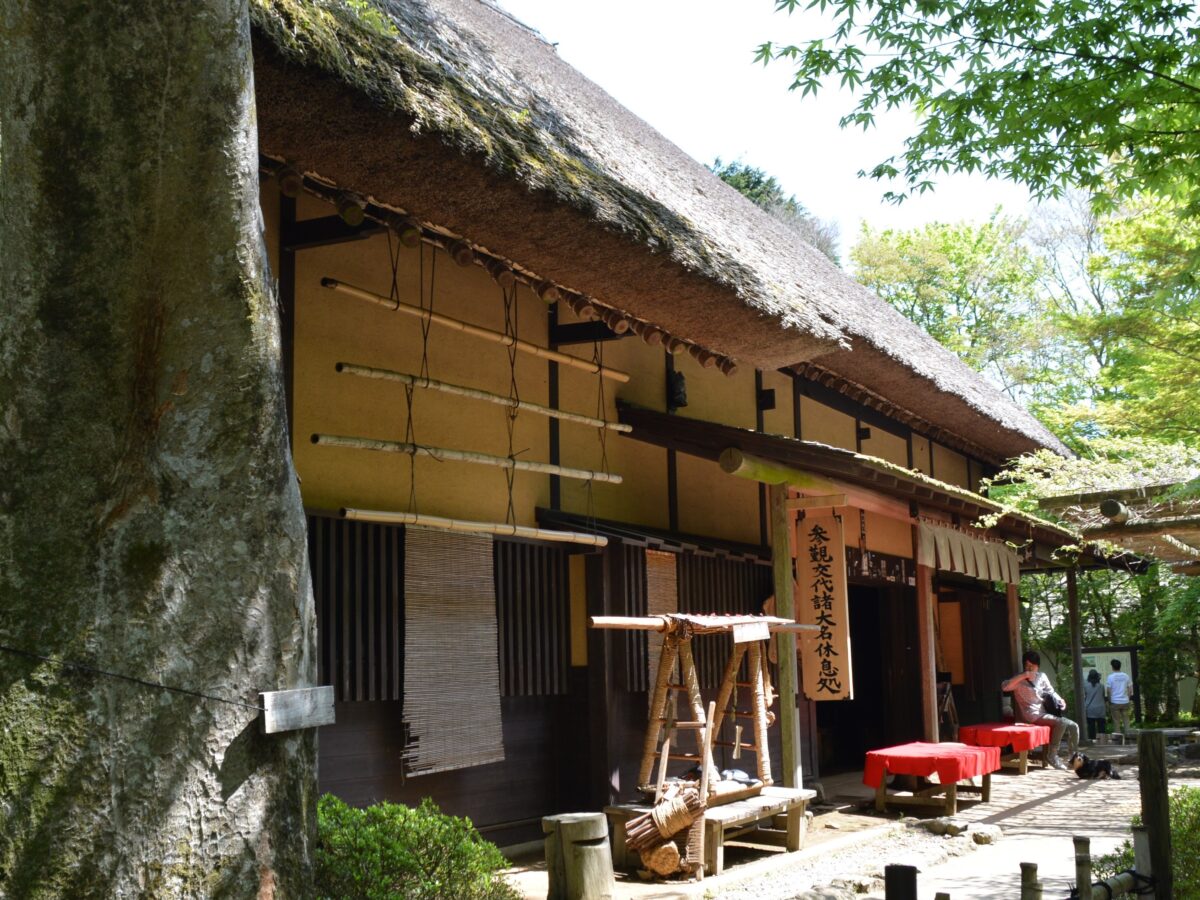
The Ogane Family Residence, a family home built in the 18th Century, is open to the public and provides visitors a glimpse of what rural Japanese life would have been like in the Edo Era.

The surrounding gardens are popular, and most famous for, the hydrangeas that bloom from late May through to the end of June.

Ogane Family Residence

MT. FUJI SHIZUOKA AIRPORT

Mt. Fuji Shizuoka Airport is Shizuoka Prefecture’s gateway to the sky.

There are countless places in the prefecture where you can enjoy a spectacular view of Mt. Fuji. This airport is one of our recommendations.

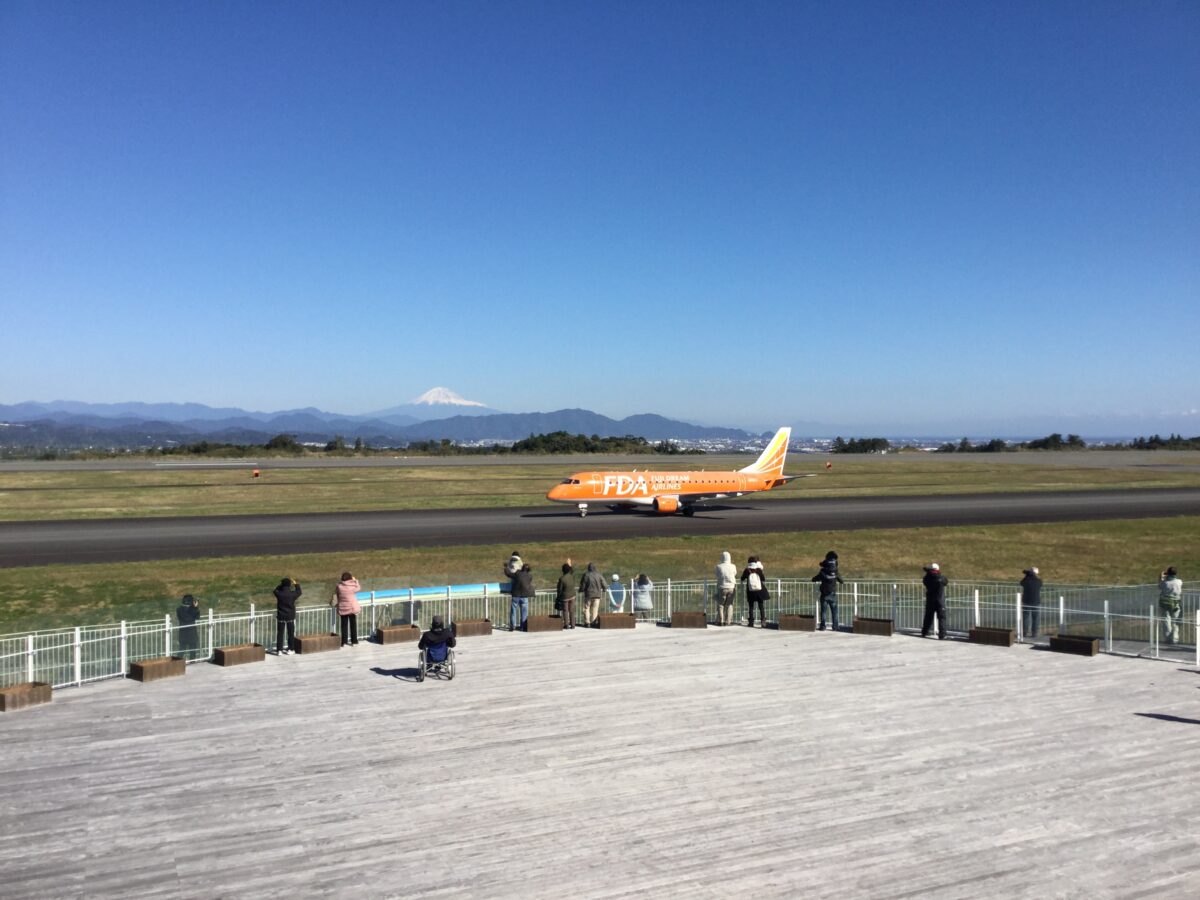
The Sekiun-in observation deck built on the east side of the airport terminal building is the best spot here. You can see airplanes landing and taking off with Mt. Fuji in the background.

Sekiun-in observation deck

Things to Do in Shizuoka, Japan- Culture and Nature Experience: Hike 500-Year-Old Tokaido to Experience Ancient and Modern Japan!

Reasons to Travel to Shizuoka, Japan – Hike Tokaido

Mt.Fuji Shinkansen
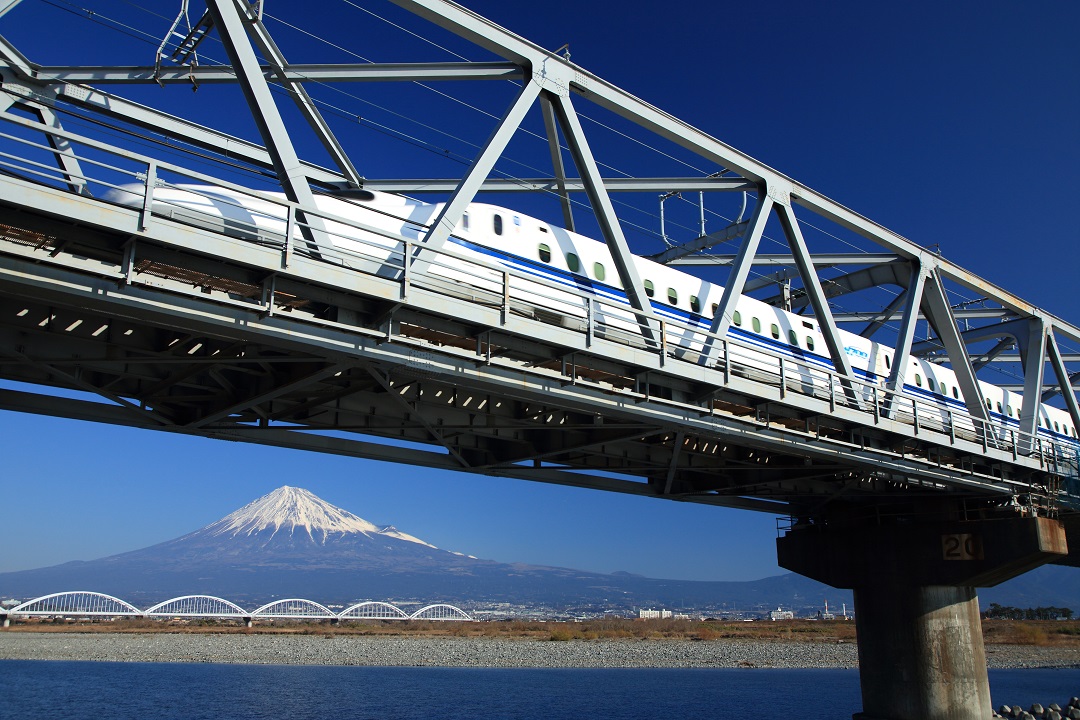
Mt.Fuji and the Tokaido Shinkansen

You might have seen this iconic photo of Mt.Fuji and the Tokaido Shinkansen bullet train. Guess where it is taken? If you travel between Tokyo and Kyoto, you will find the symbolic mountain in Shizuoka.

Traveling routes have played an important role for centuries to facilitate the flow of people, goods and information, and thus have supported the development of Japan. The high speed bullet train is surely one of Japan’s greatest innovations in the 1960s.

Tokaido Shinkansen bullet train is named after the 500-year-old Tokaido foot-highway because it closely follows the ancient road, which links Tokyo with Kyoto and Osaka, Japan’s new and old capital cities.

So, when you travel between these cities, you follow the footprints of Samurai and Shogun. The Shinkansen takes a little over 2 hours to get to Kyoto from Tokyo, whereas it took about 2 weeks for ordinary travelers and 3-4 days for couriers on foot in feudal times.

Are you interested in hiking this centuries old path, contrasting the modern and ancient route?

Here’s what we offer!

Learn more about Tokaido.

Hike the Best Part of Tokaido, Hakone Hachiri, and Enjoy Ancient and Modern Japan – Experience Japanese Culture and Nature!

Hakone Hachiri is a section of old Tokaido (just an hour from Tokyo) which has recently been declared a Japan Heritage Area. You will learn about both Japanese culture and nature during the hiking.

In Japanese, Hachi means 8 and Ri is a unit of distance equivalent to about 4km (2.5 miles). So Hakone Hachiri is the 32km (20 mile) stretch of old Tokaido between Odawara and Mishima (a setting in James Clavell’s epic novel “Shogun“), via Hakone.

In this tour, you will hike the best parts of the Tokaido route, skipping over modern busy roads by bus.

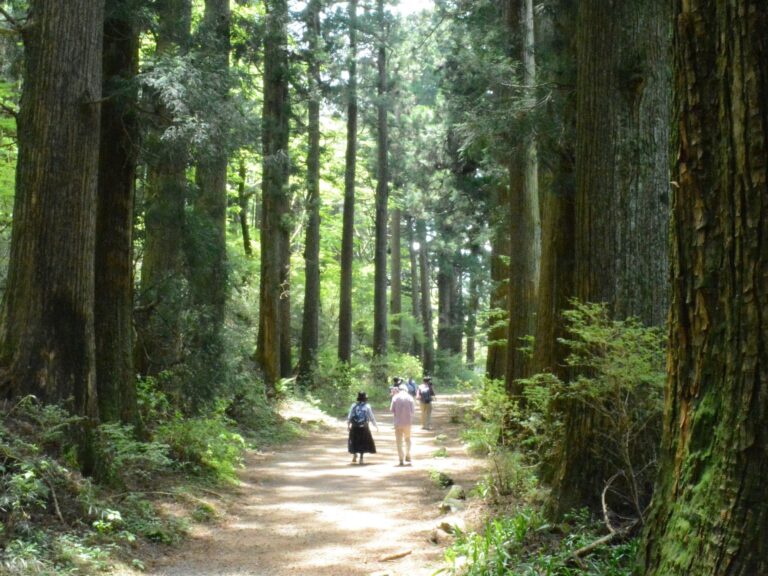
It enables you to enjoy walking the remaining parts of the original Hakone Hachiri path through the forest to Lake Ashinoko and Cedar Avenue, lined both sides with towering 400 year old Japanese cedar.

In addition, you will visit Amazake Chaya teahouse, one of the few remaining of hundreds of teahouses that adorned old Tokaido, Hakone checkpoint, the most strictly inspected checkpoint in feudal times as it was the closest to the shogun in Edo (Tokyo), Yamanaka Castle Ruins with its unique “waffle maker” fortifications, and Genbegawa World Water System Heritage Area where you can cool down with spring water from Mt. Fuji.

It is a great fit for people who want to hear stories of and see ancient and modern Japan through hiking. We also hope that you enjoy observing how Japan has developed by comparing the old and new parts of Tokaido, imagine the lives of people in feudal times, immerse yourself into a different culture and get energized by hiking through the forest and cedar avenue!

About your tour guide – Tony Everitt

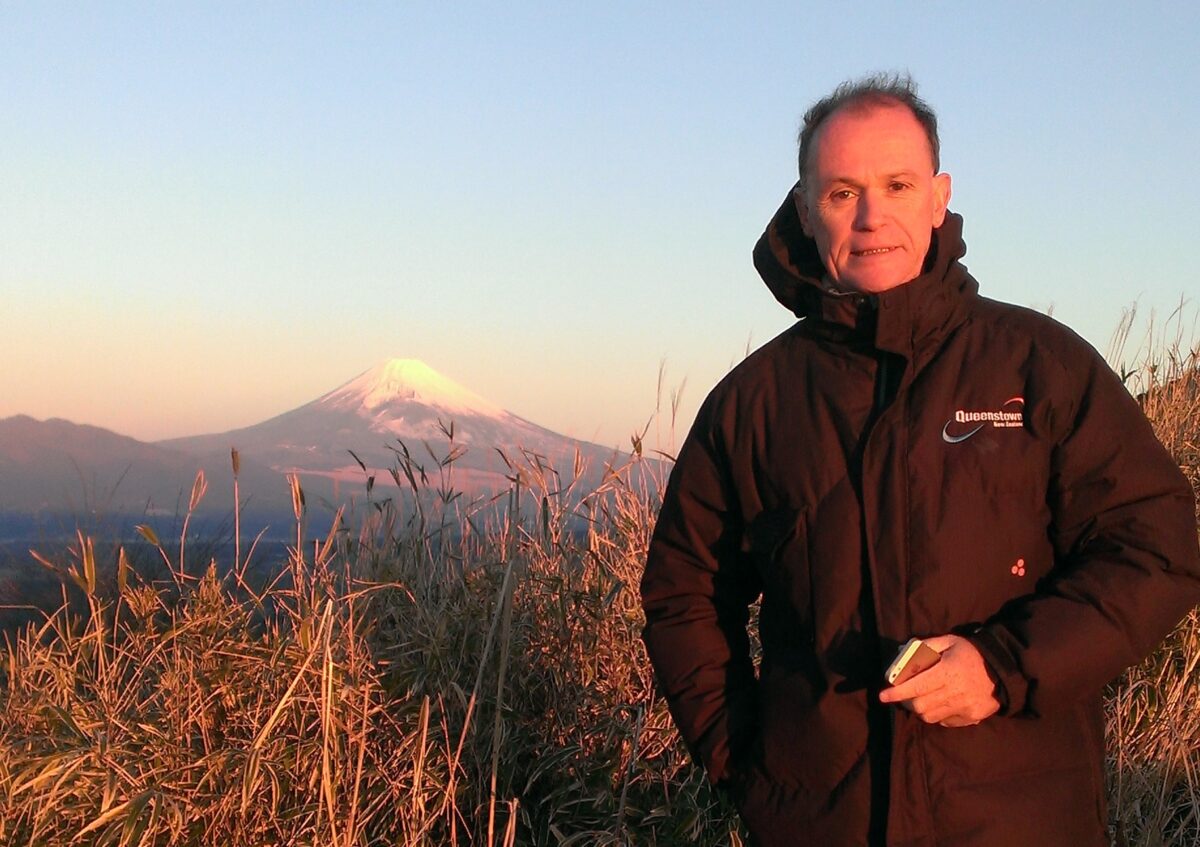
Tony with Mt.Fuji

‘Because Japan is fascinating!’. This was how Tony answered when I asked how he got interested in Japan. He passionately talked about how Japan, and later a living Tokaido road and Hakone Hachiri, attracted him.

Having been influenced by his father as a kid, Tony first got to know about Japan through its quality products and technologies such as Yamaha, Honda, Toyota, Sony, etc., as well as the world’s first bullet train Tokaido shinkansen that became a driving force for the rapid development of Japan after the World War II. He wanted to know the secret behind Japan’s ability to rapidly develop and produce such fine products.

‘Tokaido is great because it’s a living road!’ Tony adds. Tokaido has been one of the most important roads for centuries and is still Japan’s main arterial route. Tony wants to share knowledge and experience that he has gained through his decades of endeavor in Japan through heritage stories to those who are curious about the secrets of development of Japan.

Know more about Tony.

How to book ‘Hike Hakone Hachiri’

Book ‘Hike Hakone Hachiri’ here.

Other parts of Tokaido tours are available:

Shizuoka, highlights includes several remaining spots shown in Ukiyoe (Hiroshige’s woodblock paintings)

Kakegawa, hiking through green tea fields and one of the most difficult paths on Tokaido

Hamamatsu, the land of Mr.Tokyo Tokugawa Ieyasu who moved Japan’s capital to Tokyo

5-day Tokaido tour

Why don’t you hike Tokaido and enjoy contrast between old and new roads of Japan?

Discover the Tokaido Explore Shizuoka

Things to Do in Shizuoka, Japan – Enjoy Green Tea Experiences with Shizuoka Tea Farmers to Learn about Japanese Culture and Life in Tune with Nature.

Why do you travel? Why Shizuoka?

To embark on an adventure? To see the world through new eyes? To admire mother nature? To unplug yourself? To learn about different cultures? To meet new people?

There are tons of reasons to travel depending on who you are and what you need.

We hope to fulfill your needs with unique experiences which share a heart-warming interaction with locals, the blessings of nature, some of the finest food, a warm climate, and more of what Shizuoka has to offer. Learn more about Shizuoka.

The Green Tea Experiences: ‘Shizuoka Tea with…’

In Shizuoka– one of Japan’s biggest green tea producers!

Shizuoka is one of the top-ranked green tea producers in Japan. It is said that green tea cultivation in Shizuoka began in 1244 when tea seeds were brought back from China.

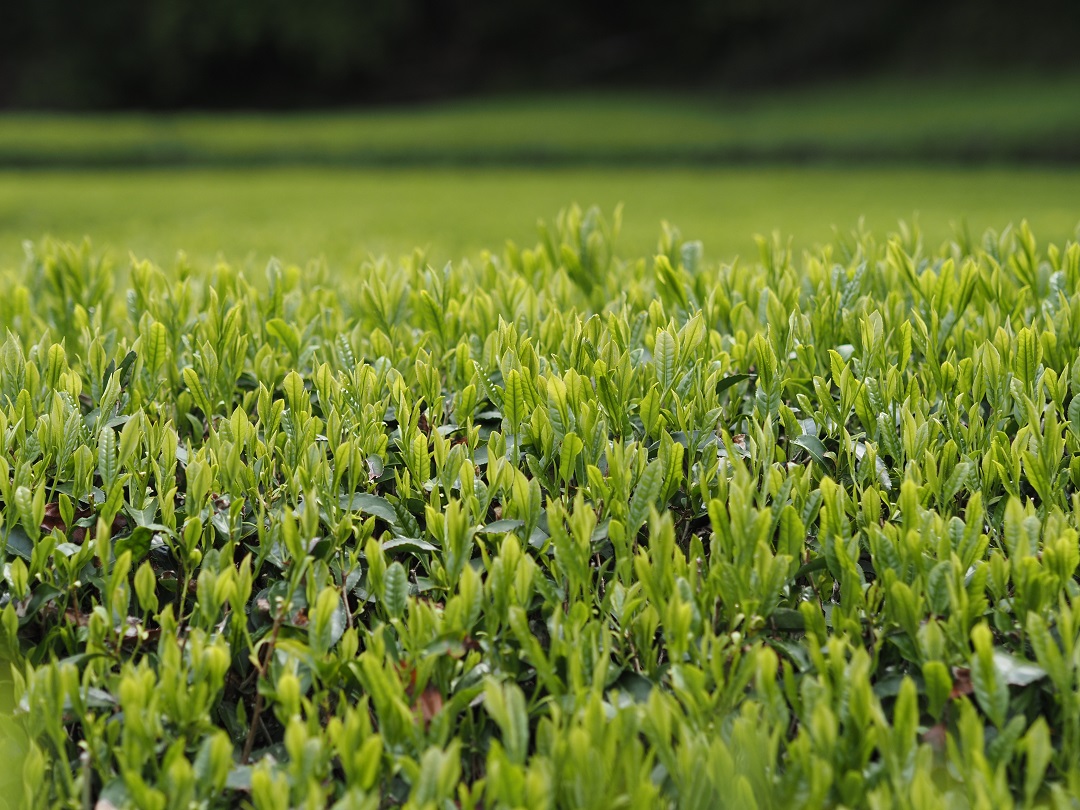
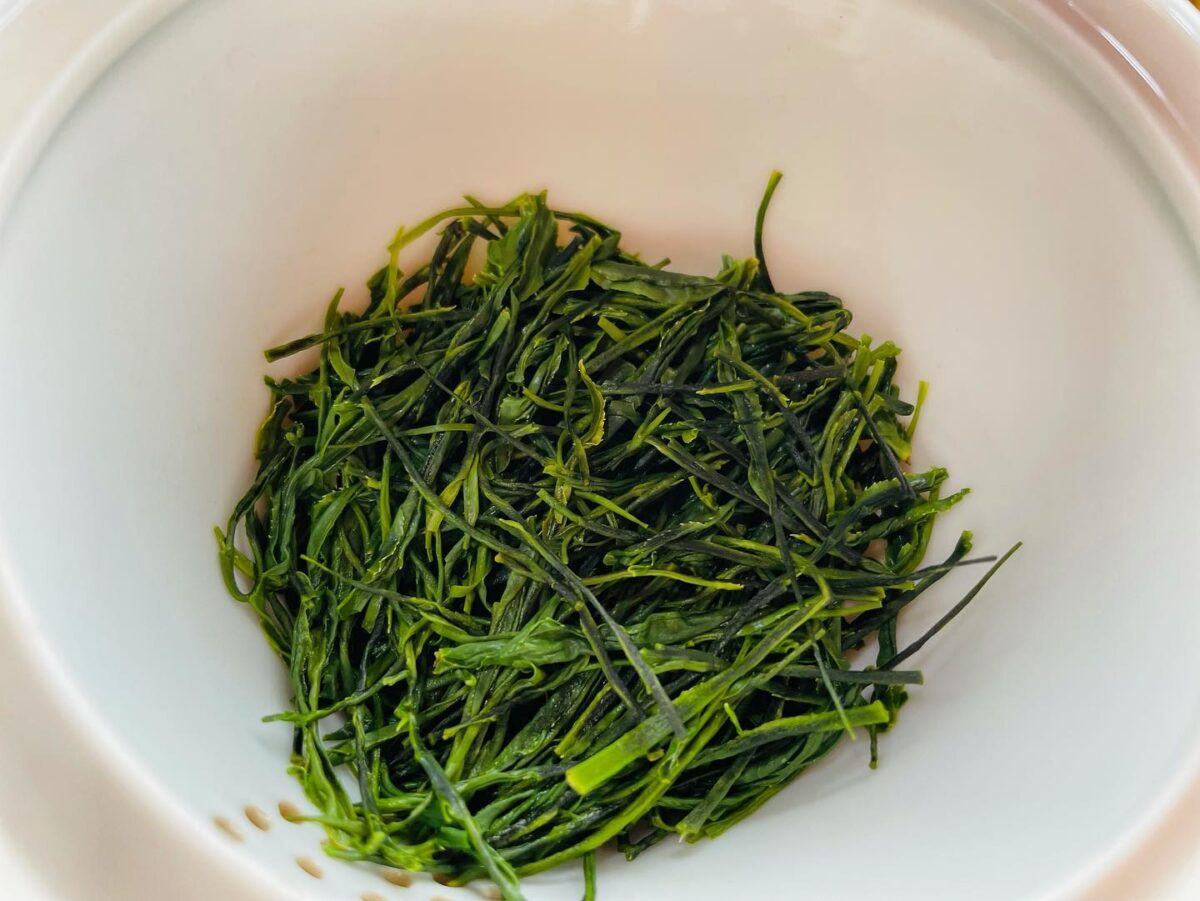
With centuries of tradition, you will see Shizuoka still produces some of the finest green tea. It’s carefully cultivated by local farmers at both large and small plantations, with row upon row of green tea hedges. If you enjoy this iconic Japanese drink, why don’t you dig in deeper through the ‘Shizuoka Tea with…’ experience?

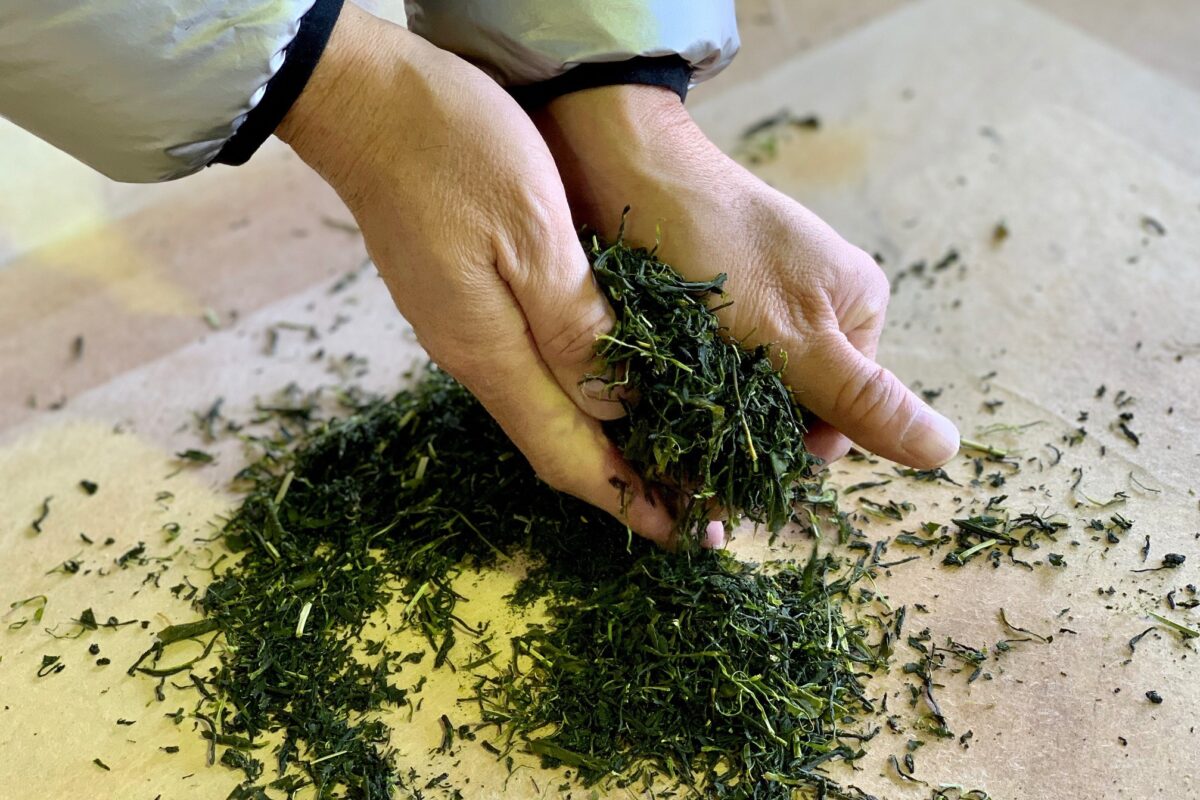
It is the best fit for people who seek authentic green tea through experiences such as visiting a green tea farm, harvesting tea leaves from spring to autumn, and sampling the best green tea produced there. We also hope that you can immerse yourself into a different culture, escape from the daily hustle and bustle, and learn from tea farmers about the luxury of living in harmony with nature.

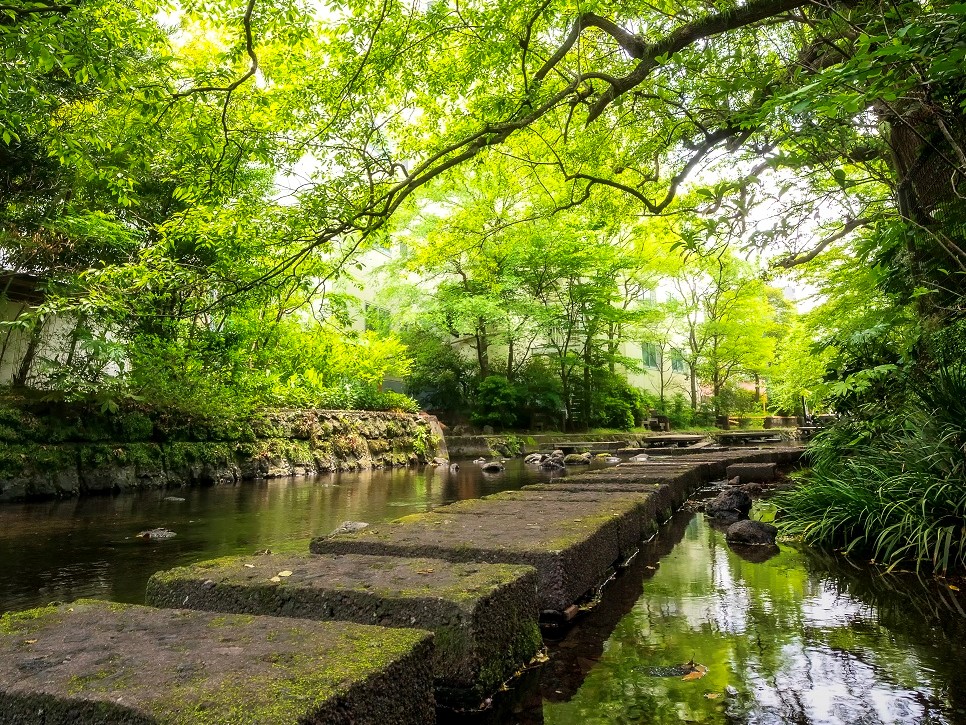
Shizuoka Tea with Kyoko-san – Nukumorien Yururi, Shizuoka city

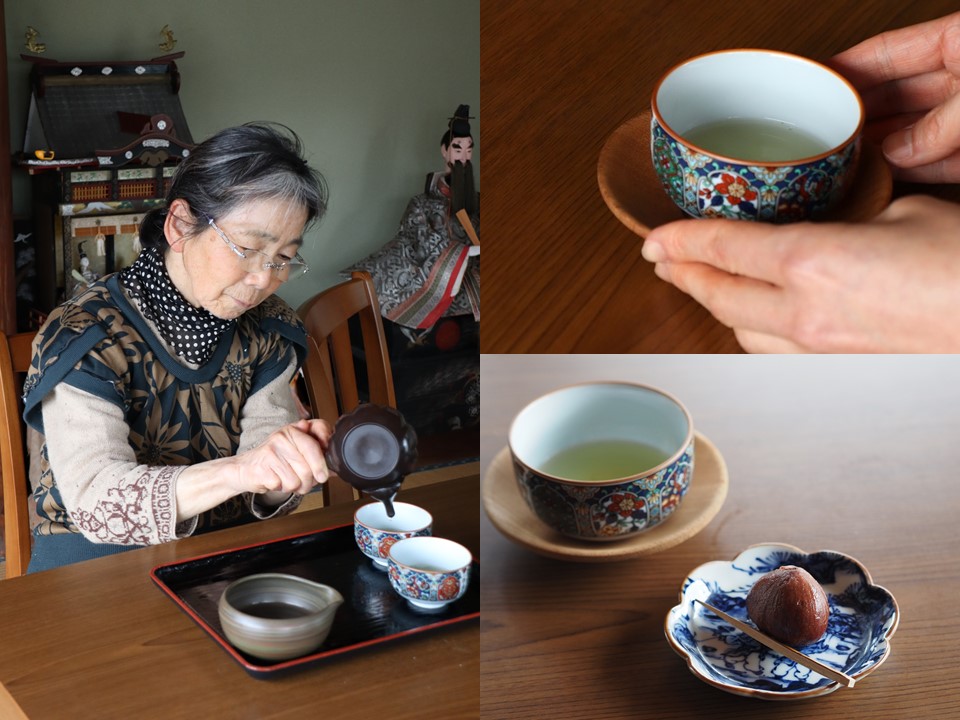
At her farm, green tea is raised in a relaxed way– just like how she is. Organic farming is one of our favorite features of Kyoko-san’s tea. She uses naturally sourced fertilizer such as fermented soy, which allows the tea to grow freely in an organic environment.

She says her tea leaves are uneven, which some people might not see as beautiful, yet she likes that they are raised in a natural and lively way. It’s just like how she respects an individual person’s own unique traits.

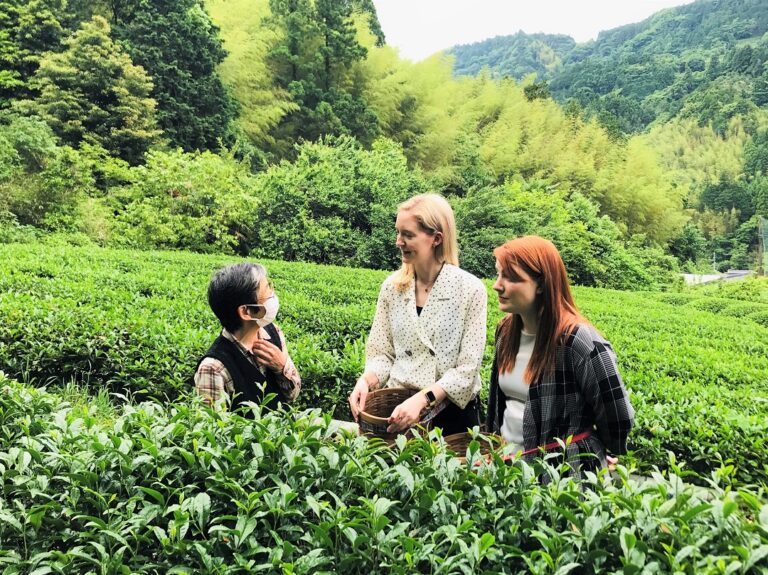
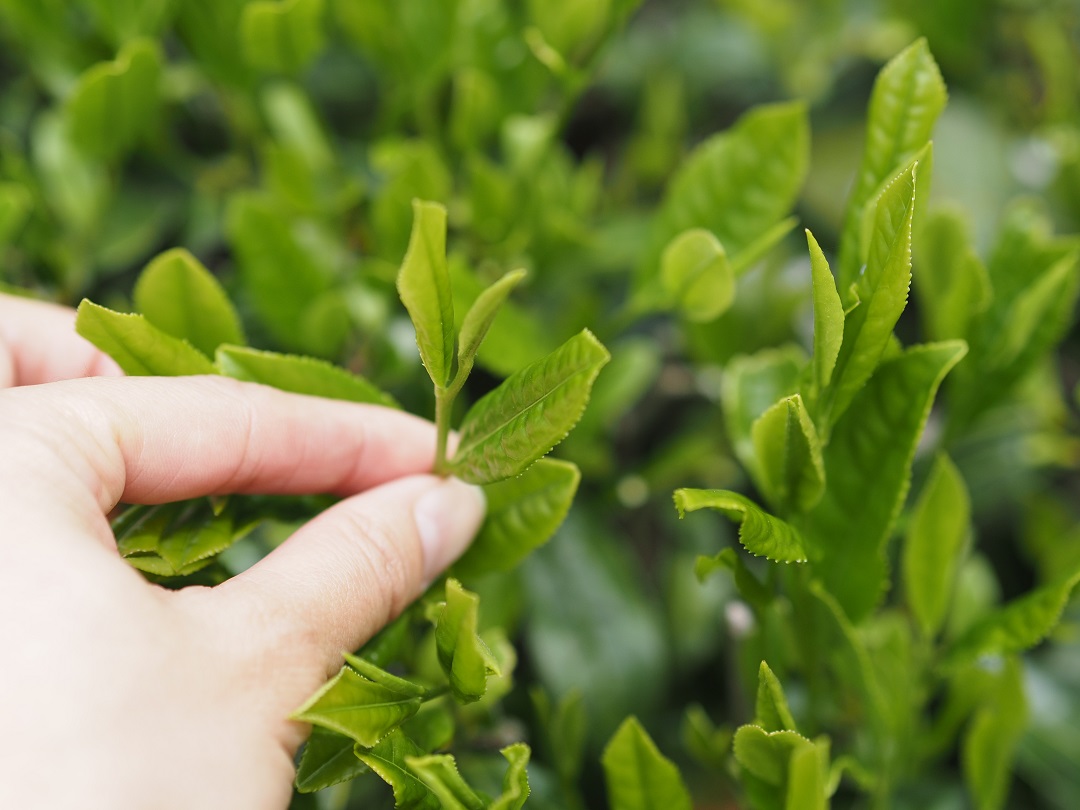
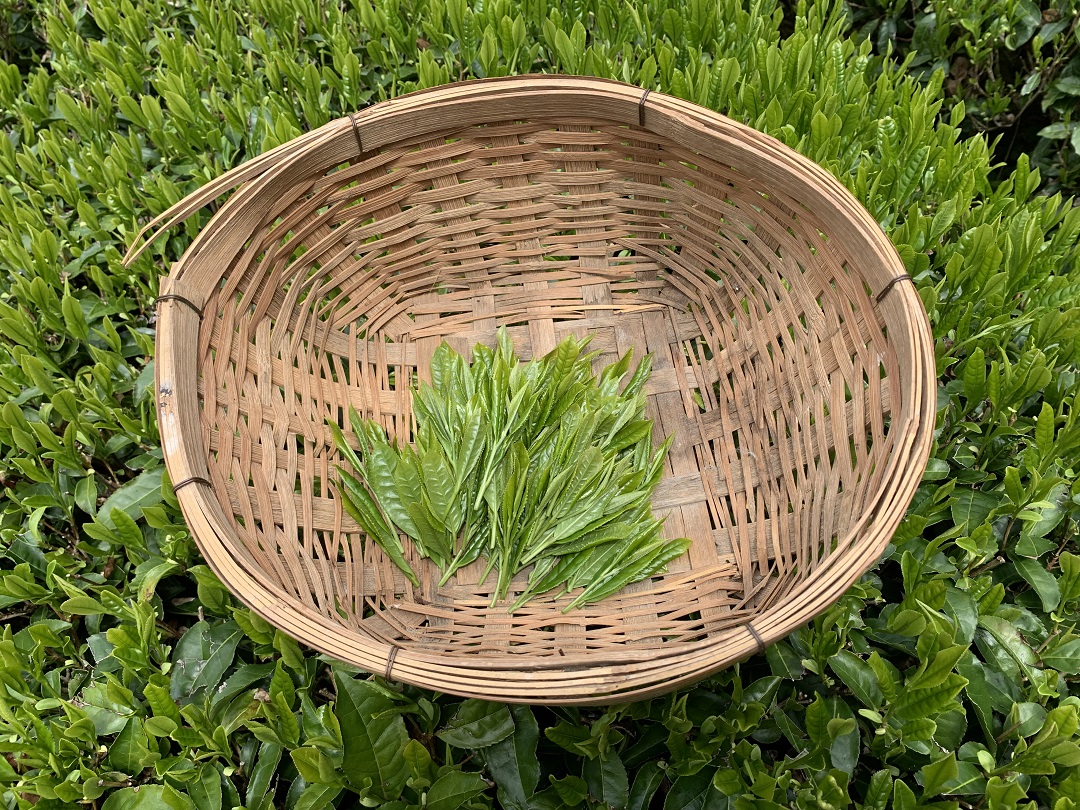
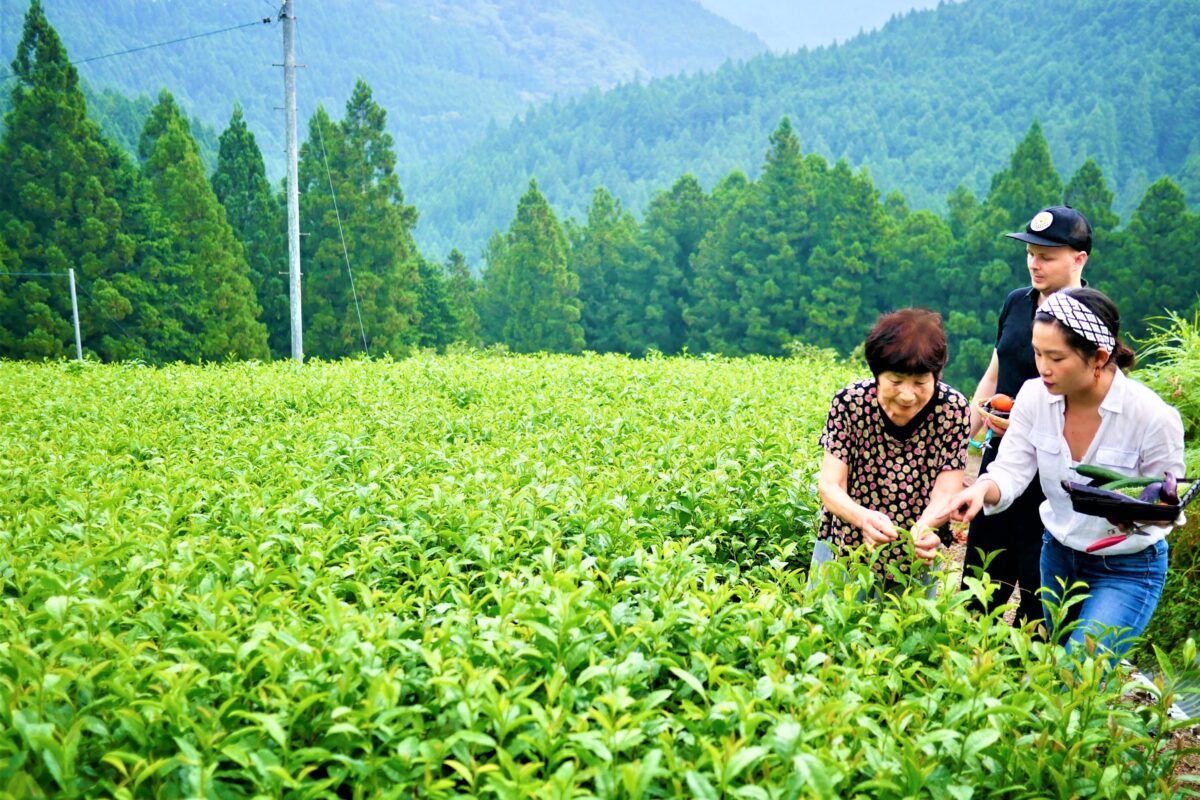
With Kyoko-san’s relaxing atmosphere, you’ll enjoy visiting green tea fields where a few varieties are grown. You can experience tea leaf picking* (you can taste them too) and drinking the green tea– often accompanied with little homemade sweets and a pleasant chat with Kyoko-san. Perhaps you can also take a nap on a tatami mat and feel the breath of nature.

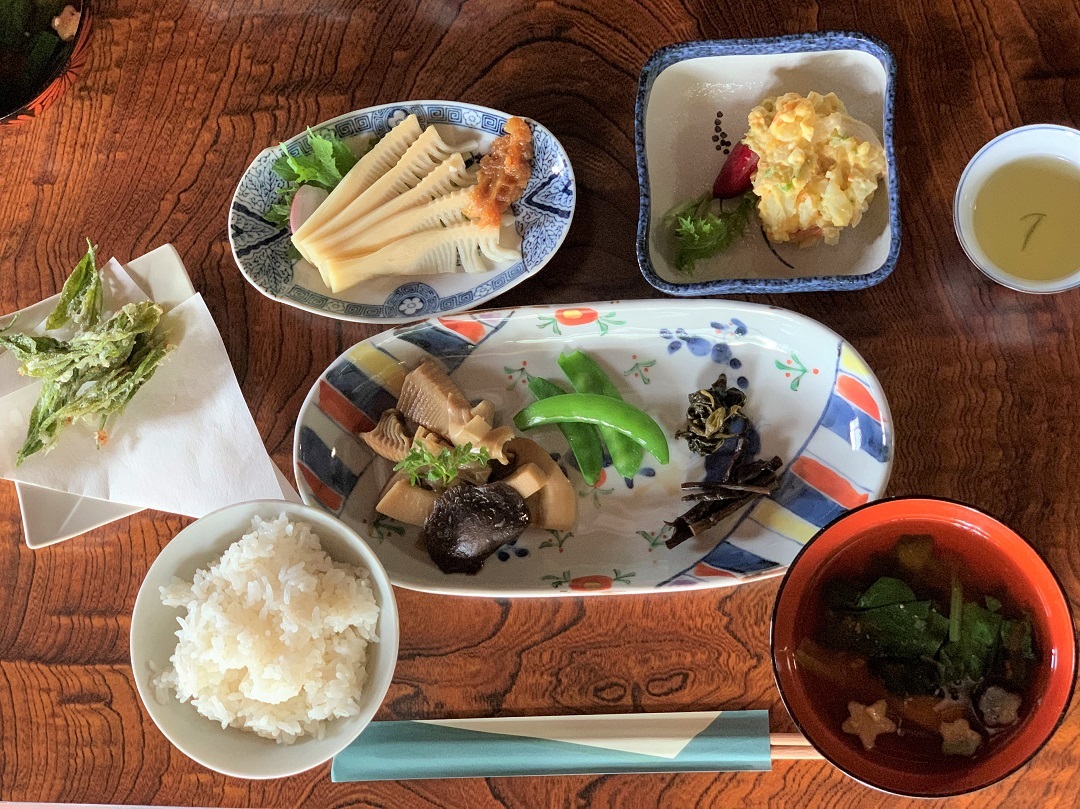
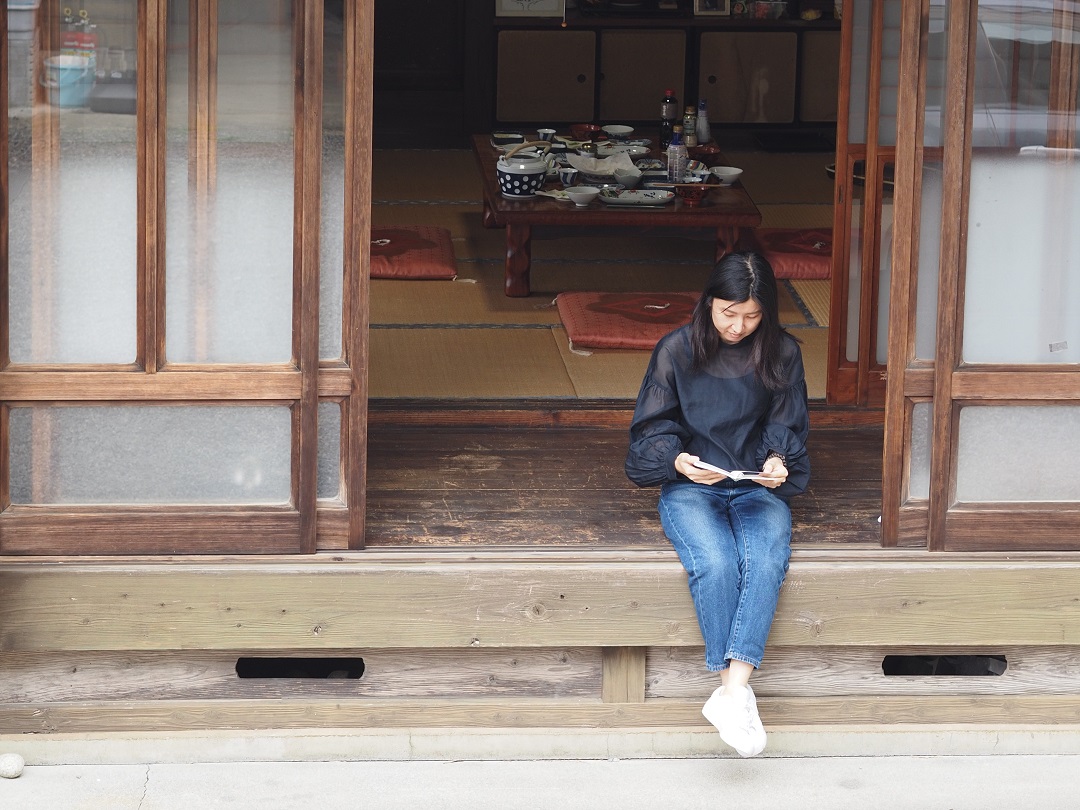
If you are interested in staying a little longer, you can have homemade lunch with seasonal vegetables from 1,000 yen, or perhaps relax and feel a soothing breeze on engawa, a Japanese-style veranda to appreciate the balance of living with nature.

*Green tea picking is available from May to October

Shizuoka Green Tea Experience with Shiratori-san – Okakae Chaen Kanebun, Shizuoka city

This is where you can motivate yourself and recharge your battery by learning from the philosophy of green tea production which has been passed to new generations for over a century.

The name of the tea farm is Okakae Chaen. ‘Okakae’ means ‘personal staff’ or ‘exclusively belonging to you’, while ‘chaen’ means ‘tea farm’. This perfectly explains what Shiratori-san strives for. When we asked what ‘okakae’ was, he answered proudly, but with a bit of shyness.

“Expensive green tea is not always valuable to everyone. Each customer has his/her own favorite tastes, and thus I hope to provide the green tea that meets his/her needs. This is what motivates me to grow, produce and sell my special green tea as well as why I keep asking myself whether I can be a good okakae to my customers. I do not choose who to sell to, rather I wish to provide good tea that everyone can enjoy.”

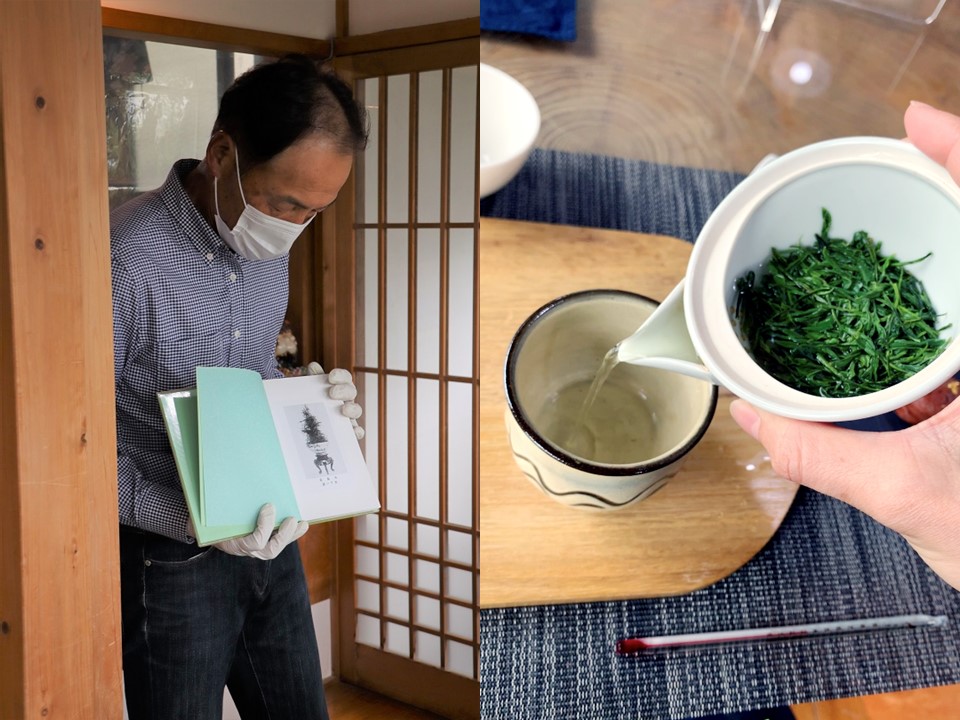
He gives guests a good welcome with his charming personality and quality green tea. Here, you will learn how to serve good tea, the difference of tea flavor depending on water temperature, and various ways to enjoy the tea.

You can see Mt. Fuji from his tea room, if weather permits. Moreover, if you are motivated to wake up early and climb the hill, you might have an opportunity to see the stunning view of a sea of clouds on green tea farms, with Mt.Fuji in the background.

How to book ‘Shizuoka Tea with…’

In addition to the two green tea farms and experiences above, there are 20+ green tea farms that provide ‘Shizuoka Tea with…’ experiences across Shizuoka. The operator will choose the farm which is the best fit and experience depending on your request.

Book a ‘Shizuoka Tea with…’ experience here.

Why don’t you visit a green tea farm and get first-hand experiences from local tea farmers with ‘Shizuoka Tea with…’?

Shizuoka Wasabi – The birthplace of Wasabi cultivation

0

Many sushi lovers will be shocked to learn that their beloved green paste may not be what it seems.

Exploring Shizuoka is a great way to learn the truth and understand more about this uniquely Japanese plant.

Discover the world’s best wasabi in the home of Mt. Fuji!

ONE OF THE MOST VALUABLE CROPS IN THE WORLD

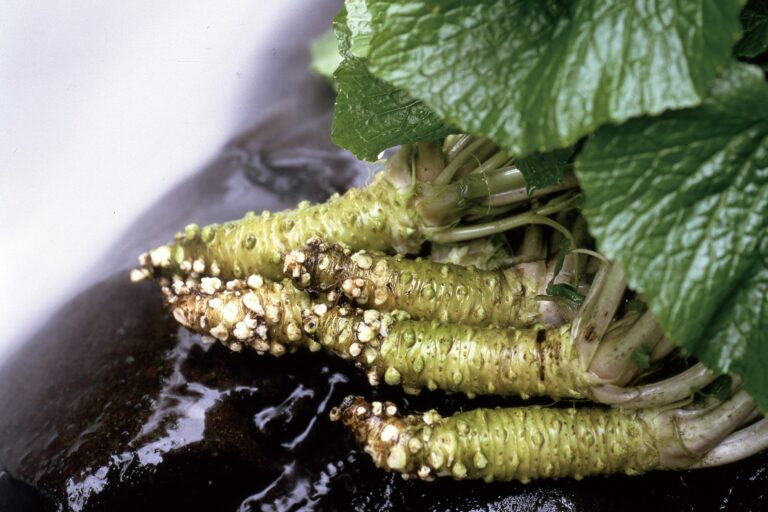
Although ‘Wasabi’ is now widely used around the world, surprisingly few people actually know much about this plant.

Wasabi adds a pleasant kick to Japanese cuisine.
Wasabi adds a pleasant kick to Japanese cuisine. Photo:Irifune Sushi

Wasabi has grown wild in Japan’s mountains for thousands of years with full-scale cultivation beginning nearly 500 years ago in Shizuoka.

In order to grow, the plant needs very specific conditions: North-facing, stable weather conditions with an abundance of cold and clean flowing water.

Even in the right environment, it can take up to as much as 3 years for a wasabi plant to grow large enough for harvesting.

Consequently, wasabi ends up in market as one of the most expensive vegetables in the world.

WASABI IN SHIZUOKA

Wasabi farmers in Japan grow two varieties of wasabi. The highest grade is Sawa (mountain stream) wasabi, which grows in shallow cold water and Hata (field) wasabi which grows in soil.

Shizuoka’s temperate climate, abundance of nature and infinite supply of fresh, clean flowing water are perfect conditions for growing wasabi.

In fact, Shizuoka has some of the largest “Sawa” wasabi farms and produces almost half of all wasabi grown in Japan.

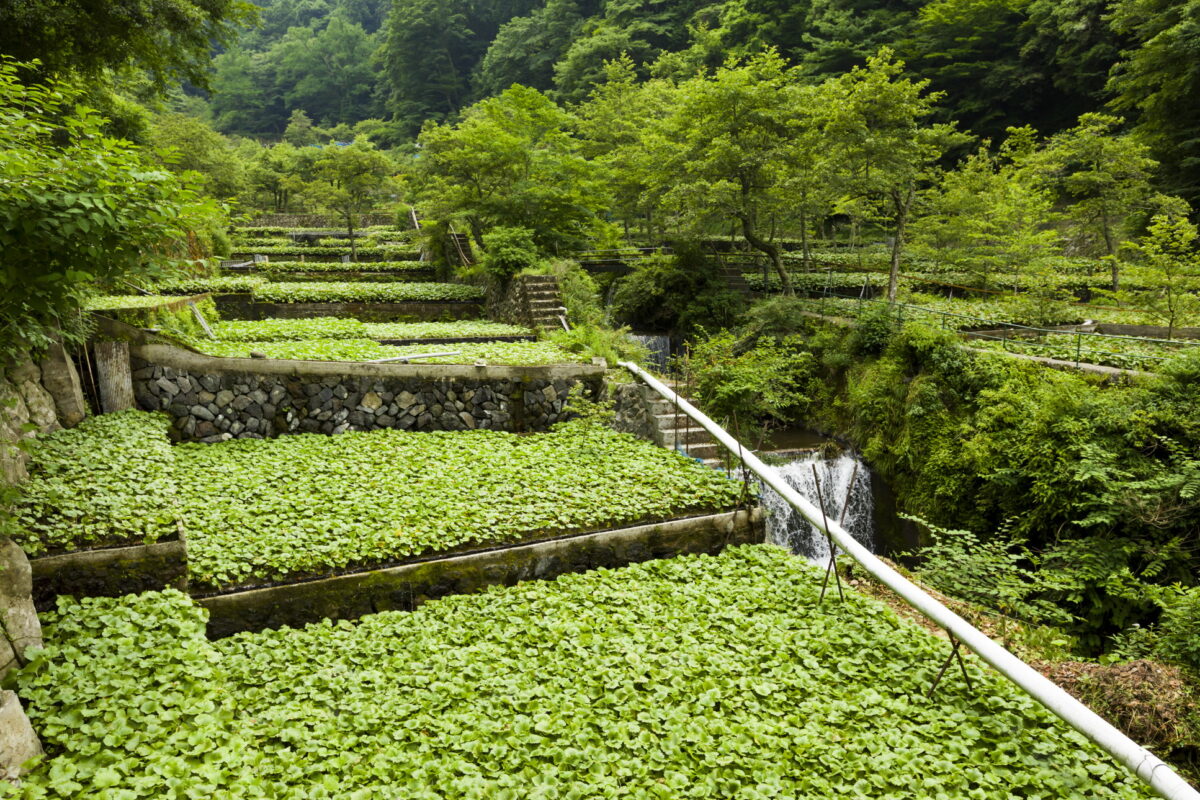
Terraced Wasabi fields in the Izu Peninsula.

The wasabi cultivation areas are mainly in the Izu Peninsula (South of Mishima Station) and Utogi (North of Shizuoka Station).

Both areas are accessible by car and offer a unique glimpse into just how labour-intensive the production can be.

THE TRUE TASTE

Did you know that what you put on your sushi might not be ‘real’ wasabi but a mixture of horseradish, mustard and food colouring?

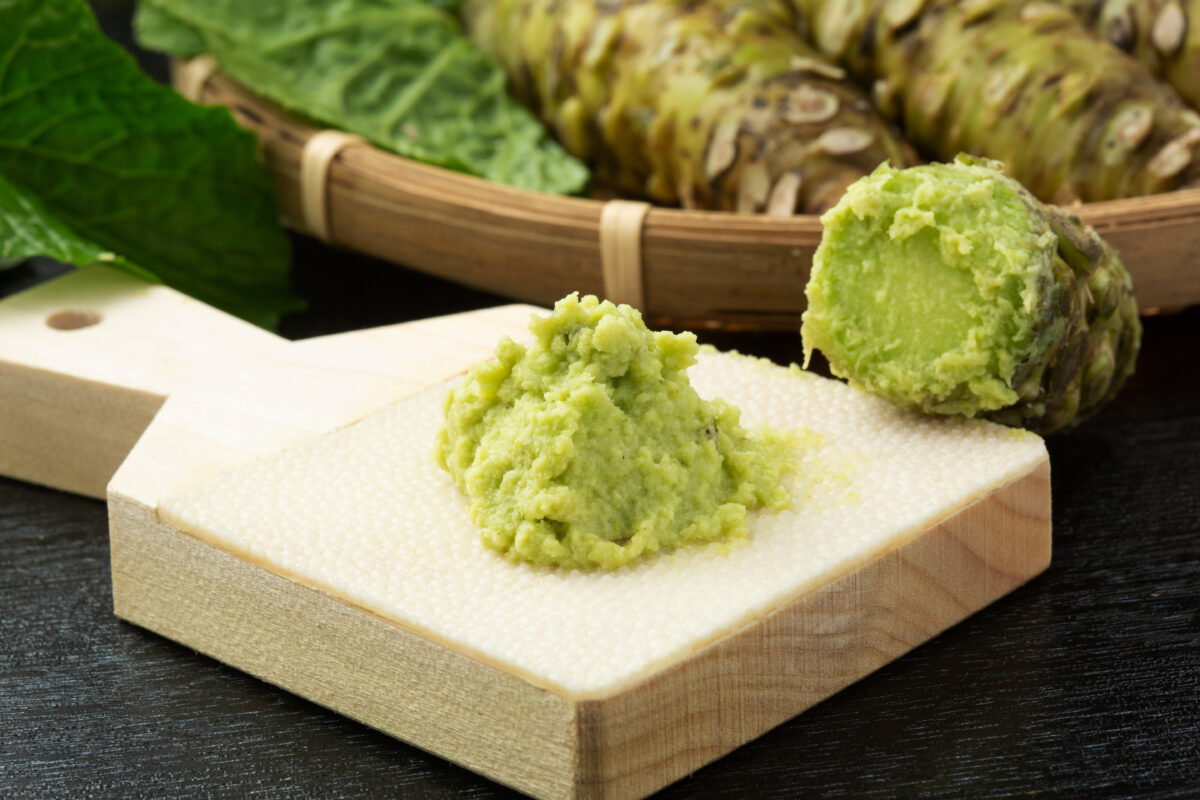
Eating freshly grated wasabi is an entirely different experience. Fresh wasabi does not hit you like you the normal stuff. Instead, it offers a complex taste with only a hint of spice.

Freshly grated wasabi is at its best 5 minutes after grating and will start to lose its true flavour after just 15 minutes.

Any trip to Japan is really not complete without trying real Shizuoka wasabi in some form or other. Even those who are not a fan of the nostril blasting hotness of tube wasabi might find their favorite way to enjoy the plant.

In Japan, people do not waste any part of the Wasabi plant. Root, stem and leaves all have their place in Japanese cuisine and each has a unique flavour.

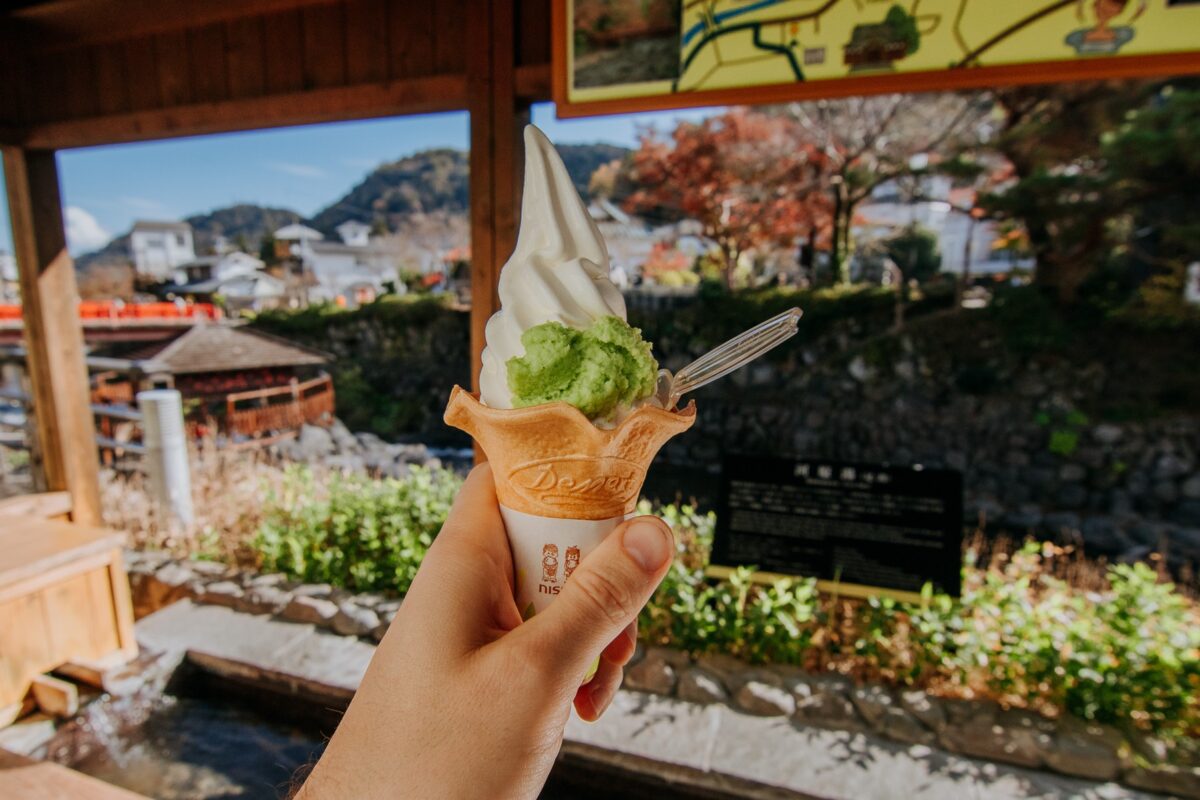
Freshly grated wasabi on ice cream.

Some great ways to experience real Shizuoka Wasabi include:

  • Spend a couple of days in Shuzenji and try the fresh wasabi ice cream.
  • Visit the wasabi fields in Utogi, where it is believed wasabi was first cultivated and try wasabi leaf tempura.
  • Visit wasabi fields learn about wasabi farming.

Shizuoka Adventure – Off the beaten path Fuji

0

Whether it is a new physical challenge you are seeking or pursuing your chosen outdoor passion, there are many adventures awaiting you in Shizuoka.

FIND ADVENTURE IN SHIZUOKA

Adventure Travel allows us to experience a new place on a deeper level than rushing through the tourist sights.


Instead of passive ‘sightseeing’, Adventure Travel provides us with an opportunity to step outside the usual tourist path to engage with the locals and reconnect with nature through exciting activities.

Not only is Adventure Travel good for you, but it is also good for the local communities you visit.

Employing local guides and operators helps sustain the small communities economically, and human powered activities like cycling and hiking have less impact on the environment.

Through adventure – both fast and slow, the memories you will take home will be the people you will meet and the culture you learn about as you travel through Shizuoka.

Shizuoka is blessed with the three key elements that underpin Adventure Travel

NATURE

Shitaito Falls in Fujinomiya

Shizuoka is abundant in nature and has two National Parks, with towering mountains, including the iconic Mt Fuji, deep oceans, long stretches of coastline and fast-flowing rivers.

ACTIVITIES

Exciting activities and reputable guide companies that offer quality experiences.

Many guides have lived and trained overseas and can guide tours in English, as well as other languages.

CULTURE

Farm to Table experience with welcoming farmers.

Welcoming locals and fascinating culture. Stopping to pick tea with a farmer while cycling through vast tea plantations, or grating fresh wasabi while hiking old pilgrimage trails in Izu are some of the unique cultural backdrops to be found in Shizuoka.

While adventures are often fast-paced pursuits, soft and gentle adventures that heal and relax you are just as important as the heart racing ones.

Let’s take a look at what Shizuoka has to offer the Adventure Traveller

RIVERS

The Fuji river at the base of Mt. Fuji is one of the top 3 fastest rivers in Japan.

The team at Natural Action offers rafting tours on the Fuji river. It is the perfect way to make use of the fast-flowing meltwater coming off Mt. Fuji in late Spring.

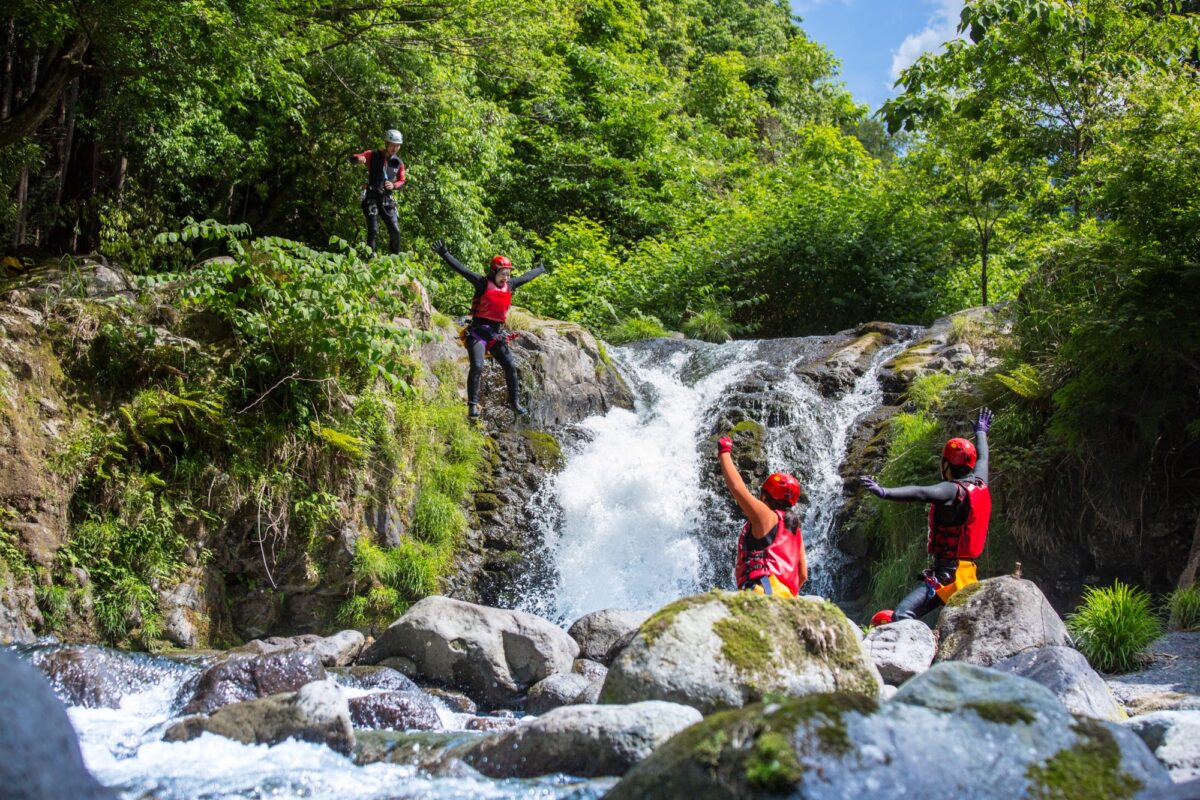
Canyoning in crystal clear water from the Amagi mountain range.

Canyoning through the incredible geopark lava formations, jumping off waterfalls, and cooling off in the lush canyons of Izu with Adventure Support is a great summer refreshing adventure.

OCEAN

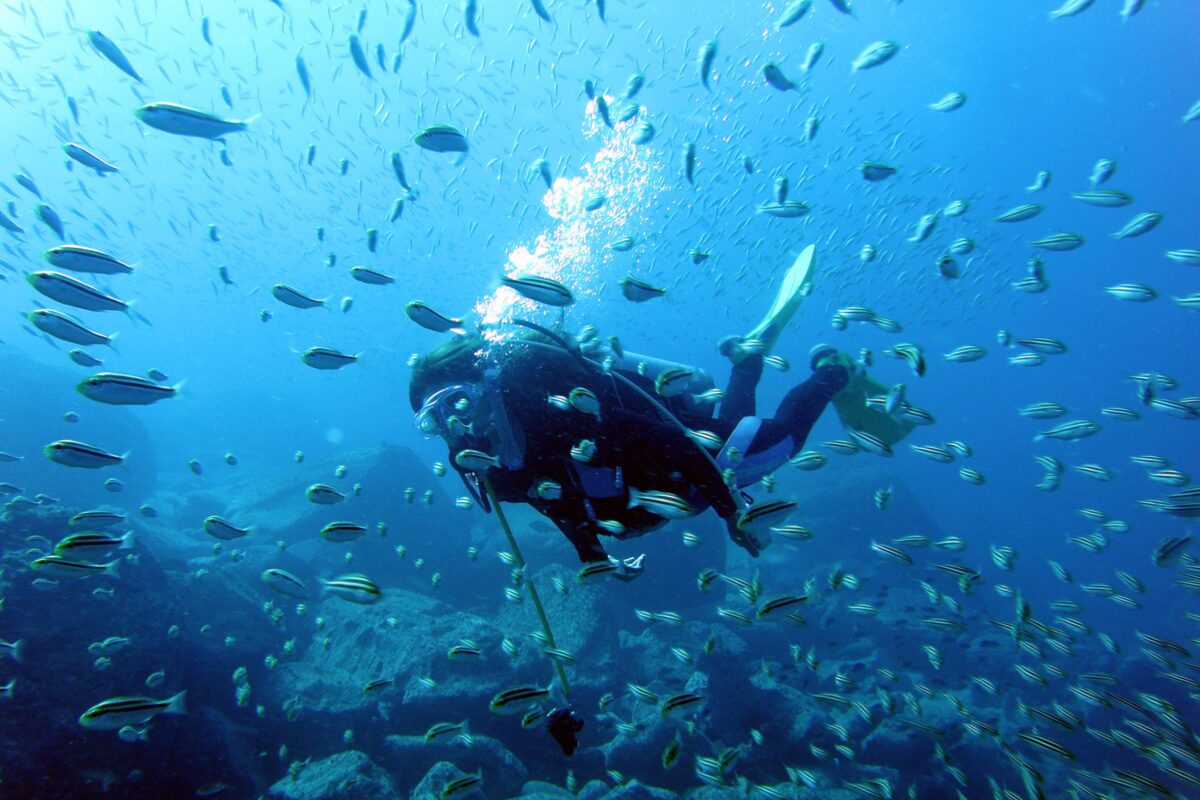
The Izu peninsula takes center stage when it comes to marine activities in Shizuoka.

Diving here is world-class with the ‘Kuroshio’ warm currents from the south bringing in tropical species of fish and coral. Combined with incredible undersea rock formations, it is a paradise for diving and snorkeling.

Shizuoka’s long coastline means lots of marine activities.

There are many great surf spots too.

Real Surf Shop can arrange rental boards, local advice, and lessons if it is your first time surfing.

Further along the Shizuoka coastline is Omaezaki, a headland that juts out into the ocean providing some world-class breaks.

There are several sea kayaking guides along the coast of Izu from Shimoda to Matsuzaki. Each operator introduces their own unique stretch of coastline where you can paddle into spectacular sea caves and get up close to areas of the coastline only accessible by kayak.

Seamon, based in Shimoda, provides information and other services in English and can assist you in booking marine activities.

MOUNTAINS

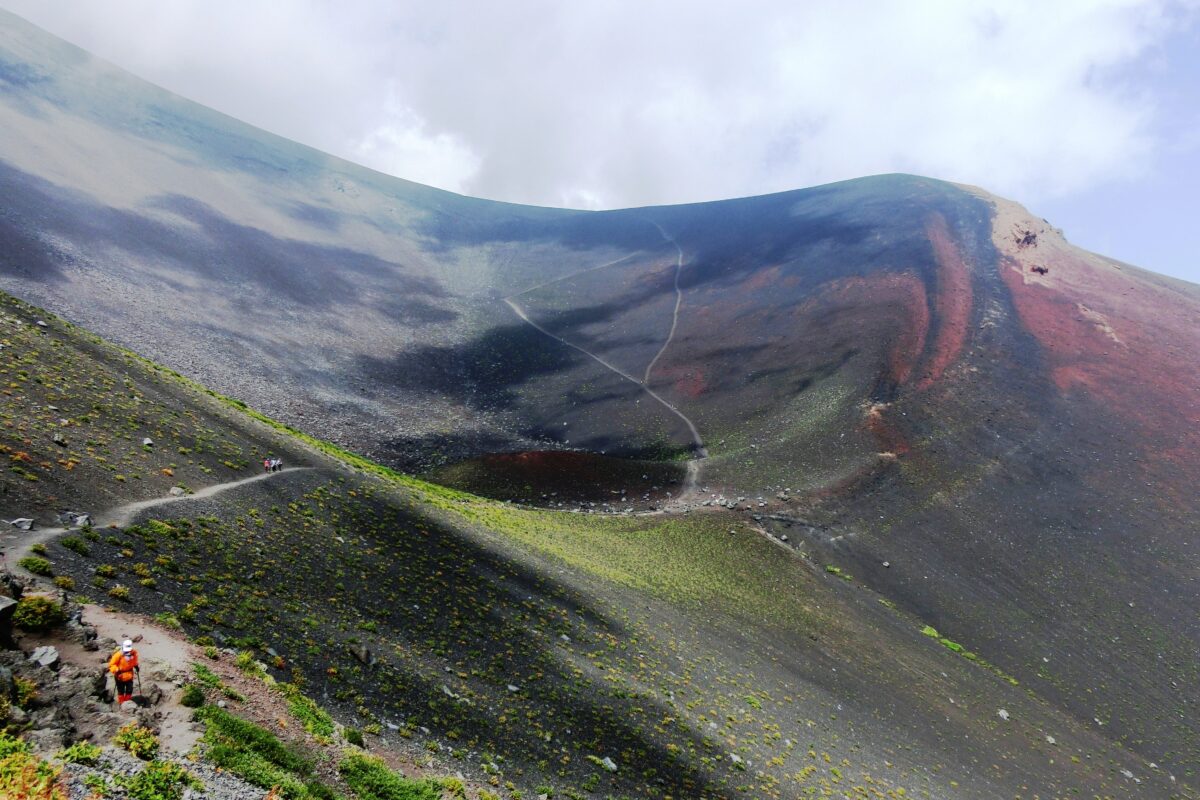
Take a trekking tour on Mt. Fuji with an exprienced guide.

While Mt. Fuji attracts many who reach for its summit in the Summer months, be sure to explore some of the primeval forest walks and lesser-known pilgrimage routes around the base of the mountain. Hoei Crater guided hike is one on them.

Shizuoka is home to two National parks that offer a wide array of walks and hikes.

Another excellent guided walk is the Hakone Hachiri that gives you a glimpse into Japan’s feudal era along sections of the ancient Tokaido.

Shizuoka is the southernmost gateway to Japan’s Southern Alps National Park.

Choose from simple day hikes to waterfalls to multiday trekking where you can overnight in mountain huts to scale the many 3,000m plus peaks for serious mountain adventures.

There are also easy day walks around the upper Oi River, which is especially spectacular in Autumn. You will find idyllic onsens (hot springs) dotted around the valleys when exploring Shizuoka’s interior.

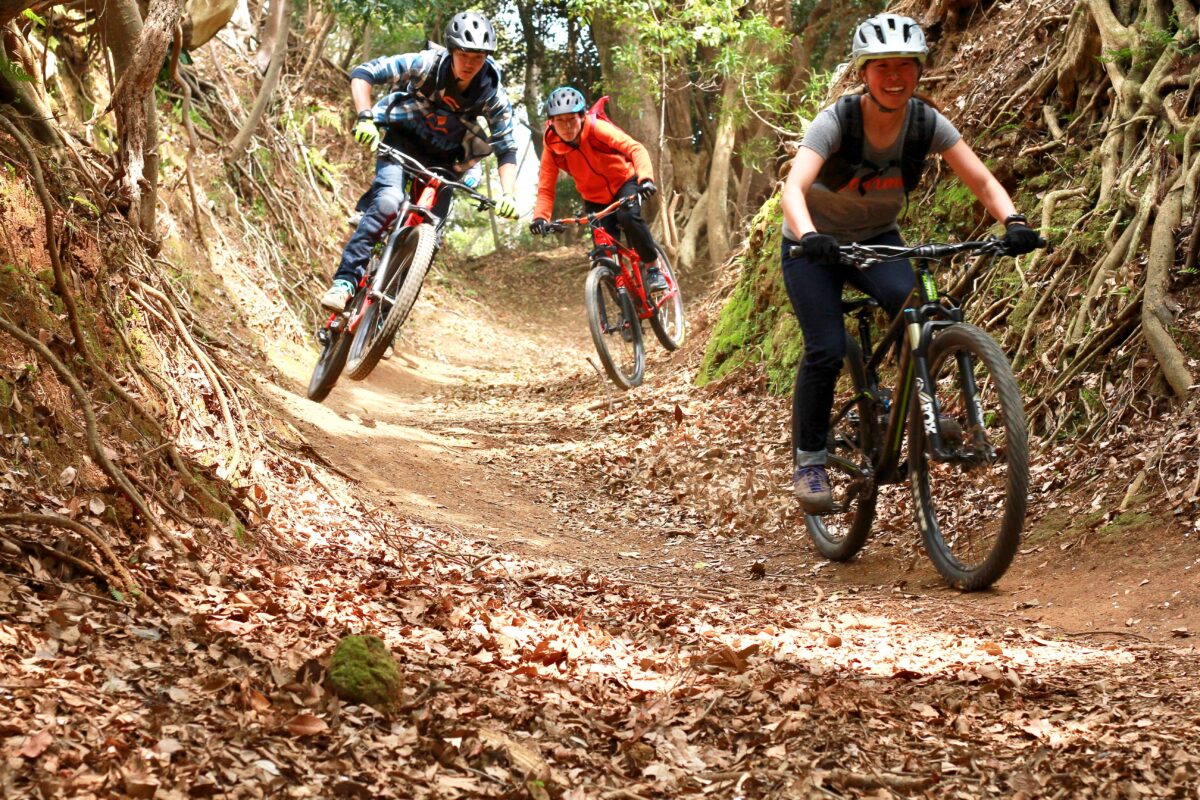
If mountain biking is your thing, check out Yamabushi Trail Tour with their interpretive rides in West Izu. Their tours are designed for not just to enjoy an adventure but also learn about the areas fascinating history and culture.

Yamabushi Trail Tour offers guided mountain biking tours on the Izu peninsula.

The course follows a half-pipe-like trail which was carved out by pulling sleds of charcoal down the mountains by horse at the turn of the 20th century.

Today it has been repurposed to create fun flowy singletrack.

Mountainous terrain can be taxing on the legs, but with e-bikes, you can conquer any hill with ease.

Enya Mt. Fuji Eco Tours, a company based at the foot of Mt. Fuji, offers a variety of guided and interpretive cycle tours. The passionate operator strongly focuses on sustainable eco tourism and community based tourism initiatives.

Road cyclists will delight in the challenging hill climbs, quiet backroads, and fast descents.

See Cycling for an overview of road cycling throughout Shizuoka.

Find more activities in Shizuoka HERE.

Numazu – a port city between Mt. Fuji and Suruga Bay

0

The port city of Numazu in Shizuoka is situated between Mt. Fuji, Suruga Bay and Izu Peninsula and offers visitors a chance to experience both city life and coastal living.

COASTAL TOWN AT THE FOOT OF MT. FUJI

NUMAZU PORT, IMPERIAL VILLA, VIEWS OF MT. FUJI, HEDA BEACH & LOVE LIVE SUNSHINE

BETWEEN THE MOUNTAIN AND THE BAY

Awashima

Flanked on one side by the Majestic Mt. Fuji and Japan’s deepest Bay (Suruga Bay) on the other is the city of Numazu.

Numazu City itself is like many other cities in Japan where the secrets are not apparent at first glance and it is only when you dig a little deeper, you are rewarded with a treasure trove of unexpected experiences.

In Numazu it is possible to experience everyday Japanese city life living at the foot of Mt. Fuji.

Numazu Alps hiking

But it is also easy to escape the urban environment and find beautiful oceanside hot springs towns and enjoy sailing, SUP or kayaking or hiking and mountain biking.

NUMAZU CITY LIFE

Numazu Fish Market

For most visitors to Numazu City the main attractions are around the Numazu Port area – especially for seafood lovers.

About 10 minutes by taxi from Numazu Station there are a wide variety of stores and restaurants that sell seafood fresh off the boats coming in from Suruga Bay.

In the evenings, and on weekends especially, this area is bustling with locals enjoying the variety of food and drinks that are available creating a fun atmosphere.

One stalwart of the Numazu Fish Market is Baird Beer’s original Tap Room.

Nearby the port are the Senbonhama (Senbon Pine and Beach) which is a nice place to stroll along and enjoy views of Mt. Fuji and Suruga Bay.

Numazu Imperial Villa Memorial Park

A little South of the Port is the Numazu Imperial Villa Memorial Park which was constructed by Emperor Meiji in 1893 and was a favourite holiday destination for Emperor Taisho when he was a child.

The residence is now managed by Numazu City and is open to the public – Read More.

FURTHER AFIELD

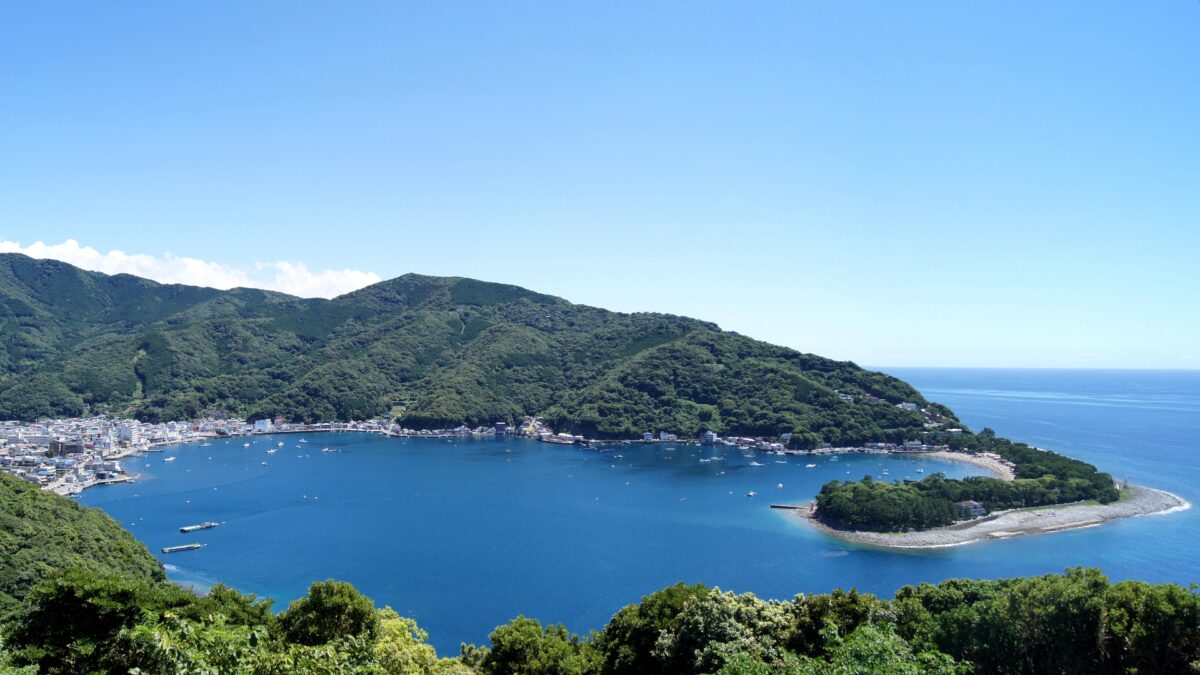
Heda Mihama cape

Numazu City stretches over a large area that includes a large chunk of Mt. Fuji, Numazu City itself and a long stretch of coastline down the West Coast of Izu down to the picturesque port town of Heda.

There is close to 40kms of coastline South of Numazu Port with coastal towns scattered along the way that boast quiet beaches with stunning views of Mt. Fuji, fishing villages and coastal hot spring towns.

If you enjoy getting off the beaten track and want to explore then this coastline is a great place to put on your Shizuoka itinerary.

LOVELIVE SUNSHINE

No introduction to Numazu would be complete without mentioning Lovelive Sunshine and its impact on Numazu.

Lovelive Sunshine is a Japanese animation that is set in and around Numazu and you can not go anywhere in the city without seeing the characters on street signs, buses and even manhole covers.

For serious fans of the series a pilgrimage around Numazu is number one on the Japan to-do list – for more information – Read more.

Mt. Fuji Countryside – Life at the foothills of Mt. Fuji

0

Perhaps one of the most underrated places to visit in Japan. Escape the crowds and experience life at the foothills of Mt. Fuji in the Mt. Fuji Countryside.

LIFE AT THE FOOT OF MT FUJI

If Mt. Fuji is high on your to-do list when you come to Japan, as it is for many visitors, more than likely you will jump on a tour bus and head to Hakone, Fuji 5 Lakes or Gotemba.

All of these places are great and are worthwhile visiting, which is why so many people go every year.

However, if you want to get off the beaten track and you are looking for some one-on-one time with Mt. Fuji, then it is worth considering the Asagiri area and neighbouring villages.

Just 20 minutes North of the city of Fujinomiya is the Mt. Fuji Countryside made up of the Asagiri Plains and idyllic villages.

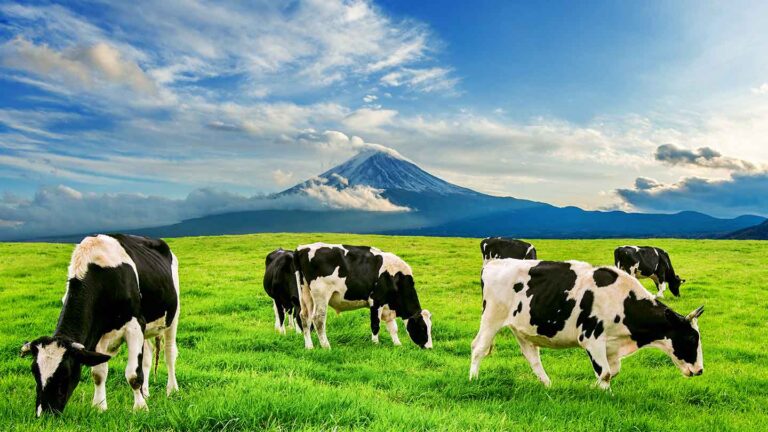
Blessed with an abundance of water provided by Mt. Fuji and sheltered from most of the harshest winter winds, this area is exceptional for rice, vegetable growing and pasture land for grazing sheep and cattle.

THE ASAGIRI PLAINS

As the name suggests, the Asagiri Plains is a large, predominantly flat expanse of land situated between Mt. Fuji and the Tenshi mountain range.

With the elevation around 800 – 900m above sea level, the Asagiri Plains are a popular destination in the hot summer season.

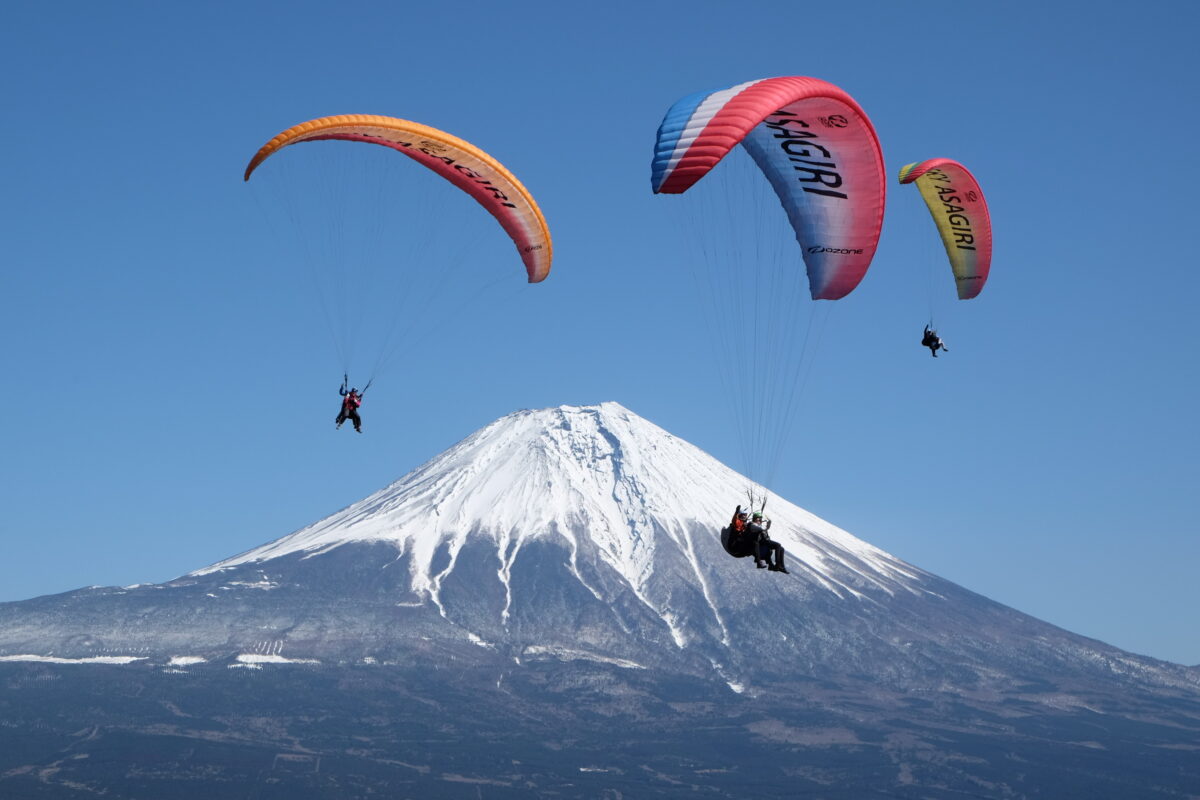
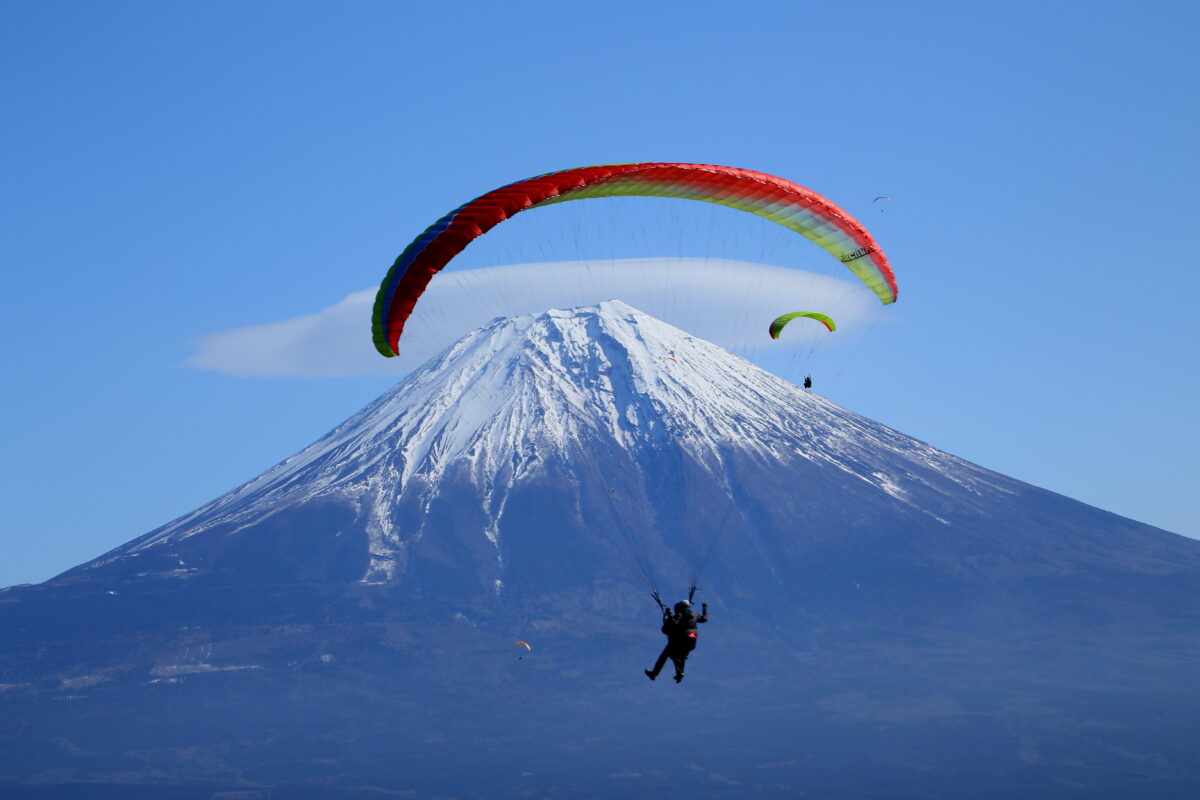
For a small area, there are a remarkable amount of things to do and see – by far the most popular and spectacular of them is Paragliding in front of Mt Fuji.

Paragliding in front of Mt Fuji
Fly high in front of Mt. Fuji

Other great attractions that are great for the kids include the Fuji Milk Land, Asagiri Food Park and  Fuji Kachoen Garden Park.

The area also has many hiking trails, some great cycling options and other outdoor activities for people looking to get active.

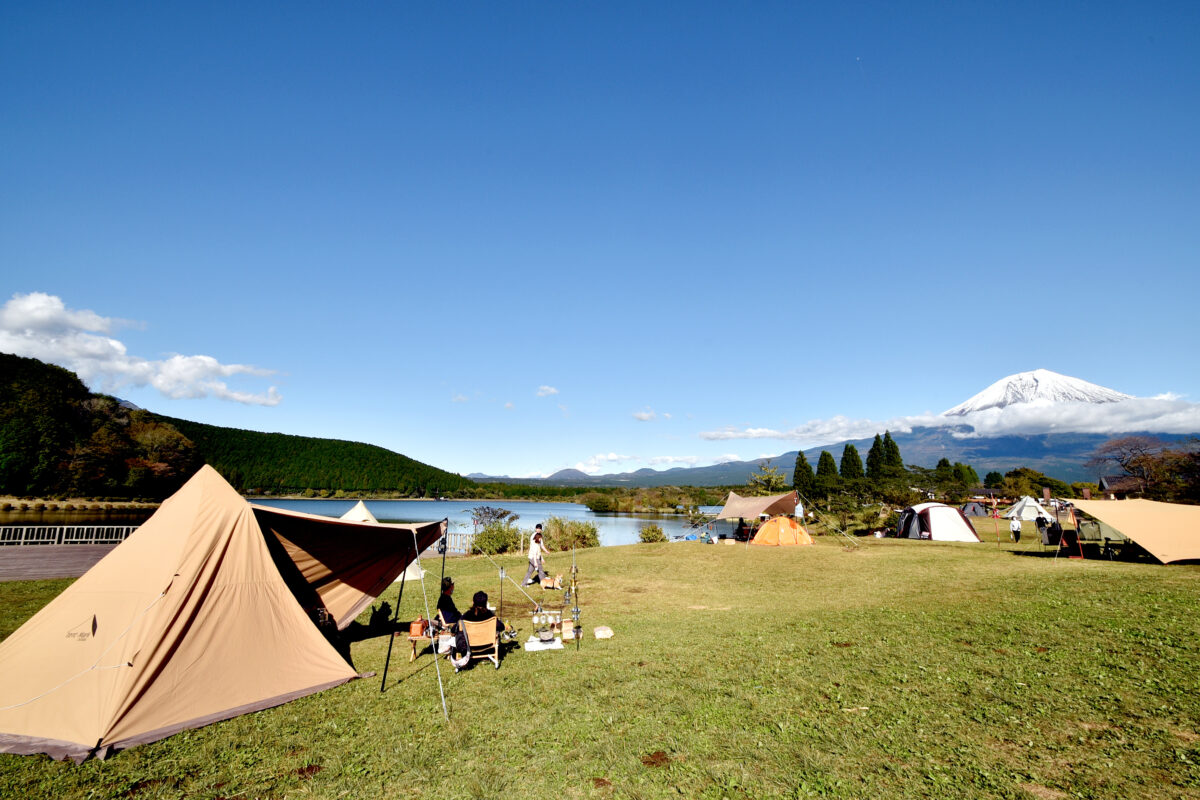
If you are looking for an iconic Mt. Fuji photo, head to Lake Tanuki. 

With a magnificent view of Mt. Fuji directly to the east, the lake shore offers beautiful seasonal scenery – cherry blossoms and azaleas in the spring and coloured leaves in the fall.

Camping ground by Lake Tanuki

There is a popular camping ground by the lake. Get up early and you will be able to get a picture of the sun rising over Mt. Fuji!

Kyukamura Fuji and Hitsuki Resort are also great accommodation options to catch this awe-inspiring view of the mountain.

VILLAGES LIVING IN HARMONY WITH NATURE

Just South of the Asagiri Plains is an area made up of small villages which are home to Shiraito Falls, Otodome Falls, Samurai remnants and community-based eco tours. Snowmelt water from Mt. Fuji has blessed local communities with abundant gifts. People here have been living in harmony with nature for generations.

Slightly more built up than the Asagiri Plains, the villages on the surface seem fairly non-descript Japanese countryside. Except at these Japanese countryside towns, the horizon is dominated by Mt. Fuji.

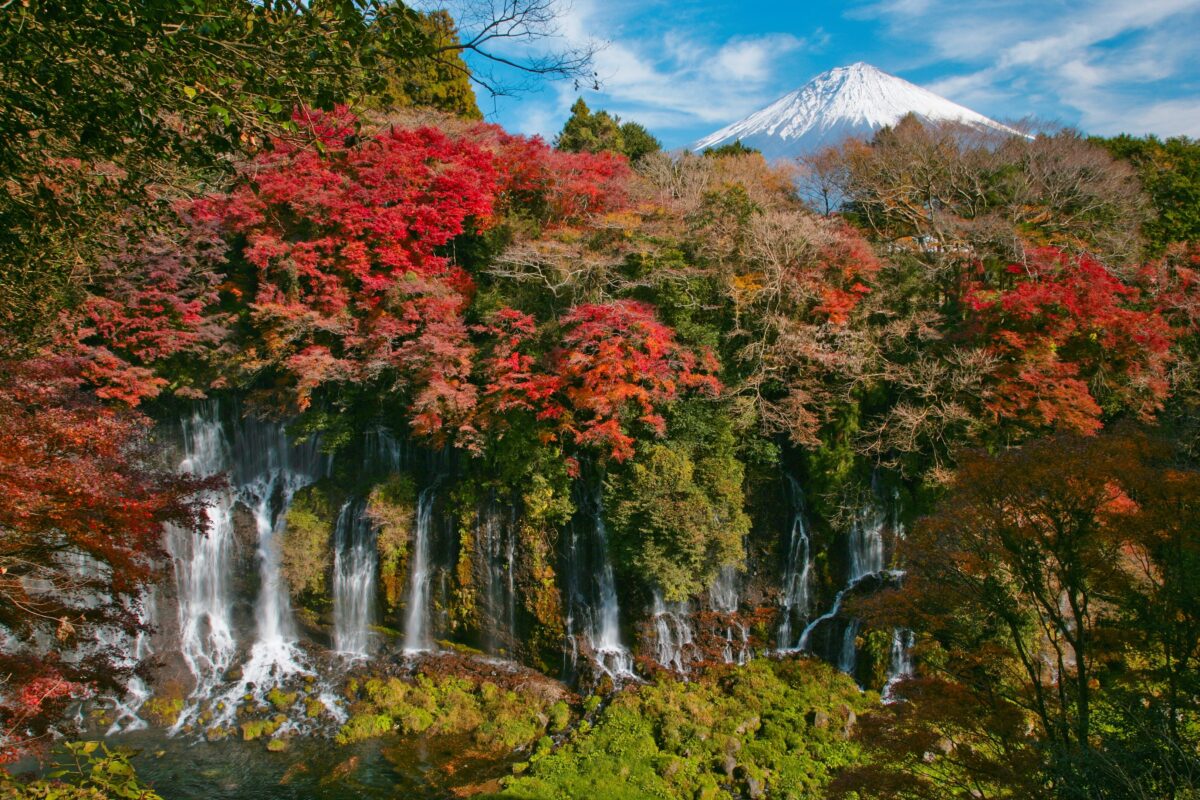
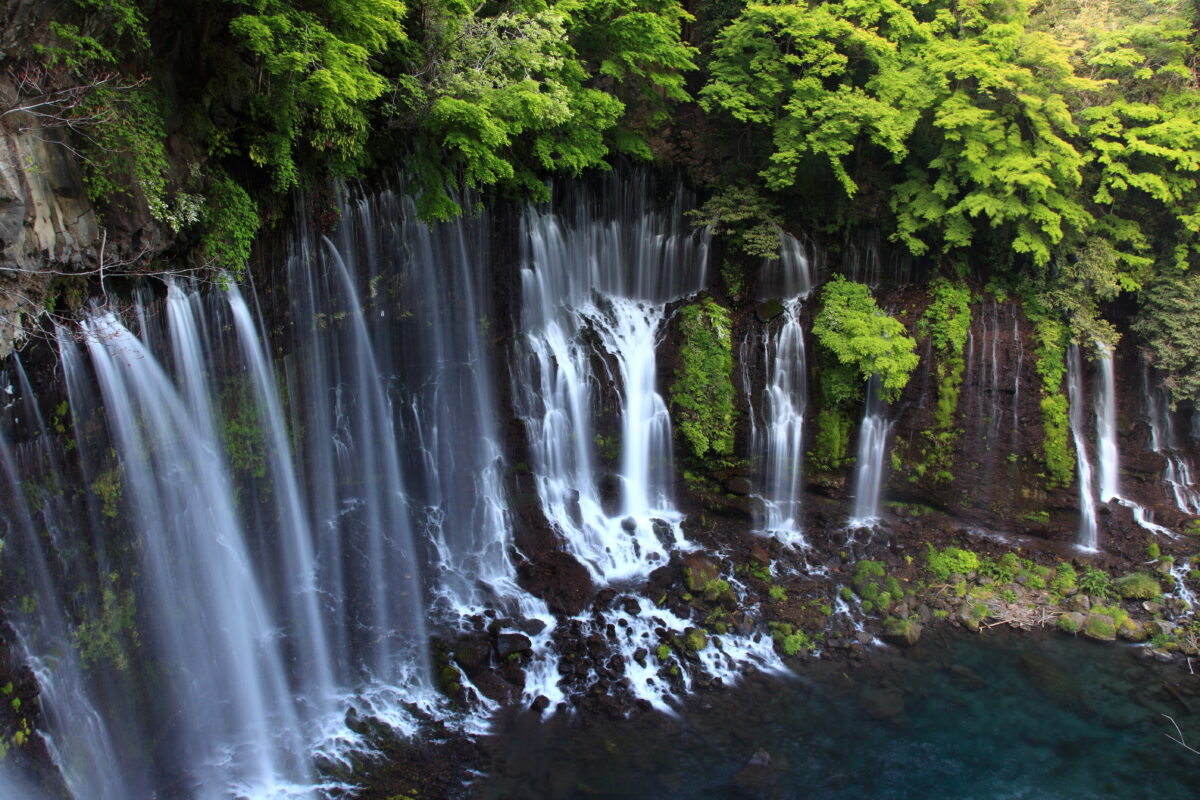
The undeniable star of this area are its waterfalls. Shiraito and Otodome Falls attract visitors from all over Japan and the world.

Shiraito Falls – Snowmelt water from Mt. Fuji gushes out like thousands of white threads (Shiraito)

The water that flows over the Shiraito Falls is said to be predominantly snowmelt from Mt. Fuji. The water has traveled underground through a lava tunnel filtering system for as much as 50 years.

The powerful 25-meter-high Otodome Falls nearby is also worthy of a visit.

SAMURAI TRAINING GROUNDS

During Samurai times, the Asagiri Plains and neighboring areas were used as a training location for soldiers preparing for battle.

The area was flat and provided the army with both excellent ground for horses and infantry with the added advantage that no enemy would be able to launch a sneak attack without being seen.

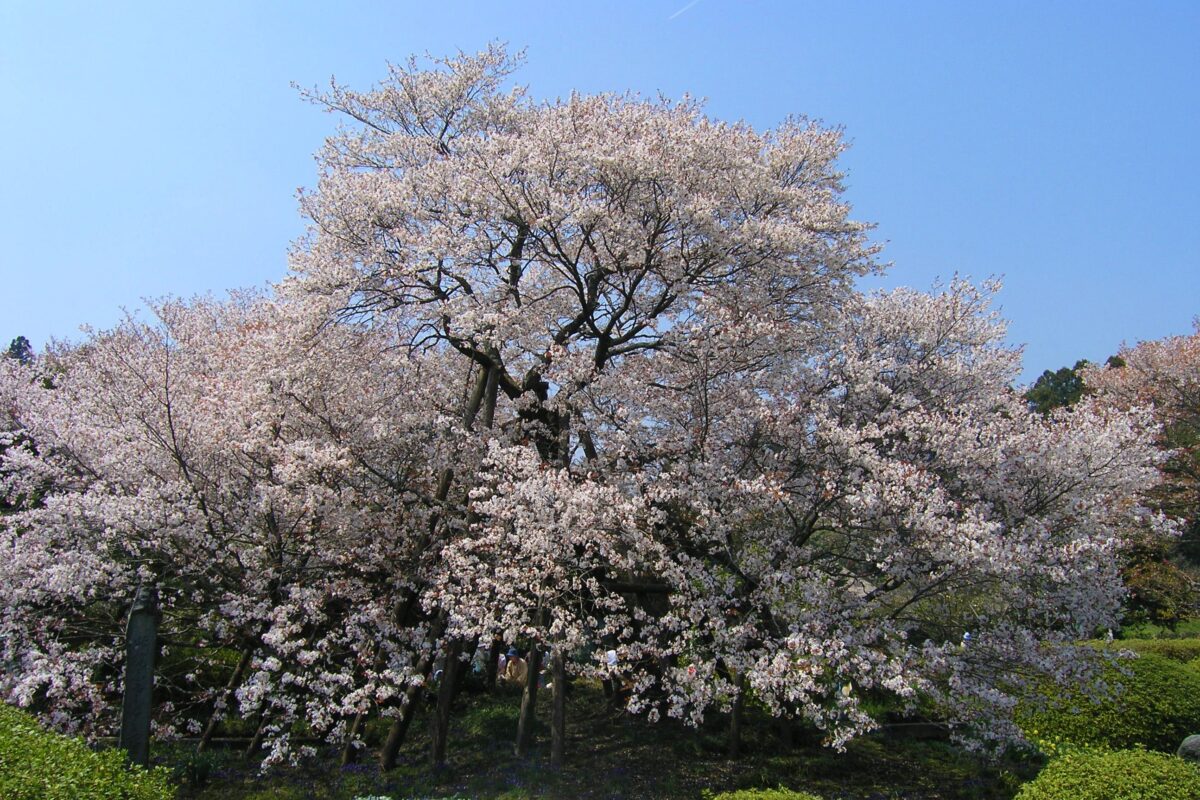
Kariyado no Geba Zakura, the 800 year old cherry cherry tree in front of the Ide family residence

The Ide Family Residence is a remnant of this time. The stable and grounds are open to the public and offer a glimpse of what life may have been like 200 years ago.

ECO TOURS & CAMP GROUND

A great way to experience the waterfalls and everything that this coundtryside offers is to hop on an eco tour with En-Ya Mt. Fuji Eco Tours.

They operate a popular Satoyama cycling tour out of their base situated close to Shiraito Falls. The tour offers visitors a chance to experience life living at the foothills of Mt. Fuji.

The tour begins at Shiraito Falls, and then follow the water as it winds it way through the local village.

During the tour, you stop to enjoy local lunch, visit historical remains. Additionally, you will either stop to tour the local sake brewery or freshen up in a local river (depending on the season) to connect with Mt. Fuji filtered fresh water.

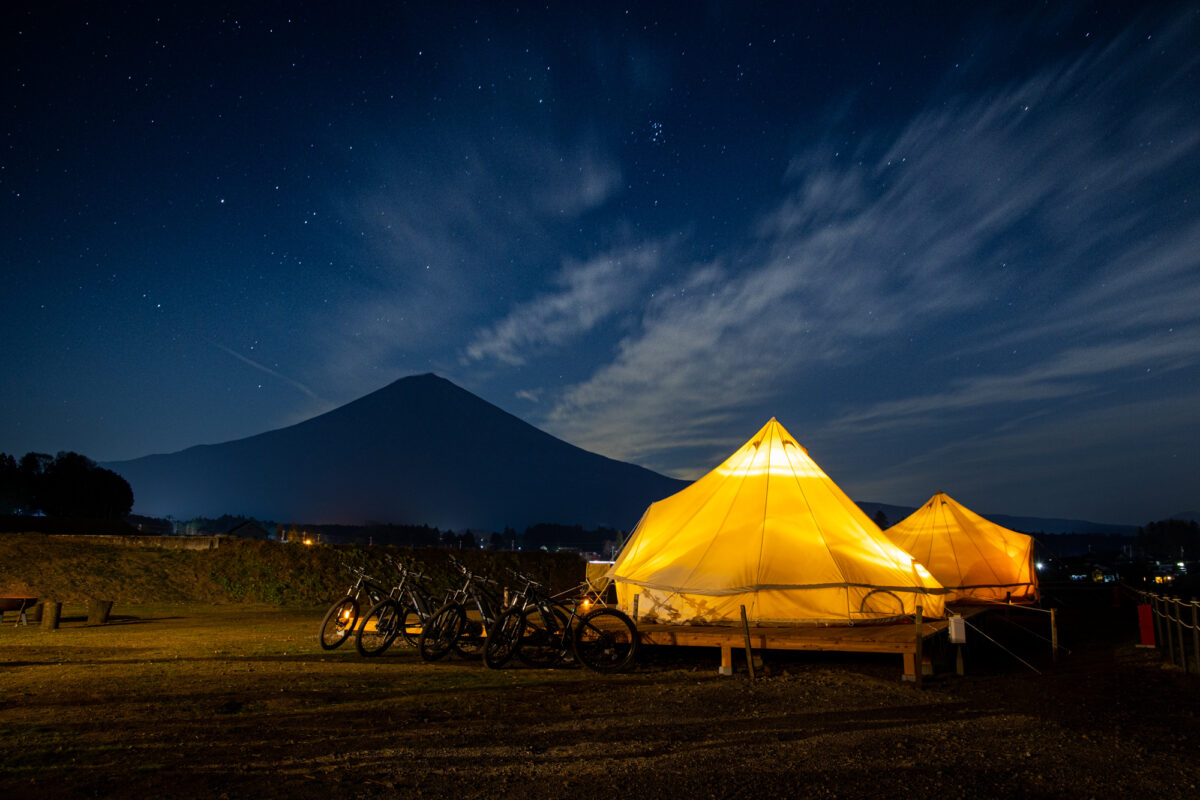
They also runs an all-inclusive camping site at Mt. Fuji Satoyama Vacation for those looking for escapes away from the city.

Mt.Fuji Satoyama Vacation

For more information about Fujinomiya, visit www.travelfujinomiya.com